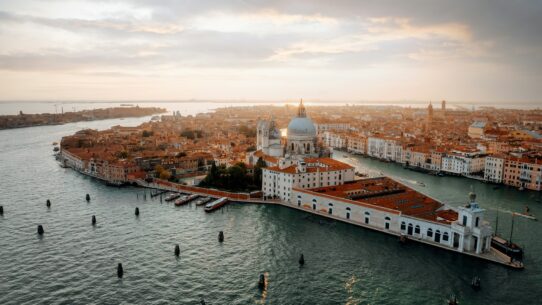
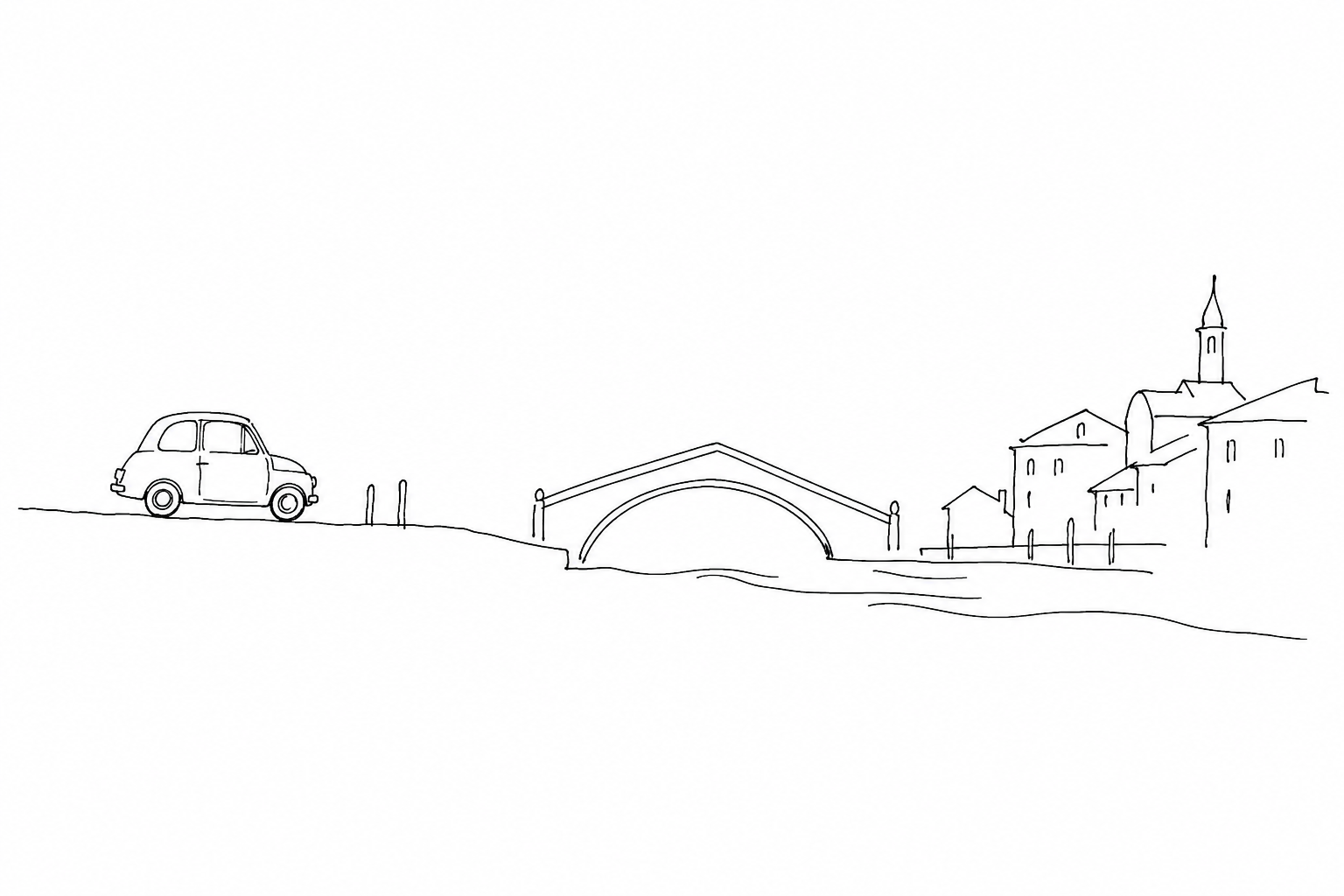

Piazzale Roma is more of a threshold than a square: the point where travel on wheels comes to a halt and Venice suddenly changes grammar. Buses, taxis, parking garages and suitcases coexist with bridges, canals, water-facing façades and pedestrian routes. It does not have the immediate elegance of the historic campi, nor does it claim to, but it accurately tells the difficult and necessary relationship between the ancient city and the twentieth century. Understanding Piazzale Roma means observing Venice at the exact moment when it stops being reachable like any other city.
The point where the mainland breaks off
Piazzale Roma is Venice’s most concrete threshold: not simply an arrival hub, but the point where the logic of the mainland suddenly stops. Here the road, wheeled traffic, buses, motor taxis and parking facilities end; a few meters farther on begins a city measured by bridges, embankments, calli and water.
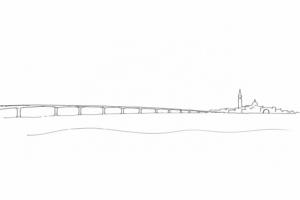
Its function comes from the connection with the mainland through the Ponte della Libertà, the axis that allows vehicles to reach the island. For this reason the square has a character different from the rest of Venice: it is broad, paved with asphalt, noisy, marked by lanes and canopies, almost a continental fragment set down on the edge of the lagoon.
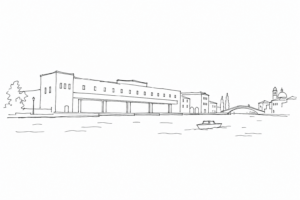
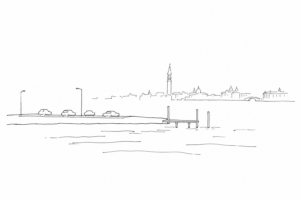
It is precisely this discontinuity that makes it important. Crossing Piazzale Roma means changing one’s system of orientation: from distances covered by car, one moves to the times of walking, bridges and vaporetti. Here, Venice does not present itself like a postcard: it begins as a physical experience of threshold.
A recent square in an ancient city
To understand Piazzale Roma, one must remember that it does not belong to the thousand-year-old fabric made of calli, campi and rii: it is a twentieth-century creation, born when wheeled traffic reached the edge of the lagoon. The opening of the road bridge in 1933, later known as the Ponte della Libertà, made it necessary to have a terminal capable of absorbing buses, taxis and private cars without pushing them farther in.
This origin explains its different appearance: wider, harder, less theatrical than the historic campi. Piazzale Roma was conceived as infrastructure, not as an urban salon. The Garage Comunale, designed by Eugenio Miozzi in the 1930s, clearly tells of that moment: functional architecture, concrete, ramps, a modern language inserted next to a much older urban organism.
Precisely for this reason the place is valuable: it shows the point at which Venice had to negotiate with the twentieth century. It does not erase the past, but forces it to confront coaches, parking garages and daily flows. The threshold is not romantic; it is historical, concrete, readable.
What you really see as soon as you arrive
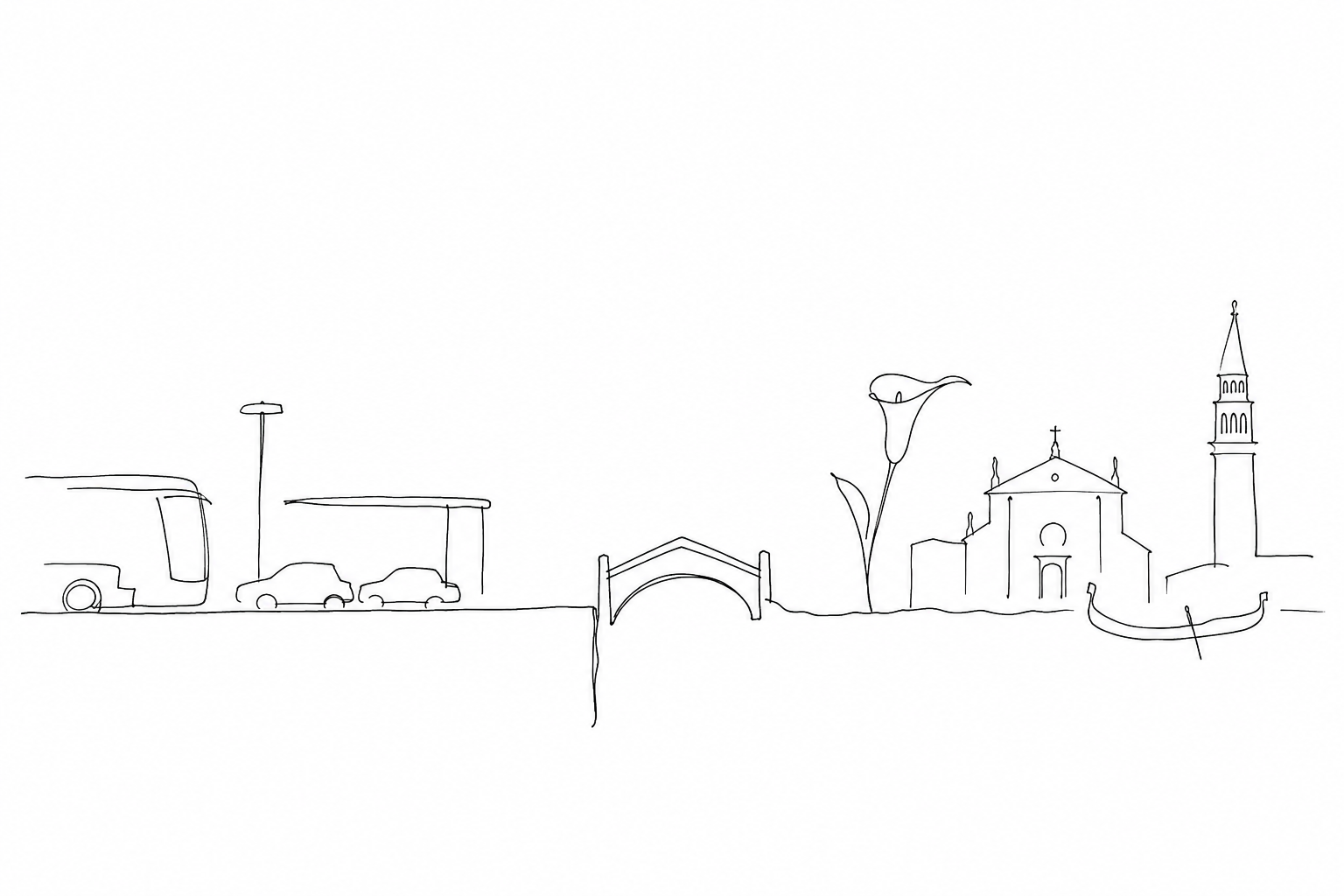
The first glance does not immediately offer gondolas or Gothic façades: it shows lanes, canopies, taxis, luggage, landing stages and people deciding in a few seconds where to go. Piazzale Roma should be read this way: not as a failed postcard, but as an urban device. Here every edge serves to separate different flows: motorists, bus passengers, travelers on foot, those looking for the water and those still needing to get their bearings.
Looking up, two elements help you understand the threshold. On one side, the Ponte della Costituzione, designed by Santiago Calatrava and opened in 2008, marks the pedestrian connection toward the railway station across the Grand Canal. On the other, the large volumes of the garages recall why this area exists: to receive vehicles before the city changes its rules.
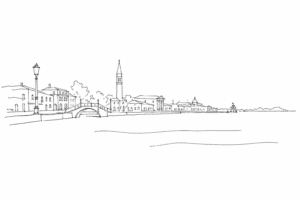
Even the smaller details speak: the Rio Novo channels water traffic inward, the Giardini Papadopoli soften the passage, the paving and parapets indicate when asphalt gives way to the pedestrian city. As soon as you arrive, it is worth observing these clues: they tell where the road ends and where Venice truly begins.
How to use it well during a short stay
On a visit of a few days, Piazzale Roma should be treated less as a place of passage and more as an operational threshold. Here it is worth doing three things before entering the pedestrian fabric: reduce your luggage to what can be carried over bridges, identify the landing stage or walking route, and fix a visual reference point for the return.
- Separate arrival and orientation: stopping at the edges, not in the center of the flow, helps you read signs, bridges and boarding points without obstructing those getting off buses, taxis or leaving parking garages.
- Assess the first stretch: even a few minutes on foot can include steps, narrow fondamente and crossings; with heavy suitcases, this choice changes the perception of the entire stay.
- Use stable reference points: the Ponte della Costituzione, the Grand Canal, the access points toward Santa Croce and the direction of the station are useful points so as not to depend only on your phone.
Timetables, services and transit conditions can change: before leaving, it is prudent to check them through up-to-date sources.
Used in a hurry, Piazzale Roma seems only like a place to cross. Looked at more carefully, however, it becomes a practical and urban key for entering Venice without misunderstandings: here the cars end, but the real measure of the city also begins, made of steps, bridges, water and slow orientation. For a short stay it can be a strategic point, provided one does not confuse it with the center or dismiss it as a simple terminal. It is the edge that prepares the eye.