
Going from central Mestre to Venice in the morning is not just a matter of transport and timetables. It is a way of setting the rhythm of the day before even seeing the water. Between Piazza Ferretto, the tram and bus stops, the streets waking up with open cafés and commuters on the move, it is often decided whether you arrive in the lagoon already tired or with the mental space to observe. Preparing the route the night before, leaving with a real margin and not immediately chasing San Marco allows you to read Venice more calmly, from the earliest hours.
Why the morning from central Mestre should be prepared the night before
A slow day toward Venice begins before leaving home or the hotel. From central Mestre, in fact, the most delicate step is not the distance from the lagoon, but the number of small choices concentrated upon waking: which stop to reach, where to keep the ticket, what to carry in the backpack, how much margin to leave before arriving at Piazzale Roma or at Venezia Santa Lucia station.
Preparing the previous evening means removing friction from the departure. Having documents, water, a light garment for the wind on the bridges, a charged battery and an essential itinerary already ready allows you to cross Mestre with more attention: the streets around Piazza Ferretto, the rhythm of the cafés opening, the people heading to work, the mainland city that precedes the city of water.
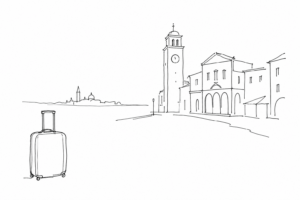
It is also worth deciding in advance the first Venetian point to reach, without overloading the morning. A single initial objective, always checking any updated transport details, is enough to set off without rushing.
In Piazza Ferretto it is best to arrive not as a point of passage, but as a small decompression chamber before aiming for Venice. The pedestrian square, with the Clock Tower on one side and the arcaded fronts, helps you take a concrete measure of time: look at the direction of exit, arrange backpack and ticket, choose without hesitation the first means of transport or the route toward the station.
The real margin is not a luxury: it is the space that prevents every traffic light, queue at the café or crossing from turning into an obstacle. From central Mestre, it is better to calculate a few minutes to leave the square and calmly reach the chosen departure axis, whether it is an urban stop toward Piazzale Roma or the train direct to Santa Lucia. They are two different entrances to the city: the first arrives at Venice’s road threshold, the second inside the perspective of the Grand Canal.
Before moving, it is enough to check the updated information on the chosen transport, then walk without speeding up: slowness already begins here.
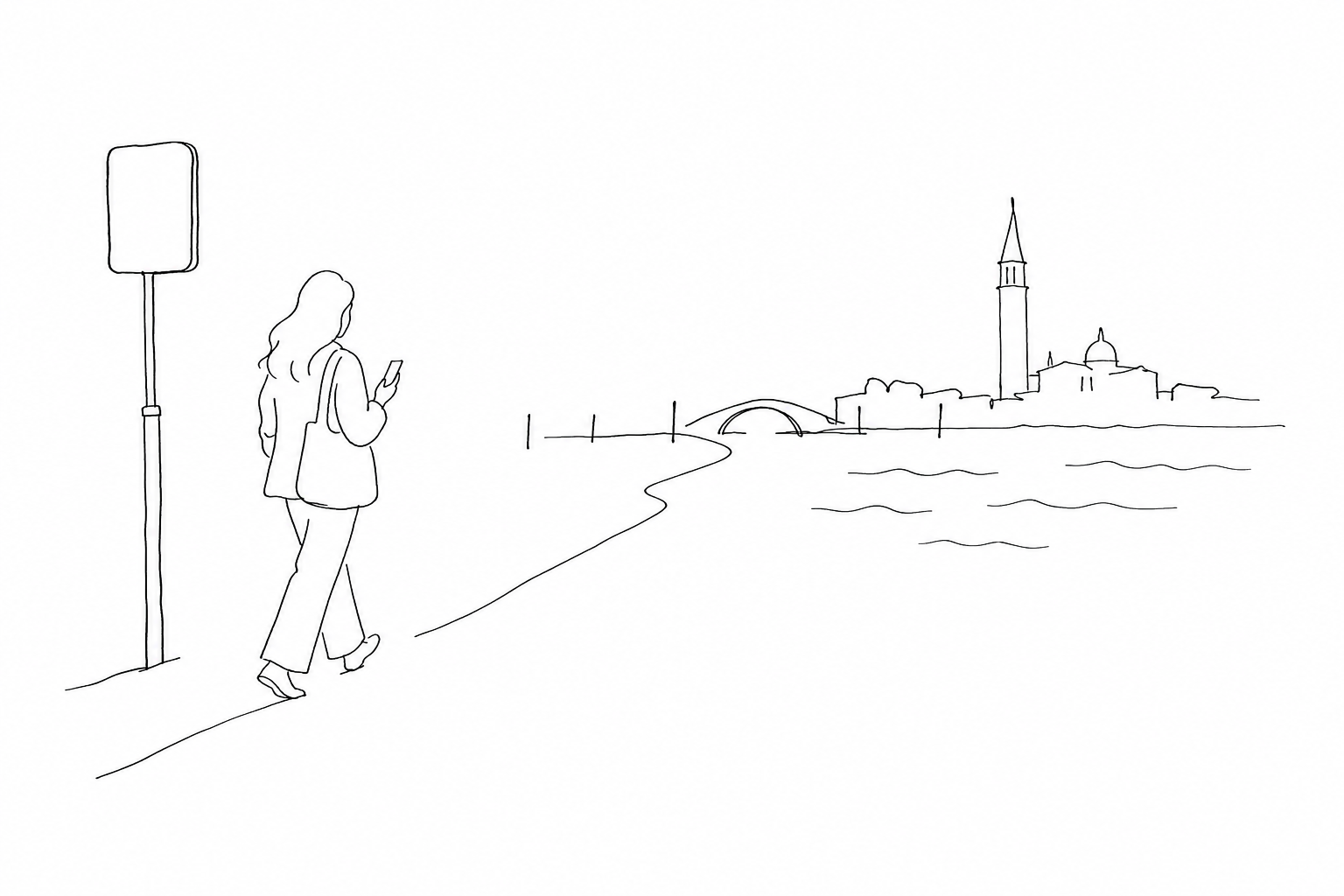
The arrival in the lagoon should not immediately turn into a race to the most famous bell tower. If you get off at the railway station or at Piazzale Roma, the slowest way to get your bearings is to pay attention to the first sestiere you encounter: Cannaregio on one side, Santa Croce on the other.
In Cannaregio, Lista di Spagna brings many visitors, but it is enough to move along a side fondamenta to understand another urban scale: house doors, work boats, low bridges, calli where the pace adjusts on its own. The Ghetto, established in 1516, helps read the city as an inhabited and layered place, not as a sequence of postcards. Campi and campielli replace monumental squares: they are open rooms, often more useful for understanding daily life than for accumulating photographs.
If instead you choose Santa Croce, the rhythm changes again: fewer obligatory axes, more deviations toward minor rii and discreet façades. Churches, scuole and palaces should be considered as points for reading the route; for any entrances or visits, it is best to check updated details.
Starting from Piazza Ferretto helps give the day a different rhythm: it is not only a convenient point, but the historic living room of the mainland, with the Clock Tower recalling the ancient layout of the village. The idea is to leave early, take a few steps, then use public transport after checking updated timetables, avoiding the car and improvised stops.
- Light start: short breakfast among porticoes and side streets, then a calm walk to the most suitable stop or to the station, depending on the chosen means of transport.
- Crossing: during the journey, watch the passage from the city of land to the water: it is already part of the experience, not dead time.
- Soft arrival: from Piazzale Roma or Santa Lucia, choose Cannaregio instead of the most crowded axis: Ponte delle Guglie, the rio, Campo del Ghetto Nuovo offer a quieter reading of the Venetian morning.
- Mindful pause: stop in a smaller campo, observe wells, altane and laundry hanging out: small signs of the inhabited city.
In this way the route from central Mestre to Venice becomes sustainable because it reduces haste, unnecessary movements and energy consumption already in the first hours.
A slow day from Mestre to Venice begins with simple choices: do not compress the departure, do not turn Piazzale Roma into a starting line, do not immediately seek the best-known image. Entering the city through less exposed calli, stopping in front of a still ordinary campo, letting the morning light reveal stone, water and daily gestures changes the tone of the visit. Mestre, in this sense, is not only a support point: it can become the place from which to take the right measure to arrive in the lagoon without rushing.