
A few minutes from San Marco, San Zaccaria changes the rhythm of the gaze. It is not a secondary detour, but one of the places where Venice best shows its stratification: the façade that passes from Gothic to Renaissance, the once powerful monastery, the crypt marked by water, the altarpiece by Giovanni Bellini immersed in an almost physical quiet. Stopping here means leaving the more predictable flow and reading the city through less noisy, but decisive, details.
Why stop at San Zaccaria, beyond San Marco
A few minutes from Piazza San Marco, San Zaccaria immediately changes the rhythm of the visit. It is enough to leave the flow toward the basilica and the Riva degli Schiavoni to enter its secluded campo: here Venice does not disappear, but lowers its voice.
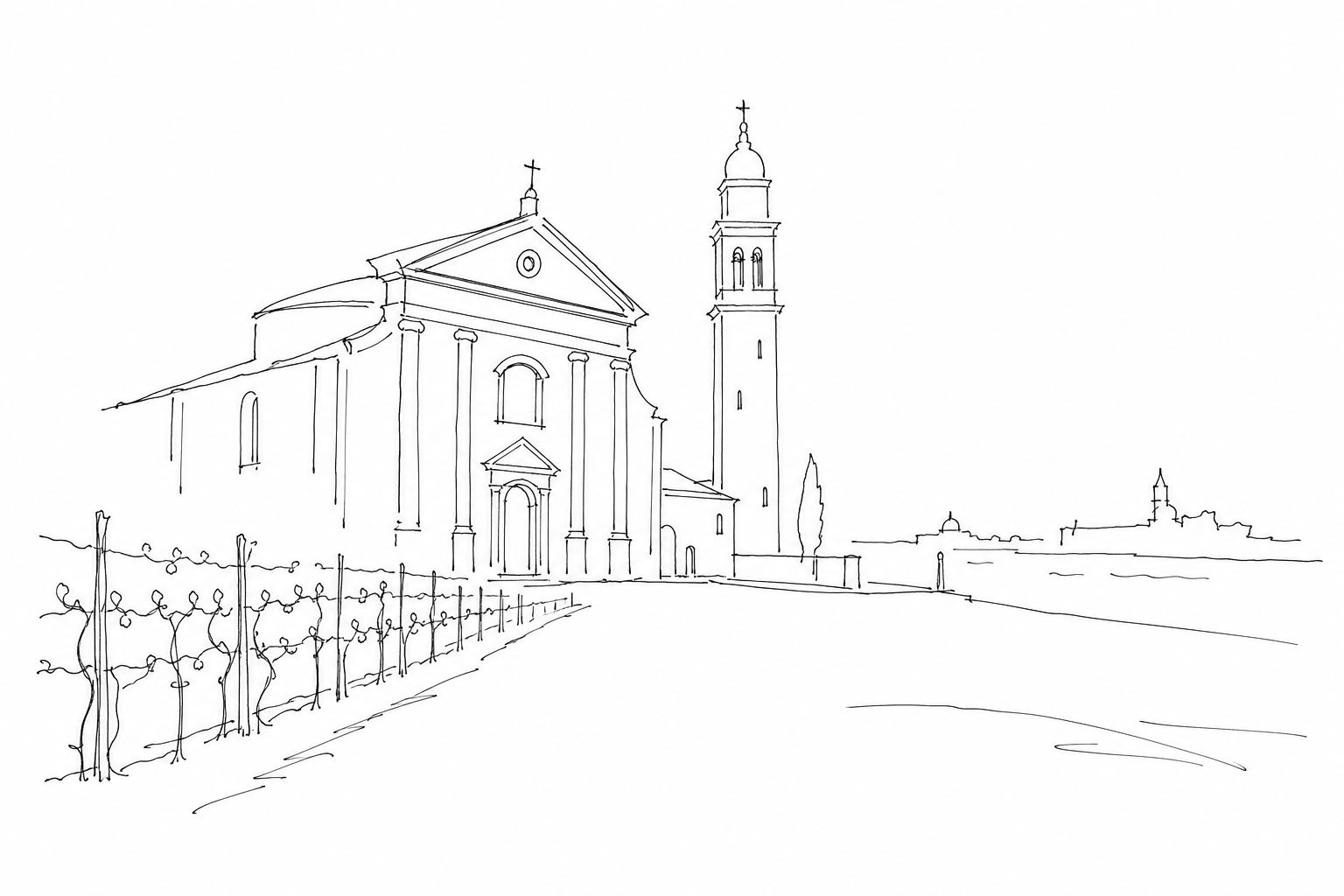
The church was born beside one of the city’s most prestigious female Benedictine monasteries, linked to patrician families and to the ceremonial memory of the doges. The building also tells this stratification: Gothic and Renaissance parts coexist in the façade, with the transition between Antonio Gambello and Mauro Codussi readable in the stone.
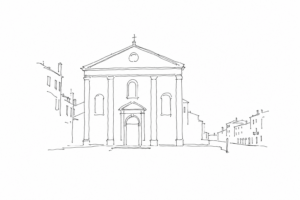
Stopping here means preparing for three very different and complementary experiences: the crypt where water enters as a concrete presence of the lagoon, the monastic history that explains the political weight of the place, and the altarpiece by Giovanni Bellini, a Sacred Conversation suspended in a quiet light. San Zaccaria is close to San Marco, but asks for a slower gaze.
A façade between Gothic and Renaissance
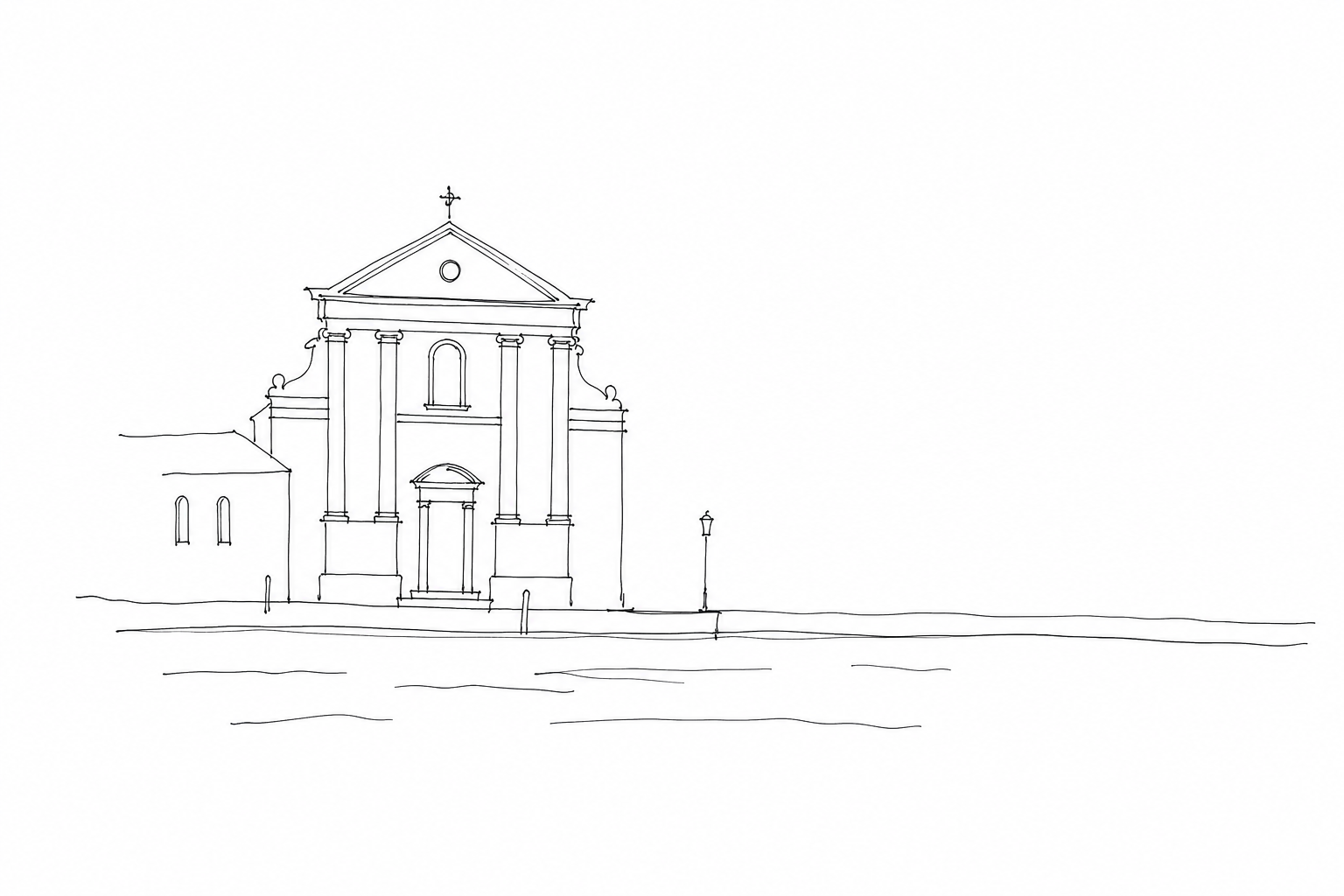
Before entering, it is worth reading the front as a stratified page. San Zaccaria shows a late Gothic legacy below: vertical thrust, softened pointed arches, dense niches, a taste still linked to fifteenth-century Venice. The upper part, completed by Mauro Codussi after Antonio Gambello’s start, changes register: more measured proportions, ordered windows, columns and half-columns that seek balance instead of pure tracery.
This transition is not a decorative detail. It prepares what will be encountered inside: a building born on ancient memories, enlarged for an influential monastic community and then updated to the Renaissance language. Even the stony white, with light shadows in the recesses, introduces a calm different from the clamor outside.
Looking at the façade from the side, its urban function is more noticeable: it does not shout, but organizes the space of the campo. It is already a visual threshold toward the crypt, water and Bellini’s quiet light.
The crypt, the water and the memory of the first doges
Beneath San Zaccaria the tone changes: the luminous church gives way to a low, secluded environment, marked by slender columns and cross vaults. The crypt preserves the memory of the oldest buildings that arose in this monastic area, linked for centuries to a female Benedictine community of great weight in ducal Venice.
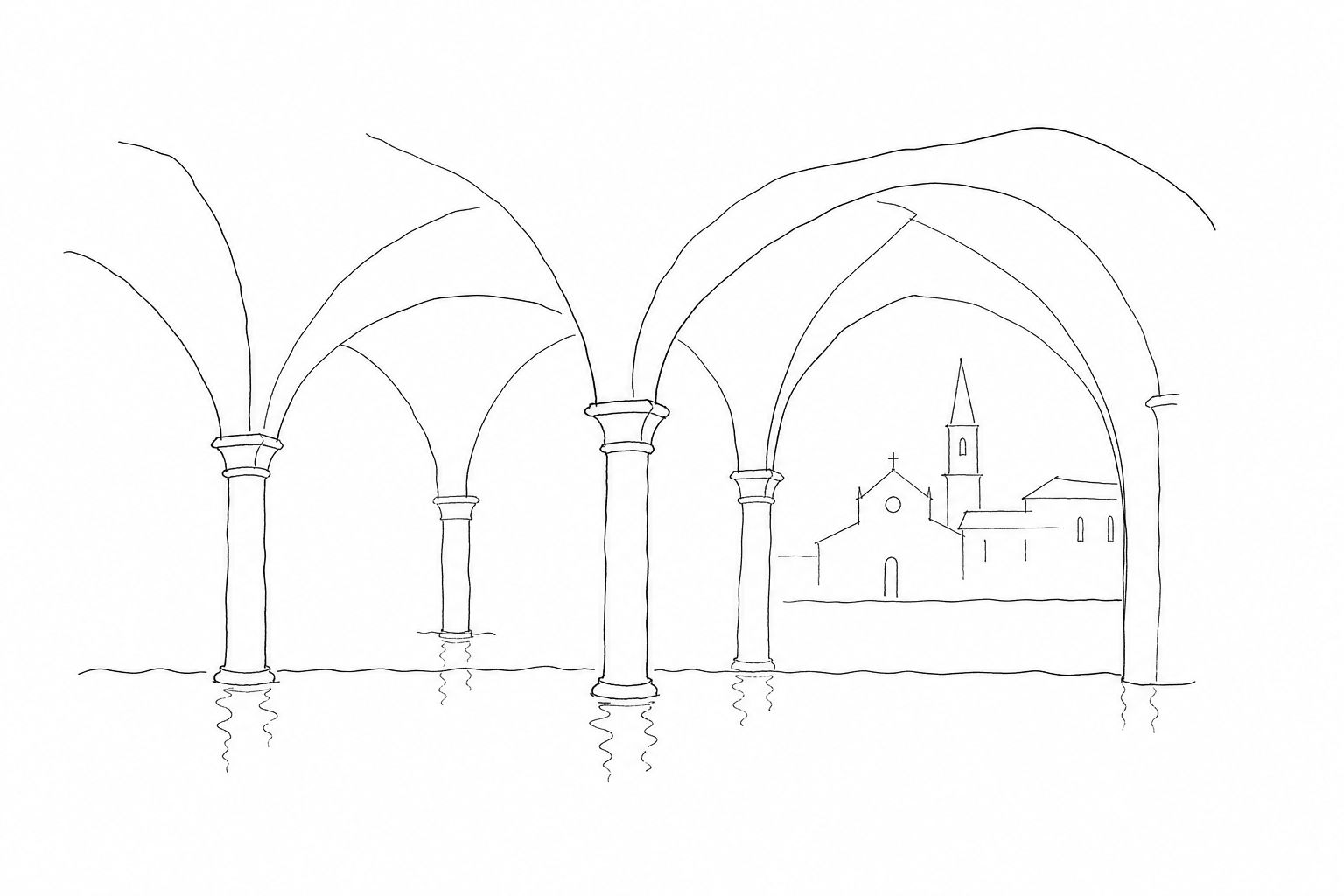
Water is an essential part of the experience, not a scenic effect. In certain periods it can occupy the floor and reflect arches, capitals and masonry, making the boundary between built space and lagoon uncertain. For this reason it is always advisable to check the access conditions before planning the visit.
The place is also important for political memory: tradition places here the burials of some doges of the first centuries, when Venetian power was still close to the aristocratic families settled between Rialto, Castello and the islands. The crypt, more than telling through grand monuments, suggests an original Venice: humid, monastic, fragile, already aware of its relationship with water.
The suspended calm of Giovanni Bellini’s altarpiece
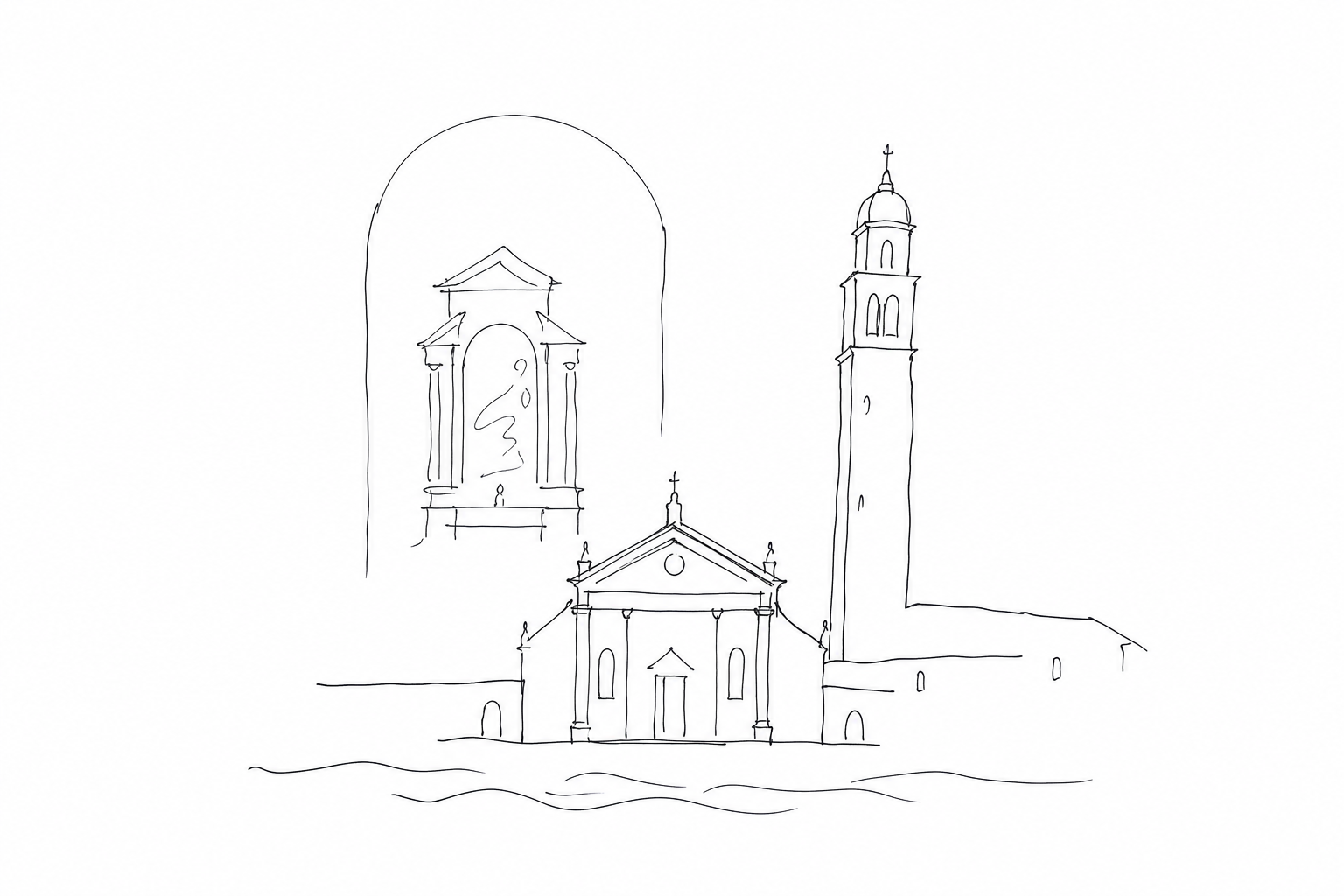
On the route beyond San Marco, the point of visual arrest is the altarpiece painted by Giovanni Bellini in 1505 for San Zaccaria: a sacred conversation that does not recount an episode, but organizes a presence. The Virgin with Child sits at the center, raised on a throne; at the sides stand Saint Peter, Saint Catherine of Alexandria, Saint Lucy and Saint Jerome, while a musician angel, below, introduces a silent rather than sonorous note.
The strength of the work comes from its painted architecture. Bellini constructs an ideal chapel, with apse and golden mosaic, which seems to extend the real space before the altar. There is no drama, there is no sudden gesture: the saints inhabit the same still time, separated and united by a soft light. Venetian color, by now fully mature, replaces rigid line with gradual transitions, warm flesh tones, deep reds and restrained greens.
The calm here is not absence of life: it is balance, a suspension in which devotion becomes space, light and measure.
Looking at it after the oldest spaces of the complex means grasping a leap: from the Venice of the origins to the Renaissance one, capable of transforming painting into a mental place.
San Zaccaria remains impressed precisely because of this measure: it does not seek an immediate effect, but gathers centuries of religious, political and artistic history in a compact space. The flooded crypt recalls Venice’s material fragility; Bellini, on the contrary, seems to suspend time in a still and mental light. Visiting the church beyond San Marco is not only adding a stop, but granting oneself a slower moment, where the city appears less exposed and more legible.
Related Posts
San Giobbe in Cannaregio: the hidden Venetian Renaissance near the station
Guide to San Giobbe, a Renaissance church in Cannaregio just a short walk from Santa Lucia.San Salvador: Titian, Bellini and a central church that many pass by without seeing
A short guide to San Salvador, between Rialto and St. Mark’s: history, architecture and works by Titian and Bellini.
The Frari Triptych: how to look at Bellini without stopping only at the great basilica
A brief guide to reading Giovanni Bellini’s Frari Triptych, beyond the scale of the basilica.Questions Answered
Why is San Zaccaria significant beyond its proximity to San Marco?
It offers a layered architectural and historical experience distinct from busier areas.How does the façade of San Zaccaria reflect Venice’s architectural history?
It transitions from Gothic elements to Renaissance designs showcasing artistic evolution.What is unique about the crypt beneath San Zaccaria?
It occasionally floods, blending architecture with lagoon water and preserving ducal memories.What is notable about Giovanni Bellini’s altarpiece in San Zaccaria?
It presents a quiet sacred conversation with balanced light and mature Venetian color.
St Mark’s seen through its details
Want to connect architecture, ceremony and power without stopping at the postcard view?
 Carpaccio in Venice: where to look for the city’s painted stories among saints, animals and everyday detailsA route through the Accademia, the Scuola degli Schiavoni and the Correr to read Carpaccio through saints, animals and everyday life.
 Riva degli Schiavoni: reading the ancient port behind the most photographed promenadeAn urban reading of the Riva degli Schiavoni: landings, palaces, mercantile memory and a slow gaze between San Marco and Castello.
 The Molo of San Marco: columns, departures and the maritime power of the SerenissimaHistory and interpretation of the Molo of San Marco: the columns, the Basin, State departures and the language of Venetian power.
 The Tetrarchs of San Marco: four embraced figures and the missing fragment in IstanbulHistory, interpretation and location of the Tetrarchs of San Marco, a porphyry group linked to Constantinople and to a fragment preserved in...