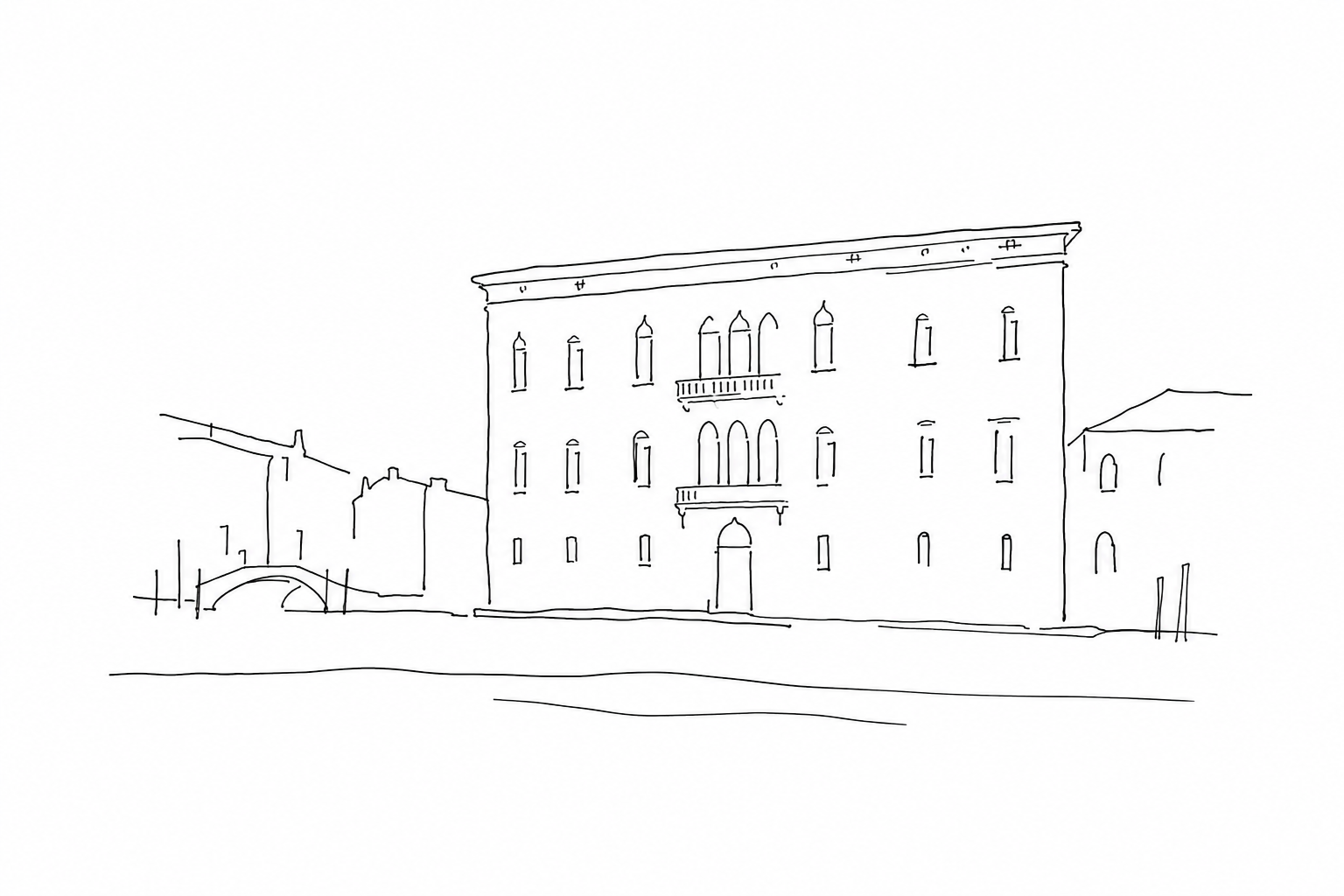
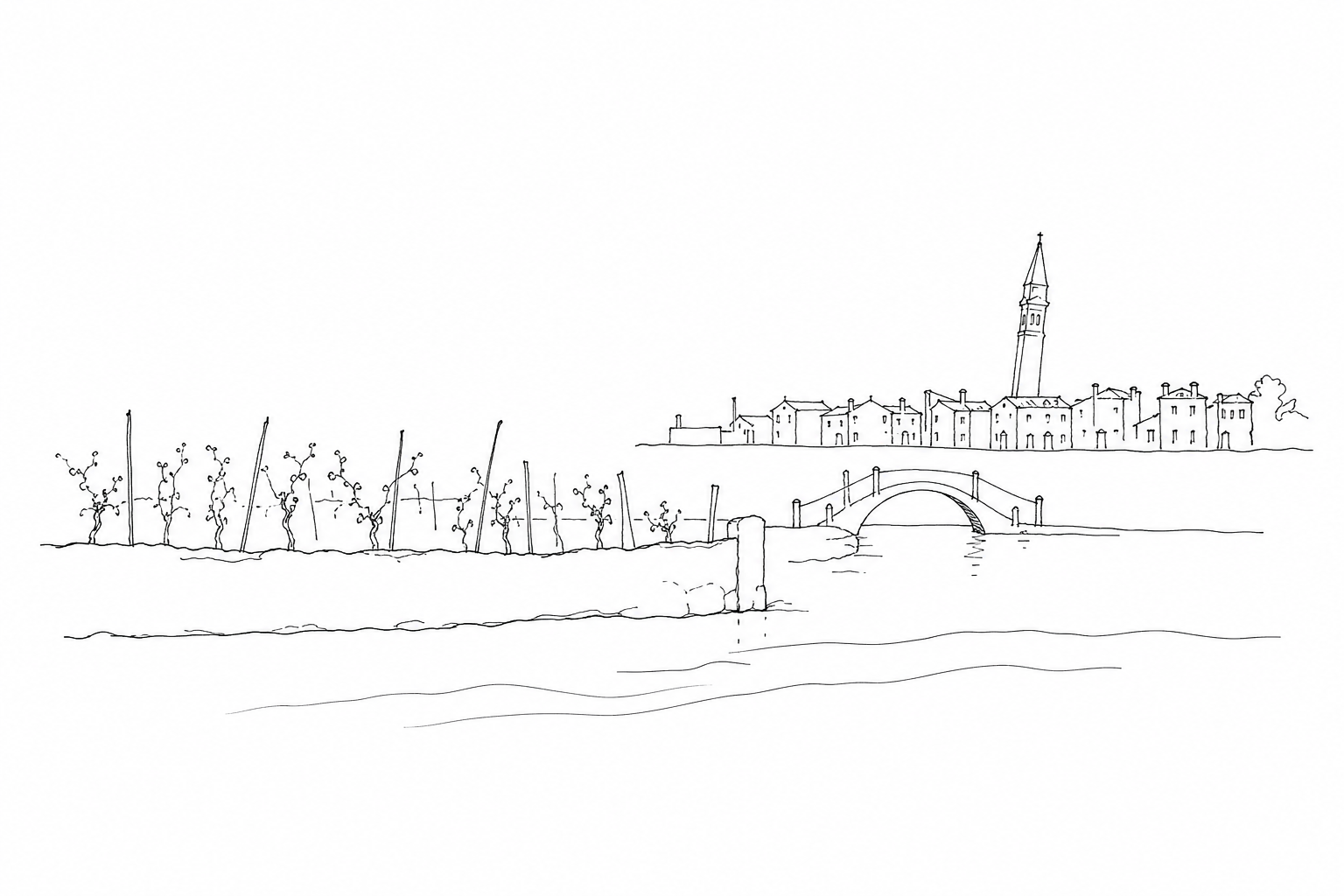
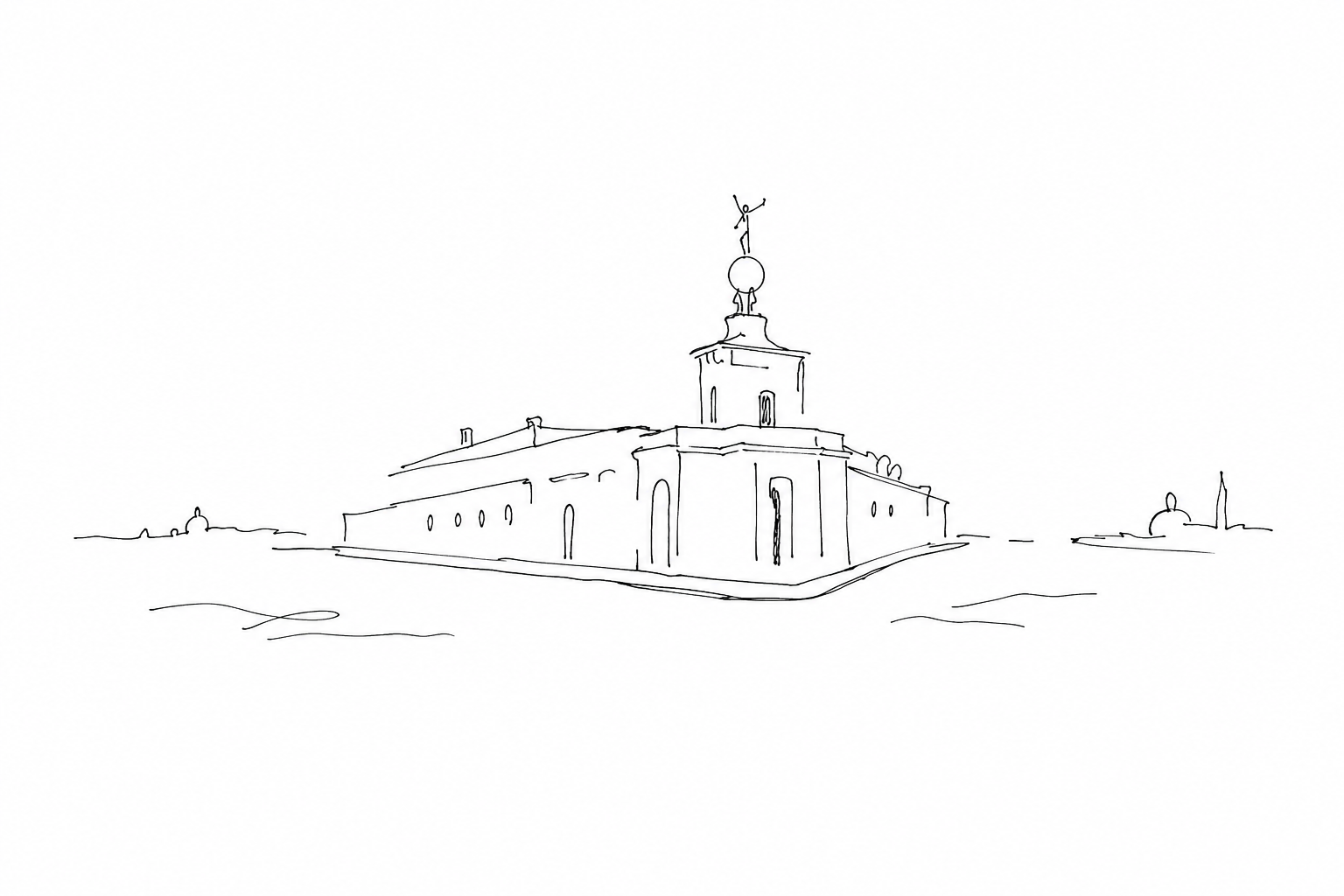

Punta della Dogana occupies one of the most exposed and legible points in Venice: the narrow tip between the Grand Canal and the Giudecca Canal. Here the city shows not only a famous panorama, but a precise function: to control, measure and tax the goods that arrived from the sea. The building, created for trade and later transformed into a space for contemporary art, tells of an important passage in Venetian history: from the power of commerce to the ability to reuse its own places without erasing their memory.
A point between two waters
Punta della Dogana occupies one of the most legible points in Venetian geography: the eastern end of the Dorsoduro sestiere, where the Grand Canal opens into the San Marco Basin and meets the Giudecca Canal. It is not only a natural viewpoint. It is an urban hinge, a stone prow that connects the Basilica della Salute, the island of San Giorgio Maggiore, the Procuratie and the outline of the Doge’s Palace.
This very position explains its original function. The goods entering the city passed in front of this strategic edge, visible and controllable, before reaching fondaci, markets and warehouses. The elongated form of the Dogana da Mar building follows the point of the land and seems to transform the boundary between the waters into a surveillance device.
When today it is recognized as a gateway to contemporary art, that role does not disappear: its language changes, but the idea of a threshold remains.
Before becoming a reference point for contemporary art, the Punta was an administrative machine. The Dogana da Mar recorded the goods arriving from Mediterranean and Levantine routes: spices, grains, salt, silks, wools, metals, timber. Here it was not only decided whether a cargo could enter the city; duties were calculated, origins were checked, bills, weights and measures were compared. Venetian trade needed a visible filter, placed in front of the political and financial heart of Venice.
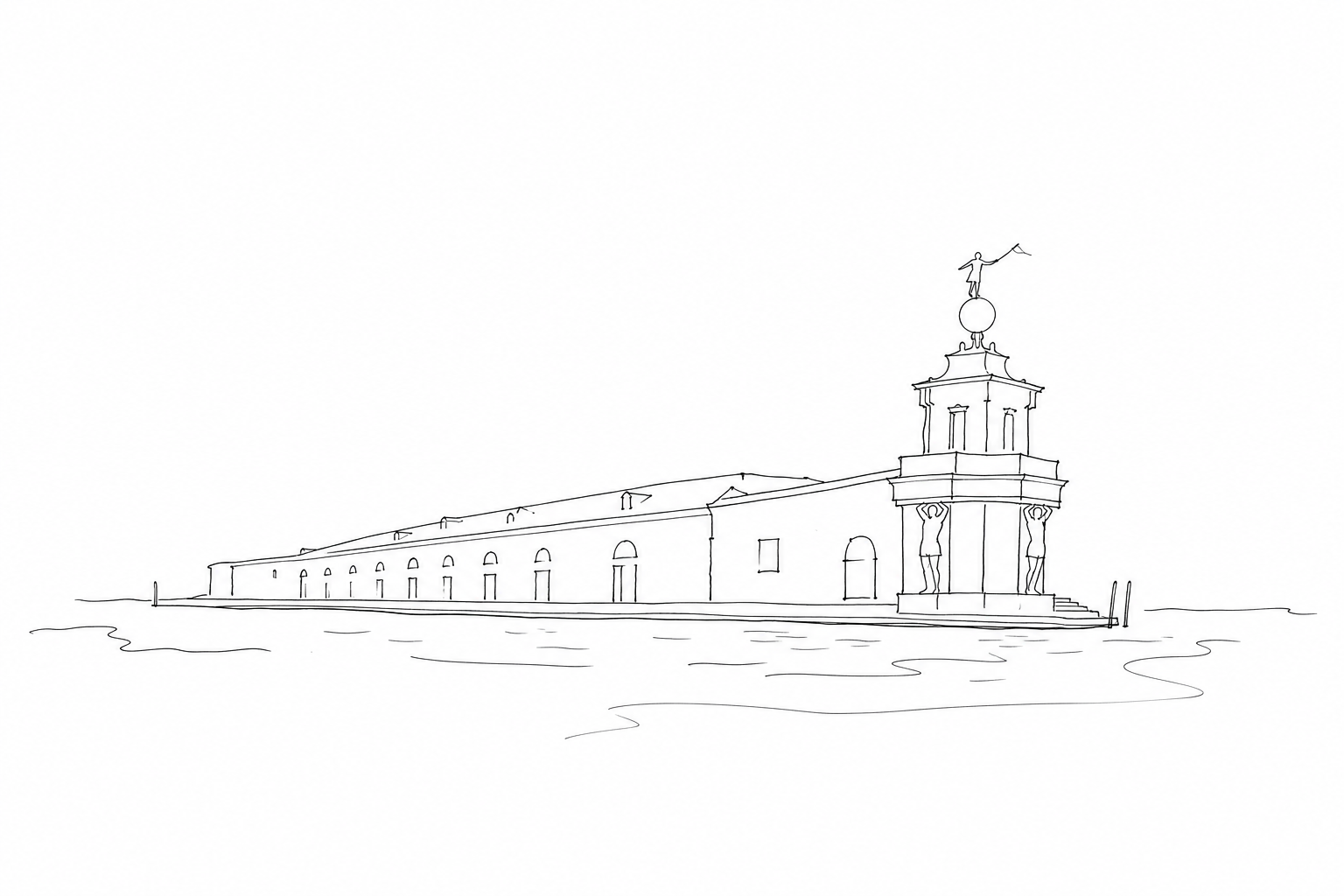
The seventeenth-century building, rebuilt to a design by Giuseppe Benoni between 1677 and 1682, translated this function into architecture. The low, elongated warehouses followed the triangular profile of the site, while the tower with the two Telamons and the bronze sphere surmounted by Fortune signaled public authority over maritime traffic to navigators. The rotating statue, exposed to the wind, combined control and instability: wealth and risk traveled together. Understanding this origin helps to read the current exhibition venue: the spaces created to catalogue foreign goods have become places where Venice measures artistic languages that have arrived from elsewhere.
Architecture: a building made to measure traffic
The wedge shape is not a scenic whim: it follows the strip of land between the San Marco Basin and the Giudecca Canal, transforming the waterfront into a surveillance tool. Those arriving by sea encountered a low, elongated building, legible from afar and suited to separating, counting and storing.
The regular façades, the repeated openings and the robust walls in brick and Istrian stone tell of a practical logic. Goods had to pass from boats to warehouses, from registers to fiscal checks: for this reason the interior spaces were designed as ordered bays, closer to an administrative organism than to a representative palace.
The crowning element facing San Marco also speaks of public function. The two Atlases supporting the golden sphere with Fortune signaled Venetian power over maritime traffic, almost a mark visible to ships. In Tadao Ando’s restoration, completed in 2009, concrete, bricks and existing beams still make this operational origin perceptible.
From Ando’s restoration to the gateway to contemporary art
With the restoration designed by Tadao Ando, completed in 2009, the ancient Venetian landing place changed function without losing memory. The project for the Pinault Collection did not erase the bricks, trusses and proportions of the warehouses: it set them in tension with polished concrete surfaces, cuts of light and more essential passages. Thus Punta della Dogana became a threshold: no longer a place for checking cargoes, but an entrance to global artistic languages.
The visit is better understood by following this double reading. The rooms are not neutral: they force one to measure contemporary works, voids and perspectives against a plan born for port work. Even when the installations change, the dialogue between the historic structure and Ando’s minimal intervention remains stable.
- Before entering, observe the relationship with San Marco, Giudecca and Santa Maria della Salute.
- Inside, note the contrast between ancient masonry and contemporary concrete.
- Always check updated details on opening hours, tickets and current exhibitions.
Observing Punta della Dogana means reading Venice through a boundary building: between different waters, between economy and representation, between historic architecture and contemporary language. Tadao Ando’s restoration did not hide the operational nature of the ancient customs house, but made it part of a new visual and cultural path. Today this point remains a threshold: no longer an entrance for goods, but a place from which to question the relationship between city, public space and art.