
In Venice, water is everywhere, but drinking water must be sought with a different kind of attention: in the public fountains scattered among campi, calli and fondamenta. Refilling your water bottle is not only a practical gesture for walking more lightly and consuming less plastic; it is also a way to read the city in its everyday details, far from the idea of Venice as a simple backdrop. The fountains tell of habits, routes, stops and small urban geographies: recognizing them helps you move with greater awareness, respecting fragile and shared spaces.
Why fountains matter in a city of water
In Venice, water is everywhere, but not all of it is drinking water. This apparent contradiction explains why public fountains have had, and continue to have, a special value: they transform the lagoon city from a landscape to contemplate into a place to inhabit with simple gestures, such as refilling a water bottle during a walk among calli, campi and bridges.
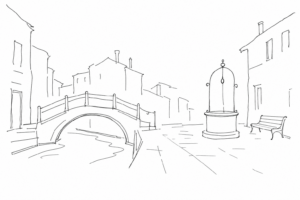
Historically, Venice’s water supply did not depend on the brackish water of the canals, but on systems for collecting rainwater conveyed into the wells of the campi. The wellheads, often made of Istrian stone and sometimes decorated with coats of arms or reliefs, still recall this urban ingenuity. Modern fountains partly continue their practical function: offering a refreshment point without multiplying disposable bottles.
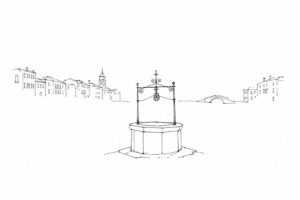
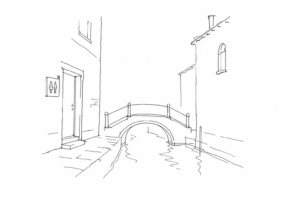
Using them also means reading Venice better. A small fountain in a campo is not just a service: it signals an everyday dimension of the city, made up of residents, slow routes and respect for a fragile and much-frequented space.
How to recognize them among calli, campi and fondamenta
During a Venetian walk, drinking water points are not always noticeable at first glance: they are often small elements, inserted into the ordinary life of the sestiere. The first clue is the location. Look for them in campi and campielli, in the less monumental corners, along a fondamenta or near a side wall, rather than in front of the main façades of churches or palaces.
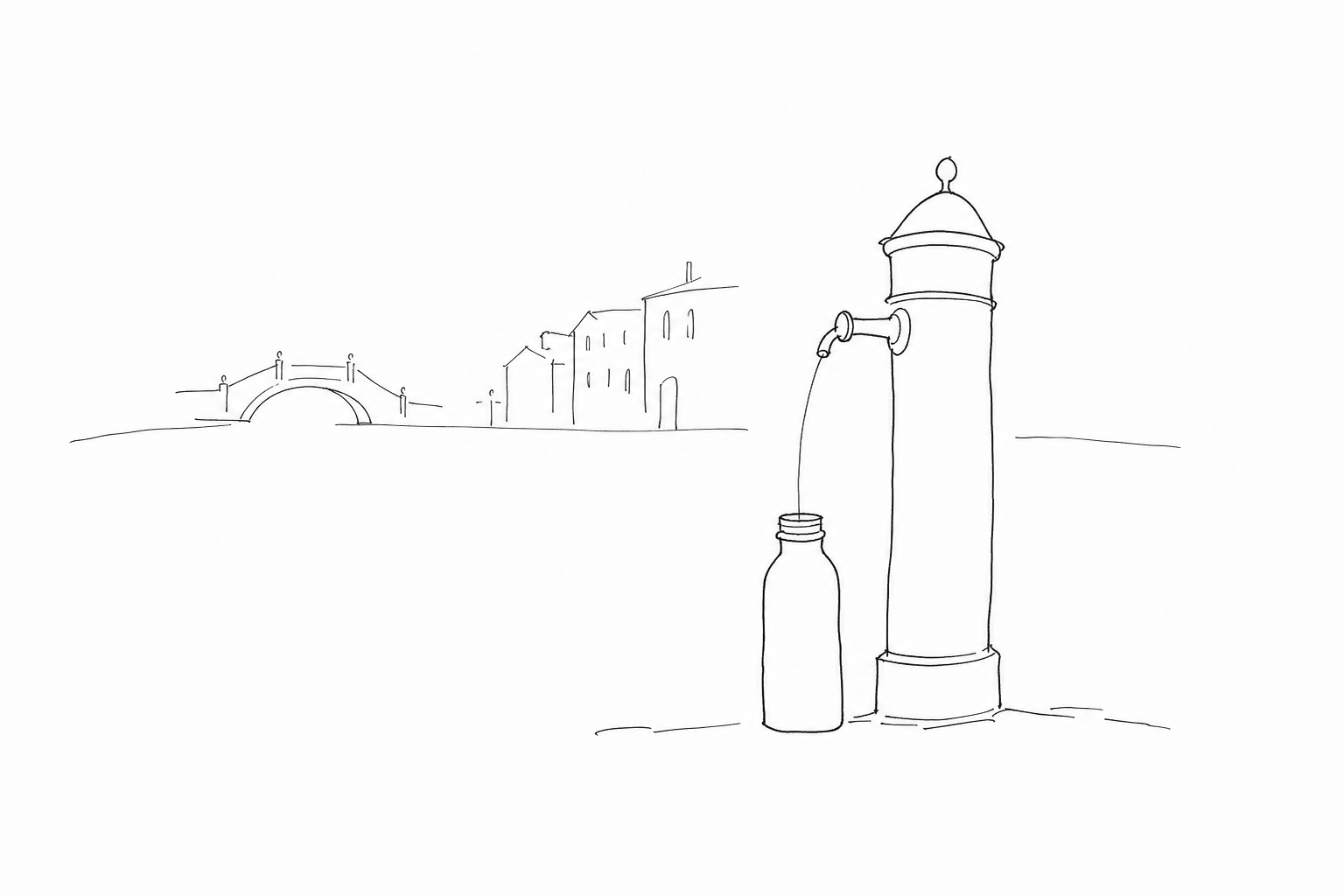
Visually, many public dispensers have a simple appearance: a metal or stone column, tap, button or lever, small drainage grate at the base. In some cases the jet is next to a low basin or a wall element. Pay attention, however, to the wellheads: the parapets of historic wells, often carved and placed in the center of the campi, are precious testimonies of the past, but should not be mistaken for fountains to use.
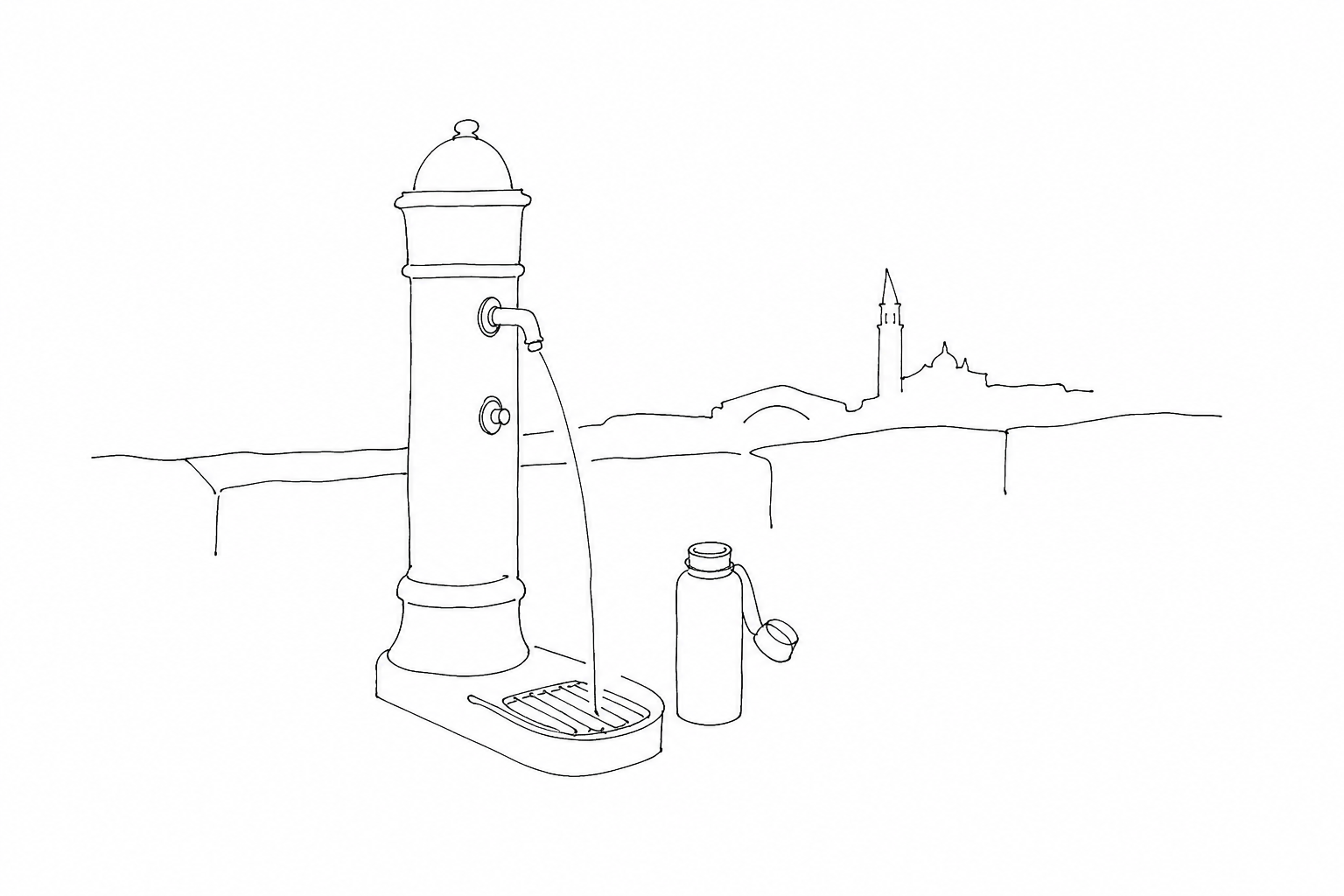
- Observe the routes used by residents, not only the more touristy ones.
- Check any drinking-water indications present on site.
- If the device is damaged, dry or unclear, it is better to look for another one.
Recognizing them also means training your eye: a water bottle filled on the spot lightens your backpack and reduces the waste produced during the visit.
Organizing the route by sestieri helps you avoid looking for a drinking water point only when your bottle is already empty. In Venice the distances are short on the map, but bridges, narrow calli and detours can lengthen the walk: it is therefore worth thinking of stops as part of the route, not as interruptions.
- Cannaregio: along the quieter fondamenta, a pause allows you to leave the flow of the Strada Nova and regain your pace.
- San Polo and Santa Croce: between Rialto, Frari and the station, alternating visits and refills avoids hasty purchases of disposable bottles.
- Dorsoduro: before or after Zattere, Accademia and Salute, stopping to refill is useful on stretches exposed to the sun.
- Castello: beyond the San Marco area, the sestiere invites you to walk slowly toward less crowded rii, courtyards and waterfronts.
An important precaution: the ancient wellheads, often splendid in Istrian stone, are historical testimonies and not points to use for drinking. To find your way, it is always better to check updated maps and indications from local services.
Using a public drinking point is a simple gesture, but in a network of narrow calli it requires attention. First rule: stop to the side, letting pass those carrying carts, strollers or shopping; a few seconds of obstruction can create a small queue on the nearby bridge.
- Wait your turn, without placing backpacks or bags on the edge of the basin.
- Do not touch the spout with the mouth of the container: just keep it slightly away from the jet.
- Avoid improper washing: shoes, dishes, travel laundry and beach toys do not belong in these spaces.
- For animals, use a portable bowl and move away immediately, so the point remains free and clean.
If the flow wets the masegni, move with caution: the stone can become slippery. Small attentions protect those who live in the sestiere and make refilling your water bottle part of less invasive tourism.
Carrying a water bottle with you and using public fountains means entering the concrete rhythm of Venice: stopping without obstructing, observing where you are, leaving it clean for those who will arrive later. It is a simple gesture, but one capable of changing the way you cross the city, making each stop less automatic and more attentive. Between a bridge, a campo and a fondamenta, drinking water thus becomes part of a more measured journey: useful, respectful and close to ordinary Venetian life.