
The question of public toilets in Venice almost always comes too late: when you are already far from the station, in the middle of a flow of bridges, narrow calli and crowded campi. Yet, in a city built on water but not very forgiving of improvisation, knowing where to stop is part of the itinerary. It is not only about comfort: it concerns the timing of the visit, the choice of breaks, the way you move among sestieri, museums, bacari and landing stages. This guide addresses an everyday topic with the same respect due to Venice: practicality, precision and a little urban awareness.
Why toilets in Venice should be planned in advance
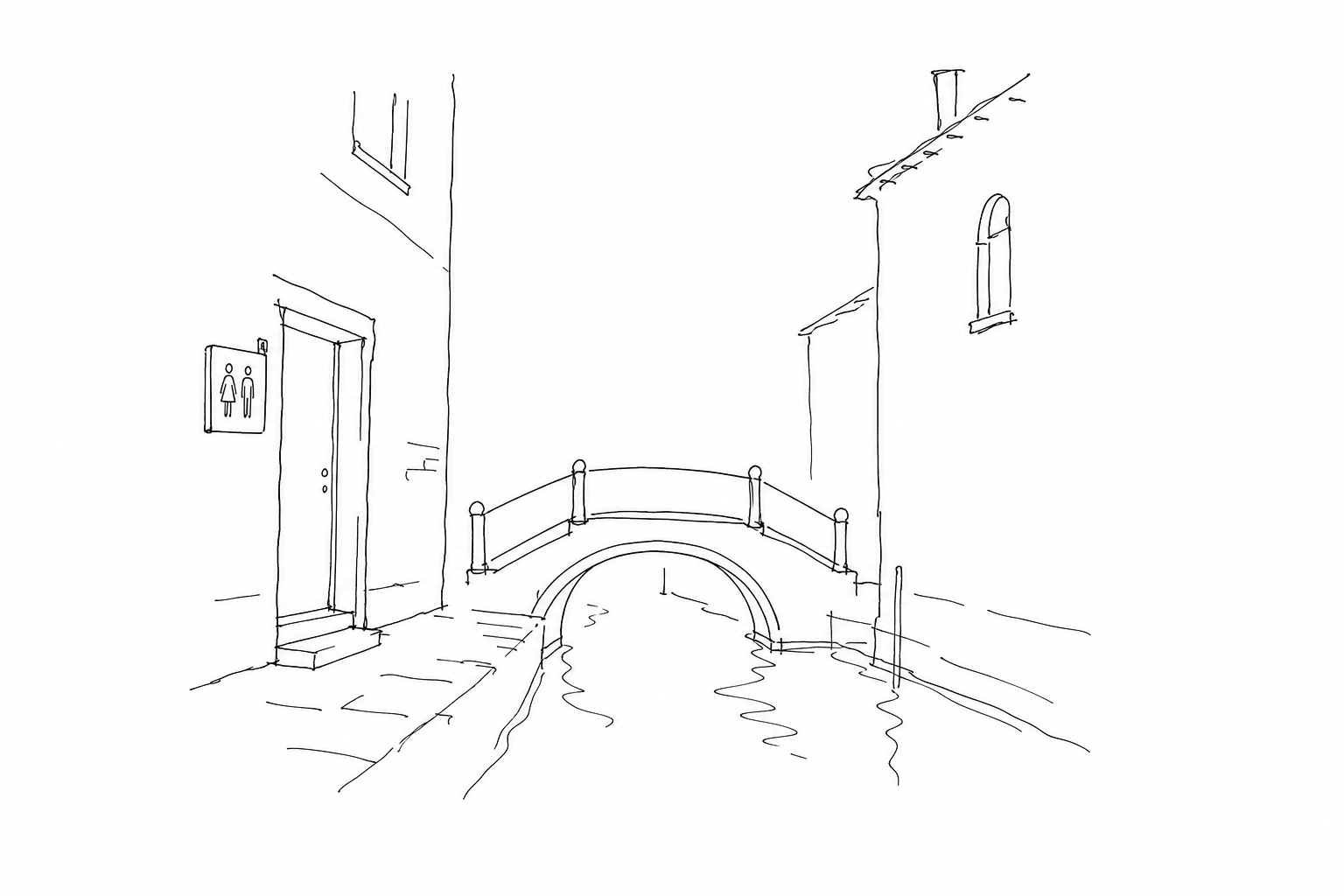
In Venice, looking for a toilet “when you need one” can become more complicated than in other cities. Not because they are entirely lacking, but because the urban form does not help improvisation: narrow calli, continuous bridges, campielli that look similar to one another and very crowded tourist routes make every detour slower. Even a short distance on the map can mean stairs, small bridges or a forced loop along a canal.
The first practical rule is therefore mental: identify the facilities before entering the densest areas, such as the San Marco area, Rialto or the routes toward the vaporetto stops. Municipal public toilets do exist in strategic points, but openings, possible costs and conditions can change: it is advisable to check them through up-to-date sources before leaving or during the day.
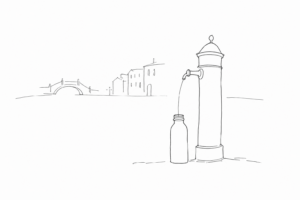
This is especially true for families, elderly people and anyone who knows they have tight timing between visits, museums, ferries and restaurants.
Where to get your bearings: sestieri, hubs and crowded areas
To look for public toilets in Venice, it is better to think by areas, not by individual address. The city is divided into six sestieri: San Marco and San Polo concentrate many tourist flows, Cannaregio and Castello alternate heavily used axes with more residential calli, Dorsoduro combines museums, universities and walks, while Santa Croce is linked to arrivals from the mainland.
The hubs to keep in mind are those where transport, monuments and pedestrian routes intersect: the area of the railway station, Piazzale Roma, Rialto, San Marco, Zattere, Accademia and the main vaporetto stops. In these areas it makes more sense to look for signposted facilities or places open to the public, checking the updated information at the time.
A useful criterion is to observe the density of passages: where you find very busy bridges, large campi, civic museums, markets or transport terminals, you are more likely to spot official signs nearby. By contrast, in the inner calli and residential stretches, the search may require longer detours. Even the most visited islands, such as Murano, Burano and the Lido, should be considered as small separate systems: it is better to locate useful points as soon as you arrive.
Smart stops among bacari, museums and transport
The most convenient way to manage toilets in the city is to fit them into the natural rhythm of the visit. A break in a bacaro is not only for drinking an ombra or eating a cicchetto: with a purchase, it is often the simplest opportunity to use the venue’s toilet, always discreetly and by asking at the counter.
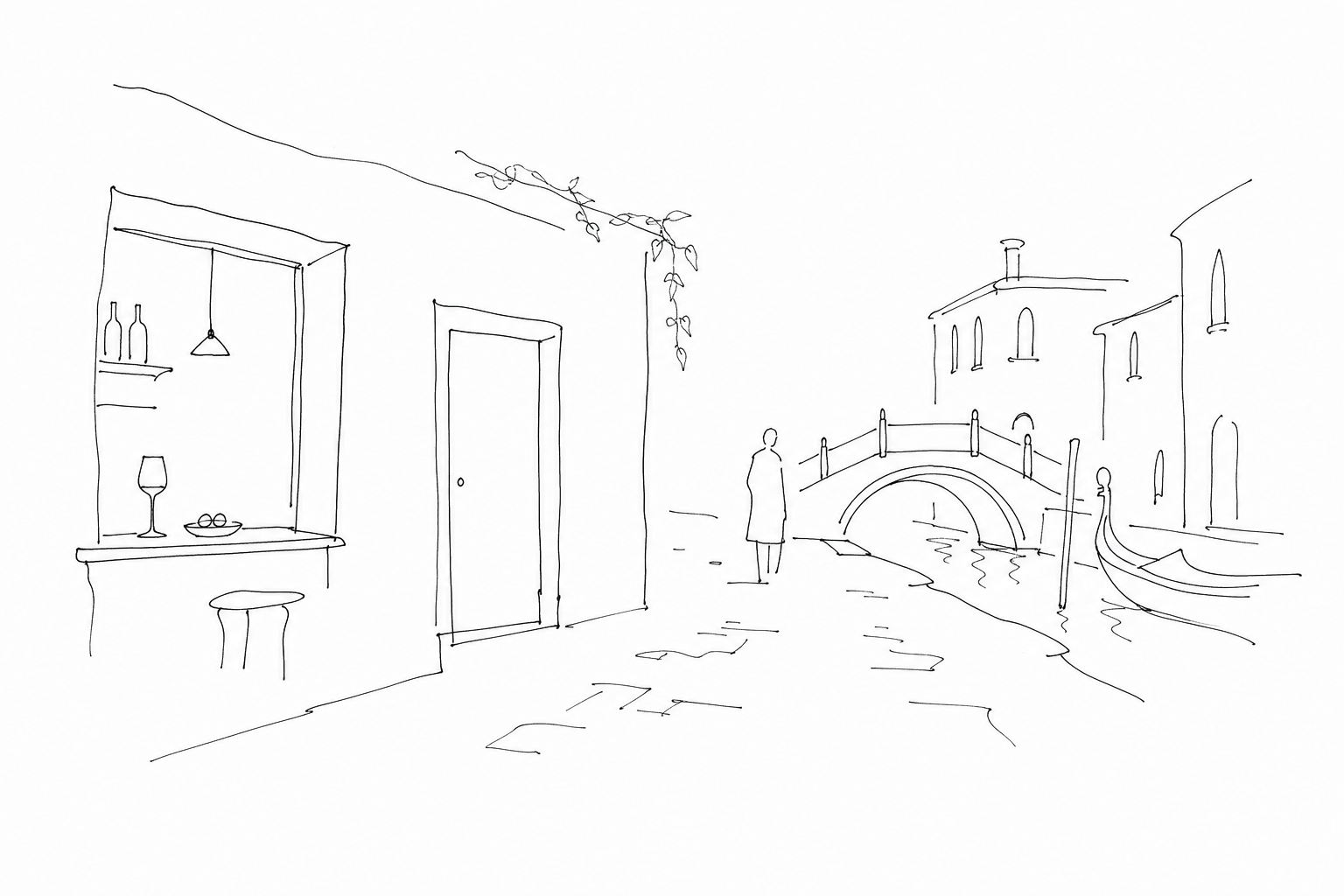
The same applies to cultural stops. Galleries, visitable palaces and exhibition venues may offer facilities for visitors, but rules, access and availability change: it is advisable to check them on site or through official channels, without considering them an automatic alternative.
Pay attention to transport as well. Vaporetto stops should not be imagined as complete railway stations: many are simple jetties. The most sensible stops are therefore those near the major arrival hubs, interchange areas or close to a visit already planned.
A good strategy is to alternate walks, a short break and travel on the water. This avoids hurried detours, especially when moving from one sestiere to another or heading toward the islands.
An everyday detail that changes the visit
Looking for a toilet in the lagoon city is not only a matter of convenience: it helps you read more clearly a place built on narrow spaces, calli without pavements and campi that still function as the neighbourhood’s open-air rooms. Here every detour weighs more than elsewhere, since a bridge, a canal or a sottoportego can lengthen even an apparently short route.
The presence of public facilities, when signposted, should therefore be interpreted within the fine-grained geography of the inhabited city. Not everything is designed for the tourist moving quickly: many areas preserve residential rhythms, discreet entrances, narrow passages and shared views. Stopping with judgement also reduces pressure on bars and venues used solely as an emergency solution.
A useful detail is to observe the main campi: they often concentrate practical functions, pedestrian flows and connections toward important waterfronts or bridges. In a fragile historic centre, even an everyday need becomes part of the balance between visiting, respect for spaces and local life. Operational information, on the other hand, always deserves an up-to-date check on site.
In the end, knowing where to find a public toilet in Venice is not a minor detail: it is a small form of urban orientation. It helps you understand distances better, choose sensible breaks, and avoid turning the visit into a race between calli and bridges. Venice requires attention even in the most ordinary things, and precisely there it reveals part of its character: a fragile, layered city, lived in every day, where organising yourself discreetly means better enjoying even a silent campiello, an unexpected church or an ombra at the counter.