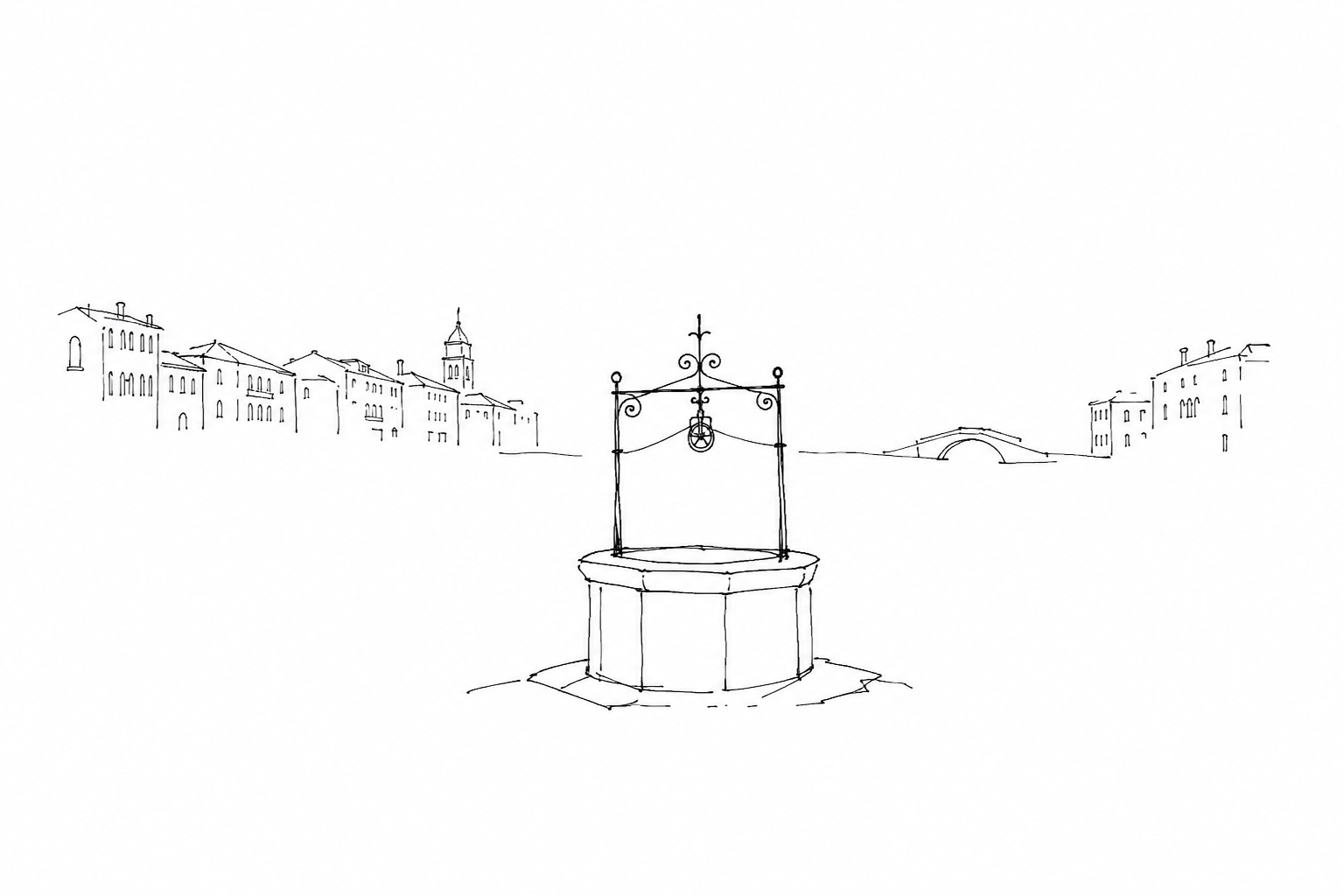

In Venice, fresh water was not a natural given, but a daily achievement. The wellheads, often observed distractedly at the center of campi and courtyards, tell precisely this story: a city built on salt water that learned to collect, filter and preserve rain. They were not simple elements of urban furnishing, but essential points of public and domestic life, linked to health, control of spaces and collective care.
Why Venice needed wellheads
Venice was born and grew in a paradoxical environment: surrounded by water, but almost without immediately usable fresh water. The lagoon offered protection, traffic routes and resources, but its brackish water could not be used for drinking, cooking or washing without risks. For this reason, from the Middle Ages onward, the city had to transform campi, courtyards and cloisters into small collection systems.
The vera da pozzo, that is, the stone parapet that can still be seen today in many Venetian squares, was only the visible part of a more complex installation. Beneath the pavement there was a waterproofed cistern, filled with rainwater filtered through layers of sand and clay. The surfaces of the campi channeled the rain toward collection openings, while the central well made it possible to draw the purified water.
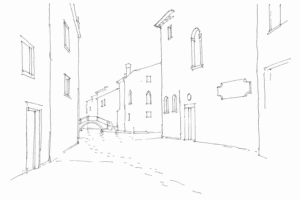
These structures were therefore essential public infrastructure, not simple urban furnishings: they guaranteed daily supply in a city built on water, but dependent on rain.
How a Venetian cistern worked
Under the wellhead there was no spring: the Venetian well was, in reality, the visible mouth of an artificial cistern. The system began from the surface of the campo or courtyard, paved with slight slopes designed to channel the rain toward small stone drains, often arranged around the wellhead.
From these inlets the liquid descended into a large underground chamber filled with sand. The sand acted as a natural filter: it retained impurities, dust and residues carried by the runoff from the paving. Before reaching the drawing point, the water therefore passed through a filtering layer, slow but effective, which made it usable for daily needs.
The most delicate part was the insulation. The cistern was lined with compact clay, often indicated as an impermeable material, to separate the fresh reserve from the brackish lagoon soil. At the center stood the well shaft, built in brick or stone, connected to the surrounding filtering mass. The wellhead, carved and raised, protected the opening and prevented falls or direct contamination.
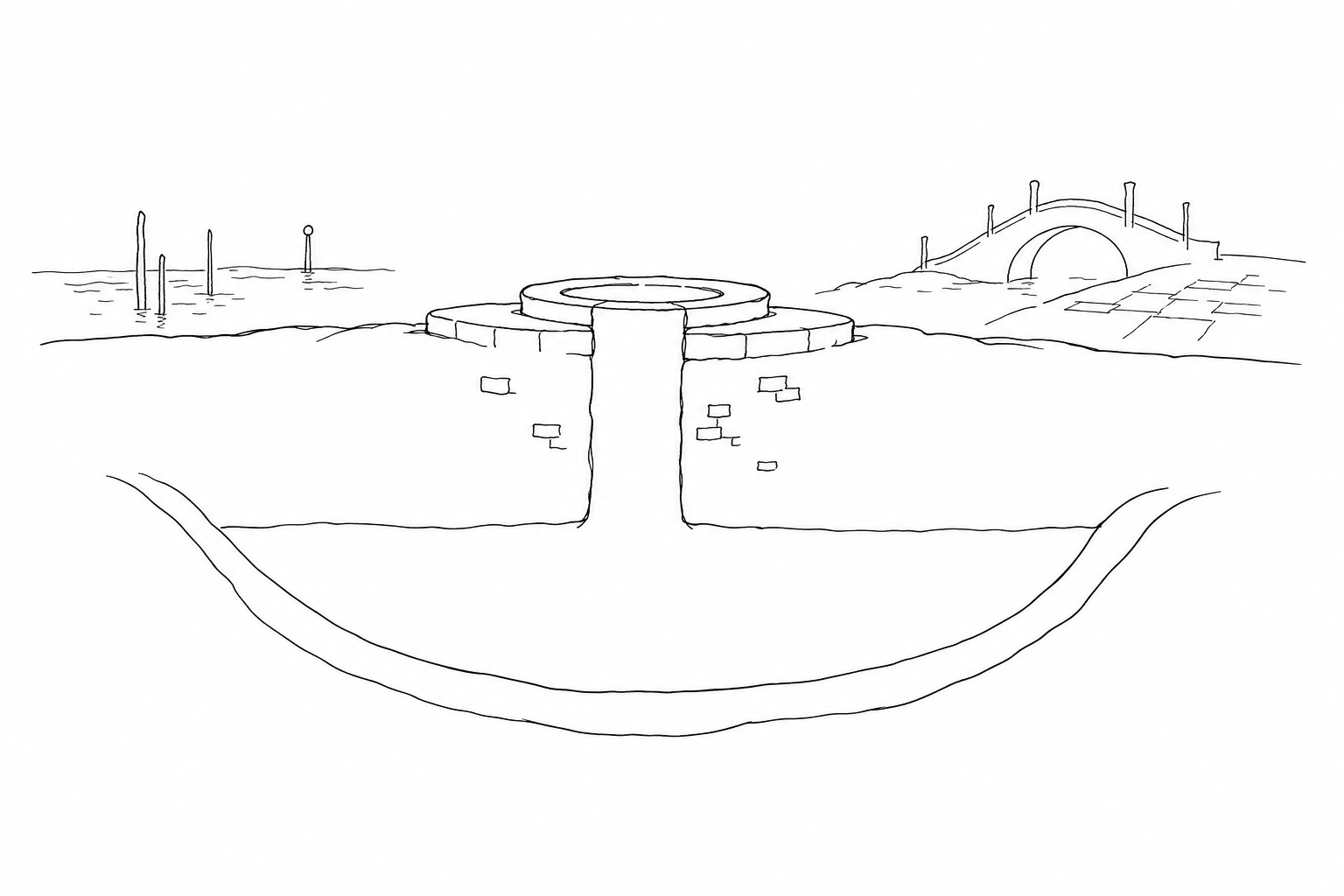
Its operation depended on maintenance: cleaning the drains, checking the sand, orderly management of drawing water. Each wellhead was therefore the monumental part of a hidden infrastructure, designed to transform rain into a safe urban reserve.
Stone, families and carved signs
Observing a wellhead means reading an urban document carved in Istrian marble or Verona red marble. Many were made from ancient blocks, capitals, sarcophagi or reused architectural elements: for this reason some preserve Roman, Byzantine or Gothic forms adapted to everyday use.
The carved coats of arms often indicate who financed the work: patrician families, confraternities, public magistracies or parish communities. The emblems of the Grimani, the Contarini, the Morosini and other families were not simple ornament: they declared prestige, responsibility and presence in the campo or courtyard.
Alongside the shields appear vegetal motifs, lions of Saint Mark, crosses, rosettes, inscriptions and dates. Even the marks left by ropes on the edge tell of the prolonged use of the artifact. The wellhead was therefore at once furnishing, civic memory and symbolic threshold: an object exposed to everyone’s view, created to protect an essential resource and to remember those who had made it available.
Where to observe them today without missing the detail
To encounter a wellhead without looking for it as a simple furnishing, it is worth stopping in the more open campi and courtyards: Campo San Polo, Campo Santa Margherita, Campo Santi Giovanni e Paolo, Corte del Milion, the Ghetto and many inner calli preserve examples useful for comparison. In monumental courtyards, such as that of the Doge’s Palace, the forms become more solemn and decorative; in the residential sestieri, on the other hand, they appear more worn, often low and marked by everyday use.
The best criterion is to observe the context. The wellhead is almost always found in a central or slightly raised position, where the paving could channel the rain toward underground filters. Look for grooves left by ropes, edges smoothed by hands, coats of arms, inscriptions, mascarons, animals or vegetal motifs. The shape also speaks: cylindrical, square, octagonal, sometimes made from reused materials. A metal cover or a modern closure reminds us that today these artifacts are historical testimonies, not sources for public use.
Looking at a wellhead means reading Venice on a more minute scale: the stone worn by hands, the coats of arms of families, the engravings, the position in the campo, the relationship with houses, churches and everyday routes. Behind every carved edge there is a technical and social system that made the lagoon habitable for centuries. Seeking them out today, even far from the most crowded itineraries, helps one understand a less scenic and more concrete Venice.
Related Posts
Public fountains in Venice: refill your water bottle and travel with more respect for the city
Where and how to use public fountains in Venice, among calli, campi and useful habits to reduce plastic and unnecessary stops.Piscina in Venice: when a name on the map recalls the water that can no longer be seen
A name in the nizioleti tells of filled-in basins, toponyms and Venice’s urban memory.
Venetian paterae: animals, symbols and Byzantine stones walled into façades
Guide to Venetian paterae: origin, forms, animals, symbols and ways to read them on façades among calli, campi and rii.Questions Answered
Why did Venice need special wellheads?
Because lagoon water is brackish and unsafe for drinking.How did Venetian cisterns purify rainwater?
By filtering through sand and enclosing in clay-lined underground chambers.What do the carvings on wellheads signify?
They indicate families or institutions that funded and cared for the wellheads.Where can one find Venetian wellheads today?
In open campi and courtyards like Campo San Polo and the Doge's Palace.
From the city into the lagoon
Which places show how deeply Venice depends on water, navigation and island margins?
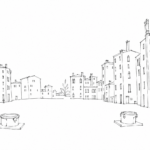 Campo del Ghetto Nuovo: very tall houses, wells and memory in a strangely wide spaceEditorial guide to Campo del Ghetto Nuovo: space, tall houses, wellheads and Jewish memory in Cannaregio.
 Barene and velme: the words of the lagoon that explain why Venice is not only stoneA lagoon vocabulary for reading Venice beyond calli and palaces: what barene and velme are, how they change with the tide and...
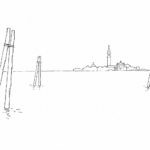 Briccole in the lagoon: the posts that guide boats and shape the Venetian landscapeWhat briccole are, how they guide boats and why they mark the landscape of the Venice lagoon.
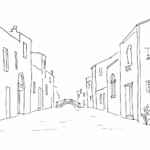 Rio terà: why some streets in Venice were canalsWhat rio terà means, why some rii were filled in, and how to recognize them while walking among calli, campi, and sestieri.