
Monday in Venice has a different pace. It is not just a matter of opening hours: some museums reduce their openings, certain churches change pace, admissions need to be checked more carefully. But precisely this slight discontinuity can become a better way to read the city. Less agenda, more attention to passages, campi, façades, water and stone routes that often remain in the background when rushing from one visit to another. Organizing a Venetian Monday means accepting some variation and turning it into a method: check, adapt, walk, observe.
Why Monday in Venice should be read carefully
In Venice, Monday is not simply an “empty” day: it is a day when the cultural calendar can change pace. Some museums, historic palaces or exhibition spaces traditionally adopt weekly breaks or reduced openings, while other places remain visitable, especially when they coincide with churches, urban routes, scuole grandi, foundations or private collections. For this reason, it is worth reading Monday as a selective map, not as a limit.
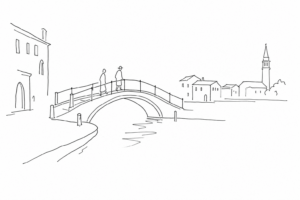
The city offers very concrete alternatives: observing Venetian Gothic architecture along the Grand Canal, entering less crowded campi, following the traces of the confraternities in the historic scuole, or focusing on sestieri such as Cannaregio, Dorsoduro or Castello, where the visit can become slower and more legible.
The practical rule is to avoid assumptions: opening hours, closures, restorations, holidays and special openings can vary. Before building the itinerary, always check the updated details on the official channels of the individual places.
If a museum does not fit: shift your gaze to the city
When an indoor visit does not fit into the Monday schedule, Venice offers solid alternatives because much of its history can be read in public space. There is no need to fill the gap with a fallback: the day can be transformed into an urban reading, following stones, façades, campi and rive.
- Rialto and San Polo: the bridge, the mercantile calli and the market area tell the story of the commercial city, founded on exchanges, warehouses, banks and water passages.
- Cannaregio: the Ghetto, established in the sixteenth century, preserves a particular building density, with tall houses and campi that help to understand the history of the Venetian Jewish communities.
- Castello and Arsenale: even from the outside, the walls and the monumental portal evoke the naval power of the Serenissima and the productive organization of the fleet.
- Dorsoduro and Zattere: the waterfront toward the Giudecca allows you to observe the relationship between water, fondamente, churches and the lagoon profile.
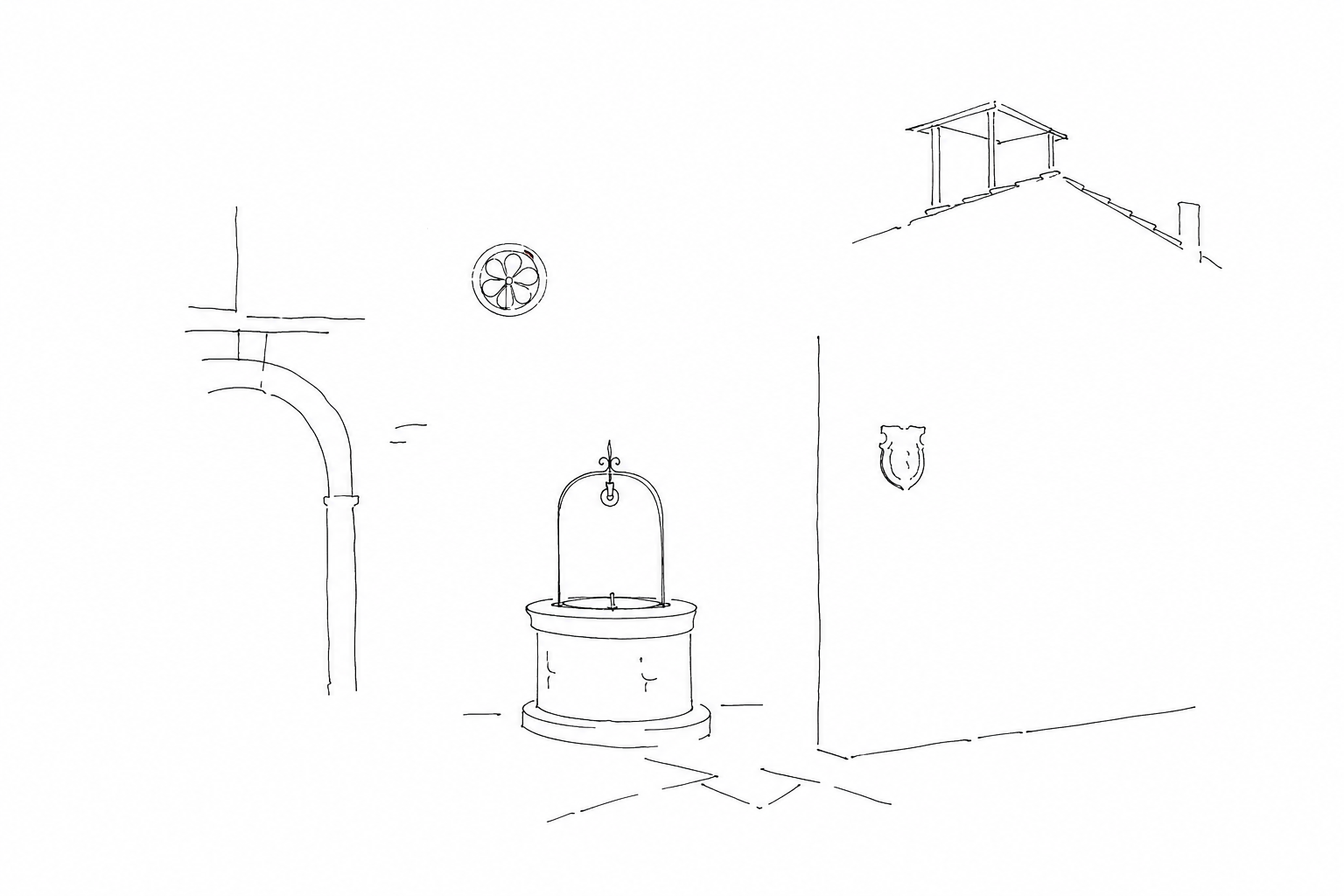
In these routes, details matter: wellheads, walled-in Byzantine paterae, altane, worn coats of arms, sotoporteghi and changes in paving. They are free and permanent clues, capable of keeping the itinerary alive even when some doors remain closed.
Sestieri for a slow walk at the start of the week
When rooms and collections require an extra check, it is worth choosing a sestiere that holds up even without scheduled admissions. Cannaregio works well for reading the inhabited city: from the Ghetto, established in 1516, to the fondamente toward the Misericordia, the route alternates wide calli, shops and views over the water that are less monumental but very eloquent.
- Dorsoduro: between Zattere, San Trovaso and the San Sebastiano area, the itinerary follows gondola boatyards, brick façades and open perspectives over the Giudecca Canal. It is suitable when you want to walk without depending on a single building.
- Castello: proceeding beyond San Zaccaria, the Arsenale tells of the maritime power of the Serenissima even from the outside; toward via Garibaldi the fabric becomes more everyday, with courtyards and rive useful for short breaks.
- Santa Croce: from the San Giacomo dall’Orio area to San Stae, you can observe palaces, narrow rii and less crowded passages, suited to a cautious rhythm.
For interiors, churches or cultural institutions along the route, it is always better to check the updated information; however, the meaning of the micro-itinerary remains valid even outdoors only.
How to compose the day without making it rigid
For a short stay, the best strategy is to separate the day into three levels: one “strong” visit to confirm, an outdoor route already valid on its own and a replaceable covered stop. This way, if a museum is not available or changes pace, you do not lose half the morning redesigning everything.
A practical method is to choose just one cultural anchor: for example a religious complex, a scuola grande, a civic collection or a foundation. Around that, build a short radius, readable on foot, with bridges, calli, Gothic and Renaissance façades, rive and historic shops. The urban part becomes content, not simple filler.
- First slot: admission checked in advance, without accumulating too many bookings.
- Central slot: walk among architecture, nearby sestieri and panoramic points.
- Last slot: quick alternative: church, bookshop, historic café or panoramic vaporetto, always checking the updated information.
In this way Monday in Venice remains organized but not fragile: especially useful for those who have only one or two days.
A Monday in Venice works when it is not treated as a “missing” day, but as a day to be composed with precision and freedom. If a museum does not fit, the city offers other thresholds: a less crowded sestiere, a silent fondamenta, an open church, an architectural detail seen without haste. The key is to build a flexible itinerary, with a few verified certainties and room for reasoned detours. Thus the change of pace does not impoverish the experience: it makes it more attentive, more urban, closer to the real Venice.