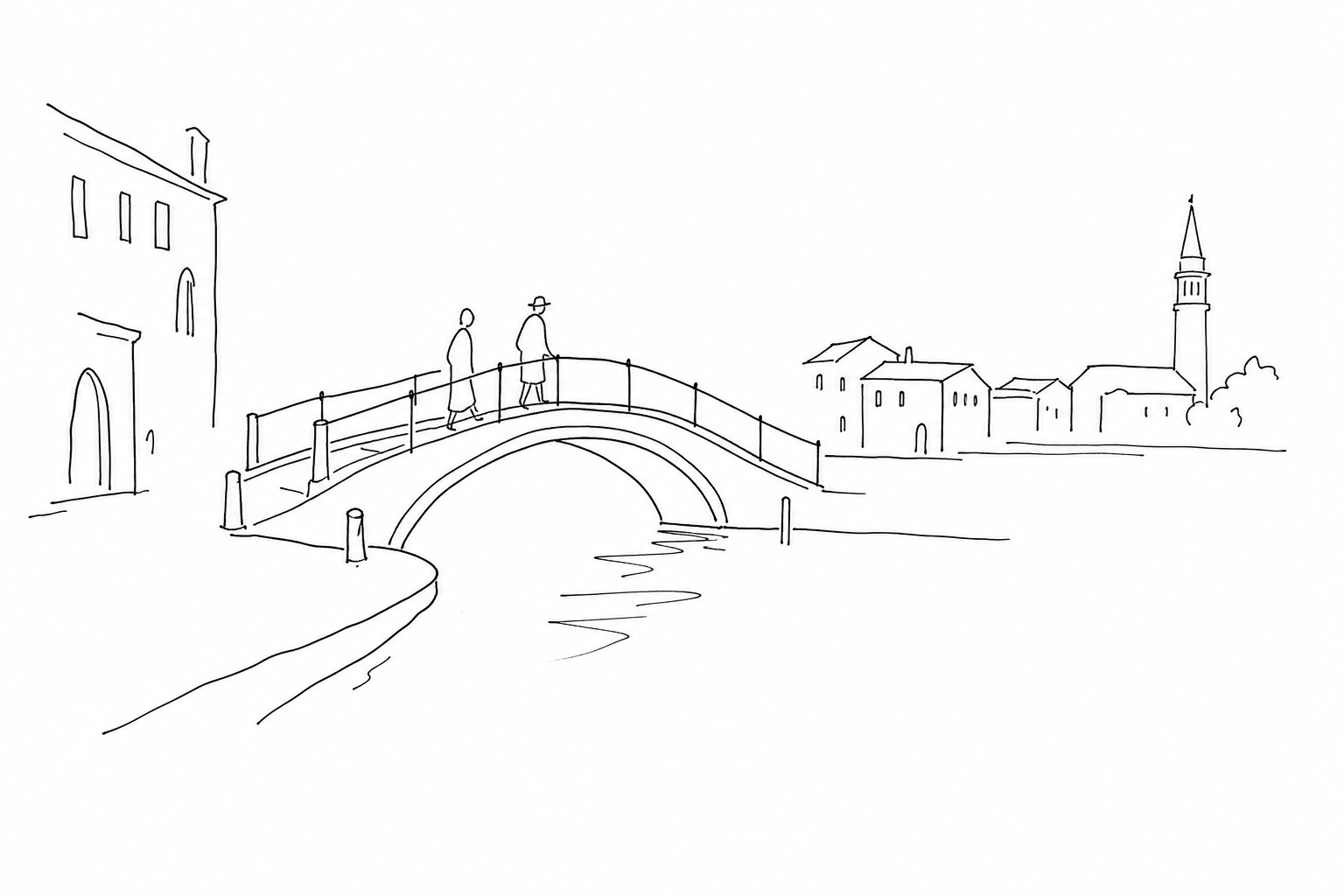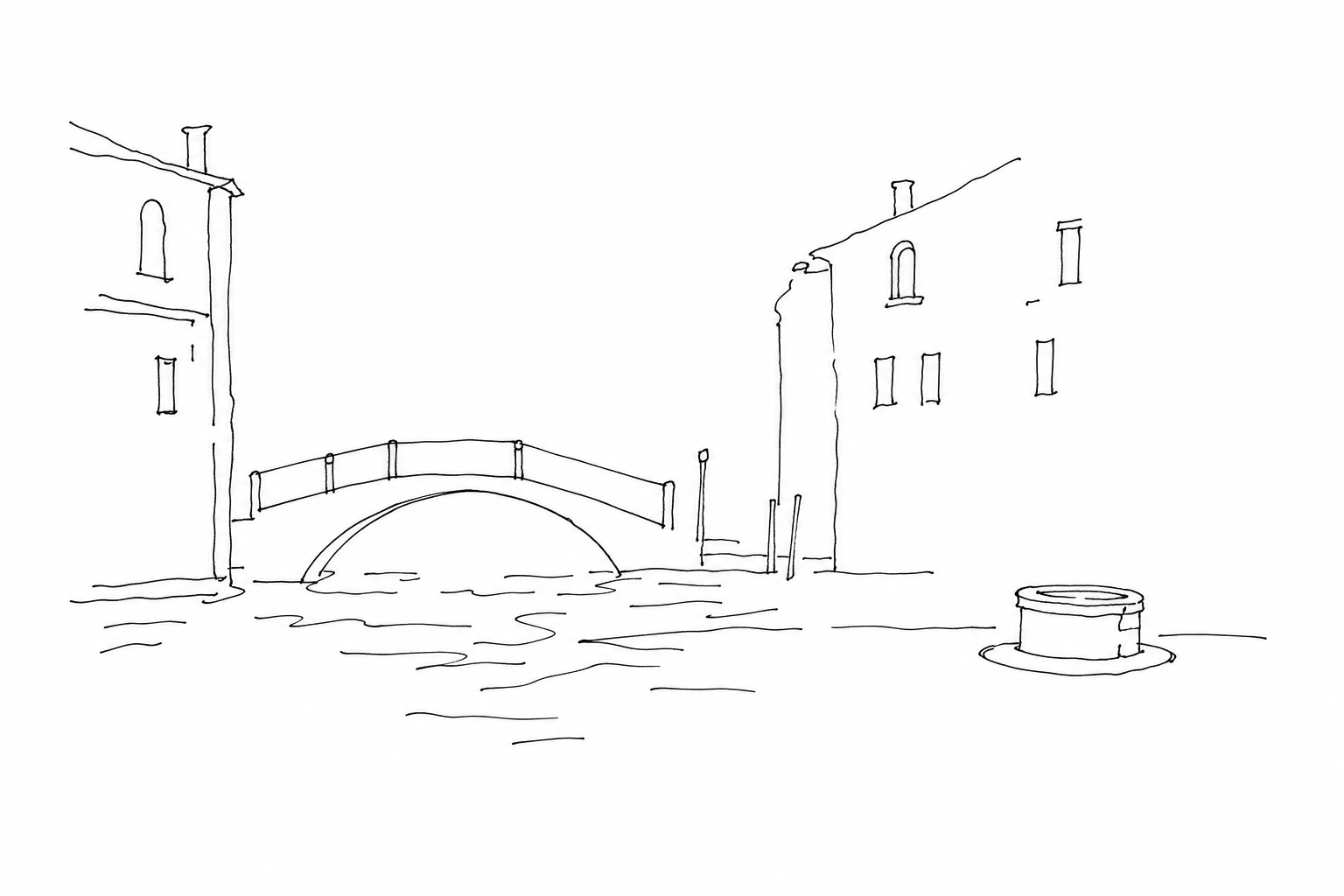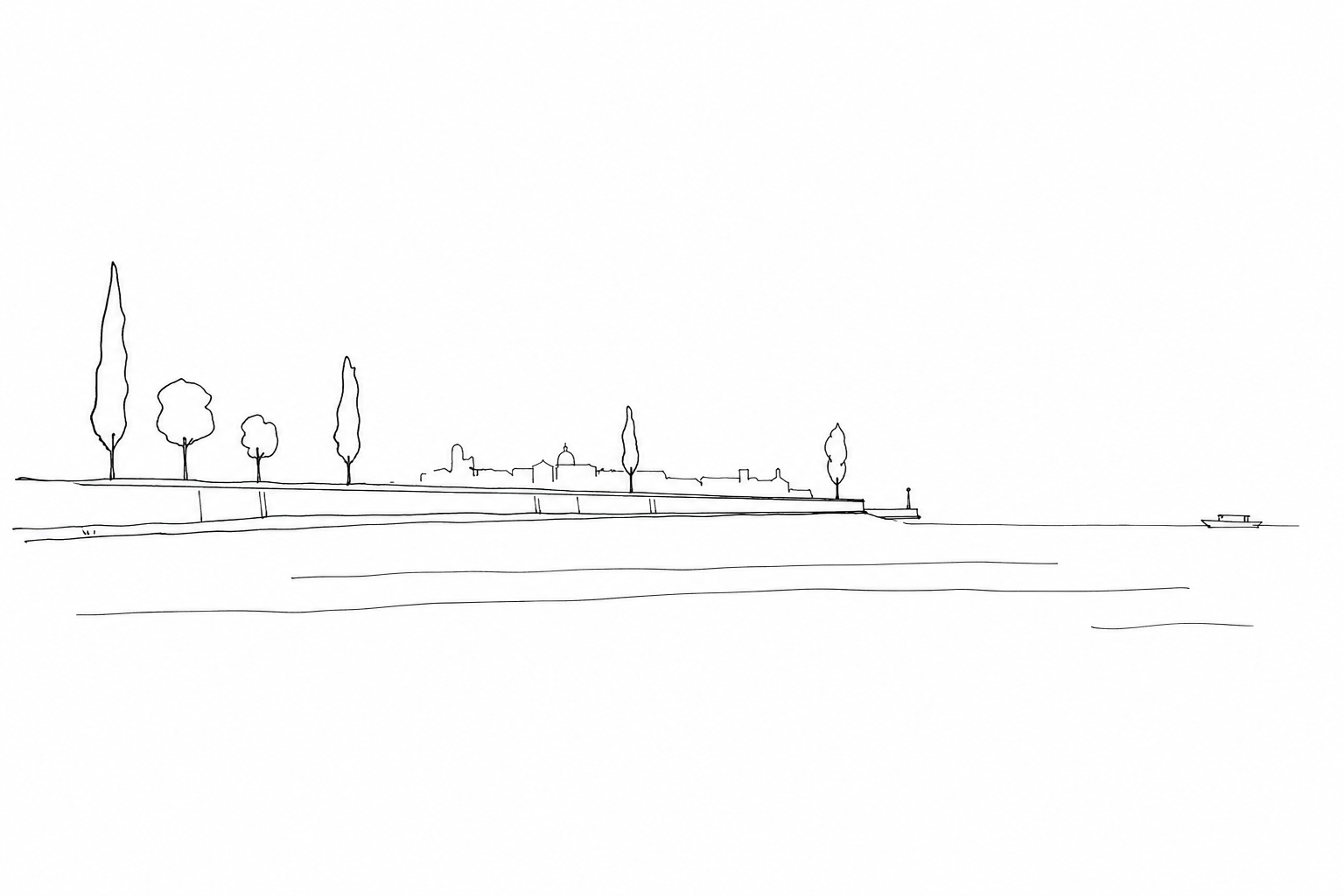
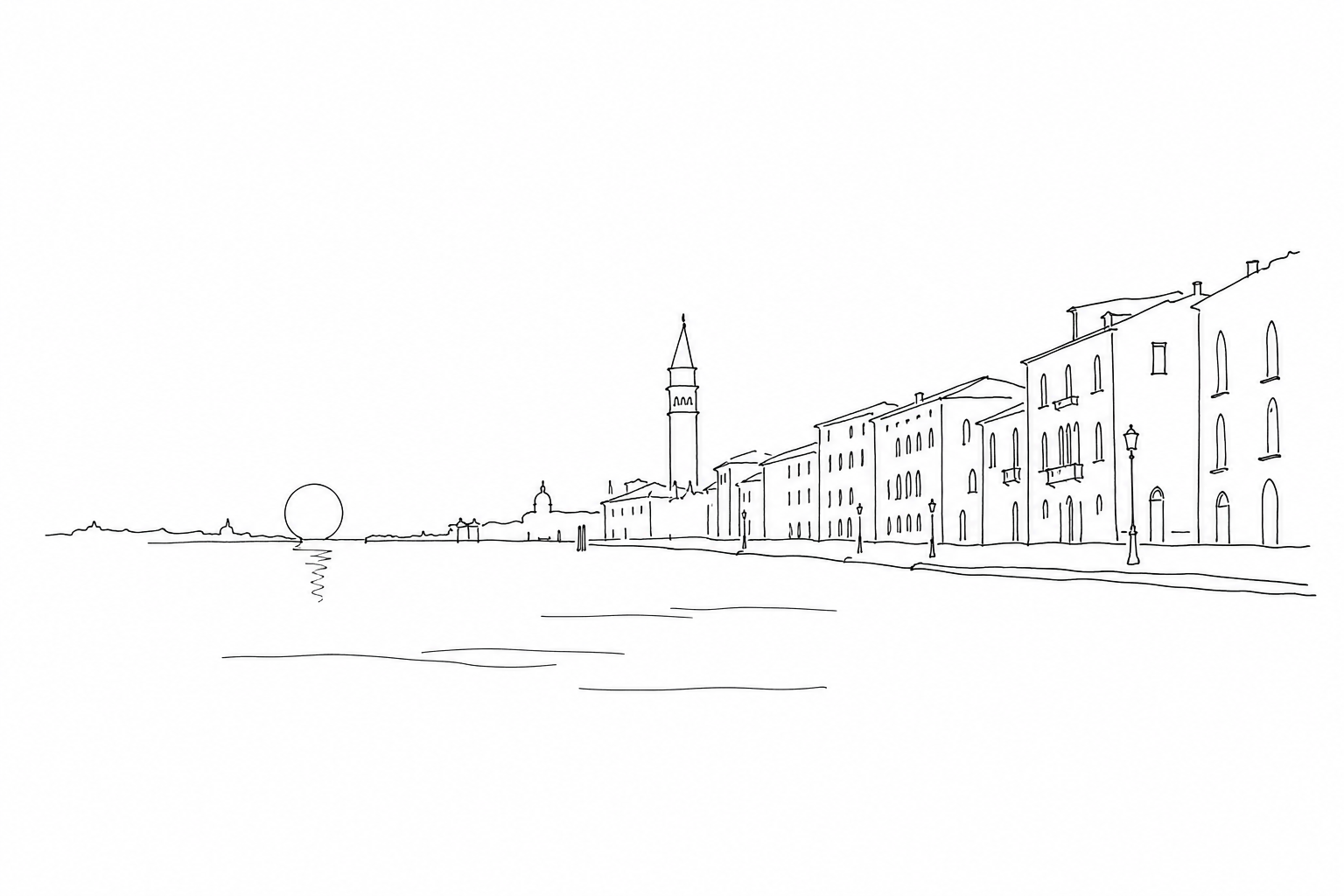

At Le Zattere, Venice changes rhythm. Not because there is any lack of churches, palaces or memories of water, but because here the city seems to explain itself through light: the sun on the Giudecca Canal, the façades that light up in the afternoon, the broad pace of a fondamenta born for practical functions and now one of the city’s most legible edges. Walking here means observing Venice without chasing only monuments, instead following an urban line where the history of work, religious architecture, everyday life and the lagoon horizon remain surprisingly close.
Why at Le Zattere the sun is worth more than the monuments
At Le Zattere, Venice changes scale: it does not ask you to keep raising your gaze toward famous façades, but to follow the light flowing over the Giudecca Canal. The walk, facing south along the edge of Dorsoduro, takes its name from the timber rafts that arrived here and were unloaded, when this stretch was also a place of work, not only of contemplation.
The title comes from this identity: at Le Zattere the monuments are there, but they remain almost in the background. The church of the Gesuati, the former Incurabili complex, the landing places and the fondamenta tell a concrete story; however, it is the sun, especially when it crosses the wide water of the canal, that gives meaning to the place. The surfaces become mobile, the shadows lengthen without hurry, the island of Giudecca appears both close and unreachable.
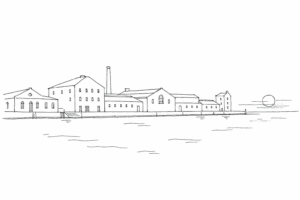
Here beauty is not concentrated in an isolated masterpiece: it is an everyday measure, made of space, wind, Istrian stone and reflections.
The name does not come from a poetic image, but from very concrete work. On this edge of Dorsoduro, timber rafts arrived and stopped, brought toward Venice by the rivers of the mainland. Logs from the Alpine and pre-Alpine areas were tied into large floating platforms, then dismantled, sold and distributed where the city needed them.
That wood was not a detail: it served building sites, boats, scaffolding, houses and, more deeply, the very logic of Venice. A city built on water depended on materials that came from far away, transformed into piles, beams, jetties, shelters. The walk therefore preserves in its name a memory of toil, trade and everyday engineering.
Seeing it this way also changes the way one reads the sun on the canal. The light does not illuminate only an elegant scene: it flows over an ancient urban infrastructure, where Venetian beauty first passed through the hands of those who unloaded, measured and arranged the timber.
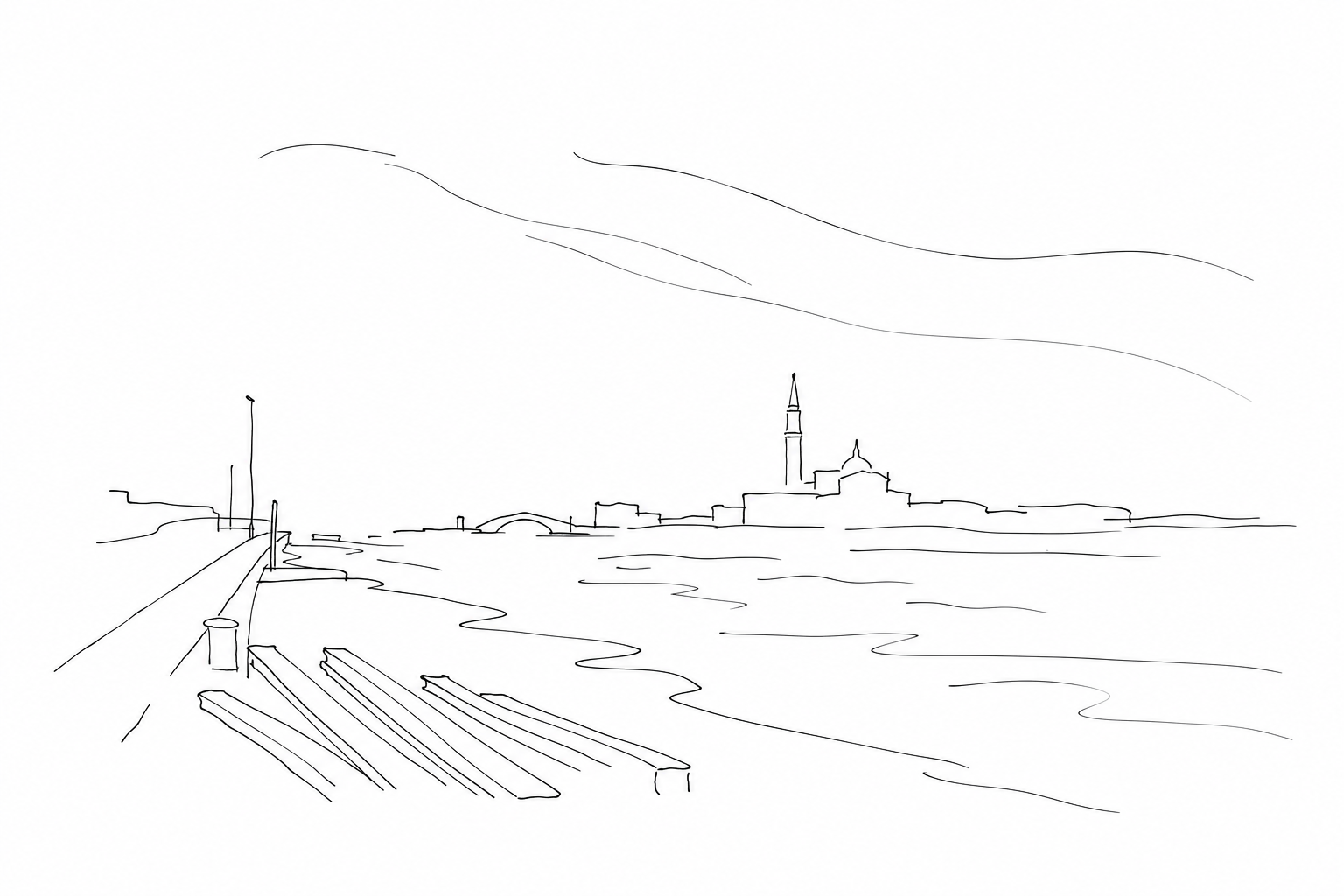
What to look at while walking: churches, quays and profiles
Here the gaze should be kept low and high at the same time. On the inner side, the façades are not a uniform backdrop: sober portals appear, convent walls, small calli that cut toward Dorsoduro. The church of the Gesuati, Santa Maria del Rosario, brings Giorgio Massari’s eighteenth-century measure to the waterfront; inside it preserves frescoes by Giambattista Tiepolo, but even from the outside one can read the Venetian taste for light surfaces, columns and theatrical rhythm.
A little farther on, near the Rio di San Trovaso, the squero shows another grammar: sloping roofs, wood, almost Alpine forms, the memory of craftsmen who came from mountain territories. It is one of the points where the walk stops being only a panorama and becomes visible craft.
Toward the water, however, the profile changes continuously. The Giudecca Canal opens up space and wind; opposite, one recognizes Palladio’s Redentore, the Zitelle, the transformed industrial volumes of the Molino Stucky. Walking here means comparing stone, water and distance: not an open-air museum, but a waterfront that teaches how to read Venice by its edges.
On a stay of only a few hours, this waterfront works best if it is not used as a simple shortcut between the Accademia and San Basilio. It is better to choose it as a central pause: arrive from inner Dorsoduro, let the narrow calli open onto the Giudecca Canal and proceed in one direction only, without the obligation to go back.
A practical way is to divide it into three short stops. The first serves to understand the space: the wide water, the service boats, Giudecca opposite. The second can fall by the Gesuati, where the façade orders the waterfront and recalls the conventual and devotional Venice of the eighteenth century. The third should be left to sunset or raking light, when the profiles toward the Salute and the Dogana become more legible than the individual monuments.
Bring little program with you: here the value is not “seeing everything,” but measuring the rhythm. If you need to use public connections or visit nearby interiors, always check updated details before organizing the route.
Le Zattere do not ask for a hurried visit or a list of stops to tick off. They work best as a walk to be crossed with attention: the name that recalls timber, the churches overlooking the water, the broad quays, Giudecca opposite, the shadows changing on the stones. On a short stay they can become an intelligent pause from the more crowded routes, but also a way to understand Venice from its southern edge, where beauty lies not only in what one looks at, but in the time one allows oneself to look at it.
Related Posts
Venice at sunset: where to go when the light makes the city slower
A slow itinerary among fondamente, campi and rii to see Venice at sunset without haste.Giudecca before sunset: wide waterfronts, transformed factories and a more horizontal Venice
A slow route on Giudecca, among broad fondamenta, industrial archaeology and low light on the canal.
Visiting Venice without entering any museum: a day made of details, campi and water
A slow itinerary in Venice without museums, among calli, campi, bridges, rii, fondamenta and stops to read the inhabited city.Questions Answered
Why is the sun considered more important than monuments at Le Zattere?
Because sunlight gives new meaning to the space beyond the visible landmarks.What is the origin of the name 'Le Zattere'?
It comes from timber rafts that were unloaded here for the city’s building needs.What notable architectural features can be observed during the walk?
Churches like Gesuati, traditional squero, and diverse waterfront profiles.How should visitors best experience Le Zattere?
By walking slowly and appreciating the rhythm, rather than rushing through.
Keep moving through Dorsoduro
Want to stay among churches, campi and waterfronts where art and everyday life meet quietly?
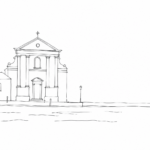 The Gesuati at the Zattere: Tiepolo, light and white façades in front of the Giudecca CanalA brief guide to the Gesuati at the Zattere: history, façade, light of the Giudecca Canal and Tiepolo’s ceilings.
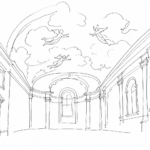 The Scuola Grande dei Carmini: clouds, angels and Venetian painting above a hidden hallA brief guide to the upper hall of the Carmini, among Tiepolo, Carmelite devotion and Dorsoduro.
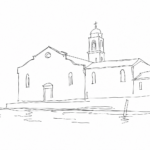 San Nicolò dei Mendicoli: one of the oldest churches where Venice still seems like an outskirtsHistory, urban space and details of San Nicolò dei Mendicoli, an ancient church on the inhabited edge of Dorsoduro.
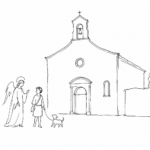 Angelo Raffaele: Tobias, the dog and a Dorsoduro church with an almost narrative toneA reading of the church of Angelo Raffaele in Dorsoduro, between Tobias, the dog, Guardi and the sacred story in Venetian space.