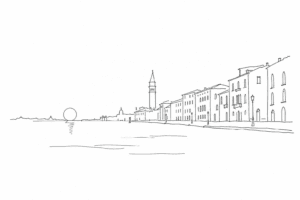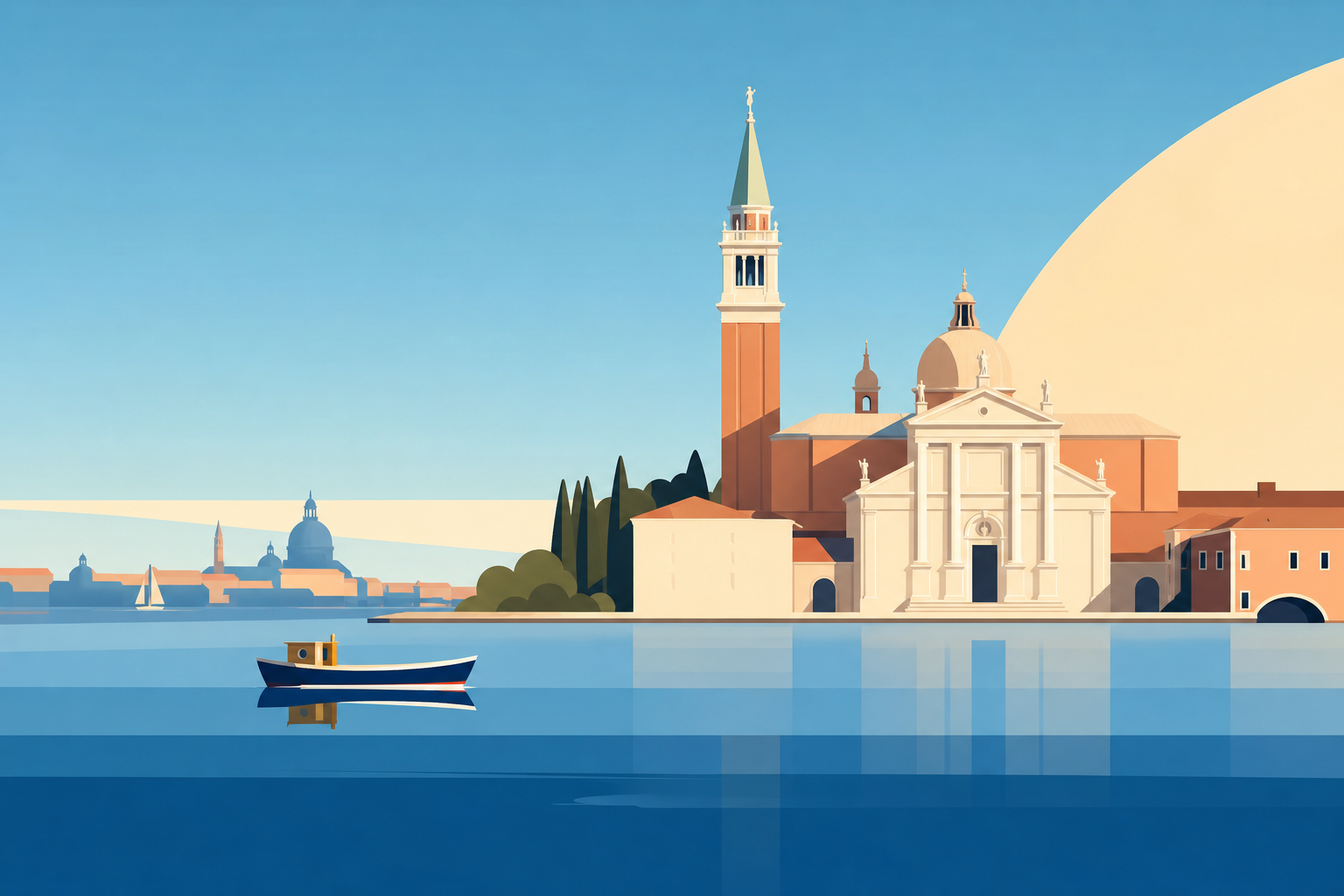
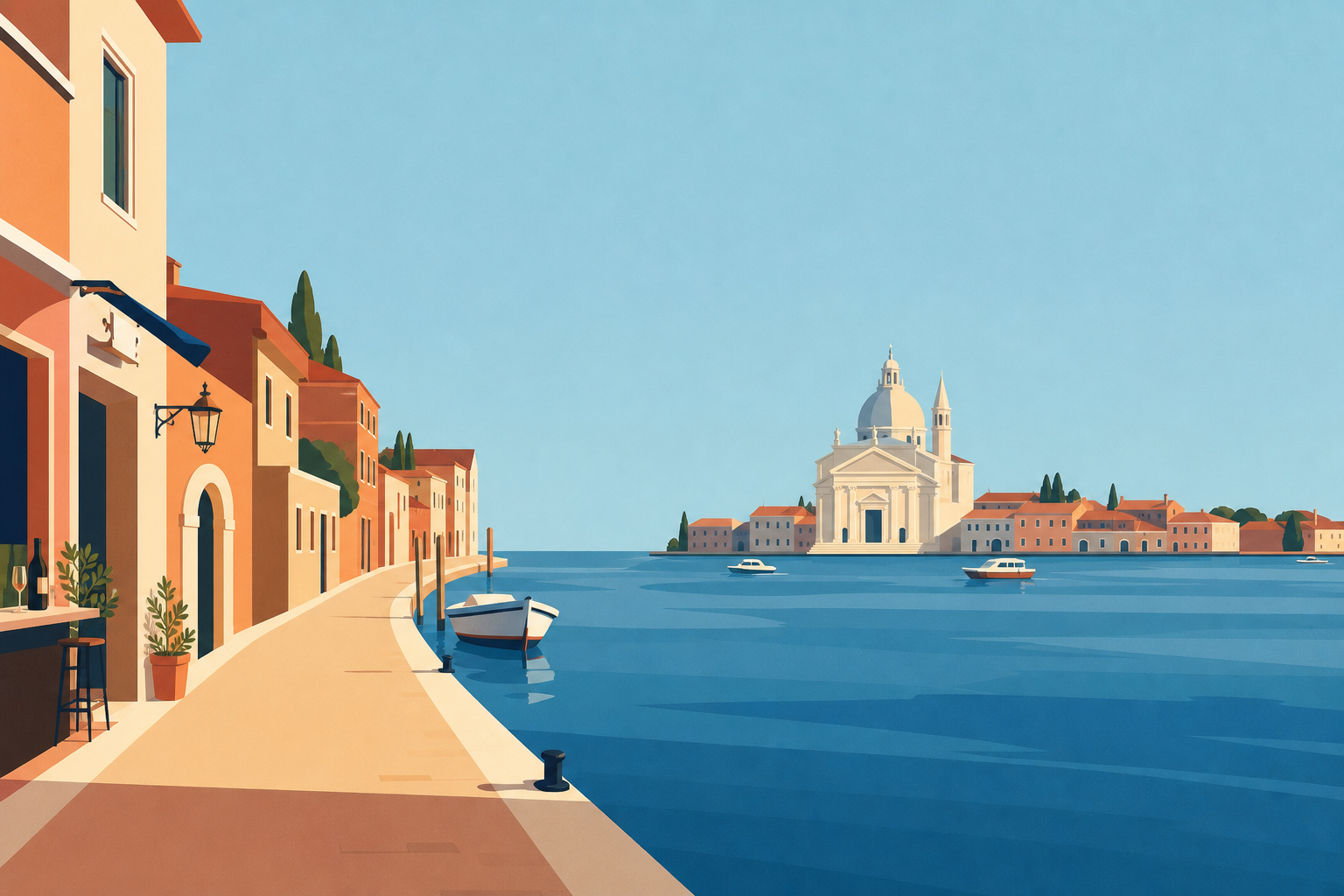

Giudecca is better understood by arriving without haste, perhaps from a vaporetto stop when the basin opens up and Venice remains opposite, close but already different. Here the water is broader, the fondamenta breathe, the calli soon come to an end and everyday life has a less theatrical pace. It is not a “secret” island, nor simply a panoramic viewpoint: it is an inhabited piece of the city, with important churches, industrial traces, courtyards, neighborhood bars and sudden silences. Looking at it up close means changing pace and accepting a more horizontal, concrete Venice, made of short crossings and slow observations.
Arriving at Giudecca by changing pace
Giudecca can already be understood from the vaporetto. It is not a sestiere of Venice, even though it is in constant dialogue with Dorsoduro, which lies opposite it beyond the broad canal. It is enough to leave behind the narrowest calli, the bridges, the rii and the campielli of the historic center to feel that the pace changes: the water opens up, the outline of San Marco remains in view, but farther away, like a silent reference point.
Here the vaporetto is not only a practical means of transport. It is a threshold. In a few minutes you cross a stretch of urban lagoon and arrive on an inhabited island, made of long fondamenta, doorways, neighborhood bars, children leaving school, people with their shopping. The everyday rhythm takes the place of the rush between Rialto, San Polo and Castello.
For a short stay, even with a base in central Mestre to visit Venice, Giudecca is a smart detour: it does not complicate the itinerary, it slows it down. Ideal for a couple or a small group looking for a slow walk, a stop by the water and a few less obvious details of the inhabited city.
Fondamenta, short calli and a city that works
On Giudecca it is best to walk with a low pace, without immediately looking for San Marco or Rialto with your eyes. Here Venice changes rhythm: the fondamenta are long and open onto the lagoon, but as soon as you enter a short calle, quiet campielli, inner rii, laundry hanging out, a carefully tied boat, and the sound of a working construction site appear.
It is an inhabited city, not a stage set. There are neighborhood shops, bacari where you can stop for an ombra and a few cicchetti, doorways marked by salt, low bridges to cross slowly. The nizioleti, the black writing on white walls indicating calli, campi and fondamenta, help you read the neighborhood like an everyday map. Every detail tells of a use: a wellhead in a campo, the altane above the rooftops, the work boats along the canals.
For those arriving from Cannaregio, Dorsoduro, San Polo, Castello or Santa Croce, Giudecca offers a slow walk different from the more beaten routes. Even choosing a base in Mestre to visit Venice, perhaps as a couple or in a small group for a short stay, it is worth dedicating an unhurried stop here.
Churches, industrial memory and views of the lagoon
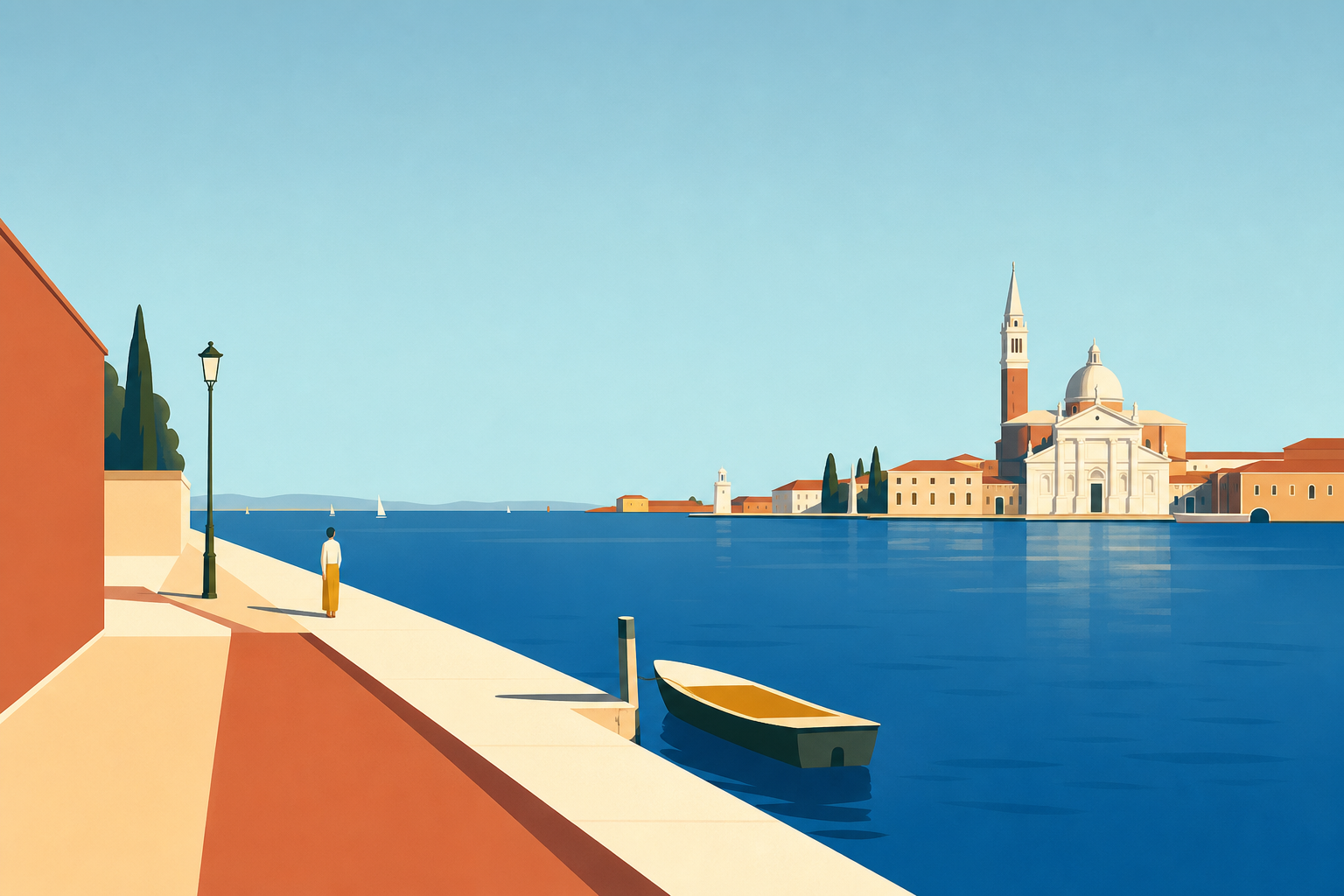
On Giudecca, points of reference come first from the spaces rather than from the monuments. Walking along the fondamenta, with the open lagoon ahead, the Redentore enters the everyday pace: it is not only a Palladian church, but a point that orients the gaze, especially when the canal widens and San Marco remains opposite, close and yet separated by the water.
A little farther on, the Zitelle tell of another Venice, made of institutions, work, care and silences. Here the calli are few, the campielli appear without haste, and the rhythm is different from Rialto, Cannaregio or San Polo. It is a part of the inhabited city where a stop on a low wall is worth as much as a visit: you observe service boats, students, elderly people with their shopping, small gestures that explain the island better than many guides.
Industrial memory surfaces in the former warehouses, in the transformed construction sites, in the repurposed architectures that today house studios, cultural spaces and residences. They do not need to be “discovered”: it is enough to look at their proportions, the bricks, the openings toward the canals.
The advice is simple: proceed with a slow walk, without chasing too many stops. From here Dorsoduro seems within reach, San Marco changes its profile with every light, and Venice is read through distances, missing bridges and broad water.
How to include it in a short stay
Giudecca works well when a trip to Venice needs to slow down. On a short stay I would devote half a day to it, or a slow evening walk: vaporetto, fondamenta along the canal, a few details on the doors, the nizioleti, the altane, the everyday rhythm of an inhabited city.
For a couple, the simplest idea is to connect it with Dorsoduro: you walk among Zattere, calli, campielli and bridges, then cross the water and look at San Marco from a quieter distance. A small group can add a stop in a bacaro, with cicchetti and an ombra, before returning toward San Polo, Santa Croce or Rialto.
If you have a base in Mestre to visit Venice, start from central Mestre: Piazza Ferretto, the Torre Civica and M9 are convenient before or after the day. Reach Venice by train or bus, then take the vaporetto. This way Giudecca fits easily into Venice in two days itineraries, together with Cannaregio, Castello or the islands of Murano, Burano and Torcello.
Including Giudecca in a short stay does not mean adding one more stop, but allowing yourself a smart pause within Venice. Half a day is enough, even less, to walk along the fondamenta, enter a church, stop to look at the city from the other side of the water and understand how much the panorama changes when you move just a few stops. It is an island to be explored with attention, without looking for special effects: its value lies in the details, in the work that continues, in the broad views and in that minimal distance that helps you read Venice with clearer eyes.