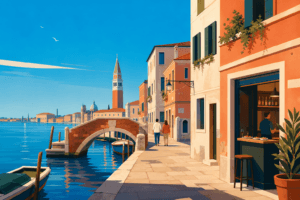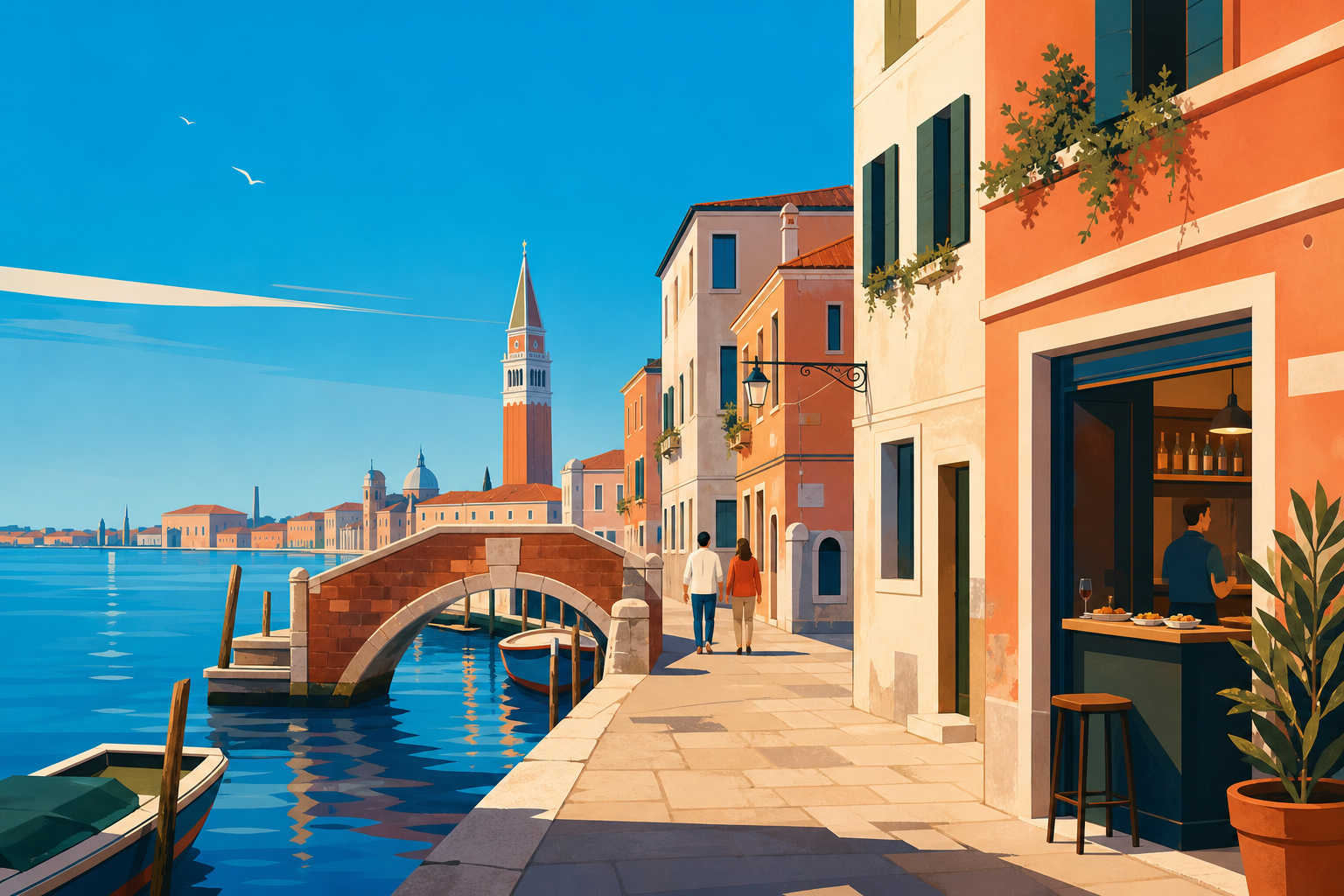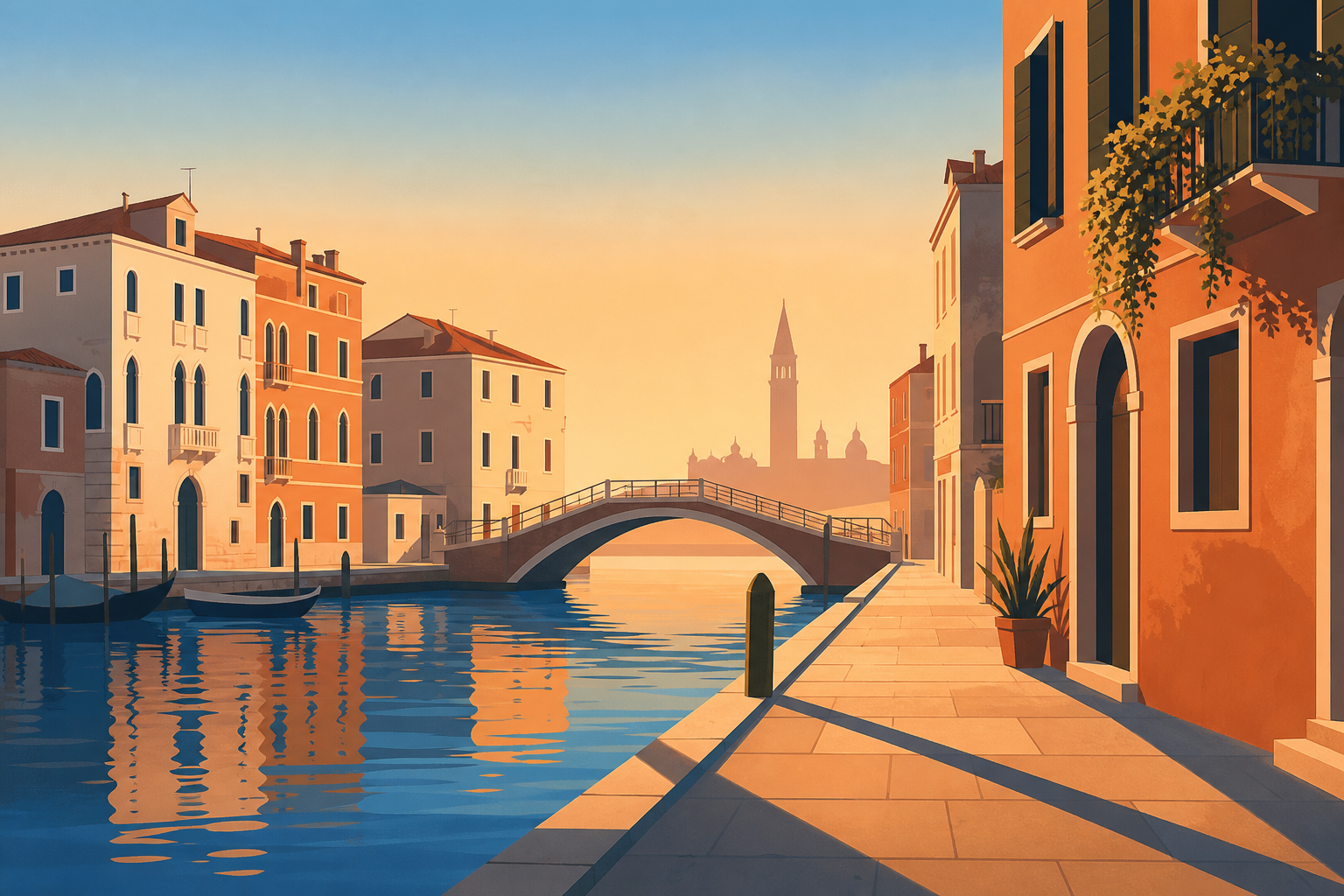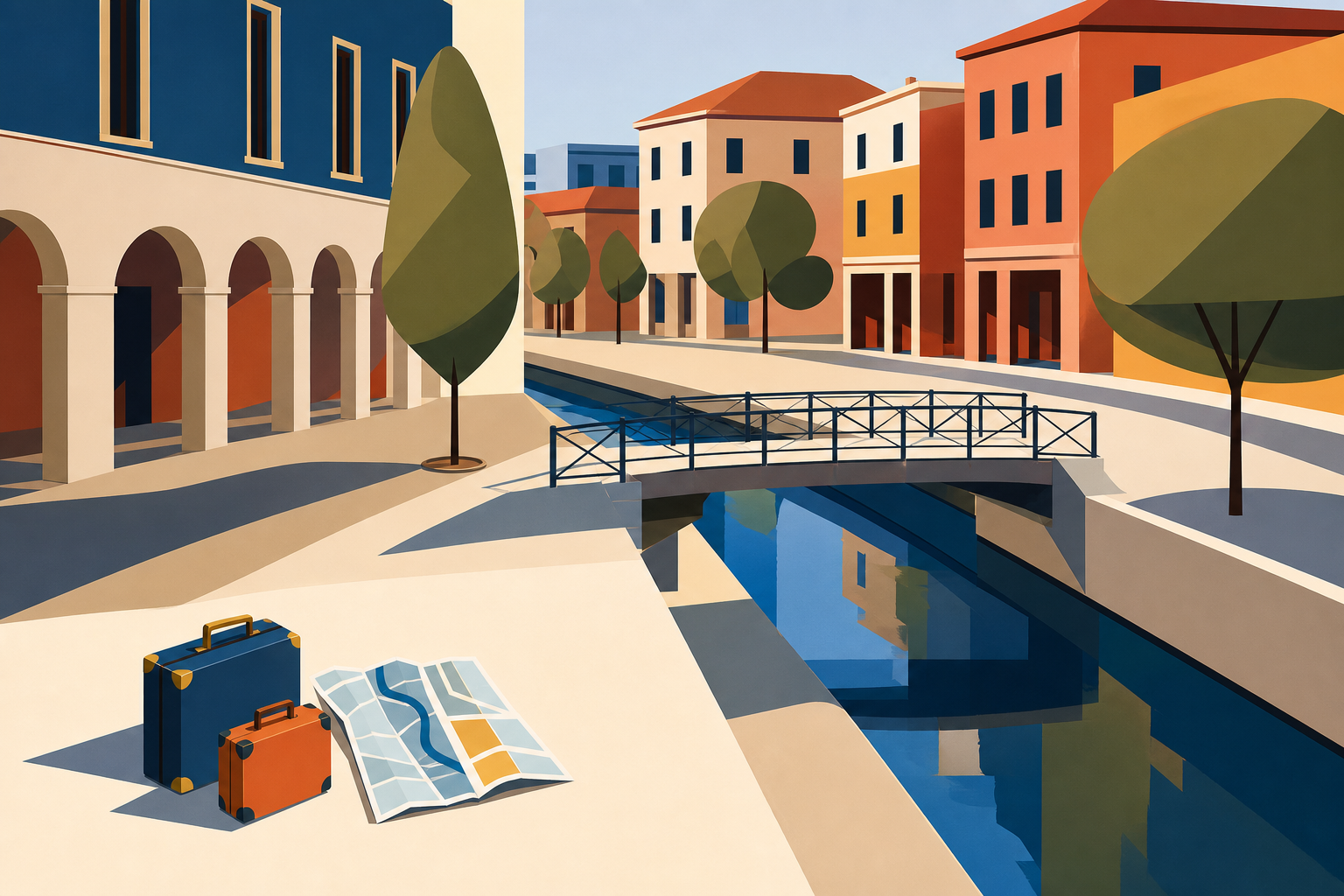
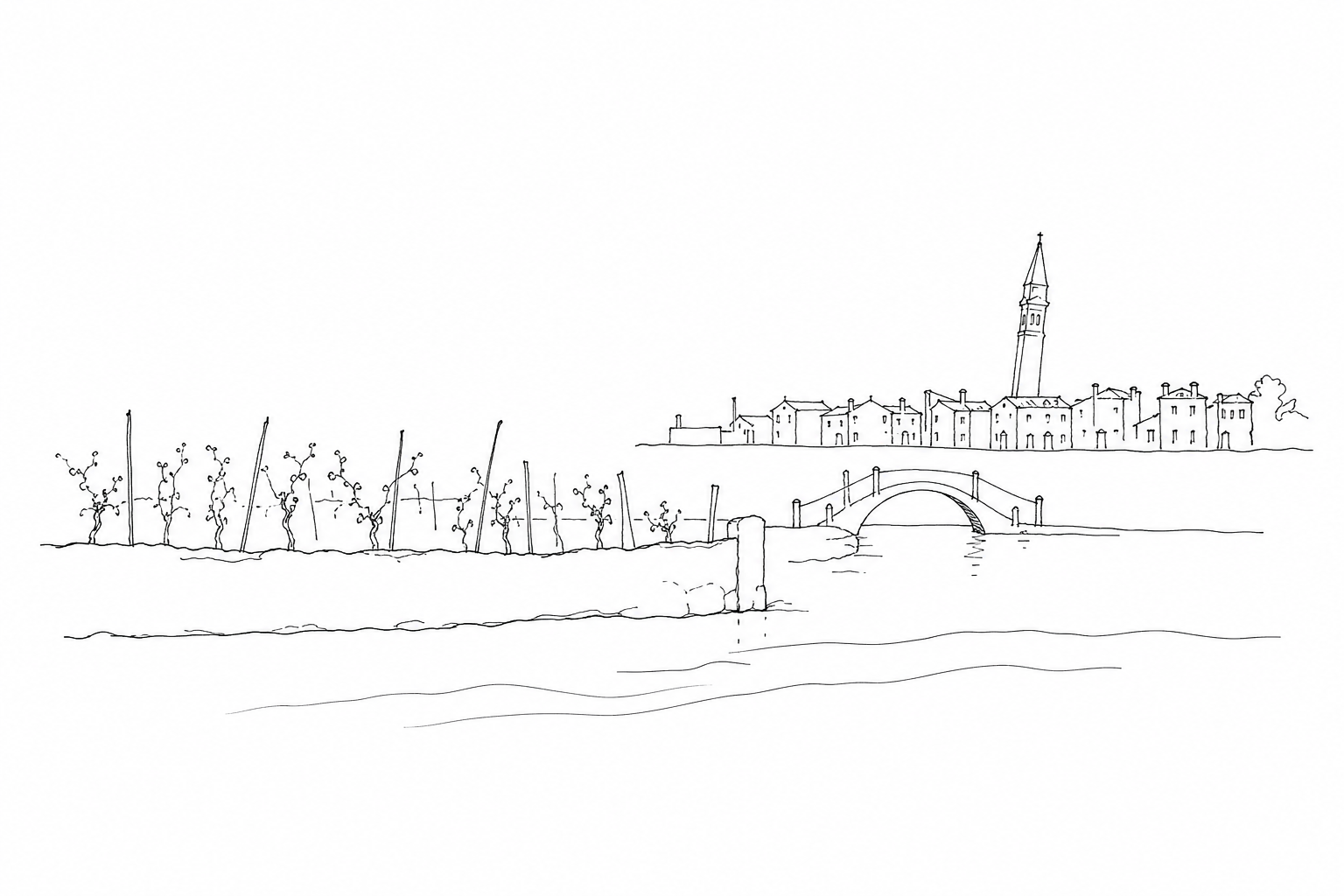

Venice puts the way we travel to the test. If you arrive with a list that is too long, you risk crossing it without really seeing it: one bridge after another, one photo after another, always with the feeling of being late. But the city is at its best when you give it time: a silent fondamenta in Cannaregio, a coffee drunk standing up, the light changing on a side canal. Visiting Venice without rushing does not mean giving up the best-known places, but learning to fit them into lighter, more human and breathable days.
Start from the rhythm, not from the list
The best way to visit Venice without rushing is to decide on the pace first, then the stops. On a short stay, especially as a couple or in a small group, it makes more sense to choose an area and inhabit it for a few hours: San Marco with its side detours, Rialto and its rii, or a sestiere such as Cannaregio, Dorsoduro, San Polo, Castello or Santa Croce.
Venice is not understood only by looking at the map. It is understood by stopping on a fondamenta, reading the nizioleti at the corners of the calli, noticing a vera da pozzo in a campo, a boat unloading crates, an open window beneath an altana. Leaving room means entering a campiello without knowing what will come next, crossing bridges without photographing them all, allowing yourself a stop in a bacaro for cicchetti and an ombra.
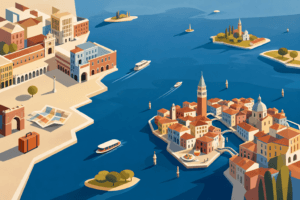
Even when choosing a base in Mestre to visit Venice, perhaps in Mestre city center near Piazza Ferretto, Torre Civica and M9, it is worth thinking of the day as a slow walk: fewer checklists, more the everyday rhythm of an inhabited city.
Build light days between sestieri and stops
To visit Venice without turning a short stay into a race, it is worth thinking of the day as a slow walk, not as a sequence of checkmarks. If you start from a base in Mestre to visit Venice, perhaps from Mestre city center near Piazza Ferretto, the Torre Civica or M9, enter the lagoon early: the first hours are the most suitable for Rialto and San Marco, when calli and bridges still have an everyday rhythm and the nizioleti, the white signs with the street names, can be read without haste.
After the morning in the most sought-after places, lighten the program. Instead of adding Murano, Burano and Torcello on the same day, choose a sestiere and stay within it. Cannaregio works well for walking along the fondamente, looking at the side rii and stopping in a bacaro for cicchetti and an ombra, the small glass of Venetian wine. Dorsoduro invites more open-air stops among campi, campielli and canals; Castello, beyond the most beaten routes, shows a more inhabited Venice, made of laundry hanging out, altane, vere da pozzo and slow steps.
A realistic itinerary for a couple or a small group brings together two or three strong points and many pauses. San Polo and Santa Croce also deserve this rhythm: crossing them without a rigid objective helps you notice the detail, and often it is there that Venice stops seeming like a checklist.
Look at the details that slow your pace
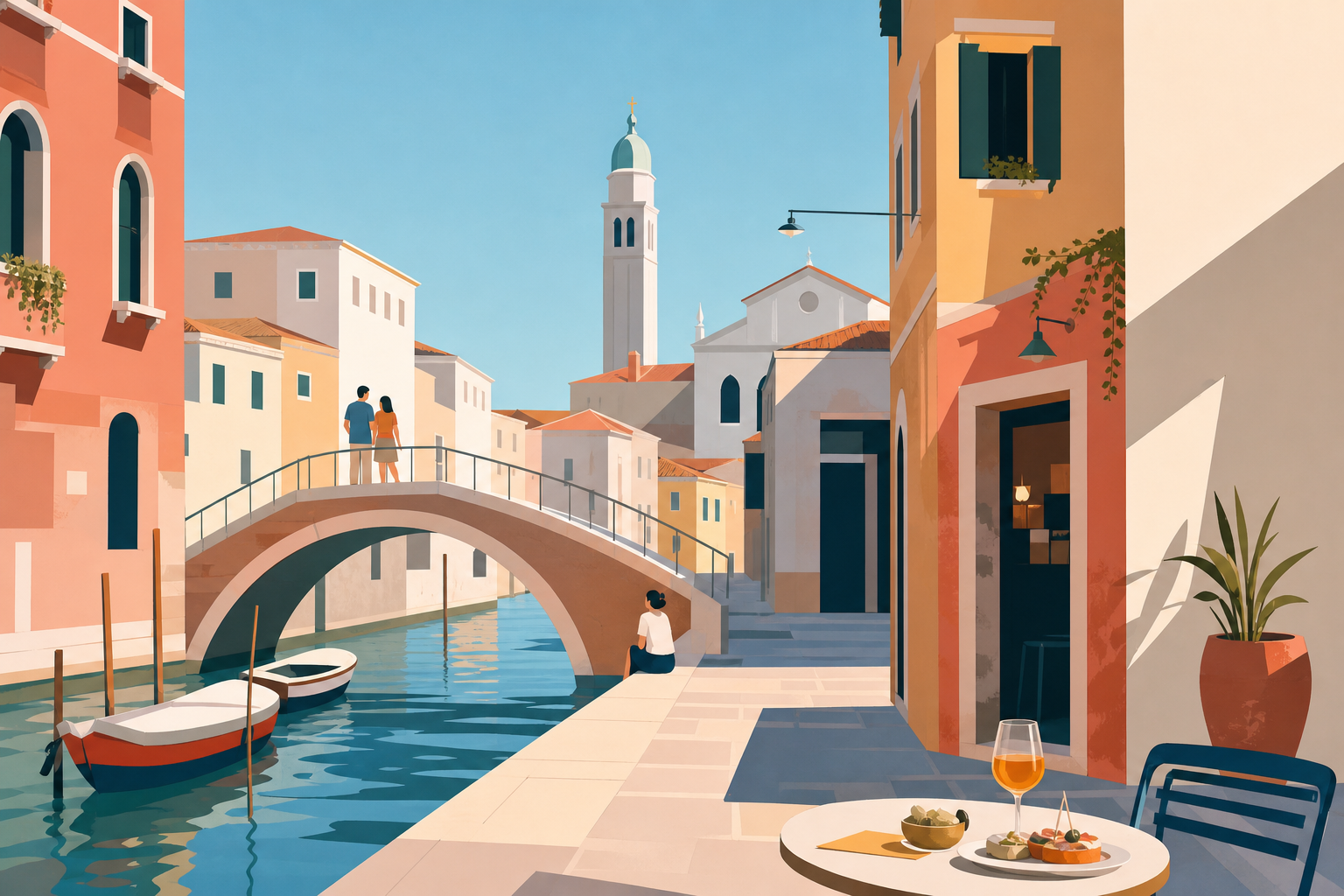
In Venice the rhythm changes when you stop looking only for the next bridge. In the calli between Rialto and San Polo, try reading the nizioleti, the street names painted on the walls: they often tell of trades, families, ancient everyday uses. In a campo or in a campiello, stop in front of the vere da pozzo, the parapets of the old public wells: they are concrete signs of an inhabited city, not simple ornaments.
Also lift your gaze. Above the houses appear the altane, wooden terraces where laundry is hung or air is taken. Then lower it toward the side rii, quieter than the main canals: a work boat, a water door, a cat on a fondamenta say much more than a race toward San Marco.
If the right time comes, enter one of the bacari without turning ombra and cicchetti into a staged tour. One stop is enough. From Rialto, detour toward Campo San Polo, then on to Santa Croce or Dorsoduro: few bridges, slow pace, attention to detail.
Sleeping in Mestre and visiting Venice with more breathing room
Choosing Mestre city center as a base in Mestre to visit Venice does not mean staying outside the journey: it means giving it a different rhythm. In the morning you reach the lagoon without loading the day with expectations, then enter the calli with more attention, passing bridges, rii and fondamente without turning Rialto, San Marco, Cannaregio or Dorsoduro into a sequence of checkmarks.
For a couple, a small group or a short stay, sleeping in Mestre to visit Venice helps separate the moments: on one side the sestieri, the campi and campielli, the bacari where you can stop for cicchetti and an ombra; on the other an inhabited, more everyday city, where you can return calmly.
A stop before or after the lagoon
Before the vaporetto toward Murano, Burano and Torcello, or on the way back from San Polo, Castello and Santa Croce, Mestre offers a concrete slow walk: Piazza Ferretto, the Torre Civica, M9. They are useful places for putting together again the details seen in Venice: nizioleti, altane, vere da pozzo, canals. This too is logistics, but lived well.
Taking Venice home does not mean having checked everything off, but clearly remembering certain moments: the slower pace in an empty calle, a stop in the shade, the sound of water against the banks, a vaporetto taken without anxiety. Choosing fewer stops, alternating different sestieri, stopping when needed and perhaps sleeping in Mestre to have more room can truly change the journey. Venice does not ask to be conquered in a hurry: it asks for attention. And often, when you stop chasing it, it finally begins to show itself.