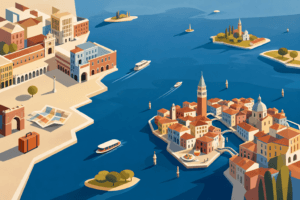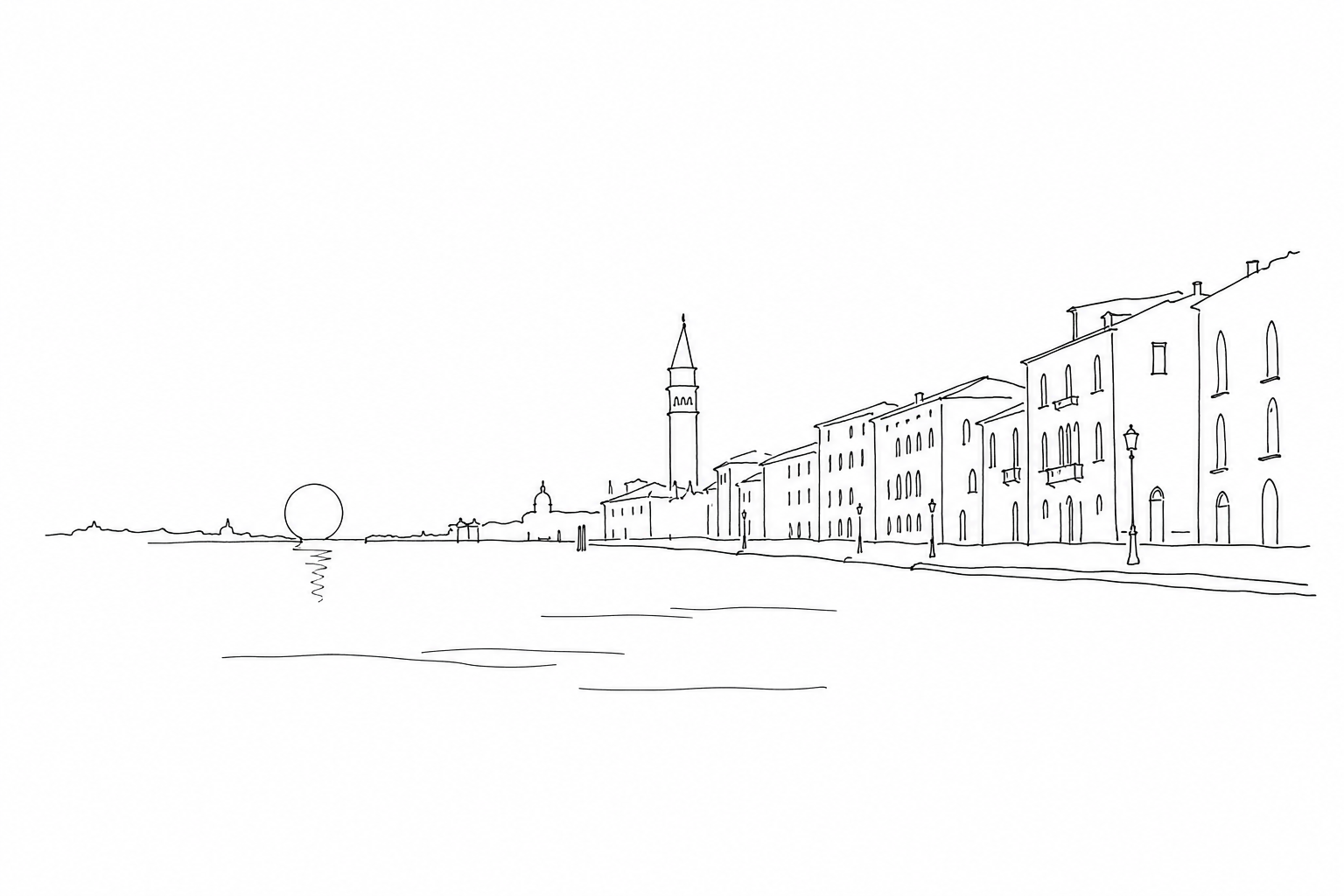
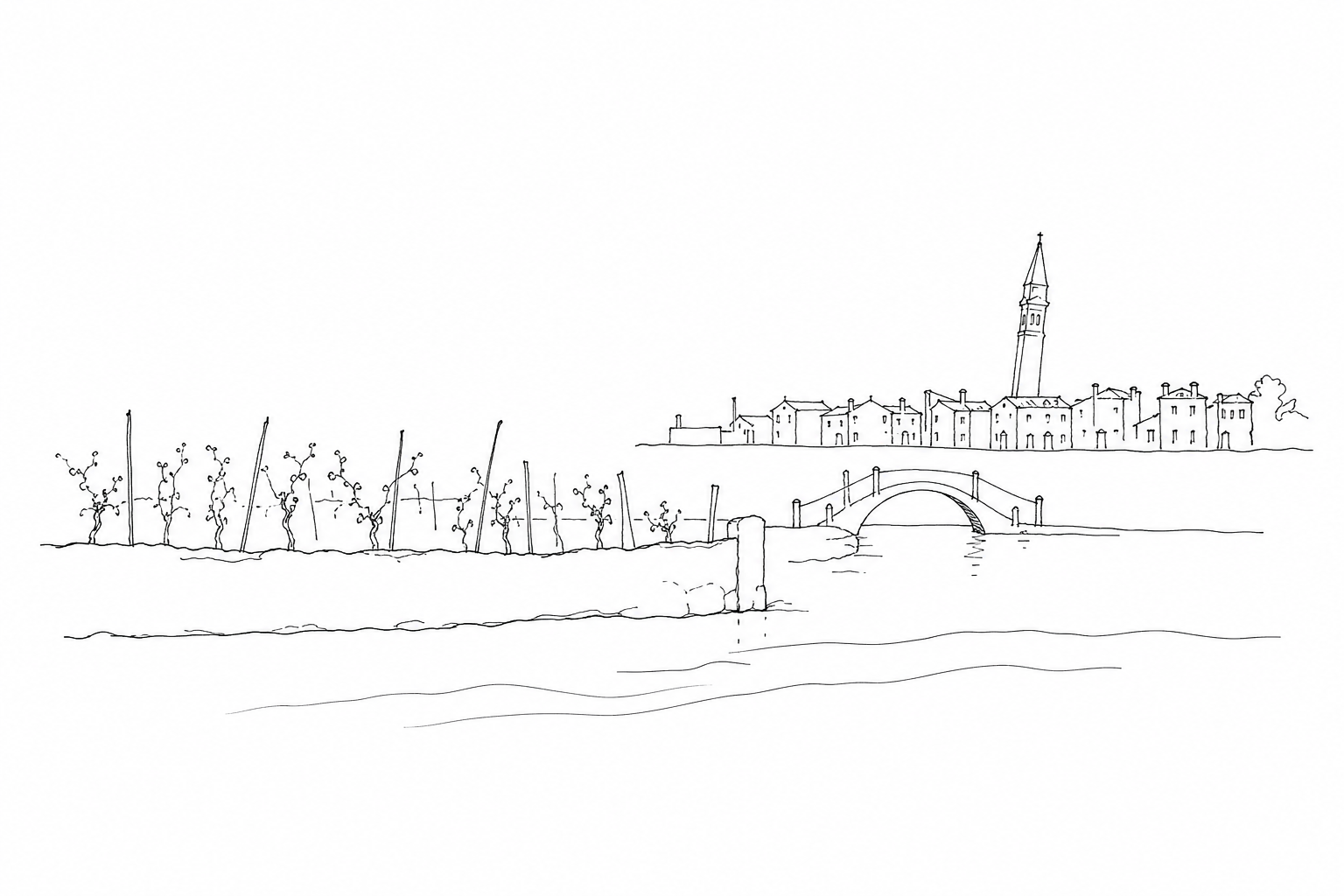
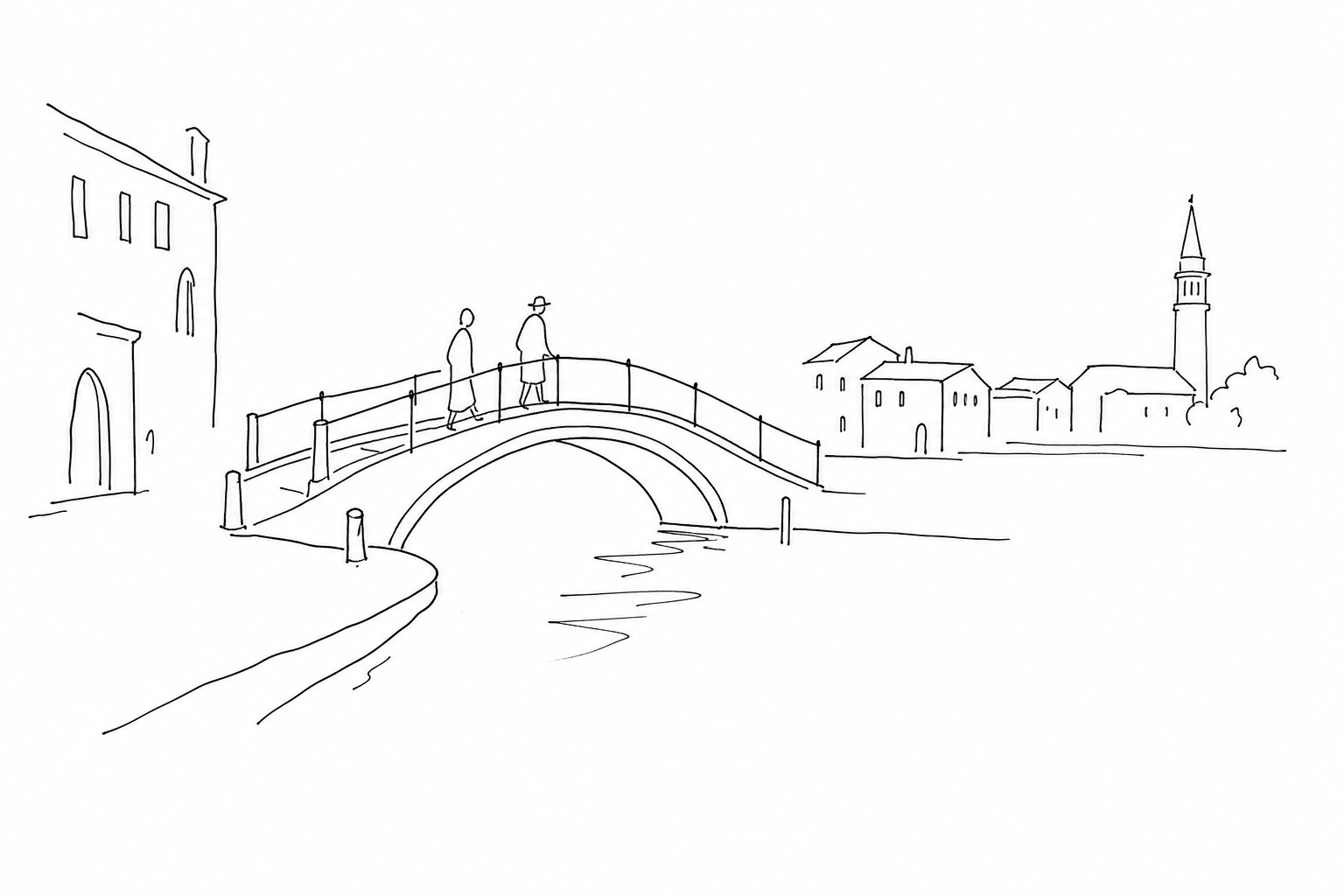

Seeing Venice in one day on a budget does not mean compressing everything into a list of obligatory stops. It means choosing a pace, accepting that you will leave something out and using the city for what it offers best even for free: views over the water, sudden courtyards, façades worn by salt, glimpsed churches, minor bridges, daily life that persists between a vaporetto and a raised shutter. The itinerary makes sense if it does not become a race: from the station to Rialto, then San Marco without the anxiety of “doing everything,” up to a simple break and a slow return.
Start with a simple idea: walk less, see better
To experience a day in Venice on a budget, the first choice is not about what to add, but what to remove. The city seems small on the map, but bridges, narrow calli and detours along the water turn every move into time and effort. Aiming to “do everything” often means paying more, eating badly and remembering little.
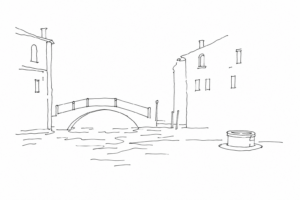
It makes more sense to choose one main area and read it calmly: for example, walk from Santa Lucia toward Rialto, then decide whether to stop between San Polo and Dorsoduro or push on toward San Marco only if your energy allows. In this way the walk already becomes part of the visit: hidden courtyards, wellheads, Gothic façades, small campi with everyday life.
An economical pace works with three clear limits: a few selected entrances, breaks in less crowded areas and no rushing to chase “must-see” views. Venice rewards those who observe: a secondary bridge over the right canal can be worth more than an itinerary full of stops ticked off in a hurry.
From Santa Lucia to Rialto: calli, campi and free details
Leaving Santa Lucia, instead of heading straight for San Marco, it makes more sense to build the first stretch toward Rialto as a slow walk, entirely free and already very Venetian. The Cannaregio sestiere lets you enter the city without tickets: the Scalzi Bridge, Campo San Geremia, the façades along the Grand Canal and the side calli are enough to give rhythm to the morning.
A short detour toward the Jewish Ghetto adds context without lengthening the route too much: here the name “ghetto” comes from the foundry that was located in the area, and the tall houses tell an urban story made of limited space and gathered communities. Then you can return toward Strada Nova, useful but to be crossed calmly, stopping now and then in the smaller campi.
Before Rialto, it is worth looking at Venice in section: sottoporteghi, wells in Istrian stone, votive shrines, worn coats of arms, unusual house numbers. They are free and concrete details, perfect for not turning the route into a march. Arriving at the Rialto Bridge, it is better to consider it the conclusion of the first stretch, not a quick tick.
San Marco without a mental queue: arrive, look, leave again
On a budget day, San Marco works better as a reading stop, not as a list of obligatory entrances. Arriving in the square already knowing what to observe helps you not get stuck among crowds, photographs and indecision.
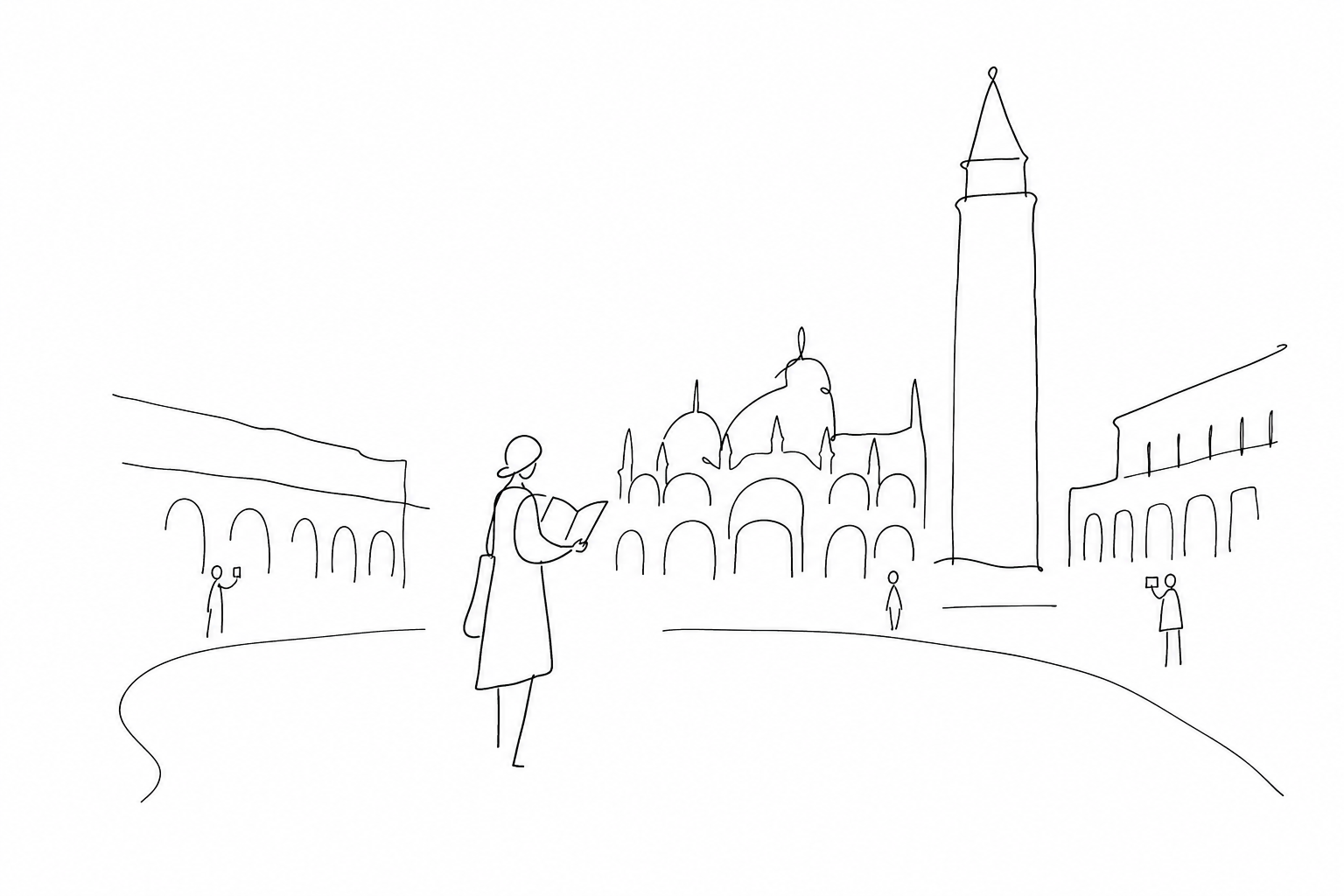
The first sensible choice is to look at the whole: the Basilica with the golden mosaics of the façade, the Byzantine-style domes, the Clock Tower with the winged lion, the Procuratie that close the space like a large public drawing room. Even without going inside, you understand why this place was the religious, political and ceremonial center of the Serenissima.
Then it is worth moving toward the Doge’s Palace and the waterfront. From the outside, you can clearly read Venetian Gothic, the light rhythm of the loggias and the direct relationship with the water. The columns of San Marco and San Todaro mark a symbolic entrance to the city.
If you want to visit interiors, it is better to check the current rules, queues and conditions first. Otherwise twenty to thirty attentive minutes are enough: arrive, really look, and leave again without turning San Marco into the point where the day jams.
Budget break and slow ending among bacari, fondamenta and return
To avoid spending too much, lunch can become a short, local stop: a bacaro with a few cicchetti at the counter, a tramezzino, or bread and something bought in a food shop. It is always advisable to check the menu displayed and distinguish between counter and table: conditions can change, so it is better to check before ordering.
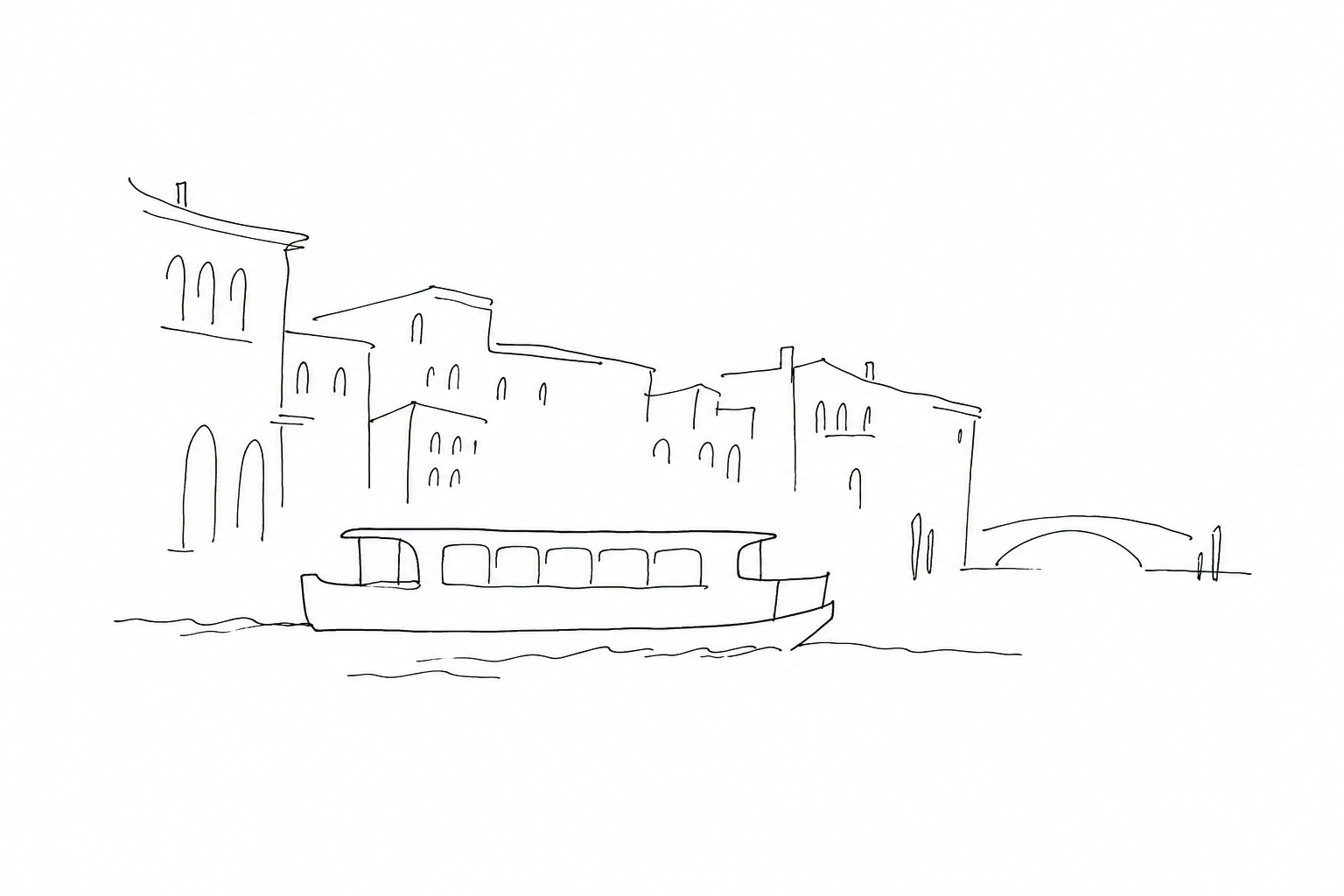
The ideal ending is not another monument to chase, but a stretch of water to follow calmly. The fondamenta della Misericordia and degli Ormesini, in Cannaregio, offer a more everyday rhythm: moored boats, low houses, small bridges, osteria signs, residents passing by. Alternatively, the Zattere give a broad breath toward the Giudecca, perfect if you want to end by walking in a straight line, with the low sun when there is one.
For the return, it is better to avoid the last disordered dash: calculate a real margin to get to the railway station or the parking area at Piazzale Roma. A slow conclusion saves energy, not just money.
A budget day in Venice works when saving does not coincide with giving things up, but with a more careful choice. Walking less, stopping more, looking at urban details and allowing yourself essential breaks lets you cross the city without consuming it. Rialto and San Marco remain strong points, but they gain value if connected by quiet calli, lived-in campi and fondamenta where your pace slows. In the end, the clearest memory will not be the number of monuments seen, but the way Venice allowed itself to be read without hurry.