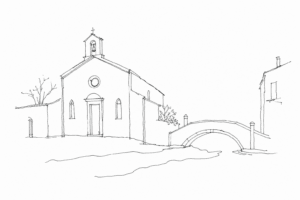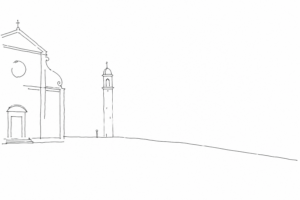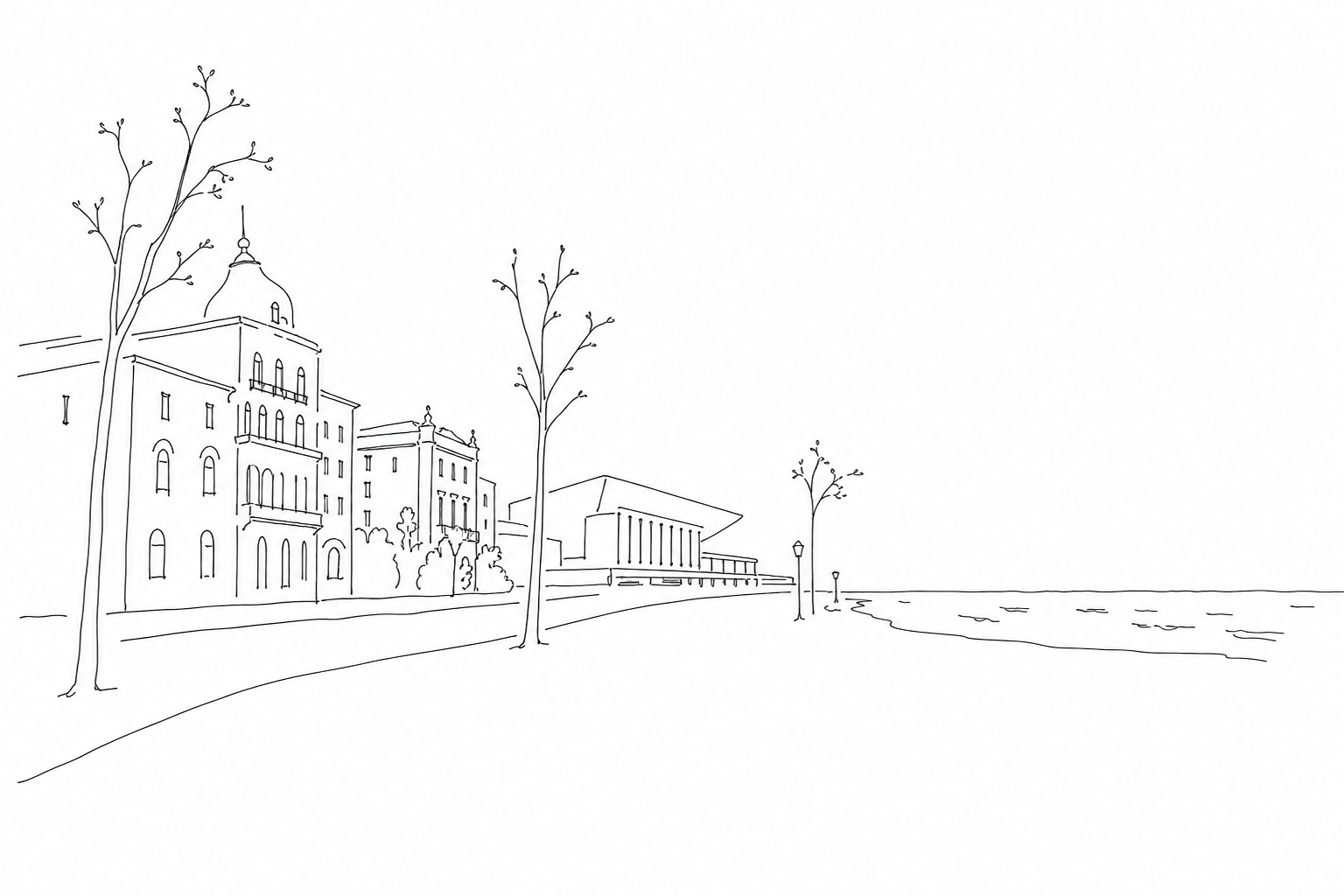

San Lio is one of those Venetian churches you come across almost without looking for it, while passing from Rialto toward San Marco or detouring through calli dense with shops, campielli and side entrances. Precisely for this reason it deserves attention: not as a simple stop along an itinerary, but as a point from which to read the city. Its position, the history of the parish, the architectural transformations and the artistic memories preserved inside tell of an everyday and stratified Venice, where the urban route and the religious one have been intertwined for centuries.
Where San Lio is located and why it is a passage church
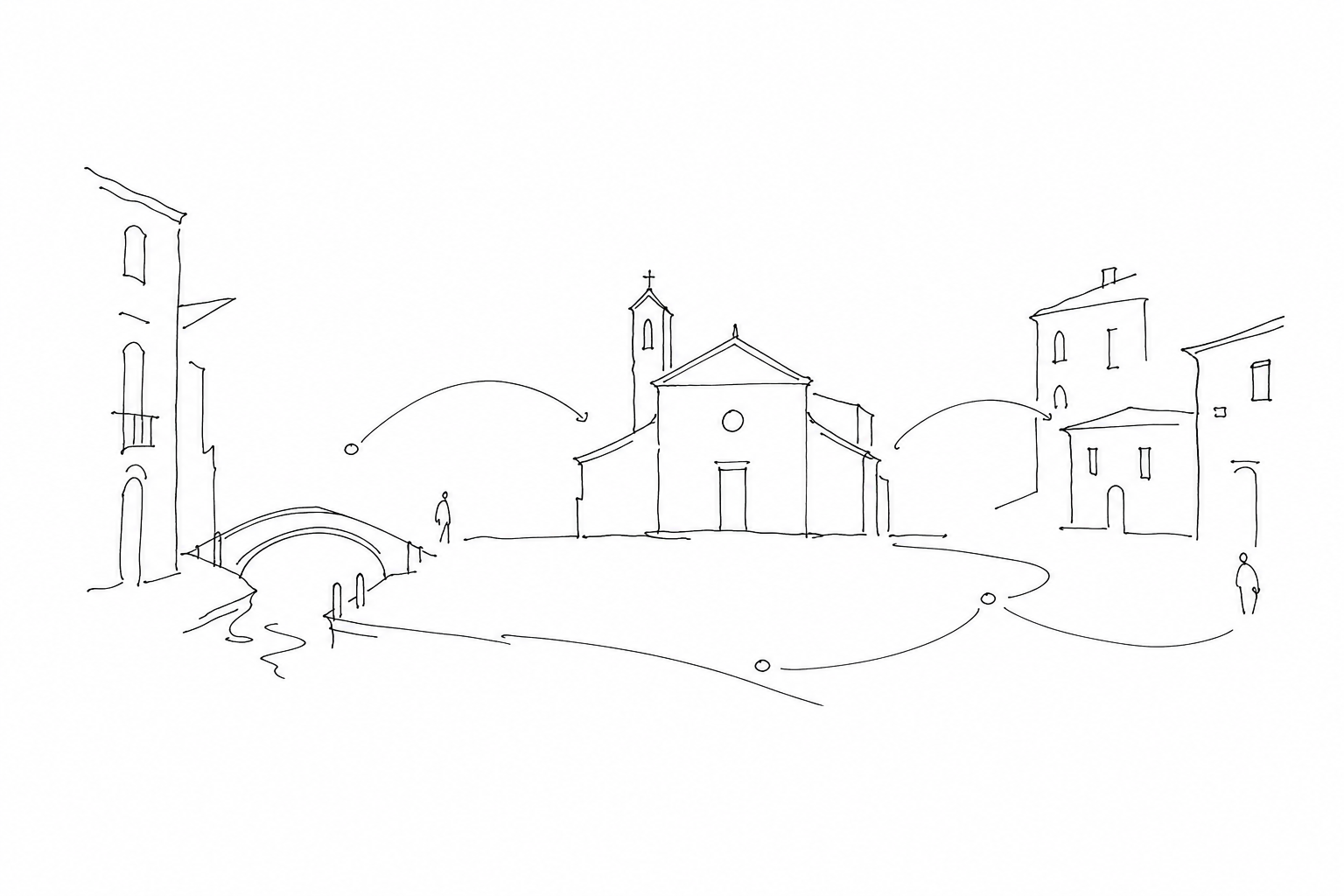
San Lio is found in the sestiere of Castello, in a hinge area between the market and the Rialto bridge on one side, and the axis that leads toward San Marco on the other. It is not an isolated church in a scenic campo: it stands within a dense web of calli, salizzade and small open spaces, exactly where Venetian walking becomes continuous, practical, almost automatic.
For this reason it is a passage church in a very concrete sense. Those moving between Rialto and San Marco can cross this area without looking for a specific monument, but San Lio helps to read the intermediate city: that of commercial routes, small parishes, façades that appear suddenly after a turn.
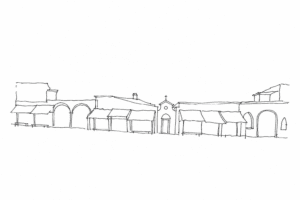
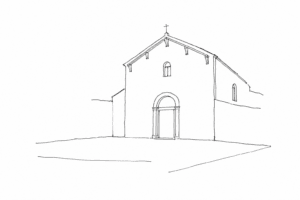
Its position also explains its urban character. San Lio does not interrupt the route: it accompanies it. Looking at it means understanding how Venice is made not only of great monumental poles, but of minor nodes that orient, distribute and give memory to everyday routes.
From the Venetian name to the history of the parish
The name San Lio is already a small lesson in Venetian: “Lio” is the local form of Leone. The dedication refers to Pope Leo IX, an 11th-century figure, and tradition connects the change of title to a phase in which Venice was seeking balance between religious authorities, patrician families and control of its own urban spaces.
Before this name, the sacred building is often remembered in relation to Saint Catherine of Alexandria, a sign of a history that is stratified rather than linear. San Lio therefore did not begin simply as a stop between Rialto and San Marco: over time it became a parish reference point for an area dense with calli, shops, dwellings and obligatory passages.
Its importance also lay in its everyday function: recording belonging, marking festivals, burials, family devotions and neighborhood relations. In this sense the parish helps to read the smaller-scale Venice, where the identity of a campo or a calle was built around a recognizable religious presence.
Inside San Lio: chapels, altars and traces of great artists
Entering San Lio means changing scale: outside a dense itinerary flows by, inside you encounter an intimate environment, made to be read up close. The side chapels and altars do not function as a simple decorative repertoire; rather, they tell of private devotions, family bequests and parish memory, that is, the minute fabric that held together inhabitants, trades and the neighborhood.
Among the most significant presences is Titian’s Saint James the Greater, a work that makes it possible to connect this apparently secondary space to the great Venetian painting of the 16th century. Its value also lies in the context: not a museum, but a place people passed through, in which the sacred image conversed with daily practice.
Another essential memory concerns Giovanni Antonio Canal, known as Canaletto: born in this parish, he was buried in San Lio in 1768. Even when the material trace does not impose itself on the eye, the biographical fact is eloquent: the author of Venice’s most famous views belonged to this intermediate urban fabric, among shops, calli and campielli.
How to look at it during a slow walk
The best stop at San Lio does not come from a solemn perspective, but from slowing down. Arriving from the Mercerie or from the calli that lead toward the Rialto bridge, stop before entering the campo: here the character of a “passage” building can be clearly noticed, squeezed between commercial routes, dwellings and small urban openings.
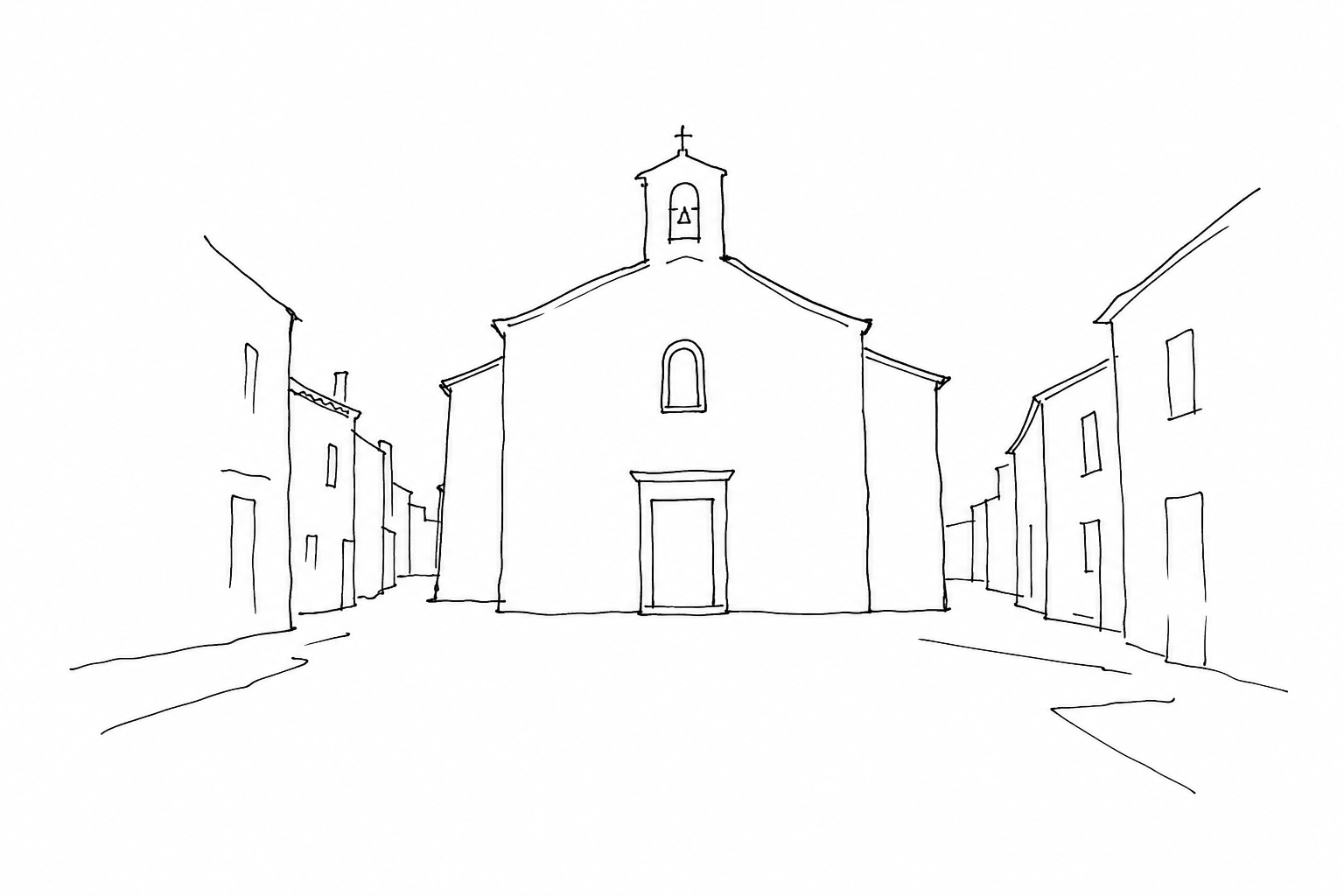
Observe the façade without expecting a grand scenic backdrop. Its value lies precisely in its measure: a religious presence inserted into an everyday fabric, closer to neighborhood life than to the official representation of the city. The dedicatee too, Saint Leo IX, contracted in local usage to San Lio, tells of this linguistic and popular adaptation.
During the pause, watch the movement around you: those who cross the campo often use it to cut between Rialto and the Marcian area. San Lio thus helps to read an intermediate Venice, made of thresholds, short detours and places that do not interrupt the walk, but give it depth.
Stopping at San Lio means accepting a minimal, almost domestic detour within one of the most traversed stretches of Venice. The church does not ask for a long visit: rather, it asks for attention, a few minutes of silence, a look at the chapels, the altars, the traces left by families, confraternities and artists. It is in these passage spaces that the city often shows its truest measure: not only monument, but inhabited, stratified, everyday urban fabric. On leaving, between Rialto and San Marco, the walk continues with a different awareness.