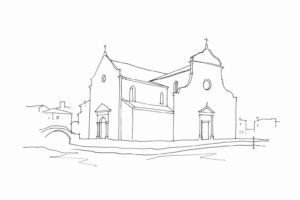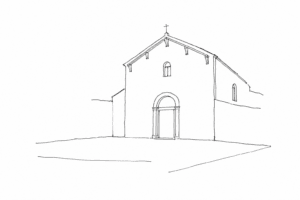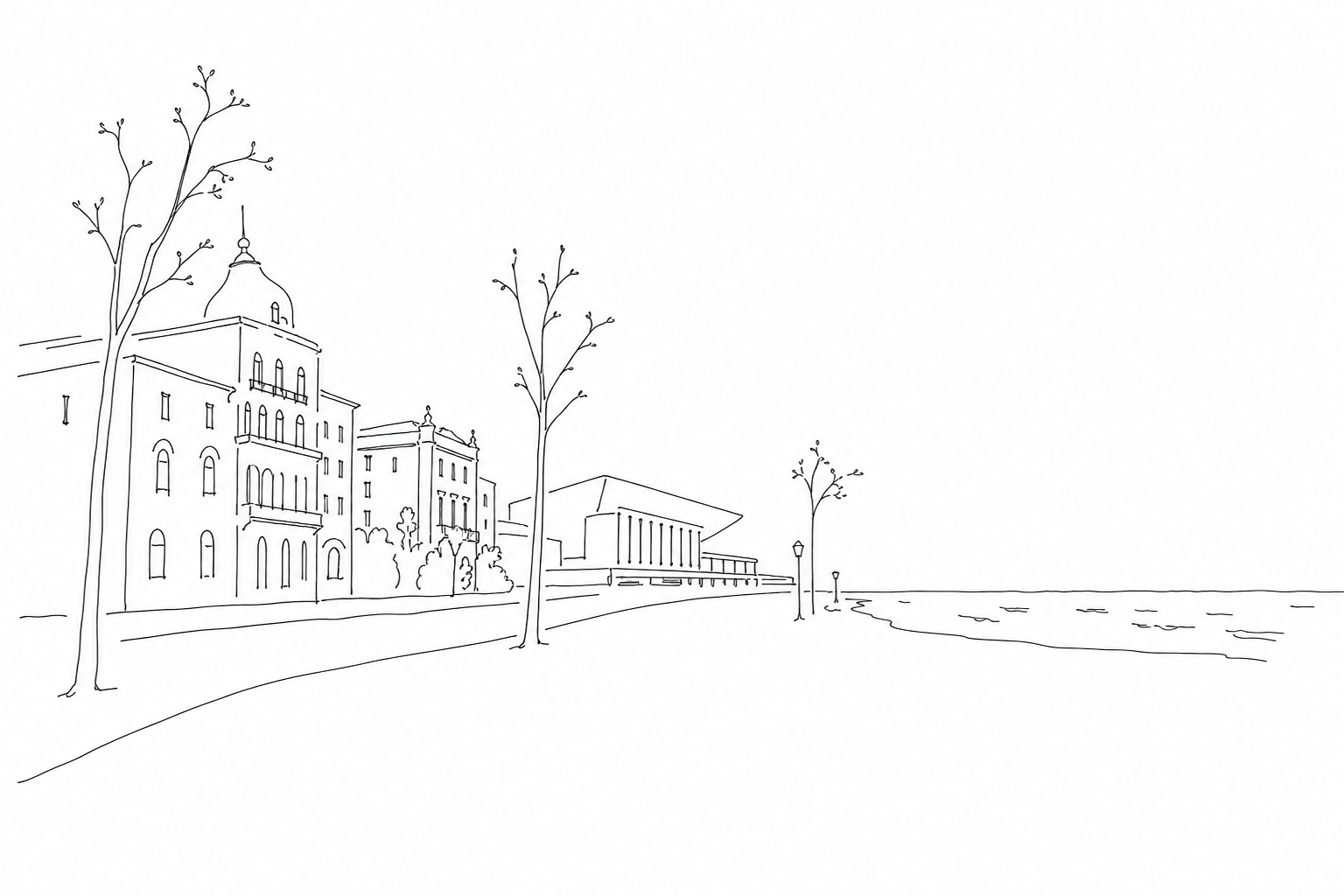

San Barnaba is one of those Venetian places where fame comes from outside, but the meaning remains entirely within the neighborhood. The church, the campo, the calli that lead to it and the nearby rio tell of a concrete Dorsoduro, made up of daily passages, sober façades and open perspectives. Cinema made it famous as the imaginary entrance to Indiana Jones’s library, but reducing it to that frame would be too little. Before and after the set, San Barnaba remains a neighborhood church and above all a Venetian campo: a space to observe calmly, in its urban details and its layers.
San Barnaba in the fabric of Dorsoduro
San Barnaba cannot be understood by isolating the church from its square. The complex stands in the heart of Dorsoduro, at a point where the sestiere shows its double nature: residential and crossed through, secluded and yet along very frequented routes between Ca’ Rezzonico, the rio of San Barnaba, the directions toward the Accademia and the Zattere.
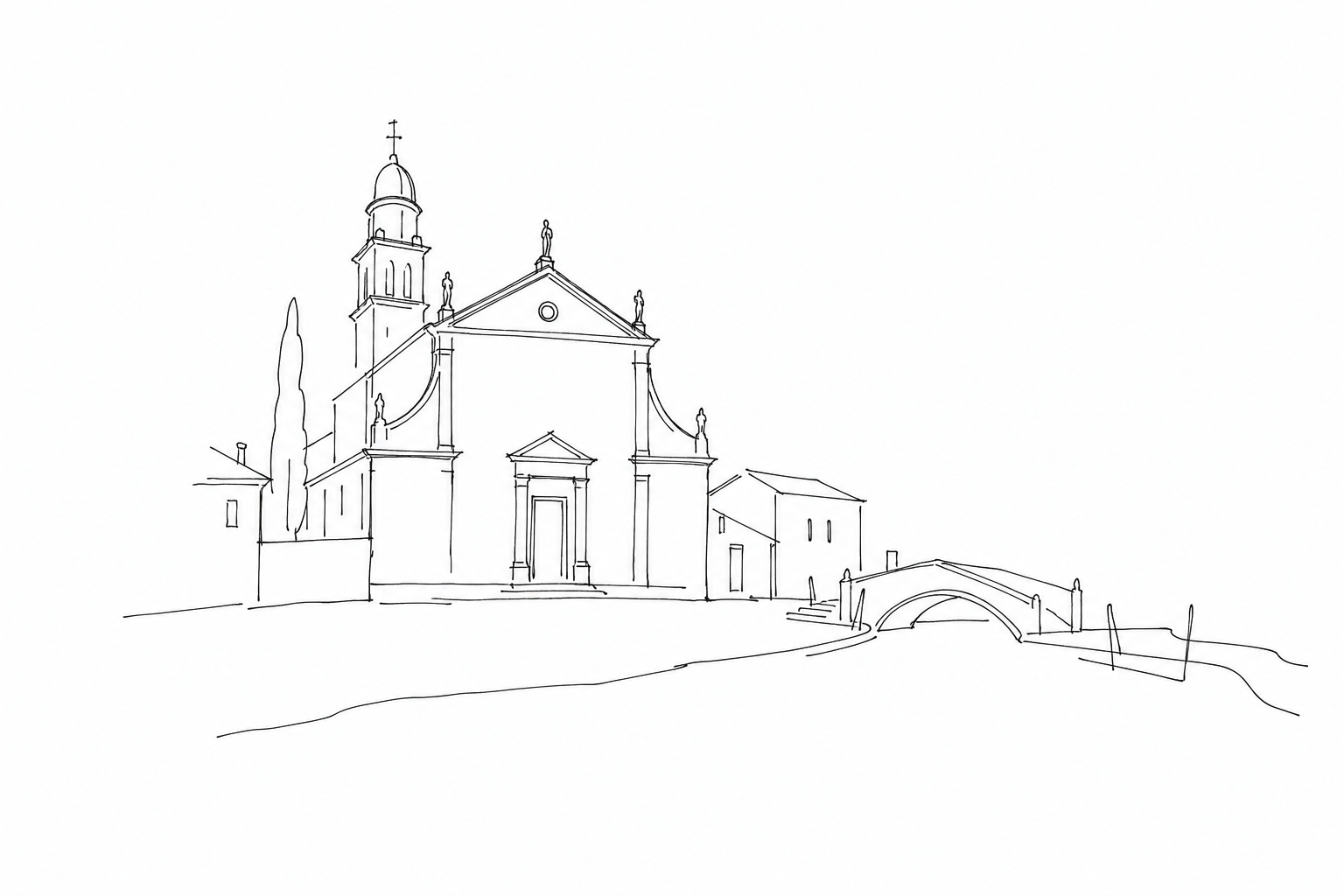
The campo is the true threshold of the church. It is not a simple scenic widening: it gathers daily passages, house frontages, shops and the direct relationship with the water, through the nearby Ponte dei Pugni and the rio that cuts through the block. The façade of San Barnaba, rebuilt in neoclassical forms in the eighteenth century, thus enters an urban scene already complete before any cinematic use.
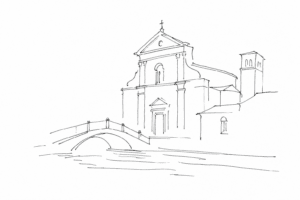
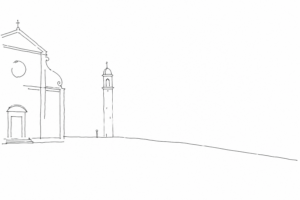
It is precisely this Venetian normality that makes the place recognizable: when cinema chose it as a set, it made use of a presence already rooted in the neighborhood, not a monument separated from the life of the campo.
A neighborhood church, remade in classical form
The church of San Barnaba has a history longer than the façade that today dominates the campo. Its origins are medieval, linked to the inhabited growth of Dorsoduro and to its parish function: not a building designed to be isolated as a monumental backdrop, but a stable point for a resident community, with altars, burials, feasts and daily passages.
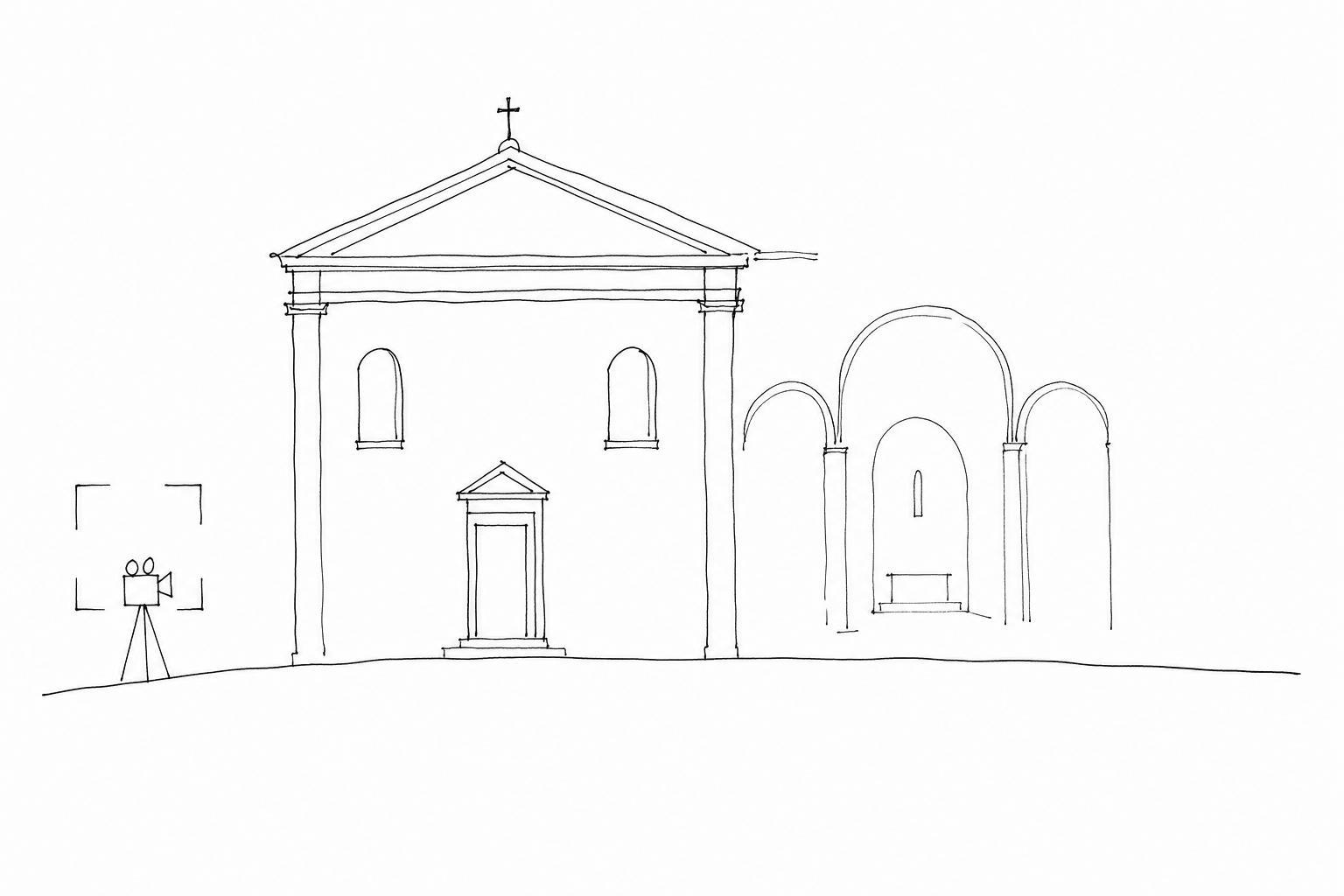
The current appearance instead belongs to the eighteenth century. The reconstruction, attributed to the architect Lorenzo Boschetti, gave the building a classicist face: temple front, Corinthian columns, triangular pediment, ordered proportions. It is a significant choice because it translates a neighborhood church into a solemn, almost archaeological language, without changing its relationship with the open space in front.
The interior also follows a composed logic, with a single nave and side chapels, suited to the liturgy but less theatrical than many Venetian Baroque churches. This architectural clarity is precisely what explains the visual strength of the place: when cinema frames it, it will find already prepared a legible, scenic façade, but still fully inserted into the measure of the campo.
Cinema: Indiana Jones’s library
For many visitors San Barnaba is also the entrance to the Venetian library in Indiana Jones and the Last Crusade, the 1989 film directed by Steven Spielberg. In the story, Indiana Jones and Elsa Schneider enter here to look for clues about the tomb of a crusader knight: the real door thus becomes the access to a place of study, maps and mystery.
The distinction is important. The film uses the exterior as an immediately recognizable sign, but the library is a narrative construction: the interior spaces, the floor with the large X and the passage toward the catacombs belong to cinematic fiction, not to the reality of the building nor to the underground of the sestiere.
Precisely this gap explains the strength of the set. The camera does not transform the area into a theme park: it exploits the clarity of the architecture and the measure of the open space in front of the portal. After the scene, the place remains Venetian and everyday, but with a second memory superimposed: that of the viewer who recognizes the shot.
The best way to read San Barnaba today is to stop for a few minutes before looking for the famous shot. The campo is not just a backdrop: it functions like a small urban room, where the neoclassical front of the building, the well, the side calli and the arrival from the bridge compose a very Venetian sequence. Looking at it from several points helps to understand why the set chose precisely this place: the space is wide enough to give the scene breathing room, but it remains enclosed, recognizable, almost domestic.
For a careful observation, it is useful to distinguish three levels. The first is historical and neighborhood-based: the religious presence ordered the life of the area for centuries. The second is urban-planning: the campo connects the rio, the homes, the routes toward Dorsoduro and the nearby Ponte dei Pugni. The third is memorial: the film added an international image without erasing the everyday use of the place.
If you wish to enter or check any exhibition uses, it is better to check up-to-date information at the time. From the outside, however, the essential reading always remains available.
San Barnaba works because it holds together several times without transforming them into a single scenery: the remade church, the houses around the campo, the market on the water a short distance away, the cinematic memory that emerges but does not dominate. Those who arrive for Indiana Jones find a recognizable place; those who stop for a few minutes instead discover a fragment of Dorsoduro still legible on its everyday scale. This is the strength of the campo: not being only a famous address, but a living urban space, where history, architecture and ordinary life continue to coexist naturally.