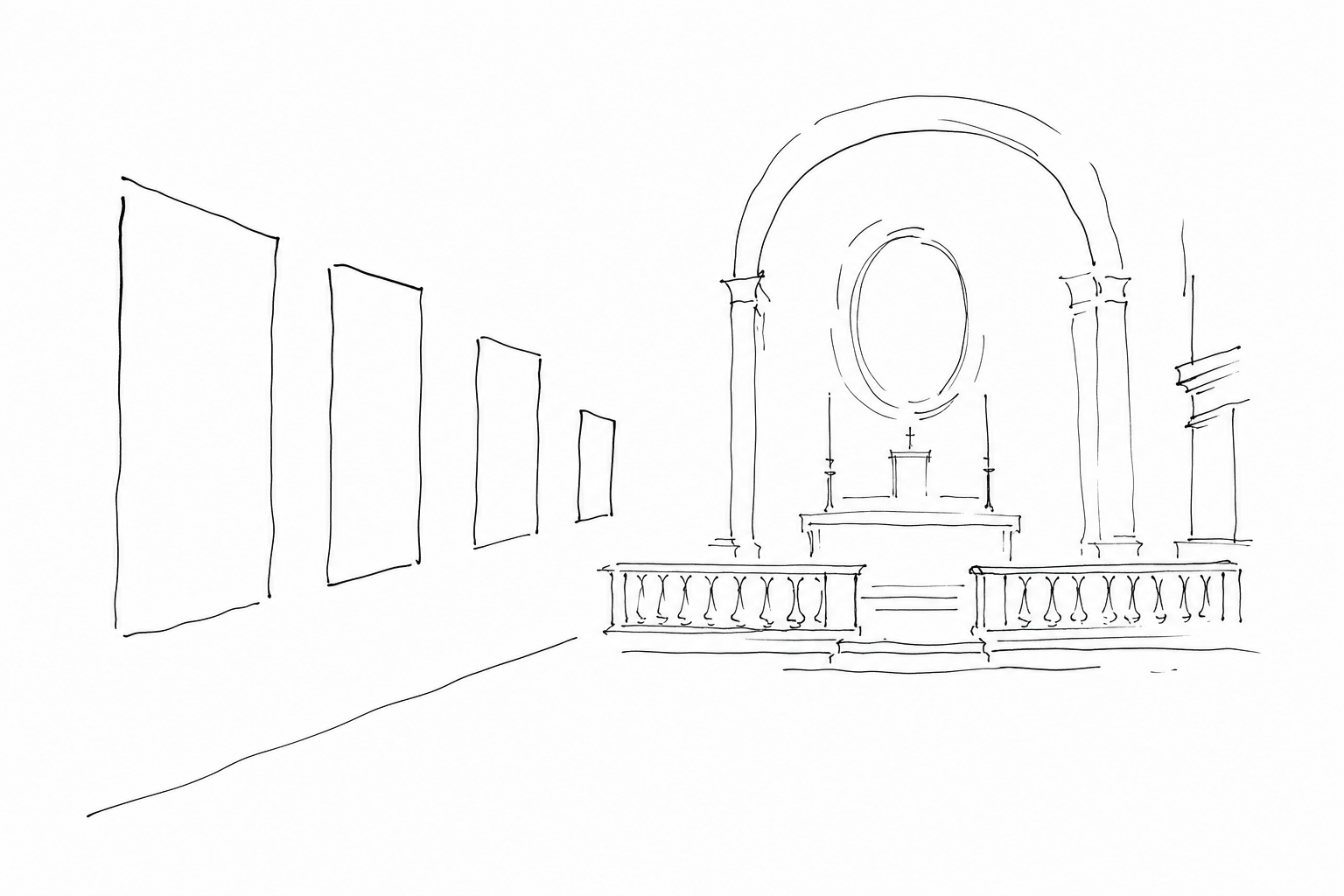
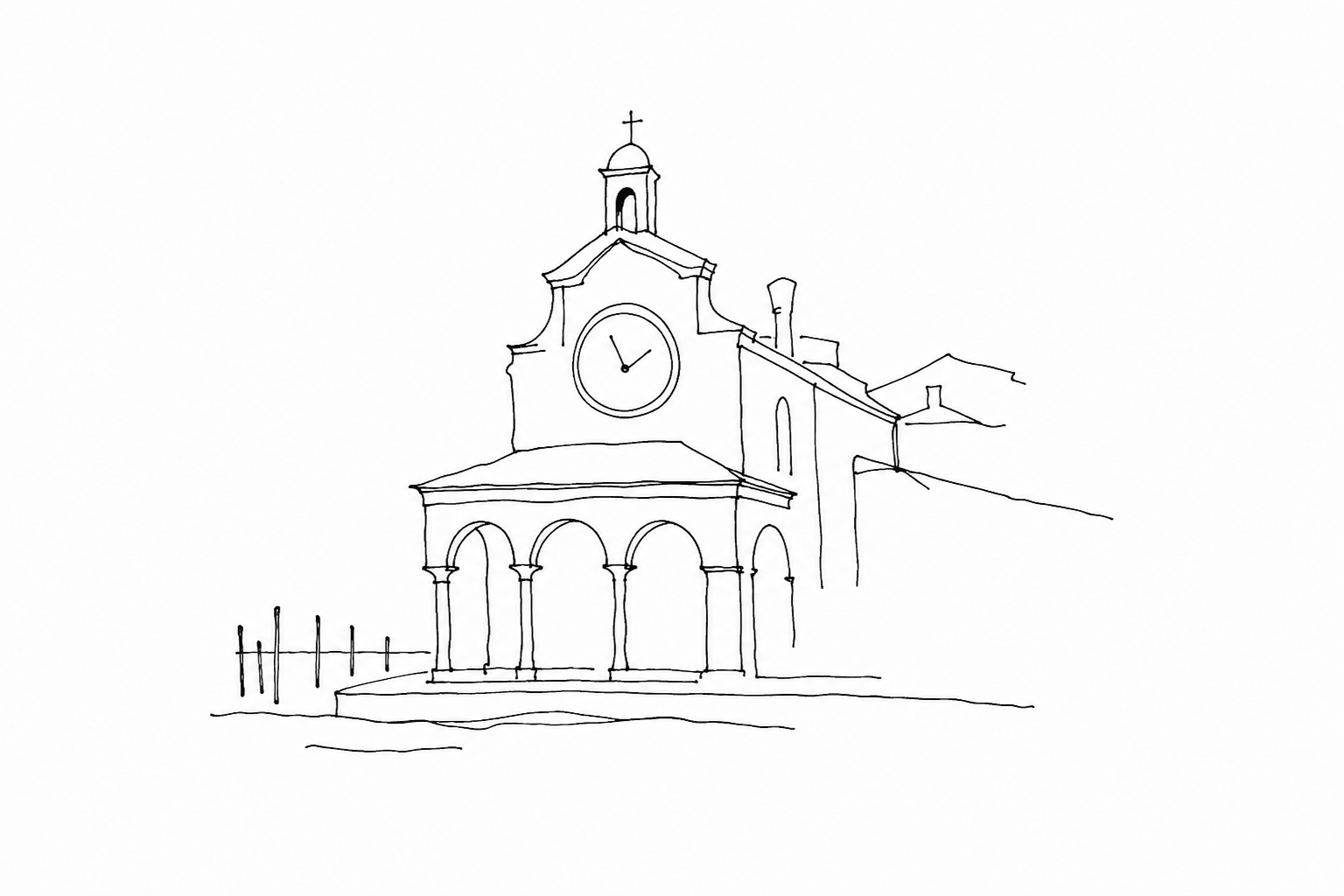

San Giacomo di Rialto is a small church, almost compressed between the market, the porticoes and the continuous movement of the sestiere. It is precisely this reduced size that makes it precious: it does not dominate the space, it records it. Its history, suspended between very ancient tradition and the development of mercantile Venice, allows Rialto to be read not only as a place of passage, but as the operational center of the medieval city. Façade, portico, inscriptions and clock tell of a close relationship between devotion, commerce and daily life.
A tiny church at the center of trade
San Giacomo di Rialto, often familiarly called San Giacometo, is found in the sestiere of San Polo, a few steps from the Rialto Bridge and from the area that for centuries was Venice’s main economic engine. Its reduced scale should not deceive: the church overlooks an urban space linked to stalls, goods, contracts and transactions, where spices, fabrics, metals and news arrived from all over the Mediterranean.
Placing it means understanding Rialto not only as a scenic place, but as a functional district of the medieval city. Around the church were concentrated fondachi, shops and seats of commercial magistracies; its proximity to the market made the building a daily point of reference for merchants, money changers and buyers.
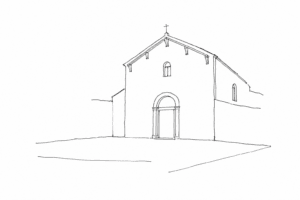
The façade with the Gothic portico and the famous external clock dialogues with the square more than with a grand religious scenography. San Giacomo di Rialto thus appears as a threshold: a small church, but placed at the point where devotion, credit and trade defined the practical heart of medieval Venice.
From the tradition of the origins to mercantile Venice
The fame of San Giacomo di Rialto also arises from a tenacious tradition: it is said to have been founded in 421, a date often repeated in Venetian narratives. It is an identity-forming account, more than a documentary certainty. Medieval sources instead allow us to read the role of the sacred building with greater caution: not so much the “first church of Venice” in a verifiable sense, as an ancient and recognizable point within the area where the city consolidated its economic activities.
Its historical value lies precisely in this continuity between religious memory and mercantile life. In front of the façade opened the campo linked to negotiations, while all around operated banks, magistracies and spaces of commerce. Its proximity to Venetian economic institutions made San Giacomo a symbolic point of reference for those who concluded agreements, lent money, recorded exchanges or crossed the market.
Looking at it today means distinguishing legend and history without impoverishing the place: the tradition of the origins tells of the Venetian need to give itself a beginning; its position in the commercial heart explains why that small building has preserved an importance so far greater than its dimensions.
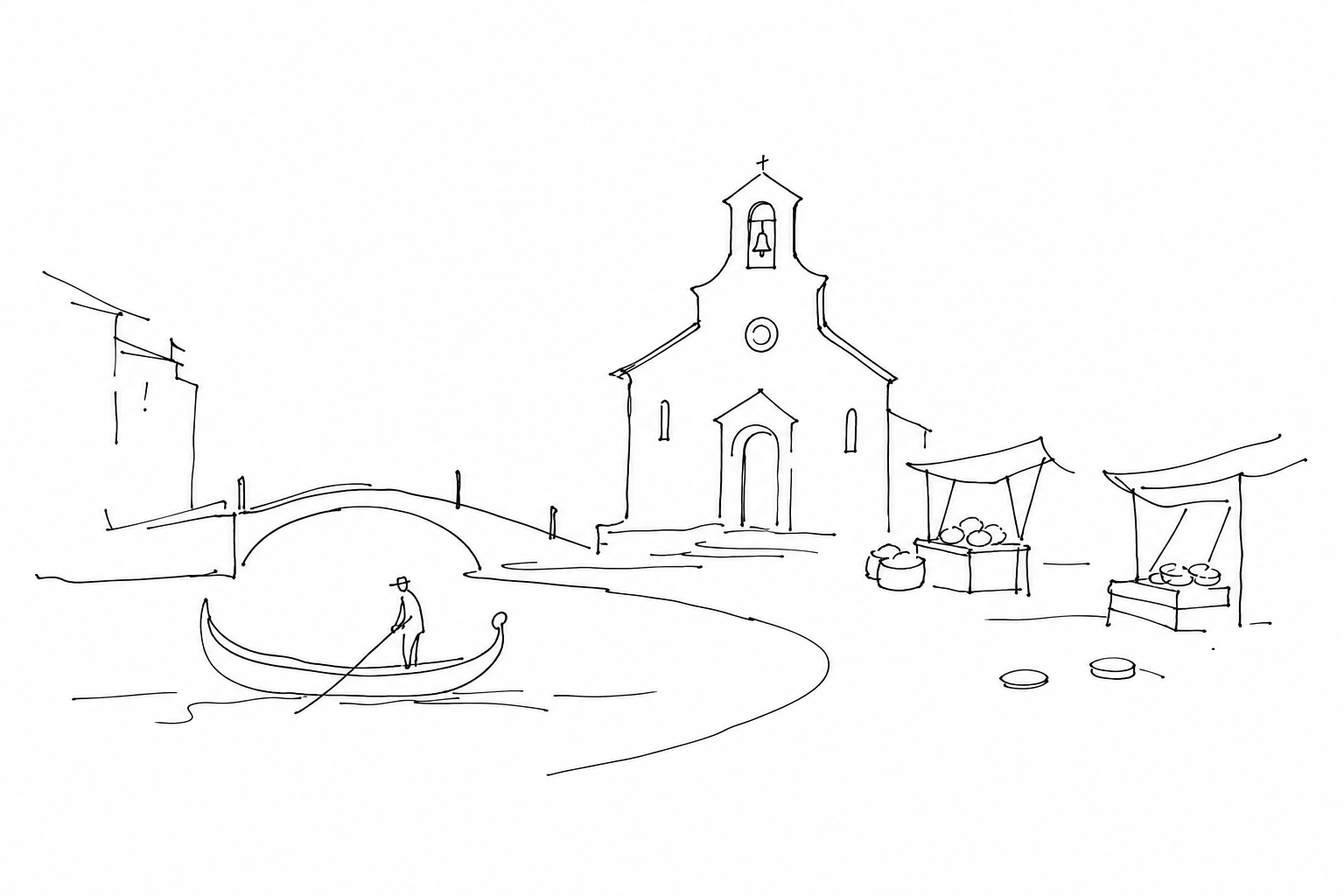
Façade, portico and clock: reading the signs
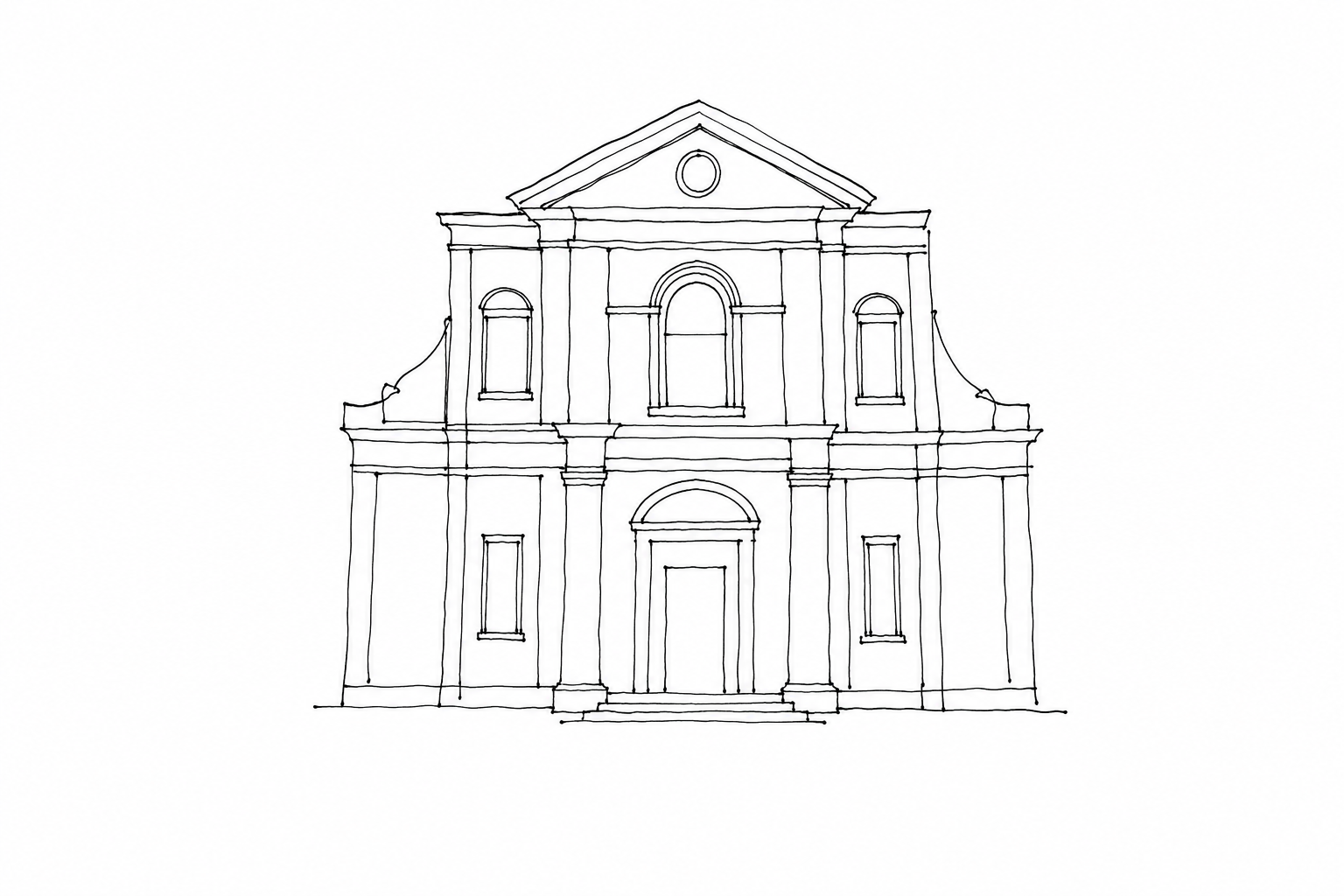
Seen from the campo, the building is striking more for its clarity than for its grandeur. The low, gabled façade reveals an ancient and compact structure: few ornaments, brick and Istrian stone, restrained proportions. It is precisely this sobriety that makes its role evident: not an isolated monument, but a stable point within the daily life of the market.
The portico is the most eloquent element. The arches open toward the public space create a sheltered threshold, suitable for passage, waiting and verbal exchanges. In an area dominated by stalls, goods and contracts, this covered zone functioned almost as a hinge between devotion and business: one entered to pray, but also lingered to discuss, measure, conclude agreements.
Above the entrance, the large clock introduces a rare sign for a sacred building of such dimensions. The dial, traditionally connected to the regulation of mercantile time, speaks to those who work in the square more than only to the faithful. It is not merely decoration: it is the visual memory of a community that needed shared hours, public trust and common points of reference.
Looking at it today without reducing it to a passage
The best way to understand it is to slow down before looking for the entrance. Stop in the campo, with your back to the flow toward the bridge, and consider the building not as isolated but as inserted into an urban machine of exchanges, weights, contracts and guarantees. Its small scale then becomes meaningful: it does not dominate the square, it presides over it.
Observe the portico as a practical threshold: shelter, waiting point, a place where religious life brushed against that of business. Then broaden your gaze toward the surrounding buildings, linked to the history of the banks and commercial magistracies. This comparison helps to read San Giacomo di Rialto as a daily reference point for merchants, money changers and buyers, not as a simple monument to photograph.
If the interior is accessible, enter with the same attention: always check the updated conditions on site. Even a few minutes are enough to grasp the distance between the noise of the campo and the restrained function of the sacred space.
Looking at San Giacomo di Rialto carefully means slowing down at the point where Venice seems to invite you to move quickly. The church does not ask for great scenographic effects: it offers details, proportions, traces of intertwined civil and religious uses. It is a place to observe before and after the market, when the square changes rhythm and the signs become more legible. In a few meters one grasps an essential part of the city: the one that built its identity between faith, exchanges, rules and daily work.
Related Posts
San Giovanni Elemosinario: the almost invisible church hidden among the shops of Rialto
A short guide to the church of San Giovanni Elemosinario, amid the Rialto market, Renaissance history, and works by Titian and Pordenone.San Giacomo dall’Orio: beams, silence and ancient stone in the less obvious heart of Santa Croce
A slow reading of San Giacomo dall’Orio: campo, wooden beams, ancient columns and urban quiet in Santa Croce.
San Polo: the church that gives the campo its name but often remains out of frame
The church of San Polo explained from the campo: position, history, details and works to observe more carefully.Questions Answered
What is the significance of San Giacomo di Rialto’s location?
It stands at the center of Venice's medieval commercial and economic activities.When was San Giacomo di Rialto traditionally founded?
Tradition dates it to 421 though historical evidence is cautious.How do the church's architectural elements reflect its role?
Features like the portico and clock blend religious and commercial functions.How should visitors approach the church today?
As a meaningful part of Venice's mercantile and religious history, not just a landmark.
Keep reading Rialto
Want to see how the market, churches, shops and palaces tell the story of the same commercial heart?
 Le Mercerie: the commercial route between Rialto and San Marco that was not created for modern shoppingHistory and urban reading of the Mercerie, a dense axis of calli between Rialto and San Marco born from civic, artisan and...
 The Fondaco dei Tedeschi: from house of northern merchants to contemporary terrace over RialtoHistory, architecture and current interpretation of the Fondaco dei Tedeschi, between Rialto, the Grand Canal and the terrace.
 Corte del Milion: Marco Polo, toponyms and hidden memory behind RialtoA reading of the Corte del Milion among the Polo houses, nizioleti and urban traces behind Rialto.
 San Cassiano: Tintoretto, market and silence a few minutes from the chaos of RialtoA short route between Rialto and San Cassiano: market, quiet calli, church and canvases by Tintoretto.