
Murano is not only glass, furnace demonstrations and colorful shop windows. A few minutes from the island’s most beaten paths, the Basilica of Saints Mary and Donatus preserves one of the most solid and fascinating narratives of medieval Venice: floor mosaics, Veneto-Byzantine architecture, early medieval memories and a devotion linked to Saint Donatus. This guide is meant to help you understand why to stop here, what to observe without limiting yourself to a quick glance and how to organize the visit sensibly, especially if you have included Murano in an already full day among islands, museums and vaporetto journeys.
Where it is and why stop at Saint Donatus
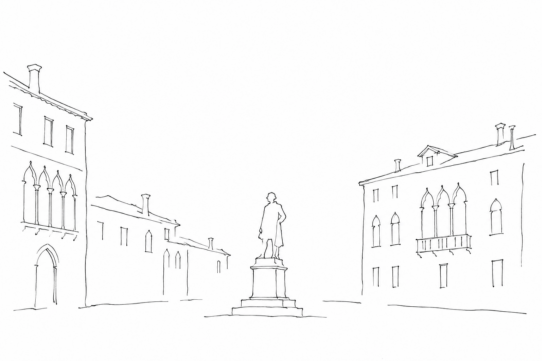
The Basilica of Saints Mary and Donatus is located in Murano, at Campo San Donato 11, 30141 Venice, in a quiet area of the island, overlooking the fabric of calli, campi and canals that tells the story of Murano even before its furnaces. It is not a stop to include “in passing” only because it is close to the glass workshops: it deserves a specific stop, even a short one, because it brings together in a single building many threads of lagoon history.
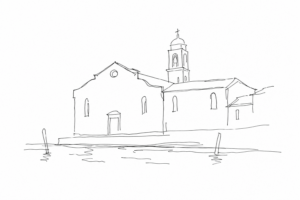
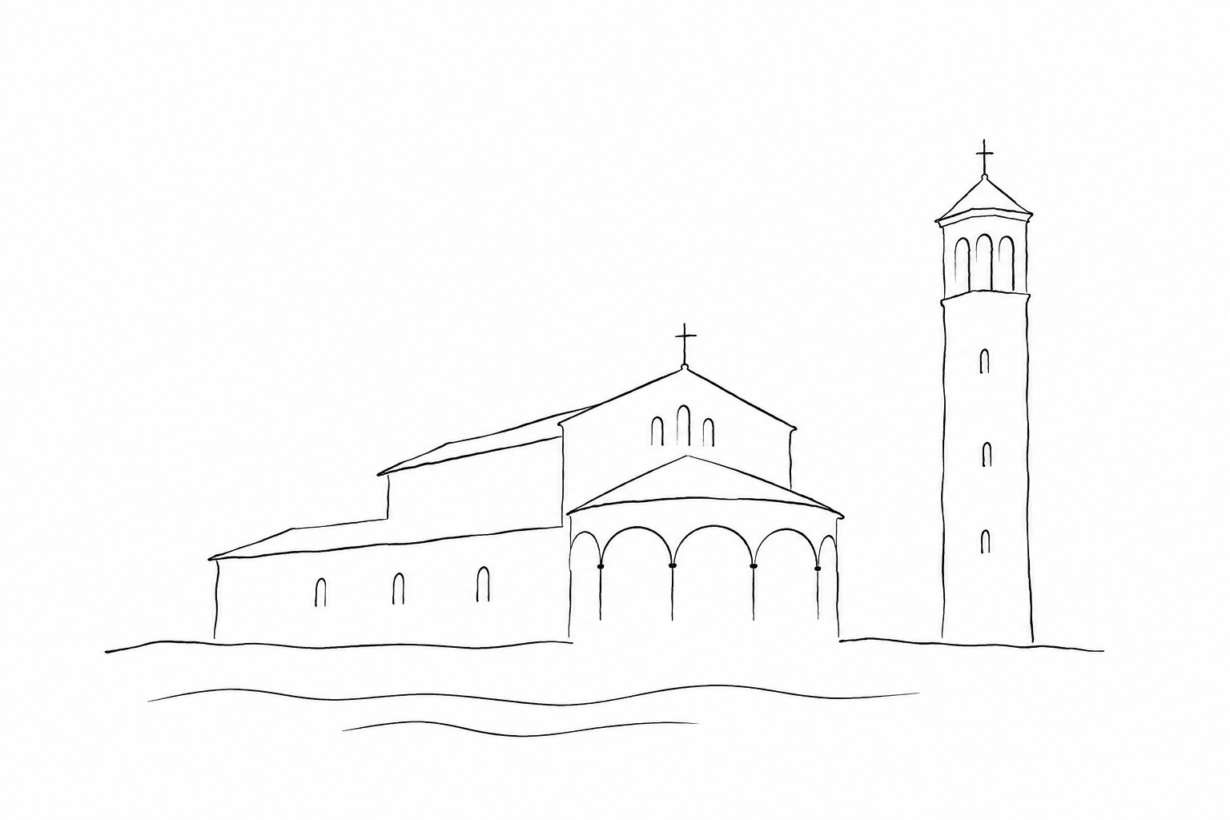
Here the religious and civic dimensions of the island can be read together. Saint Donatus is not only an ancient church: it is one of the places that help you understand Murano’s role in the Venetian lagoon, with a sober monumental presence, different from Venice’s more crowded routes. Even from the outside, the apse facing the canal and the separate bell tower immediately direct the gaze.
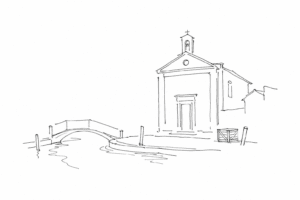
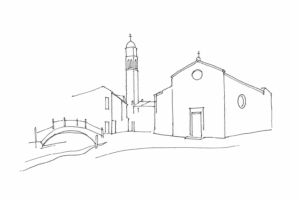
The visit works well if you have little time in Murano, but also for a couple or a small group that wants to alternate glass, a walk and medieval art without building an itinerary that is too dense.
From early medieval origins to the 12th-century reconstruction
The history of Saint Donatus should be read with some attention, because it did not immediately begin with the name by which we know it today. Tradition and local documentation indicate a very ancient foundation, perhaps in the 7th century, as a church dedicated to Saint Mary. We are therefore in an early medieval phase of the lagoon, when settlements on the islands were taking on more stable forms and places of worship were also becoming reference points for local communities.
During the 9th century the building was restored, a sign that the church already had a history behind it and a recognized role in Murano. The decisive turning point, however, came in the 12th century, with a complete rebuilding: it is to this phase that the monumental imprint that still today makes Saint Donatus one of the most important examples of Veneto-Byzantine architecture in the lagoon is linked. It is not just “antiquity”: here the Venetian Middle Ages can be seen in the structure, in the rhythms of the masonry, in the relationship between the interior, the apse and the canal.
The name of Saint Donatus entered the history of the basilica in 1125. In that year, after the conquest of Cephalonia led by Doge Domenico Michiel, the saint’s body was transported to Murano and associated with the title of the church. Since then the dedication has united Saint Mary and Saint Donatus, intertwining the original Marian cult with the memory of the martyr. It is an important passage for understanding the building even before observing its mosaics: the basilica is not only a well-preserved medieval church, but the result of centuries of religious, political and lagoon transformations.
What to see: mosaic floor, apse and Mother of God
Inside Saint Donatus, your gaze should be lowered even before looking for the altar. The mosaic floor, datable to around 1140, is one of the main reasons to enter calmly: it is not a simple decorative covering, but a medieval surface built with marbles and polychrome glass pastes, where geometric motifs, interlacings, animals and symbolic figures accompany the step along the naves.
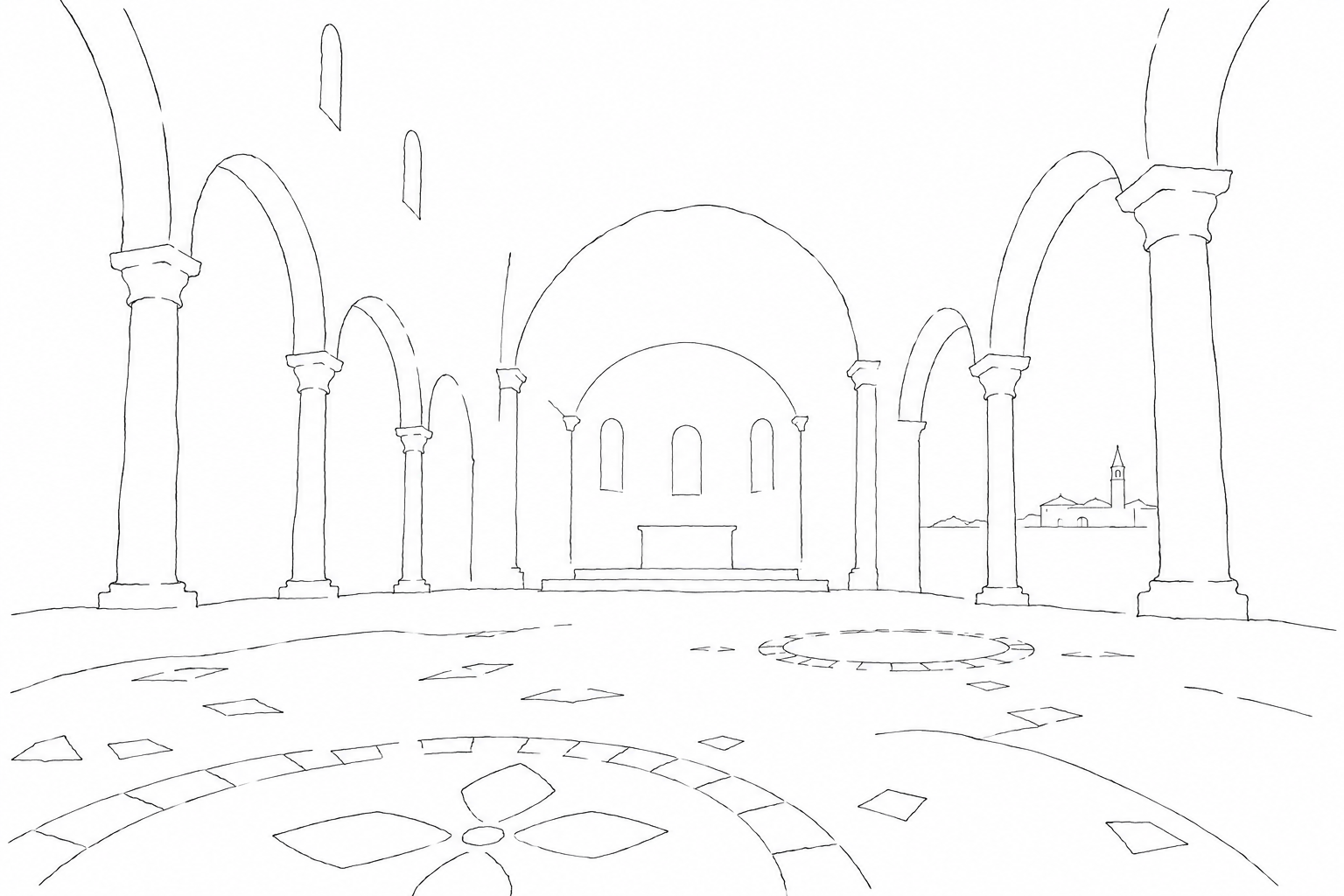
The church has a basilica plan with three naves, and this structure helps you read the space well: the columns mark the route, while the floor creates a kind of continuous visual weave. It is best to proceed slowly, observing how the designs change from one bay to another. Some details are better grasped by stepping back a few meters, others by looking almost vertically, without hurry.
The second strong point is the apse. Inside, the gold-ground mosaic with the Mother of God dominates, attributed to the 13th century: a solemn, isolated and frontal figure that focuses attention in the most sacred part of the building. The golden background is not only precious; it serves to separate the figure from earthly space and to give it a luminous presence, according to a language close to Byzantine culture.
Before or after the visit inside, it is worth walking around the basilica to observe the apse from the canal. Here the architecture speaks with great clarity: the lower blind portico, the upper loggia with arches on paired columns and the brick masonry show the Veneto-Byzantine character of the building. A short distance away, the isolated bell tower, dated between the 12th and 13th centuries, completes the reading of the complex and reminds us that Saint Donatus should not be viewed only from the front.
Opening hours, tickets and tips for organizing the visit
To plan Saint Donatus without rushing, consider the official visiting hours: Monday to Saturday 9:00-16:45, Sunday 12:00-16:45. These are convenient time slots, but it is best not to arrive close to closing time: even a short visit requires at least 20-30 minutes if you want to look carefully at the mosaic decoration, the presbytery and the exterior facing the canal.
The entrance contribution indicated by the official website is €3.50 for the full ticket and €1.50 for students aged 12 to 25. Free admission is provided, including for children under 12, residents of the historic center and islands, people with motor disabilities with a companion, authorized guides, clergy and teachers with school groups.
Before leaving, always check the updated hours and rates: in a church that is still active there may be services, temporary closures or variations. To read the interiors well, choose, if possible, the central hours of the day, when natural light helps distinguish materials and colors without haste.
Saint Donatus is a small visit only in appearance. In a few steps it brings together medieval Murano, devotion that arrived from the eastern Mediterranean, Byzantine taste and a craftsmanship quality that speaks the same language as the lagoon. It is worth leaving the island’s most predictable itinerary and dedicating time to it carefully: looking at the floor, walking around the apse, observing how the building dialogues with the canal. It is one of those places that do not ask for special effects, but give back a great deal to those who arrive prepared and with a slightly slower gaze.