
In Venice there are places that cannot be understood at first glance, and the Ospedaletto dei Derelitti is one of them. It attracts attention because of its façade, almost unexpected in the rhythm of the calli of Castello, but it becomes interesting when one discovers that behind that such scenic front, assistance, musical training and spaces designed to be heard as well as seen coexist. This article is meant precisely to read it without haste: not as “another church,” but as a small urban system where charity, art and public prestige have intertwined for centuries.
In Barbaria de le Tole, a façade that interrupts your pace
In Castello, the Ospedaletto dei Derelitti is encountered in a very Venetian spot: not on a large square, but along Barbaria de le Tole, at Castello 6691, where the daily passage between campo, fondamenta and calli narrows in front of a marble wall that seems to demand attention.
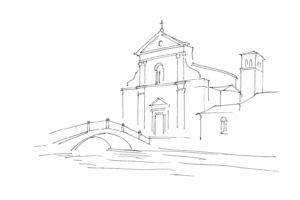
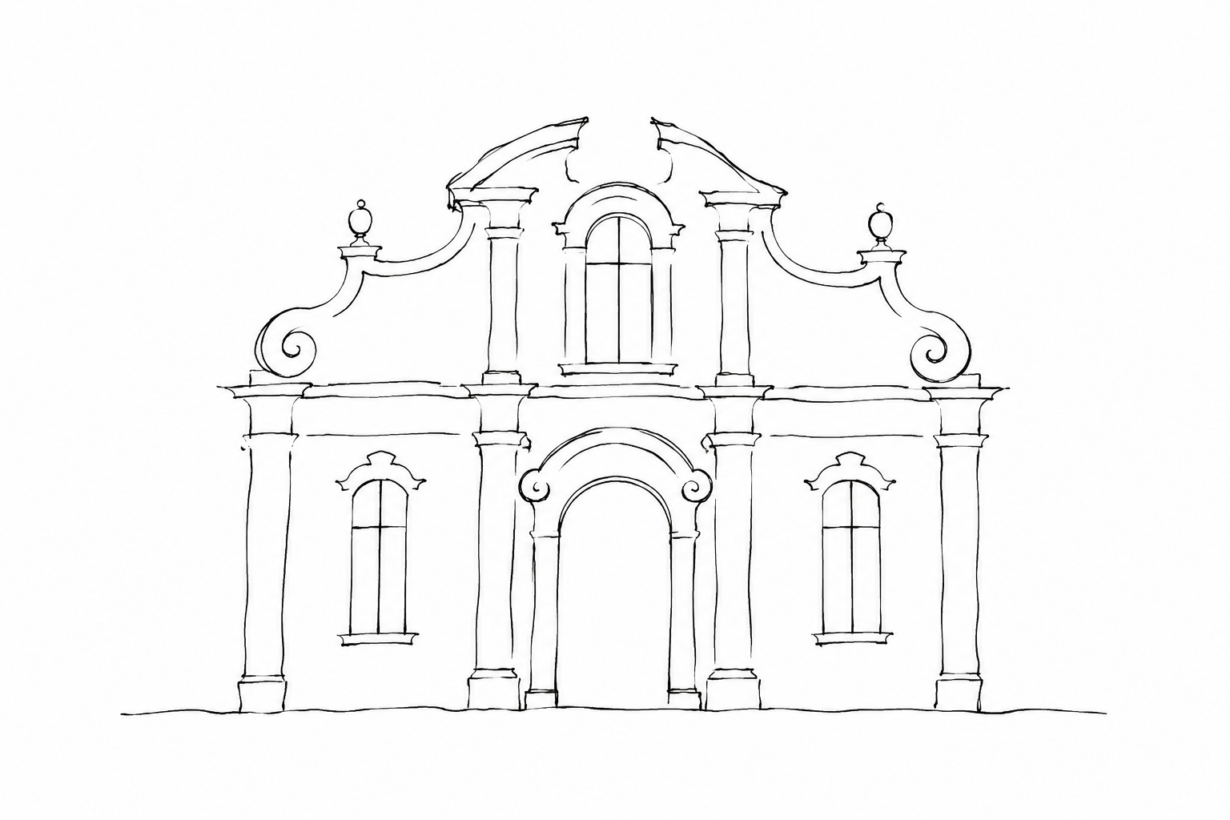
The first surprise is precisely this controlled disproportion. The church of Santa Maria dei Derelitti, known as the Ospedaletto, shows toward the street a Baroque façade designed by Baldassare Longhena and built between 1668 and 1674. In an area of Castello where many architectures speak in a low voice, here the language changes: columns, niches, sculpted figures and a theatrical layout transform the entrance into a kind of urban stage.
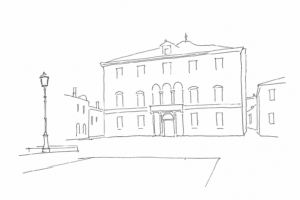
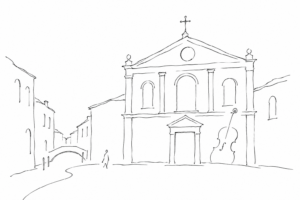
At the center, inside a large shell, appears the bust of Andrea Cargnoni, the benefactor connected to the construction of the façade. It is a useful detail for reading the building: not only a church, but a civic institution built around care, public reputation and representation. Even before entering, the Ospedaletto thus declares its complex nature: assistance, devotion, music and spectacle coexist behind a front that, in just a few meters, changes the rhythm of a walk in Castello.
Derelicts, poor people and orphans: the charitable origin
To understand the Ospedaletto, one must start from its name, more than from its façade. “Derelitti” was not a poetic label: it indicated people left without a network of protection, poor, sick, disabled, children without family or without means. The institution was founded in that area from 1528, within a Venice struck by the crisis of 1527-1528, when assistance was not a service separated from religious life, but a concrete response organized around confraternities, benefactors and places of welcome.
In this context belongs the connection with Saint Jerome Emiliani, a central figure of Venetian charity in the early sixteenth century. The tradition of the Ospedaletto links him to the desire to welcome precisely the sick, the poor and orphans: therefore not a marginal shelter, but a piece of the city network that tried to bring order to social emergencies that were very visible in the calli and campi.
The church of Santa Maria dei Derelitti came later, in 1575, next to the already existing hospital. This passage is important: first there is the charitable function, then a sacred space built to give it public and spiritual form. The church should not be read only as a “decoration” of the institution, but as a place where care, prayer, education and daily discipline were held together.
It is from this practical, almost harsh origin that the musical and theatrical activities of the complex would later also arise: not as a separate luxury, but as part of the education and public visibility of the institution.
Music, choir galleries and rooms: the less obvious heart of the Ospedaletto
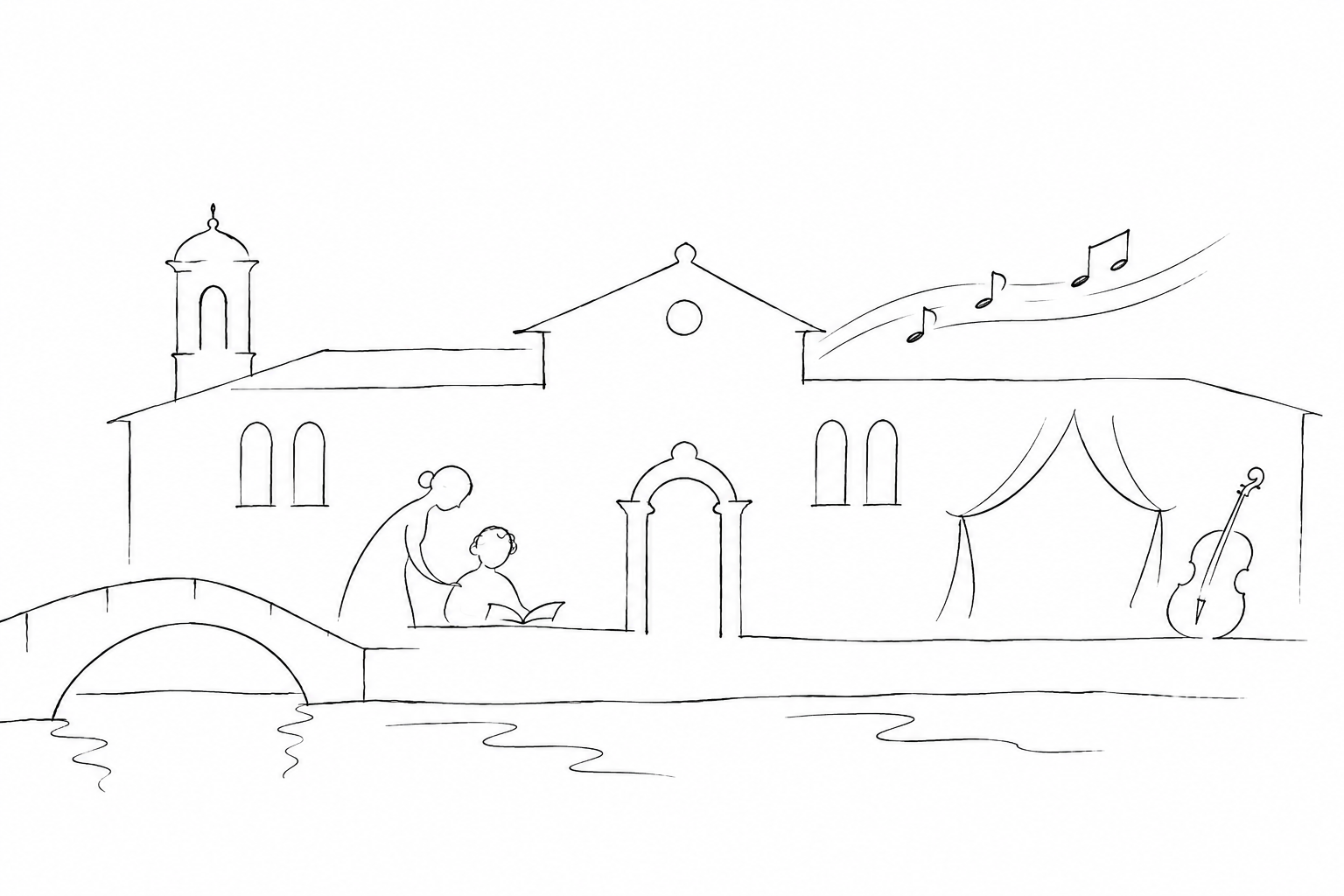
The most surprising part, once the threshold has been crossed, is not only pictorial: it is acoustic. The Ospedaletto was one of the Venetian places where assistance also became musical education. The putte, girls raised in the institution, were trained in singing and instruments; they were not a simple accompanying choir, but a presence capable of giving public prestige to the house that welcomed them.
For this reason it is worth observing the interiors by thinking of sound, not only of images. The preserved choir galleries tell of a church organized to allow listening without showing too much: voices and instruments could arrive from above, filtered by the architecture, with an effect of controlled distance. It is an important detail, because it explains why a place born for the derelicts could also become a respected musical center.
Another point not to miss is the organ by Pietro Nacchini, dated 1751. Nacchini was among the great organ builders active in the Veneto area in the eighteenth century, and the presence of one of his instruments here confirms the level reached by the musical chapel. It is not an isolated ornament: it dialogues with the choir galleries and with the very idea of sonic space.
The interior route then finds a change of register in the Music Room, decorated by Jacopo Guarana and connected to the musical life of the complex when the church was no longer enough, also for acoustic reasons. Here the theme of theater enters without the need for monumental stages: painted ceiling, reception room, music performed and listened to in an environment designed to impress benefactors, guests and authorities. The Ospedaletto can truly be understood only by holding these three functions together: care, artistic discipline and social staging.
How to visit it and read it within a walk in Castello
To organize the visit, the practical reference is simple: the complex is located in Barbaria de le Tole, Castello 6691, a few minutes from the large area of San Giovanni e Paolo. Venezia Unica indicates opening every day from 10:00 to 17:00, but it is advisable to check before setting off, because times, entry procedures and availability of the monumental rooms may vary.
For tickets as well, it is better to go through the official Venezia Unica channels, without relying on information reported elsewhere or not updated. Once inside, devote time to reading the spaces: façade, church, choir galleries, Music Room and internal courtyards are not separate episodes, but parts of an organism born to assist, educate and represent itself.
On a walk, the Ospedaletto works well together with San Giovanni e Paolo and the nearby calli: first the monumental campo, then the narrow passage of Barbaria de le Tole, finally this architecture that transforms Venetian charity into an urban stage.
The Ospedaletto dei Derelitti leaves a very Venetian lesson: the most interesting buildings do not always coincide with the most famous ones, and often ask to be read in layers. Here a theatrical façade introduces a history made of fragility, education, charity, music and public representation. If you include it in a walk in Castello, do not treat it as a simple detour: stop to observe how the spaces speak to one another. It is precisely in this balance between care and spectacle that the complex reveals its value, discreet but anything but minor.