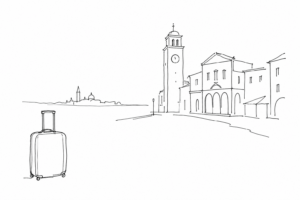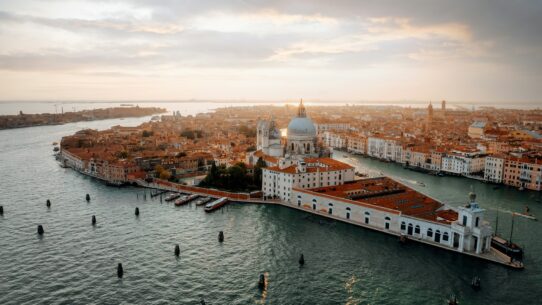
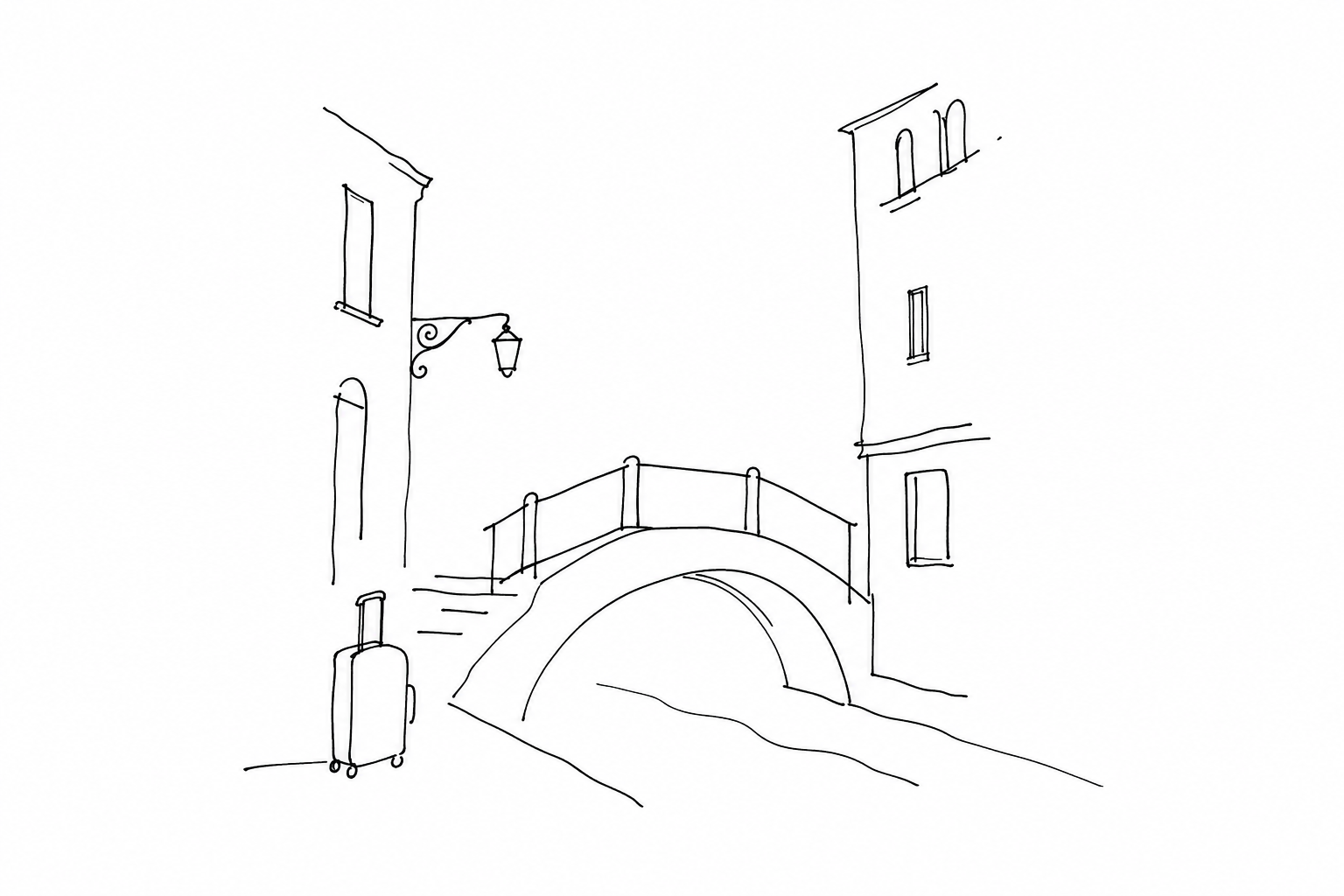

Arriving in Venice with a wheeled suitcase seems like a simple, almost automatic gesture. Then the first bridges appear, the narrow calli, the uneven masegni, the uncertainty between a fondamenta and a sottoportego. The city, built for boats and footsteps more than for wheels, immediately asks for attention. It is not a matter of discouraging luggage, but of understanding how to move around without turning your arrival into a small test of endurance. From Santa Lucia to Piazzale Roma, up to the choice between sleeping in the lagoon or in Mestre centro, a few details read beforehand can change the rhythm of the trip.
Arriving light: why the wheeled suitcase changes the rhythm
In Venice, arrival does not end when you get off the train at Santa Lucia or the vehicle at Piazzale Roma: it really begins on the first stretch on foot, when the wheeled suitcase meets bridges, steps and stone paving. The city is built on islands connected by narrow passages, and even a short route can change rhythm if the suitcase is heavy.
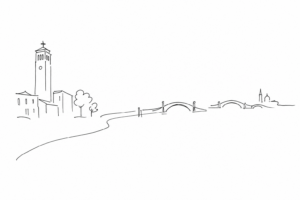
The critical point is not only the distance, but the sequence: one bridge after another, calli where two people cross paths with difficulty, small campi where you have to orient yourself without stopping the flow of passers-by. The Ponte degli Scalzi, in front of the station, and the Ponte della Costituzione, towards Piazzale Roma, immediately show this difference between map and reality: on paper they seem like a few metres, with luggage they become a small practical test.
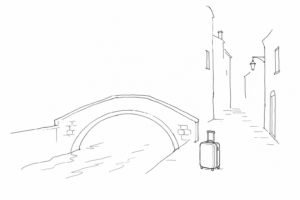
Arriving light means being able to read the city better, choose a detour without anxiety and not turn the first contact with Venice into a struggle against wheels, steps and crowds.
From Santa Lucia or Piazzale Roma: read the map first
The two most common entrances are not equivalent when you have a wheeled suitcase. Leaving Venezia Santa Lucia station, you immediately find yourself in front of the Grand Canal: the temptation is to cross the Ponte degli Scalzi, but it is often better to ask yourself first which bank your accommodation is on. Staying on the Cannaregio side, towards Lista di Spagna and Strada Nova, can avoid unnecessary steps.
From Piazzale Roma, the city’s road terminal, the initial choice is different: you are already in the Santa Croce area, near the routes to Tolentini, Frari and San Polo. The Ponte della Costituzione connects to the station area, but it should not be taken automatically: with wheels and luggage, every crossing weighs.
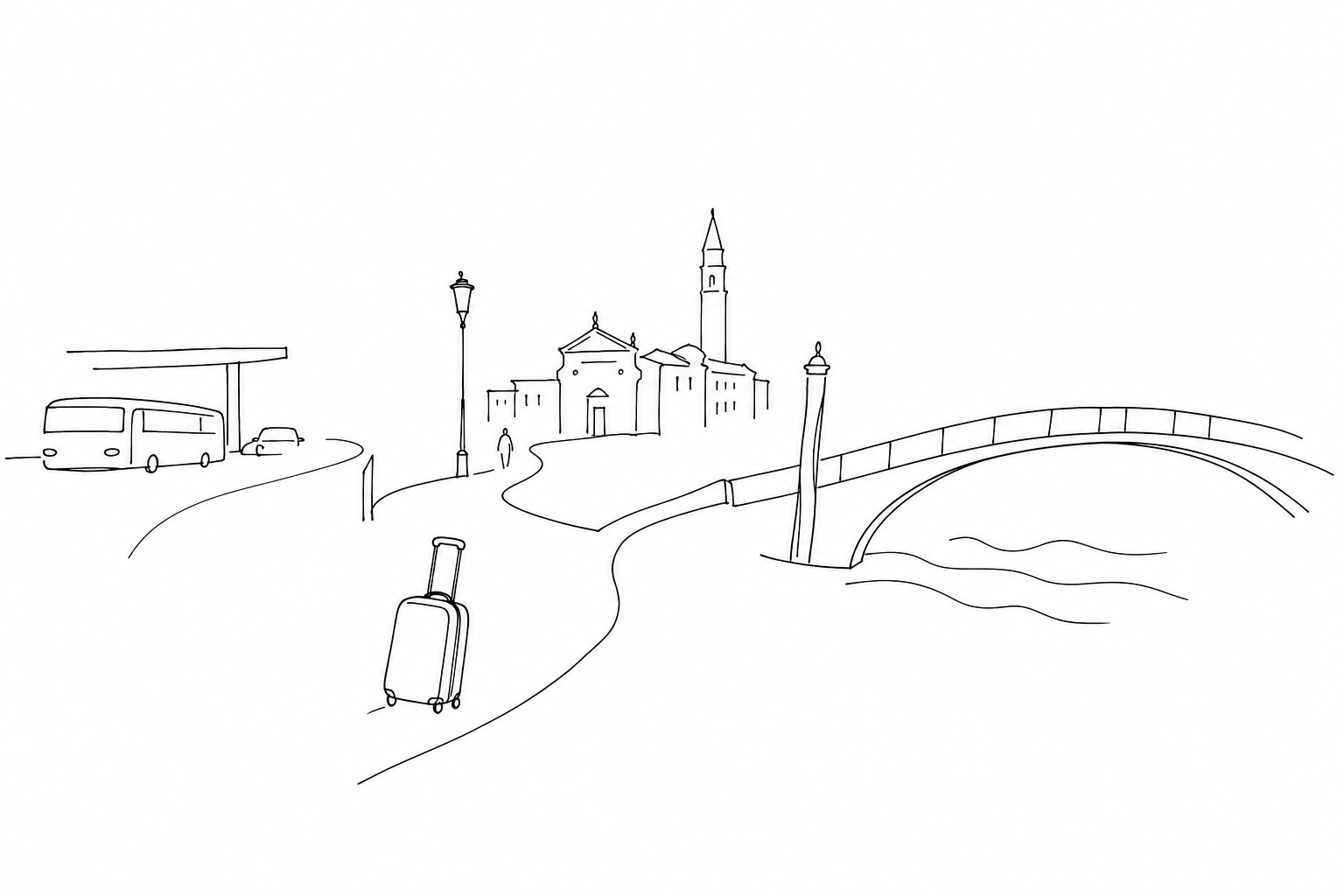
Before moving, reading the map means identifying three things: the canal to cross, the name of the main fondamenta or calle, and the last bridge before the destination. In Venice, the typical mistake is to follow the “shortest” direction without counting the steps. Better one extra bend along a wide fondamenta than a shortcut made up of closely spaced small bridges.
Bridges, calli and campi: the mistakes to avoid
The first mistake is treating every bridge as a simple crossing. Many have low but numerous steps, often in worn Istrian stone: with a hard suitcase they become tiring and noisy. Better to stop first, close the outside pockets properly and use the side handle for a few metres, instead of dragging the wheels over every riser.
- Trusting only the navigator. In narrow calli, the signal can shift the position of a side street. Also check the names written on the walls: “calle”, “salizada”, “fondamenta” indicate different spaces and help you understand whether you are skirting a canal or entering a closed passage.
- Cutting across crowded campi. A campo is not just any square: it is often a meeting point, a passage for residents, an area with historic wells or outdoor seating. Keeping your luggage close to your body avoids bumps and sudden stops.
- Underestimating house numbers. Here they follow the sestiere, not the street. Before looking for the doorway, check the sestiere, the name of the calle and the full number.
Base in the historic centre or in Mestre: the weight of the suitcase matters
The choice of base is not only economic: it depends on how many kilos you are dragging. If the room is in the historic centre, it is worth looking for accommodation that can be reached with few bridges from the arrival point, or near a public navigation stop; always check the updated service conditions. A flat map deceives: two hundred metres can include three arches with steps, a narrow calle and a crowded campo.
Mestre centro is more practical with hard or heavy luggage: wider pavements, more linear routes and easier access to the hotel door, depending on the location chosen. The disadvantage is postponing the transfer towards the lagoon every day, so the lightness of the initial route is paid for in time.
- Light suitcase: better to sleep near the places to visit.
- Heavy suitcase: better to reduce bridges, changes and paving stones.
Venice is easier to cross when you accept its logic: short distances on the map, more flexible times in reality, routes that depend on bridges, banks and minute passages. A light wheeled suitcase, an address checked carefully and a first reading of the route help avoid common mistakes, without taking anything away from the surprise of arrival. Whether you sleep in the city or in Mestre centro, the difference often lies in preparing the first movements. Entering Venice with less weight, physical and mental, allows you to observe it immediately with more calm.