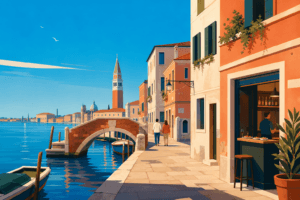

In Venice, winter brings darkness as early as the afternoon, but it does not truly shorten the city: it shifts the time for reading it. On a short visit, this reduced light can become an advantage, because it forces you to slow down, to choose better, to observe what remains in the background during the day. The calli empty out earlier, the rii reflect lit windows, the campi acquire sharper proportions. It is not a more scenic Venice in an easy sense, but one that is more legible in its details: stones, thresholds, bridges, façades and everyday gestures emerge with a different attention.
Early darkness changes the rhythm, it does not reduce the visit
In winter, in Venice, the light that fades early does not truly shorten the experience: it concentrates it. On a short stay this can become an advantage, because it forces you to read the city in two very different phases within the same afternoon: first the pale stone of the façades, then the dark reflections of the canals and illuminated windows.
The transition is particularly evident between San Marco, Rialto and the smaller calli. By day you notice proportions, marbles, capitals, campielli; after sunset, sounds and distances emerge: footsteps under the porticoes, water against the banks, the outlines of the bridges. The city built for centuries on water seems less panoramic and more theatrical.
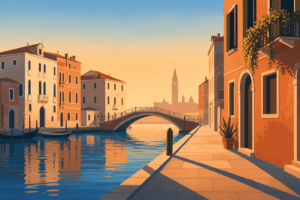
For those with little time, this double register helps avoid turning the visit into a list of places. The same walk can show monumental Venice and the more intimate one, without needing to add stops: you only need to remain in the passage between natural light and darkness.
Calli, rii and campi legible with a different attention
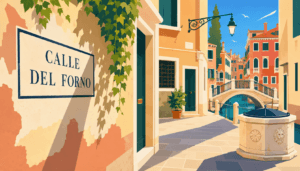
When the sun drops low, Venice better reveals certain structures that during the day risk blending into the movement. In the narrow calli, the side light highlights the irregular surfaces of the plaster, the Istrian stone frames, the lowered arches of the sottoporteghi and the wellheads at the center of the campi. These are not isolated decorative details: they help you read how the city was built for small passages, short views and continuous adaptations to water.
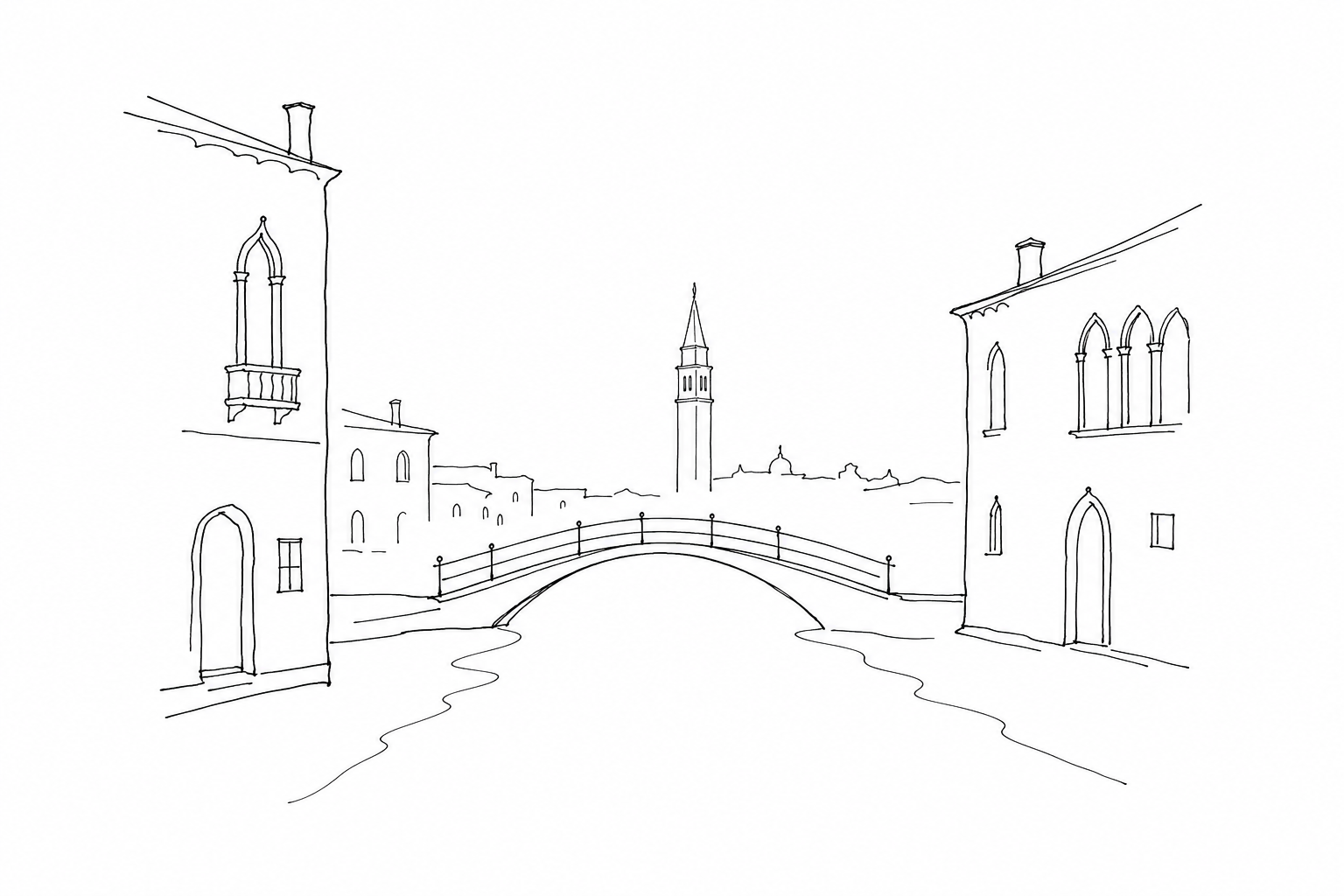
The rii also become more evident. With the reflection of windows and lanterns on the water, it is easier to understand the role of the smaller canals as operational back areas: water entrances, low banks, bridges without monumental emphasis but essential to daily life. In a campo, instead, the first darkness clearly separates the church, the houses, the well and the openings of the calli, making visible the function of the space as a small neighborhood square.
For a short visit, this urban reading is worth as much as a famous stop: it transforms the route itself into content.
Where the fading light becomes part of the itinerary
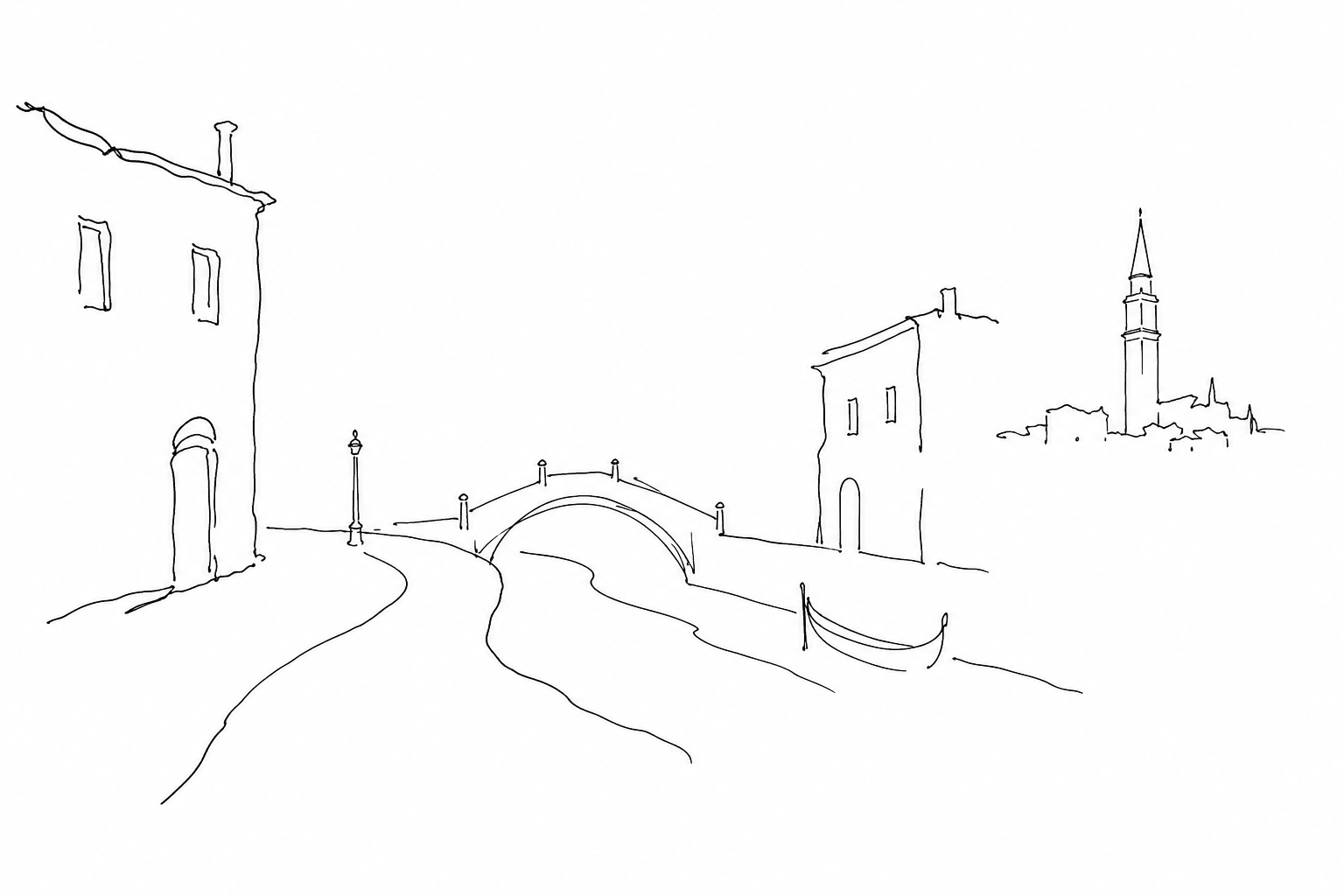
On a short visit it is useful to choose points where the passage from afternoon to evening does not interrupt the route, but makes it legible. The Zattere, overlooking the Giudecca Canal, are ideal: the horizon remains open, the façades of the warehouses and convents simplify into clear profiles, while the boats become slow reference points in space.
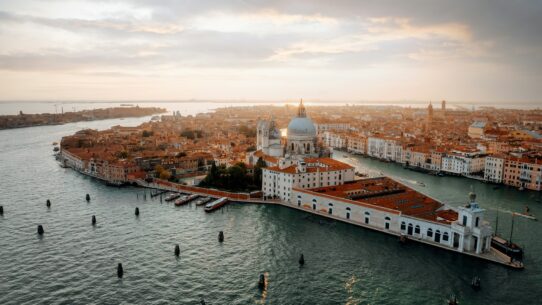
From there, reaching the Salute area makes it possible to read architecture and urban position together. Baldassare Longhena’s basilica, built in the seventeenth century after the plague, gains strength when the remaining glow strikes the large dome and leaves the lower parts in shadow. A little farther on, Punta della Dogana clarifies the relationship between the Grand Canal and the San Marco Basin: the city appears almost drawn by the water.
Another suitable place is the Accademia Bridge. Without turning it into a mere photo spot, it is worth stopping to observe the sequence of Gothic and Renaissance palaces along the Grand Canal. The gradual lighting of the windows helps distinguish homes, historic hotels and institutional buildings, giving the evening an interpretive function, not only an atmospheric one.
How to organize a few winter hours
To make the most of a short afternoon, it is useful to build the route in nearby blocks, without unnecessary crossings. Choose an initial area with an important interior — a church, a Scuola grande, a civic museum — and keep the outdoor stretch for the exit, when Istrian stone, brick and water change contrast. Before setting out, always check updated openings and conditions: in the cold season they may vary due to restorations, acqua alta or site management.
- First stop: a covered place that provides historical context, for example Venetian painting, Gothic architecture or confraternal devotion.
- Second stop: a slow connection, with low bridges and fondamenta, avoiding chasing too many sestieri.
- Third stop: a wide outlook, useful for reading profiles, bell towers and boats when the early darkness simplifies the scene.
The rule is to reduce distance, not intensity: fewer places, observed at the moment when winter makes them less dispersed.
Visiting Venice in winter means accepting a less extended but often more precise rhythm. The early fading of the light invites you to build short, concentrated itineraries, capable of alternating exteriors, churches, museums, stops and crossings without chasing too many stages. In this reduced measure the city shows aspects that a long day can disperse: the relationship between water and architecture, the passage between natural light and urban illumination, the ordinary life of the campi. For those with little time, darkness is not a limit to compensate for, but a condition to use in order to see better.