
The Venice People Mover is a small, almost peripheral infrastructure, but it clearly reflects one of the most delicate points of the contemporary city: the transition between the mainland, terminals, parking lots and the historic center. In just a few minutes it connects Tronchetto, Marittima and Piazzale Roma, crossing a landscape made up of tracks, quays, ramps, water and urban edges. It is not an attraction, nor does it claim to be one: it is a practical device, created to ease short but often decisive journeys. Observing it carefully means reading a less scenic and more functional Venice, where everyday mobility meets the arrival of visitors.
A very short but strategic route
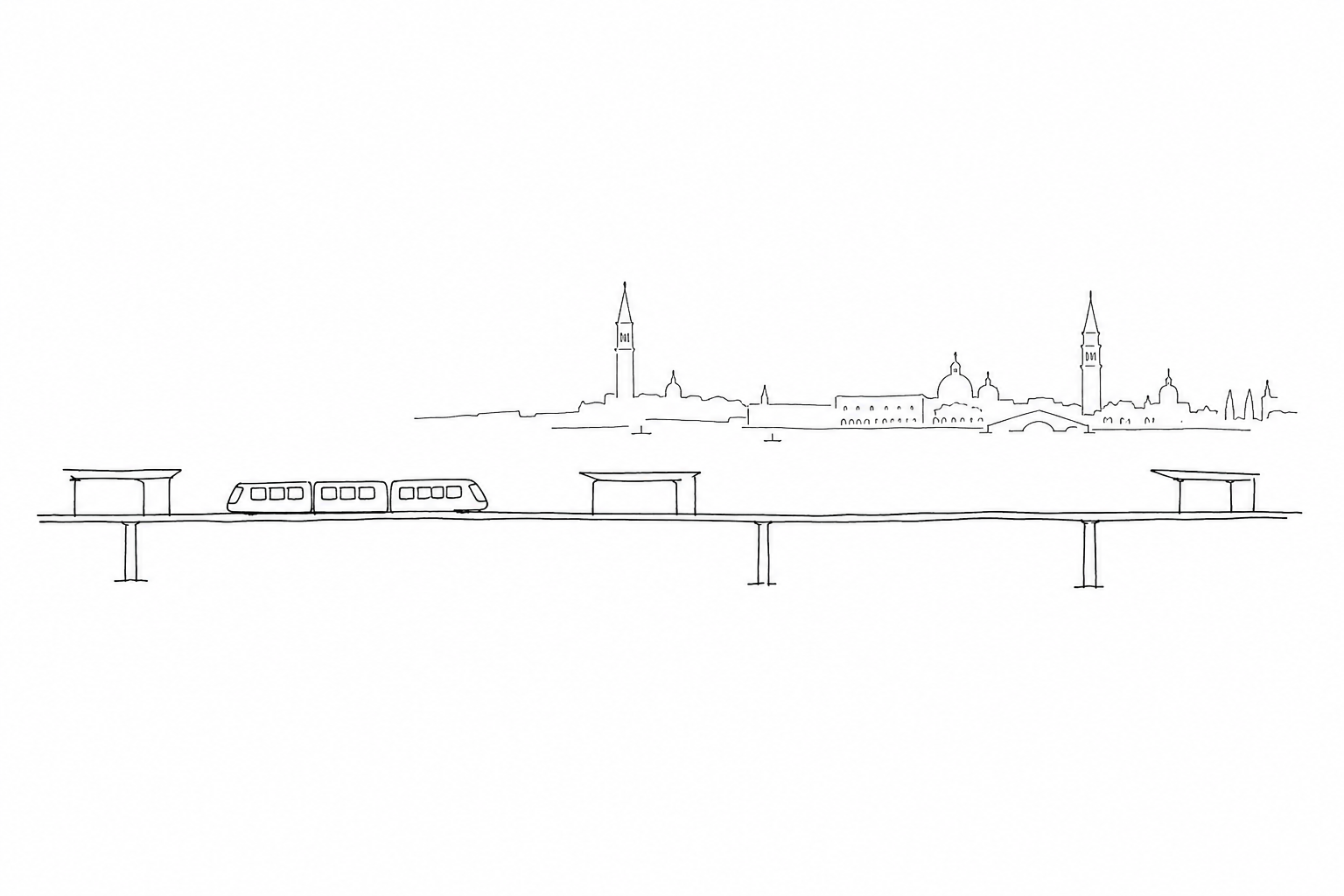
The Venice People Mover covers a tiny route, just under one kilometer, but it crosses one of the most delicate points of arrival in the city. It is an elevated automatic shuttle that connects three stops: Tronchetto, an area of parking lots and road access; Marittima, linked to the port and terminals; Piazzale Roma, the last large space reachable by road before pedestrian and waterborne Venice.
Its importance lies precisely in its brevity: it prevents a logistical step from turning into a complicated transfer. Those who leave their car at Tronchetto, those arriving from a ship or those who need to quickly reach the Piazzale Roma hub find a direct connection between modern infrastructures and the historic city.
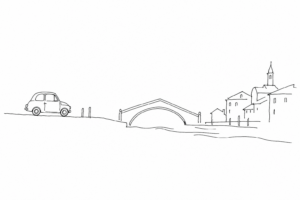
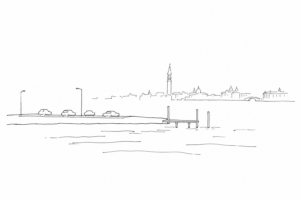
Opened in 2010, the system is designed as a functional stitch between the mainland, the port and lagoon access points. It does not take you “inside” monumental Venice, but to its operational threshold. For updated timetables, fares and rules, it is always advisable to check the official information before traveling.
The three stops: Tronchetto, Marittima, Piazzale Roma
The People Mover route reads almost like a small entry map: three names, three functions, no detours. The ride starts or ends at Tronchetto, the artificial island created in the second half of the twentieth century to accommodate cars, coaches and parking-related services. Here the system intercepts those leaving their vehicle before approaching the historic center.
The intermediate stop is Marittima, linked to the port area and cruise terminals. It is the point where the short system best shows its practical nature: it is not designed for the view, but to bridge a logistical gap between quays, parking lots and pedestrian access points.
The urban terminus is Piazzale Roma, the last large road hub before the city of water. From here you continue on foot or with lagoon transport. In just a few minutes, the route therefore puts three thresholds in sequence: parking, the port, the urban entrance. Its importance lies precisely in this linear simplicity, which makes a often complex edge of Venice readable.
How to read the People Mover in the urban landscape
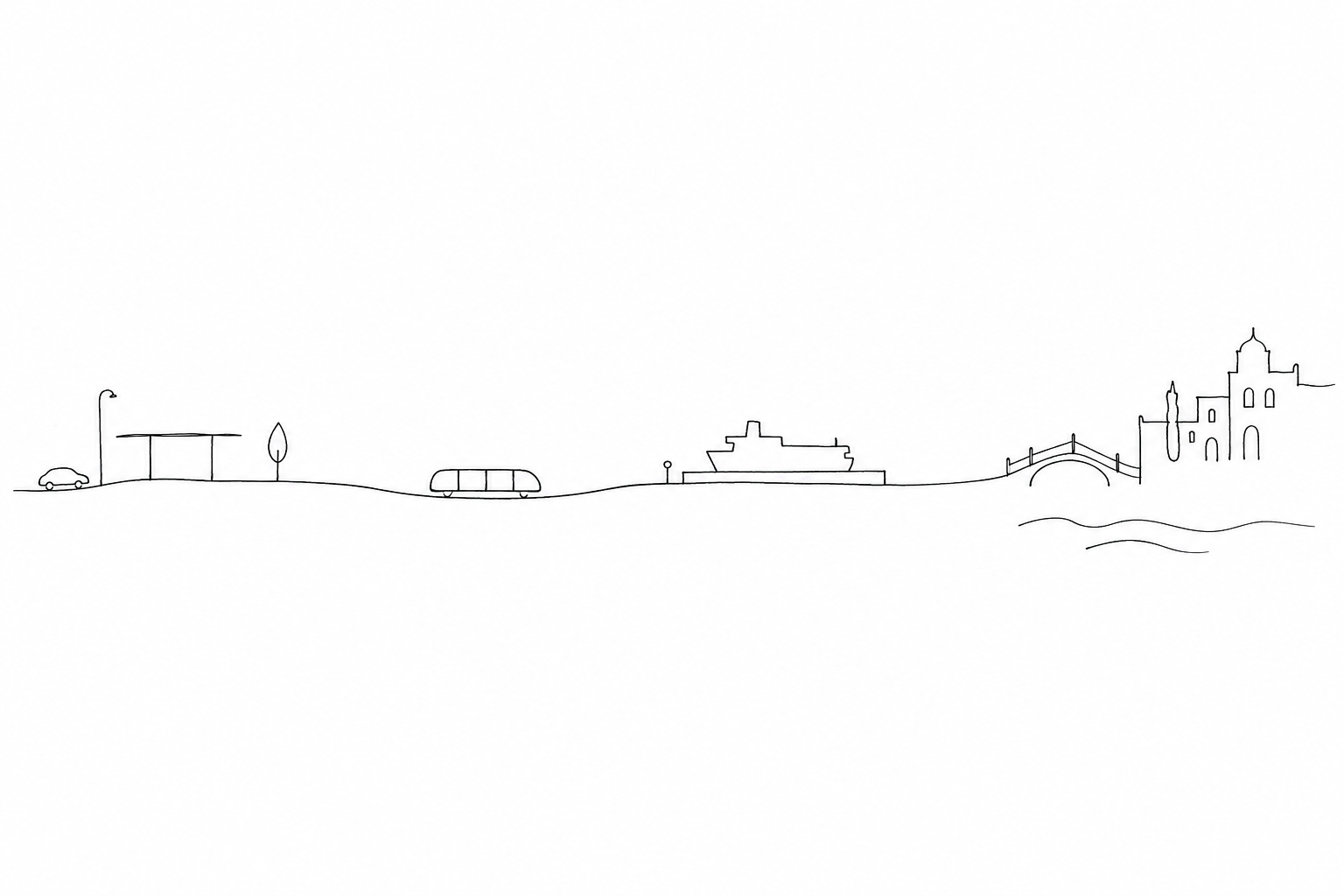
More than a transport line, the People Mover functions as a technical sign drawn along the western edge of the historic city. The elevated track, supported by pillars and beams, does not seek a monumental effect: it crosses an area made up of ramps, docks, parking lots, warehouses and fences, that is, the operational back side that often remains outside the postcard image of the lagoon.
Its short course makes it possible to observe a clear transition between different infrastructures. On one side there are surfaces designed for cars, coaches and boarding; on the other, the pedestrian threshold toward bridges, calli and vaporettos comes closer. The automatic ride, almost horizontal, brings visual order to this interweaving: it follows a readable trajectory separated from traffic, without turning into a metro or a traditional railway.
The scale is also significant. Compact cabins, essential stations and a single track describe a connecting infrastructure, not one for crossing the city: a minute device, built to stitch together a few precise points where the city of water meets land-based logistics.
When it is worth using and what to check
The Venice People Mover is especially useful when the route coincides with its three fixed points: arrival by car at Tronchetto, passage from the Marittima area, or the need to reach Piazzale Roma without relying on water taxis or long walks with luggage. Its strength is not capillarity, but simplicity: few stops, a short route, immediate orientation.
Before including it in an itinerary, however, it is advisable to check some updated practical aspects: operation of the service on the planned day, accepted travel tickets, any interruptions, access conditions with bulky suitcases, strollers or wheelchairs. Even the actual distance between the Marittima stop and the quay, terminal or boarding point can vary significantly depending on the precise destination.
It is less suitable if you need to reach the monumental heart of the lagoon city directly: in that case it remains only an initial connection, to be combined later with vaporetto, bus, taxi or walking.
Using the People Mover may seem like a logistical detail, but in Venice even access details change the way you enter the city. This short route helps you understand the threshold between the road and port system and pedestrian Venice, which begins at Piazzale Roma. It is useful when arriving from Tronchetto, from the cruise terminal or from some parking areas, provided you check timetables, fares and actual distances from your starting point. More than an experience to remember, it is a practical key to reading an urban space of transition, often crossed in a hurry.