


Bigoli in salsa are one of those Venetian dishes that do not seek apparent elegance: few ingredients, a rough texture, a strong aroma of stewed onion and anchovy. Yet they tell a great deal about the city, its lean days, domestic kitchens and a kind of poverty capable of turning necessity into flavor. Understanding them means looking at Venice not only from its bridges and façades, but also from the simple tables of osterias, where history passes through a dark, slow, deeply lagoon-like sauce.
What bigoli in salsa are
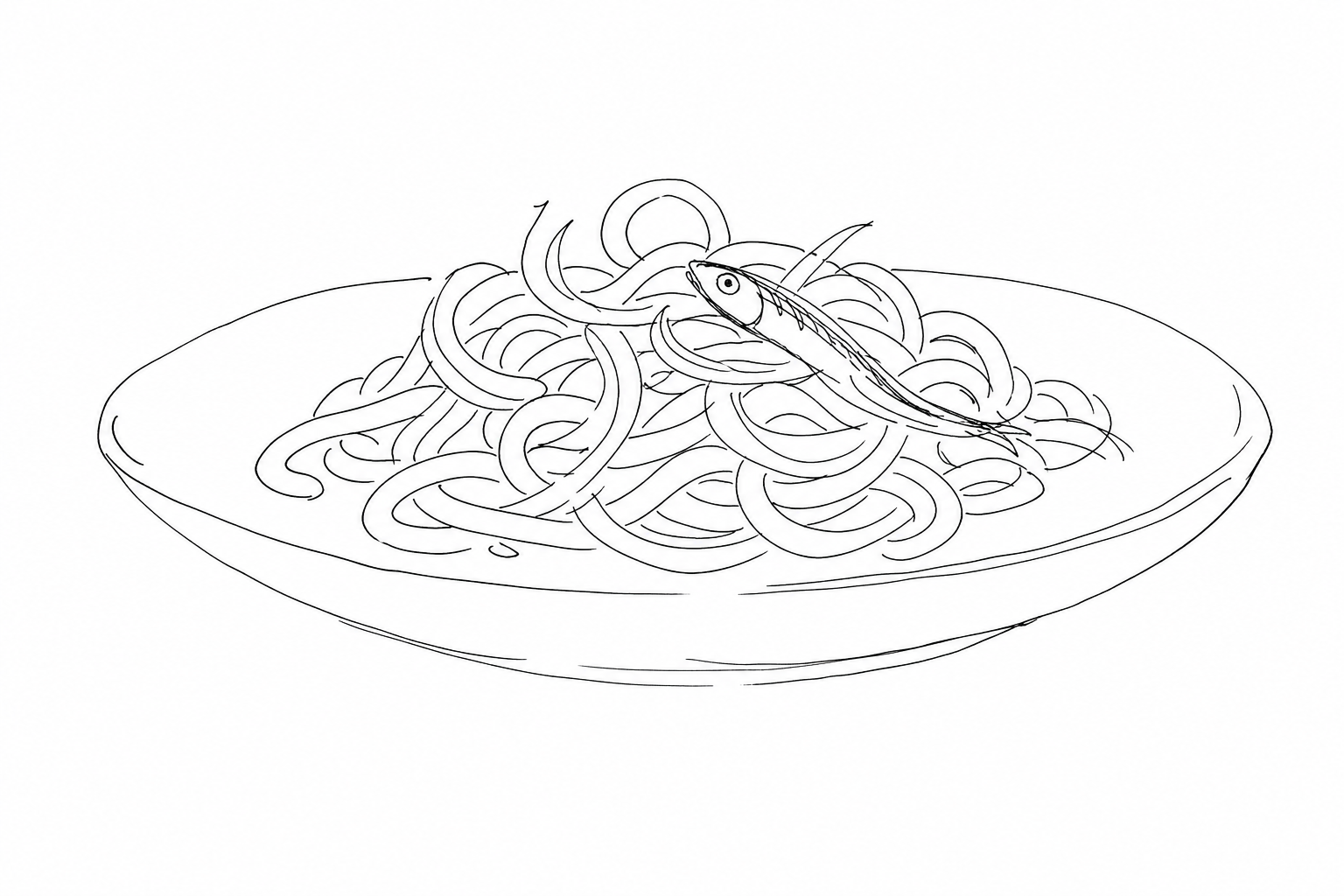
Bigoli in salsa are one of the most recognizable dishes of Venetian lean-day cooking: a long, rough and substantial pasta dressed with an essential sauce of stewed onion and anchovies or, in the lagoon tradition, also salted sardines. The name “salsa” does not indicate a rich cream, but a slow, savory and almost broken-down condiment, in which the sweetness of the onion balances the salty strength of the preserved fish.
Bigoli, similar to thick spaghetti, were historically prepared with soft wheat flour or with mixed doughs; their porous surface holds the sauce well. The Venetian character of the dish is born precisely from the meeting between a poor pantry and a maritime environment: few ingredients, long cooking, intense taste. For this reason bigoli in salsa are linked to vigils and days of abstinence, when meat was excluded but the table remained full of aroma and substance.
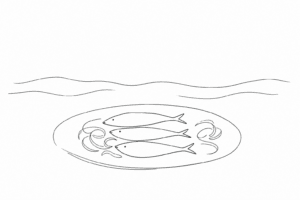
Humble origins and lean days
The strength of this dish comes from a cuisine of necessity, built with what could be preserved for a long time and cost relatively little. In Venice, onion was an everyday ingredient, easy to find in the gardens of the lagoon and the mainland; salted anchovy, on the other hand, brought the flavor of the sea into the pantry without requiring fresh fish.
The link with lean days is decisive. In the Catholic tradition, vigils, Lent and occasions of abstinence excluded meat from the table. This preparation answered the rule without giving up substance: the slow sweetness of the onion compensated for the savoriness of the anchovy, creating an intense condiment with very few elements.
It was not a dish to show off, but one to make go a long way. Long cooking transformed humble ingredients into a dark, fragrant cream, capable of enveloping the rough pasta and satisfying the appetite. Precisely for this reason it has remained in Venetian memory: a sober domestic ritual, born among pantry, religious calendar and popular ingenuity.
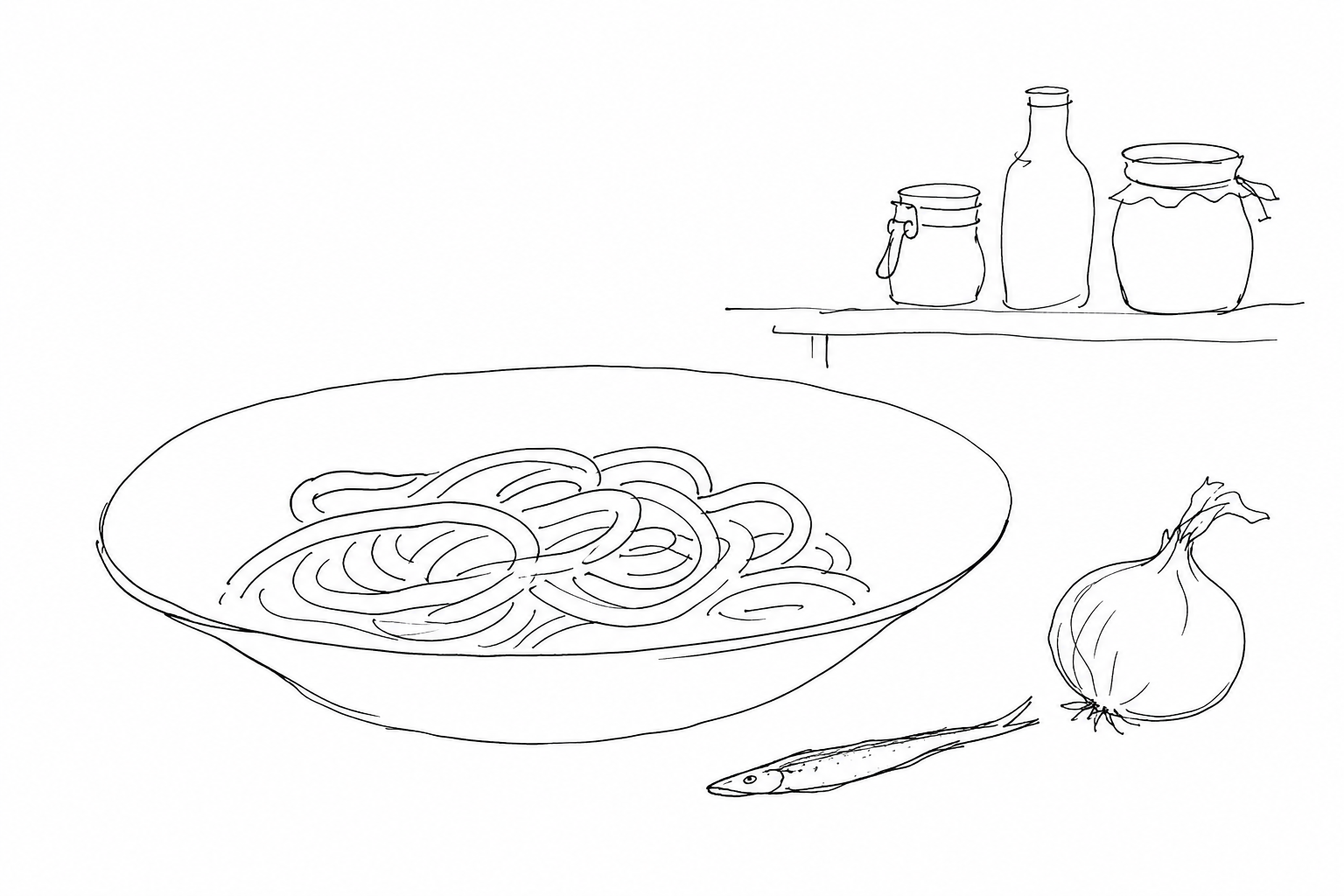
The secret lies in time, not in the strength of the flame. The base must soften calmly in oil, over a gentle heat, until it becomes soft, almost creamy, without taking on a dark color: if it burns, the flavor turns bitter and covers the sea of the anchovy. Slow cooking transforms the initial pungent note into sweetness, creating the foundation on which the salted fish can melt.
The anchovies, desalted if preserved under salt or well drained if in oil, should not be fried for long. They go in when the base is already tender and break down with the residual heat, helped along with a spoon. The correct result is not a liquid sauce: it should have a velvety consistency, oily but not heavy, capable of clinging to the rough pasta.
During the final mixing, a little starch-rich cooking water binds everything and makes the condiment more uniform. The bigoli should remain firm to the bite: their thick section holds the savory cream, leaving in the mouth a precise balance between sweetness, salt and lagoon aroma.
How to recognize them in Venice
In Venice you will often find them also listed as bigoi in salsa: the dialect name is already a good sign, especially in trattorias that preserve a home-style rather than tourist-oriented cuisine. To taste them carefully, first look at the color: it should be golden beige, never red, never too dark. The condiment should not float in oil, but veil every strand with a rustic, glossy cream.
On the nose there should be stewed sweetness and a marine note, not an aggressive smell of preserved fish. In the mouth, look for three clues: a thick and porous shape, firm chew, savoriness that grows without covering everything. If the preparation is correct, no cheese is needed: the depth comes from the dissolved anchovies and the long cooking of the vegetables.
- Be wary of watery versions or ones with burnt soffritto.
- Appreciate a slight irregularity: it is a sign of cooking made at the moment.
- Always check the updated menu, because recipes and availability can change.
Recognizing good bigoli in salsa in Venice means looking for balance: the pasta must hold the condiment, the onion must not cover everything, the anchovy must melt without becoming aggressive. It is an everyday and ancient dish, linked more to measure than to abundance. Tasting it attentively helps you read another Venice, made of slow gestures, essential pantries and flavors born before tourism, when cooking followed the calendar, the sea and the needs of urban life.
Related Posts
Bigoli in salsa: the poor pasta that tells of anchovies, onions and days of abstinence
An outline on bigoli in salsa: poor Venetian pasta, slow-cooked onions, salted anchovies and the memory of days of abstinence.Sarde in saor: the sweet-and-sour dish that tells of sailors, preservation and the lagoon
History, taste and everyday use of sarde in saor, a Venetian dish born among fishing, onions, vinegar and long preservation.
Baccalà mantecato: why a fish from the North became one of the most Venetian flavors
History, technique and places of baccalà mantecato, from Nordic cod to Venetian tables.Questions Answered
What are bigoli in salsa?
A Venetian pasta with a sauce of stewed onion and anchovies or salted sardines.Why is this dish linked to lean days?
It adheres to abstinence rules by replacing meat with preserved fish and onion.How is the sauce for bigoli in salsa prepared?
Onions are slowly cooked until creamy and mixed with anchovies to create a velvety sauce.How can you recognize authentic bigoli in salsa in Venice?
Look for golden beige sauce, balanced sweetness and savoriness, and no overpowering fish smell.
Between bacari, cooking and the lagoon
Would you like to follow the thread linking simple ingredients, seasons and Venetian habits?
 Baccalà mantecato: why a fish from the North became one of the most Venetian flavorsHistory, technique and places of baccalà mantecato, from Nordic cod to Venetian tables.
 Moeche: what the lagoon’s soft-shell crabs are and why they are so sought afterWhat moeche are, when they are found, how they originate in the lagoon and why in Venice they are considered a rare...
 Venetian-style liver: onion, sweetness and character in a dish more refined than it seemsHistory, balance and a local reading of Venetian-style liver, among onions, bacari and city taste.
 Risi e bisi: why a simple dish tells the story of spring in the SerenissimaHistory, season and everyday gesture of a Venetian dish linked to April 25 and the lagoon.