
The Teatro Malibran is not only a historic hall where you can check a programme: it is one of the places where it is easiest to understand how Venice transformed entertainment into an urban, economic and social habit. Those who arrive today among narrow calli and small campi often see a discreet building; behind that facade, however, there is a story that leads from patrician Venice to the birth of opera open to a paying public. This article follows the theatre in its real context, without separating it from the district, from the families who wanted it and from the way the city learned to sell wonder.
Where the Teatro Malibran was born: Ca’ Milion and the Grimani
To understand the Teatro Malibran, one must start from the exact point where Venice brings together market, nobility and entertainment. The building that today stands in Campiello del Teatro, in Cannaregio, was founded in 1677 with another name: Teatro di San Giovanni Grisostomo, from the nearby church and the parish in which it stood. It was not a random choice. We are in the area known as Ca’ Milion, linked to the memory of the Polo family, therefore in a zone already charged with urban prestige even before the stage, boxes and singers arrived.
It was commissioned by the Grimani, one of the great Venetian patrician families, very active in the theatrical world. In the seventeenth century, owning and managing a hall did not mean only investing in entertainment: it meant controlling a place of social relations, political representation and musical culture. The new theatre was therefore born within a Venice in which opera was no longer only a court celebration, but was becoming an organised city phenomenon, with halls, impresarios and a paying public.
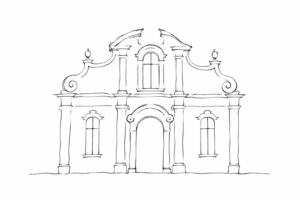
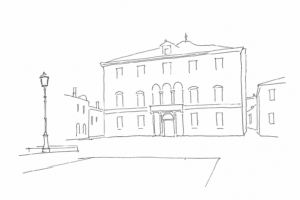
The design of San Giovanni Grisostomo is attributed to Tommaso Bezzi, known as lo Stucchino, a figure suited to such an undertaking because he combined skills in architecture, painting and stage machinery. This origin already says a great deal: the future Malibran was not conceived as a simple container, but as a theatrical machine built to amaze, to welcome a selected audience and to give the Grimani family a recognisable presence in the heart of Venice.
From the carnival of 1678 to opera for the public
The Teatro di San Giovanni Grisostomo entered the scene at the right moment: the carnival of 1678. The inauguration took place with Il Vespasiano, to a libretto by Giulio Cesare Corradi and music by Carlo Pallavicino, and it was not only the opening of a new patrician hall. It was a decisive piece within a transformation already begun by Venice forty years earlier, when in 1637 opera in music had begun to leave the circuit of courts and private festivities to become a paid spectacle.
Here is the point: in Venice, opera “for the public” did not necessarily mean popular in the modern sense. It meant that access was purchased, that the theatrical season entered the urban calendar, that success also depended on the ability to attract paying spectators. San Giovanni Grisostomo placed itself at the top of this system. It did not aim at maximum crowding or the lowest price, but at a chosen audience: Venetian nobility, high-ranking travellers, diplomats, cultured foreigners who arrived in the city precisely during the carnival.
For this reason the future Malibran matters in the history of Venetian public opera: it shows how commercial theatre could coexist with aristocratic prestige. The Grimani offered a new, costly and ambitious hall; the public, by paying higher ticket prices than at other Venetian theatres, also bought social position, worldliness and participation in a city ritual. Opera thus became a recognisable form of urban entertainment: no longer an event closed inside a palace, but an appointment regulated by the market, by the season and by the reputation of the hall.
In the Venetian panorama between the seventeenth and eighteenth centuries, San Giovanni Grisostomo therefore functioned as a high-profile cultural hub. The operas, the singers and the presence of the international public helped make the hall one of the places where Venice exported a new idea of musical theatre: elegant, competitive, open to those who could pay for a ticket, and capable of transforming carnival into a European showcase for opera.
A prestigious hall: dances, machines and Goldoni
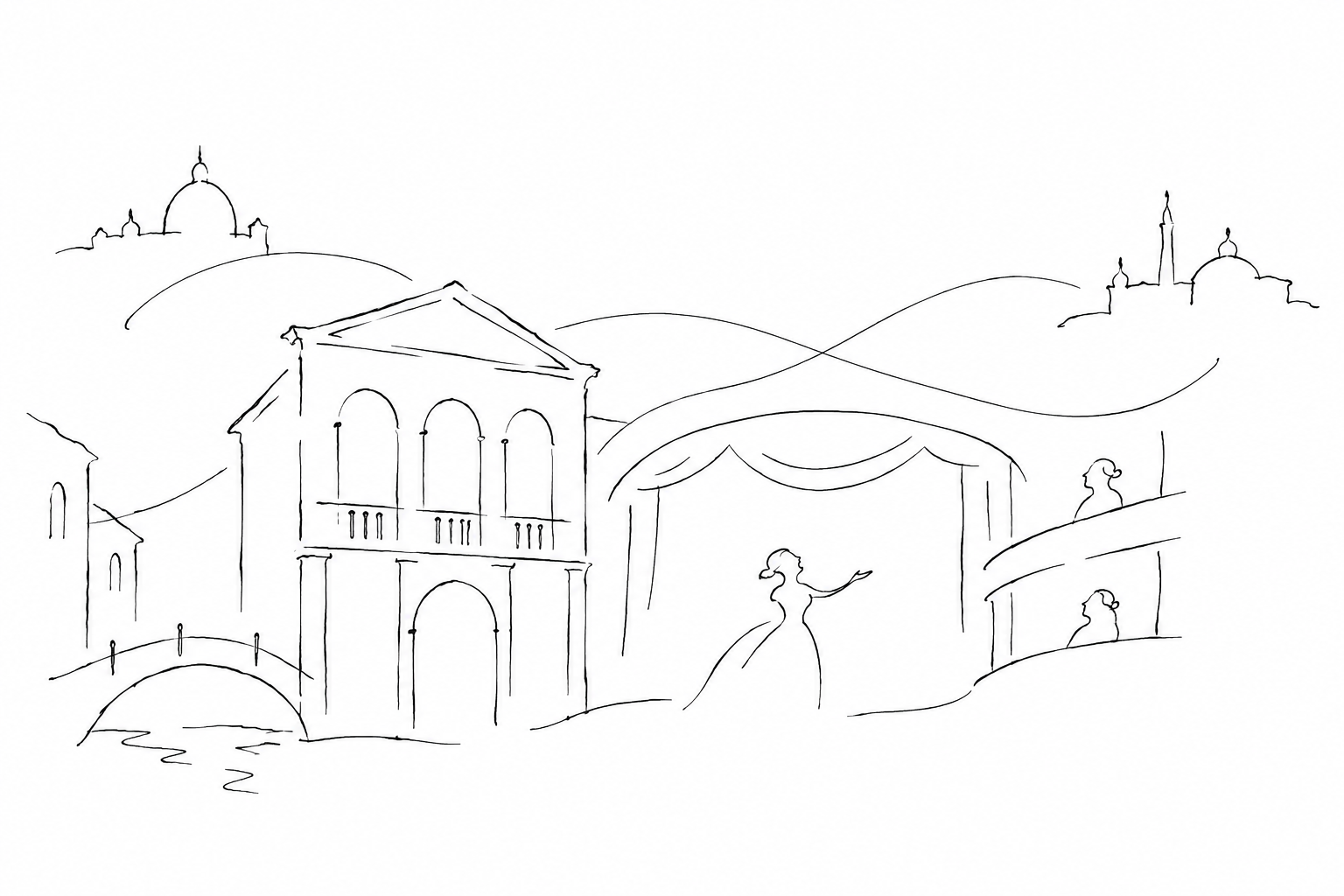
The prestige of the Grimani theatre did not depend only on the singers or on the cost of the boxes. What happened between one act and the next also counted a great deal. At the beginning of the eighteenth century this space was known for the great dances included in the evening, a different choice from that of other Venetian theatres, where the intervals increasingly tended to host comic episodes. Here, instead, dance remained part of the representation of luxury: movement, costumes, sets and visual order helped distinguish the Grimani theatrical house.
In this framework one can also better understand the attribution of the design to Tommaso Bezzi, known as lo Stucchino. He was not only an architect: he was a painter and engineer of machines, that is, a figure capable of thinking of the stage as a technical organism. Wings, appearances, rapid changes and movable apparatuses were decisive tools for a theatre that wanted to surprise without losing elegance.
Between 1736 and 1741 the young Carlo Goldoni worked there, with the role of poeta di teatro. Before the reform of comedy that would make him famous, Goldoni here learned the trade from the inside: he rewrote arias and recitatives, followed the adaptation of texts and coordinated the scenic realisation. It is an important detail, because it shows the Malibran before its nineteenth-century name: not only a noble building, but a concrete workshop of Venetian theatre.
From San Giovanni Grisostomo to Teatro Malibran
The transition from the old name to the current one tells well the last great turning point of the theatre. After the nineteenth-century reconstruction, the building officially reopened on 31 December 1834 with L’elisir d’amore by Gaetano Donizetti. A few months later came the episode that fixed the modern memory of the place: on 8 April 1835 Maria Felicita Garcia Malibran sang La sonnambula and the theatre took her name, leaving the denomination of Teatro di San Giovanni Grisostomo in the background.
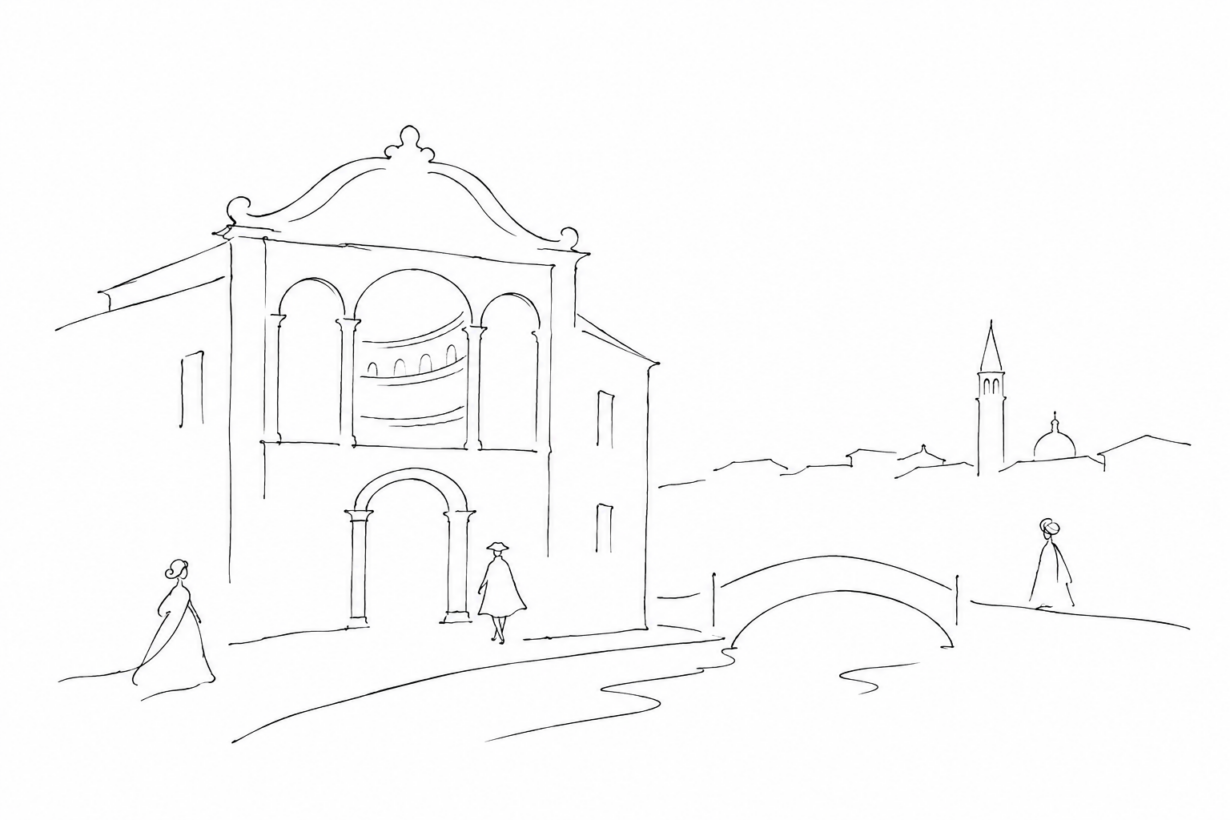
For those looking for it today, the practical reference is Campiello del Teatro, 5873 Cannaregio. It is worth, however, not reading it only on the map. Arriving from Rialto, one understands better why this building had such a strong role: it does not dominate a monumental square, but fits among narrow calli, bridges, rii and small courts. Here Venice does not offer an isolated facade to photograph; it forces one to reconstruct the theatre through the urban fabric.
This is precisely the key to the visit: to look at the Malibran as the visible heir to a long continuity. Behind the nineteenth-century name remain Ca’ Milion, the Grimani, paid opera and the city that transformed a patrician theatre into a stable point of European culture.
The Teatro Malibran is one of those Venetian places that work best when observed on two levels: that of the still active hall and the less immediate one of the city that produced it. There is no need to idealise it: its importance lies precisely in the concrete stratification of patrician ownership, impresario management, paying public, international taste and musical memory. Passing in front of it, it is worth stopping for a moment and reading the building as a still legible trace of theatrical Venice, not as a simple name on a poster.