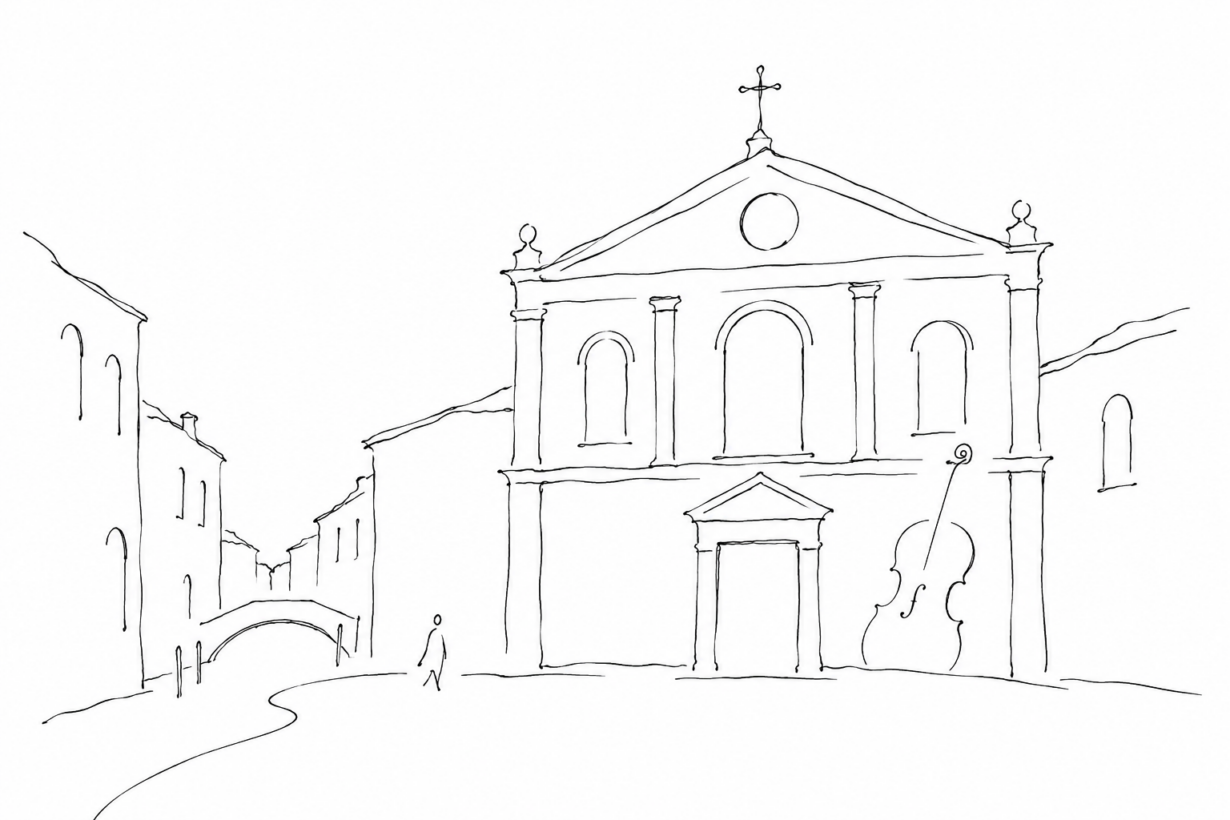

In Venice there are places that do not require a demanding detour, but change the way the city is read. The Music Museum in San Maurizio is one of them: small, central, easy to include between a walk toward the Accademia and a stop in the Santo Stefano area, but anything but decorative. Here music does not remain a vague reference to Vivaldi: it takes shape in the instruments, the workshops, the history of a deconsecrated church and in a piece of Venice less crowded than the obligatory routes. It is worth entering calmly and with eyes trained for detail.
A small, precise museum in the heart of San Maurizio
In the dense pedestrian axis between the Santo Stefano area, La Fenice and the Accademia, the Venice Music Museum is a very concrete stop: not a large museum to schedule for half a day, but a concentrated collection inside the Church of San Maurizio, in Campo San Maurizio, in the San Marco district.
The starting point is already clear from the title of the permanent exhibition, "Antonio Vivaldi and his time". Here Vivaldi’s name is not used as a simple attraction: it introduces the visitor to the sound world of Baroque Venice, when instruments, workshops, theaters and musical hospitals formed a very lively ecosystem.
The museum works well if, on your trip, you want to include a short and focused cultural stop, without changing area or building a complicated itinerary. It is also suitable for those without musical expertise: the display places readable objects at the center, especially string instruments, and helps you understand how much Italian violin making influenced the European sound between the seventeenth century, the eighteenth century and beyond.
San Maurizio: a deconsecrated church between history and music
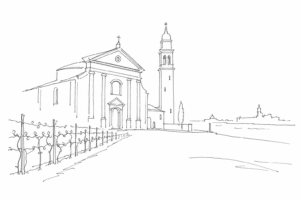
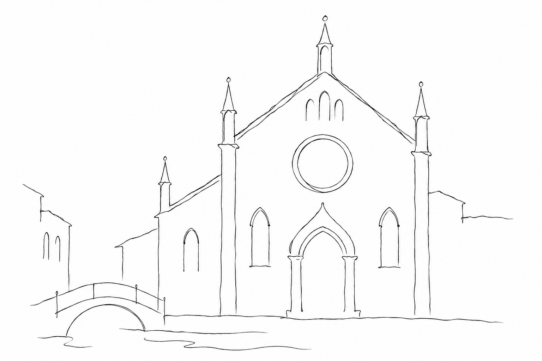
The venue counts almost as much as the collection. San Maurizio is not a church chosen at random as a neutral container: it is one of those Venetian buildings in which, on a reduced scale, one can read the city’s long-standing habit of reusing its historic spaces. The church is documented as early as 1088; after the fire of 1105 it was rebuilt and dedicated to San Maurizio, entering the fabric of the parishes that for centuries organized the daily life of the district.
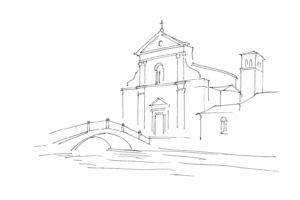
The appearance seen today, however, belongs to another period. The current building derives from the reconstruction carried out between 1795 and 1806, difficult years for Venice, precisely in the transition from the end of the Republic to a new political arrangement. The project is connected to the names of Pietro Zaguri, Giannantonio Selva and Antonio Diedo: not a secondary detail, because it places San Maurizio within the Venetian neoclassical taste, more measured and rational than the Baroque churches often associated with eighteenth-century music.
The facade overlooks Campo San Maurizio, a short distance from the flows that connect San Marco, Teatro La Fenice and the Accademia. This also makes the museum interesting from an urban-planning point of view: you need only deviate slightly from the most beaten paths to find yourself in a campo still legible as a civic space, with the deconsecrated church transformed into a place of visual listening. Inside, the antique instruments are not isolated from their context: they converse with a building that tells of continuity, changes of use and that Venice in which art, worship, craftsmanship and music often shared the same blocks.
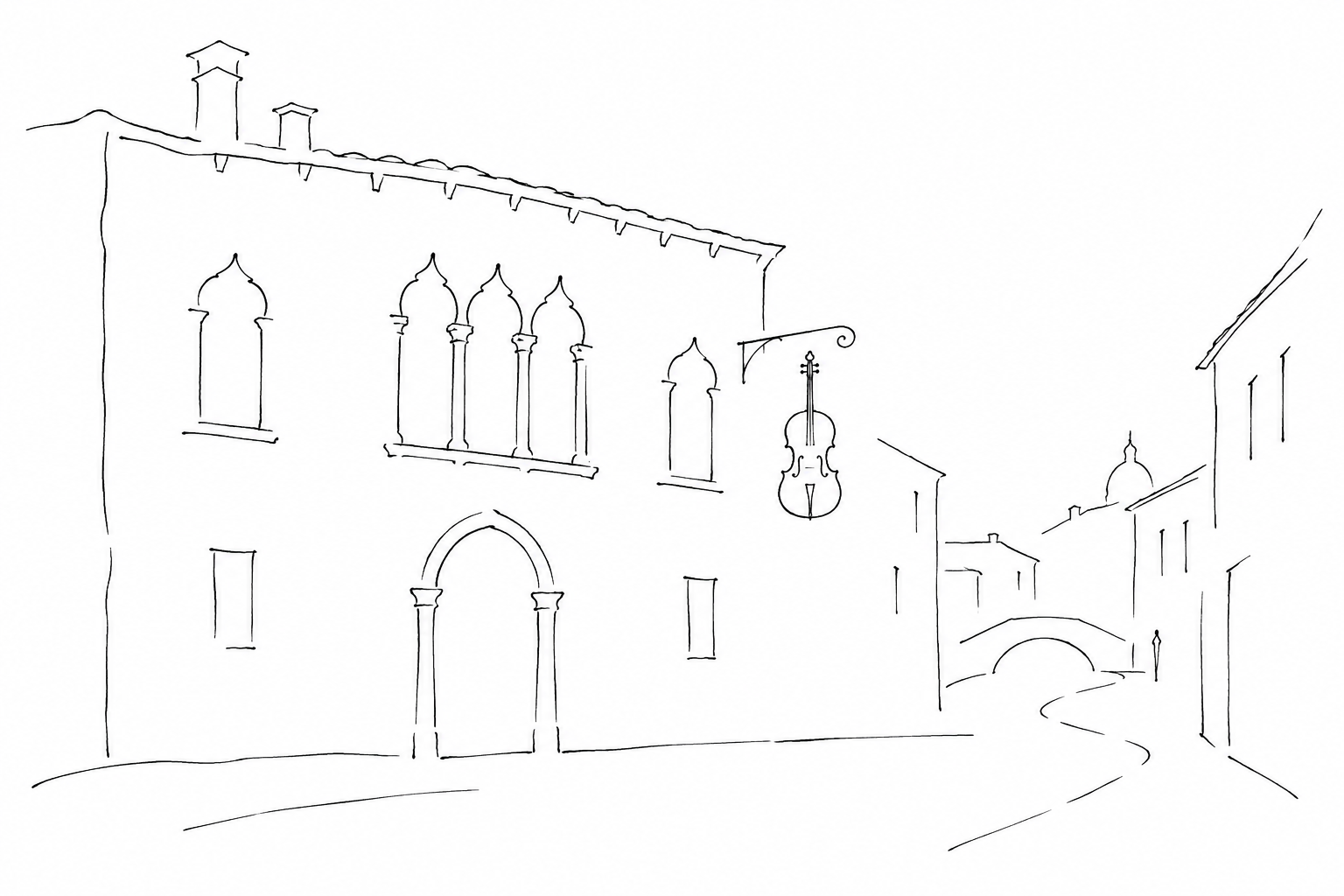
Antique violins and Italian violin making: what you see
The most interesting part of the collection is the way it lines up about three centuries of Italian violin making without turning them into a lesson for specialists. Above all, you look at the form: the arching of the body, the cut of the f-holes, the varnish, the proportion between neck and body. Small details, certainly, but useful for understanding why a violin is not only a beautiful object to look at: it is an acoustic machine built with almost architectural precision.
Among the examples indicated by the museum are names that help you find your way among schools and territories. The violin from the school of Gasparo da Salò, dated 1600, refers to the Brescia area, fundamental in the early history of Italian string instruments. Giovanni Grancino, with a violin from 1710, instead leads toward Milan and toward a very recognizable production in the panorama of the early eighteenth century. Later, Carlo Guadagnini, present with an example from 1798, recalls a violin-making dynasty of great importance, while Giulio Degani, with a violin from 1891, makes it possible to reach the Venetian tradition of the nineteenth century.
The connection with Vivaldi should be read precisely here. It does not mean that you necessarily observe his personal objects, but that you enter the material world in which his music could exist: workshops, theaters, orchestras, regional schools, craftsmen capable of giving concrete voice to the scores. Venice in the eighteenth century lived on music performed, copied, taught and listened to; these violins show the physical side of that system, the one made of wood, strings, expert hands and perfect pitch.
How to organize the visit without wasting time
To include it well in the day, the Music Museum should be treated as a focused stop, not as a large container to cross in a hurry. The opening hours indicated by the museum are simple: every day from 10 a.m. to 1 p.m. and from 2 p.m. to 7 p.m. The midday break matters, especially if you arrive walking between Campo Santo Stefano, La Fenice and the Accademia: it is better to avoid showing up shortly before 1 p.m.
An independent visit can comfortably fit into 30-45 minutes, with a few extra minutes if you stop to read the panels and compare forms, varnishes and construction details. Those with little time should enter with a clear idea: look at the permanent exhibition on Vivaldi and his musical environment, then linger over the oldest examples and the differences between schools and periods.
- Audio guide: it is indicated as paid, 5 euros full price and 3 euros reduced. It makes sense if you want to give order to the names of the masters and to the Venetian context of the eighteenth century.
- Guided tours: they are available by reservation; for groups, schools or specific needs, it is best to check updated conditions and availability in advance.
The most practical advice is to arrive in the first hours of opening or after the afternoon reopening: you can observe better without overlapping the visit with the flow of those crossing the campo only in passing.
The Music Museum leaves a discreet but precise trace: it helps you look at Venice not only as a city of painting, palaces and canals, but also as a place built on sound, on the work of artisans and on the circulation of musical ideas. It is a short visit, to include without weighing down the day, but capable of giving context to names that often remain abstract. On leaving into Campo San Maurizio, the advice is not to rush away immediately: a few minutes in the space of the campo are enough to put building, instruments and neighborhood back together, and to understand why this stop works so well.