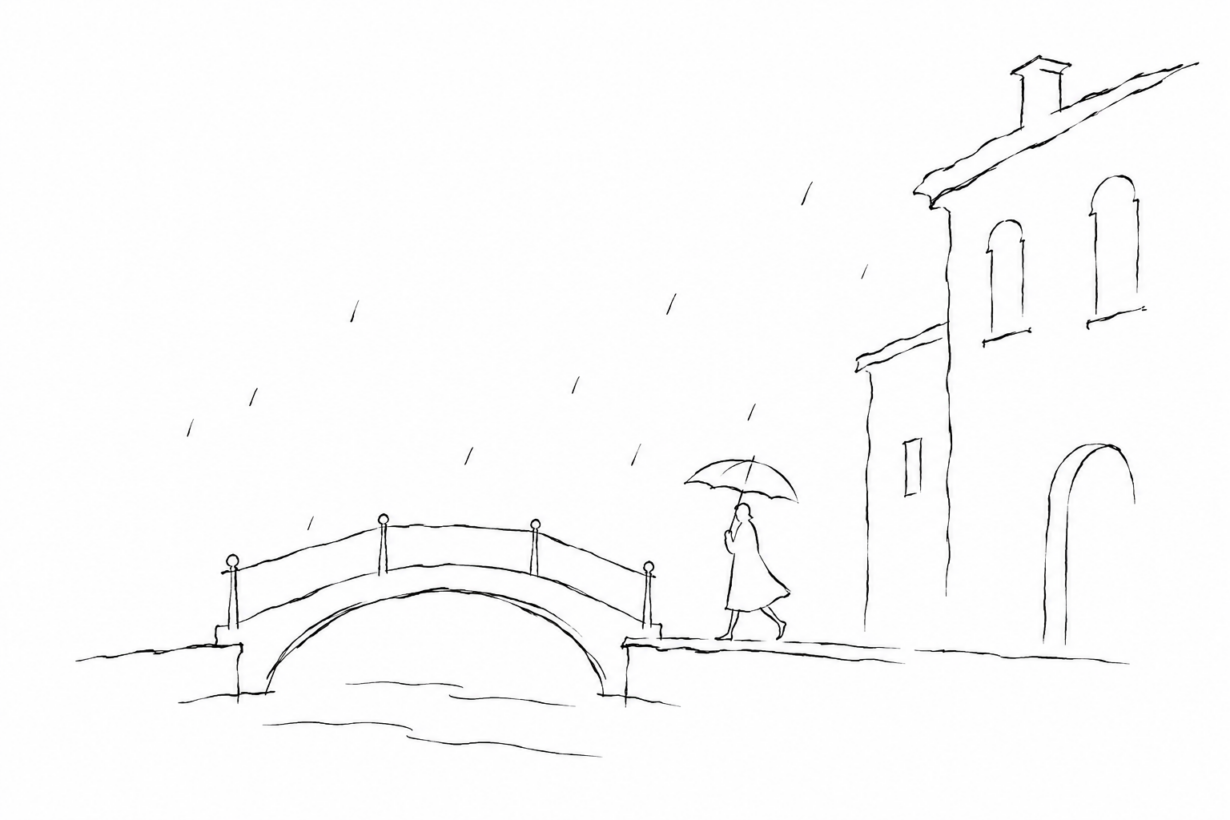

In Venice, rain immediately changes distances: one extra bridge weighs on you, a crowded stop slows you down, while a well-chosen visit can save the entire day. You do not need to give up on the city, but it is worth shifting the center of gravity: less chasing after outdoor stops, more covered places with real content, generous timing and sensible routes. This guide starts from a practical question: where should you go, based on the area you are in and the intensity of the bad weather? Museums, churches, historic halls, bacari and alternatives on the mainland thus become useful tools, not simple emergency shelters.
When it rains in Venice: choose well before going out
In Venice, rain does not always weigh in the same way. A light rain still allows you to move among calli, bridges and porticoes, choosing short stops every twenty or thirty minutes: a coffee, a visitable atrium, a bookshop, a church along the way. With heavy downpours, however, it is better to change logic: better an indoor place that can occupy two hours, reachable without too many changes and close to the vaporetto stop.
Before going out, the useful question is not only “what do I see?”, but “what area am I in when it starts to rain?”. From San Marco you organize yourself differently than from Cannaregio, Dorsoduro or Santa Lucia station. Crossing half the city under the rain, with slippery bridges and umbrellas crossing paths in the narrow calli, rarely improves the day.
- Light rain: short itinerary, shoes with good soles, frequent breaks and few unnecessary bridges.
- Heavy rain: choose a nearby covered place and stay there long enough.
- High water: check updated notices and consider walkways, boots or detours.
- Vaporetto: useful, but in bad weather it can be crowded: allow more margin.
Indoor museums: Doge’s Palace, Accademia and the MUVE network
If bad weather catches you in the San Marco area, the most solid solution is to stay within the system of museums around the square. Doge’s Palace is not just a convenient shelter: it easily fills two hours among courtyards, institutional rooms, decorative features and passages linked to the justice system of the Serenissima. It is the museum to choose when you want to reduce movement and give meaning to the stop, because it tells the story of Venetian power in the place where that power was administered.
A few steps away, the Museo Correr works well as a second option or as an extension of the visit: it overlooks Piazza San Marco and allows you to read Venice from another perspective, more civic and urban, among city history, art collections and monumental rooms. In winter, many civic museums have reduced opening hours compared with the warm season: it is always worth checking the day’s opening, especially for venues with weekly closures.
If you are in Dorsoduro, head for the Gallerie dell’Accademia, in Campo della Carità. Here the day takes a different direction: less palace of power, more Venetian painting, with Bellini, Carpaccio, Giorgione, Titian, Tintoretto, Veronese and a very concrete reading of how Venice built its own image through light, color and commissions. In 2026 the exhibition program adds further reasons to enter: Tintoretto racconta la Genesi from February 11 to August 30, Marina Abramović: Transforming Energy from May 6 to October 18 and Leiko Ikemura. TransLucent — La forma della luce from September 10 to November 22.
For those staying several days or wanting to link together several interiors, the MUVE Museum Pass can make sense: it costs 50 euros full price and 25 euros reduced, is valid for 6 months and includes one admission to each participating civic museum, including Doge’s Palace, Correr, Ca’ Rezzonico, Ca’ Pesaro, Fortuny, Natural History Museum and Glass Museum.
Churches, theaters and historic halls for a dry stop
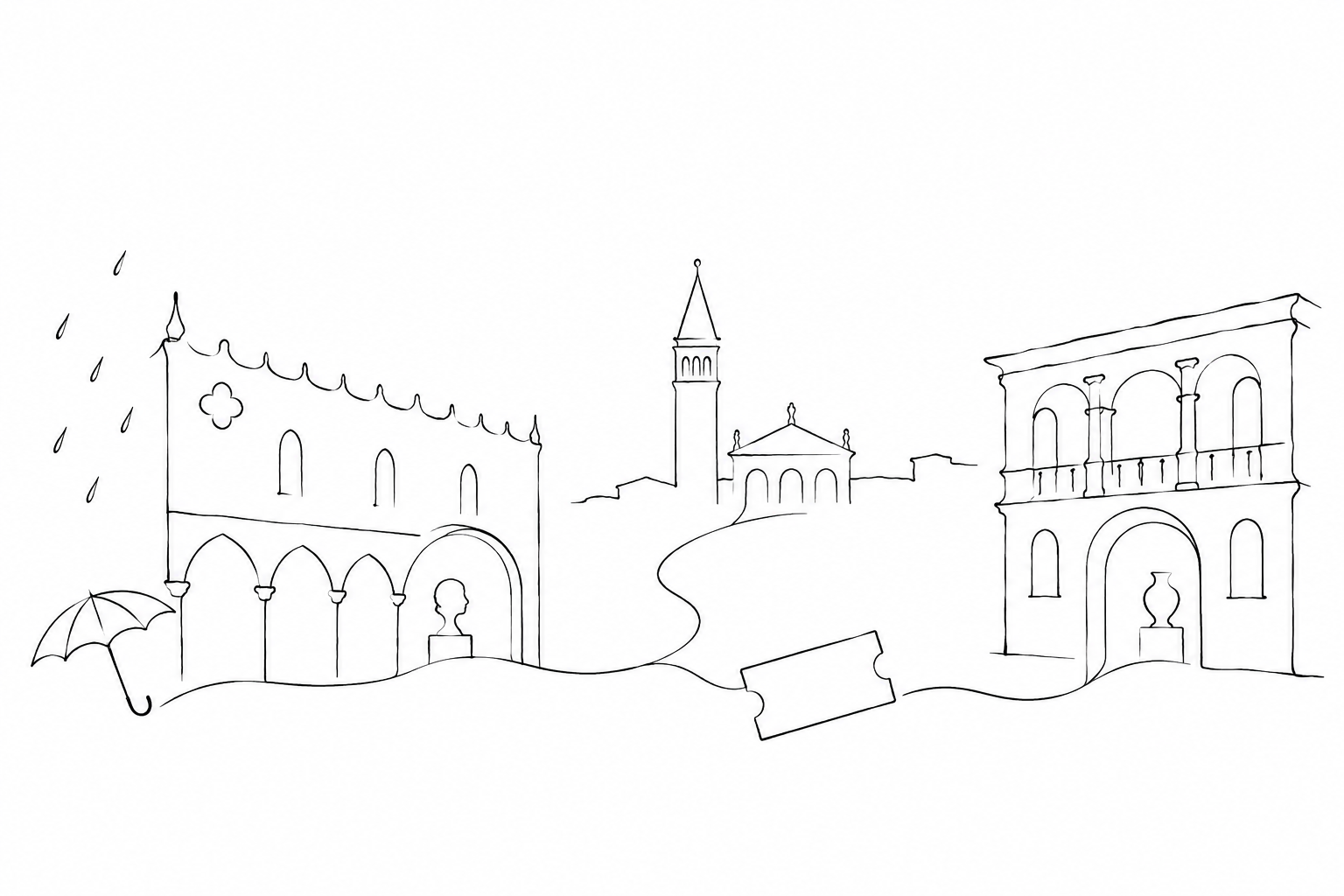
When you want to stay indoors without necessarily shutting yourself inside a museum, Venetian churches are a very concrete choice: they provide shelter, but above all they demand attention. The Basilica di Santa Maria Gloriosa dei Frari, in Campo dei Frari in San Polo, should not be treated as a quick stop: between Titian’s Assunta, the monument to Canova and the great dogal tombs, it makes sense to plan a slow visit.
Another useful stop, if you are between San Marco and Castello, is San Zaccaria. The interior brings together Gothic and Renaissance, and its proximity to Riva degli Schiavoni makes it convenient when the weather suddenly worsens. San Giorgio Maggiore instead requires a more deliberate choice: you have to reach the island, so it is worth going if transport conditions are calm and if you want to dedicate time to the Palladian church and the view from the bell tower area.
For a more theatrical shelter, La Fenice is a good alternative: the theater can be visited and the route also includes the permanent exhibition dedicated to Maria Callas and her Venetian years. It is a suitable stop when you are in the San Marco area and want a historic interior different from the churches.
Before crossing half the city, always check opening hours, any religious services, rehearsals, restorations or limited access: in Venice’s historic interiors, the practical detail often changes how successful the day is.
If the rain does not stop: bacari, Mestre city center and M9
When the water continues and energy drops, bacari are the most Venetian way to break up the day without turning it into a marathon. The most convenient areas are Rialto, Cannaregio and San Polo: around the Rialto market you find counters historically linked to the city’s commercial life; toward Strada Nova, Fondamenta della Misericordia and the Ghetto the itinerary remains fairly linear; between Frari, San Tomà and Campo San Polo you can alternate cicchetti, an ombra of wine and short stretches under gutters and sottoporteghi. Better to aim for two nearby stops, not a hunt for the “famous” place: in bad weather, small places fill up quickly.
If instead the day is long and you are already oriented toward the mainland, Mestre city center can become a real plan B. The M9 – Museo del ’900, at Via Giovanni Pascoli 11, works well precisely in these conditions: covered spaces, a multimedia route on twentieth-century Italian history, temporary exhibitions and manageable visit times. It is open Wednesday-Friday 10:00-18:00 and Saturday-Sunday 10:00-19:00, with the ticket office closing 30 minutes earlier; the ticket for the permanent exhibition costs 12 euros, the combined permanent plus temporary exhibition ticket 16 euros. For short stays, families or small groups, having Mestre as a base makes it easier to end the day without other tiring crossings.
Rain in Venice should not be challenged at random: it should be worked around with a little method. The day works out better when you choose few movements, nearby interiors and realistic timings, letting go of the idea of seeing everything anyway. A long museum, an important church, a break in a bacaro or a return toward the mainland can become not a fallback, but a more attentive way of reading the city. Always check opening hours and access before moving, especially with unstable weather or high water: in Venice, often, the difference between a tiring day and a successful one lies in a detour decided at the right moment.