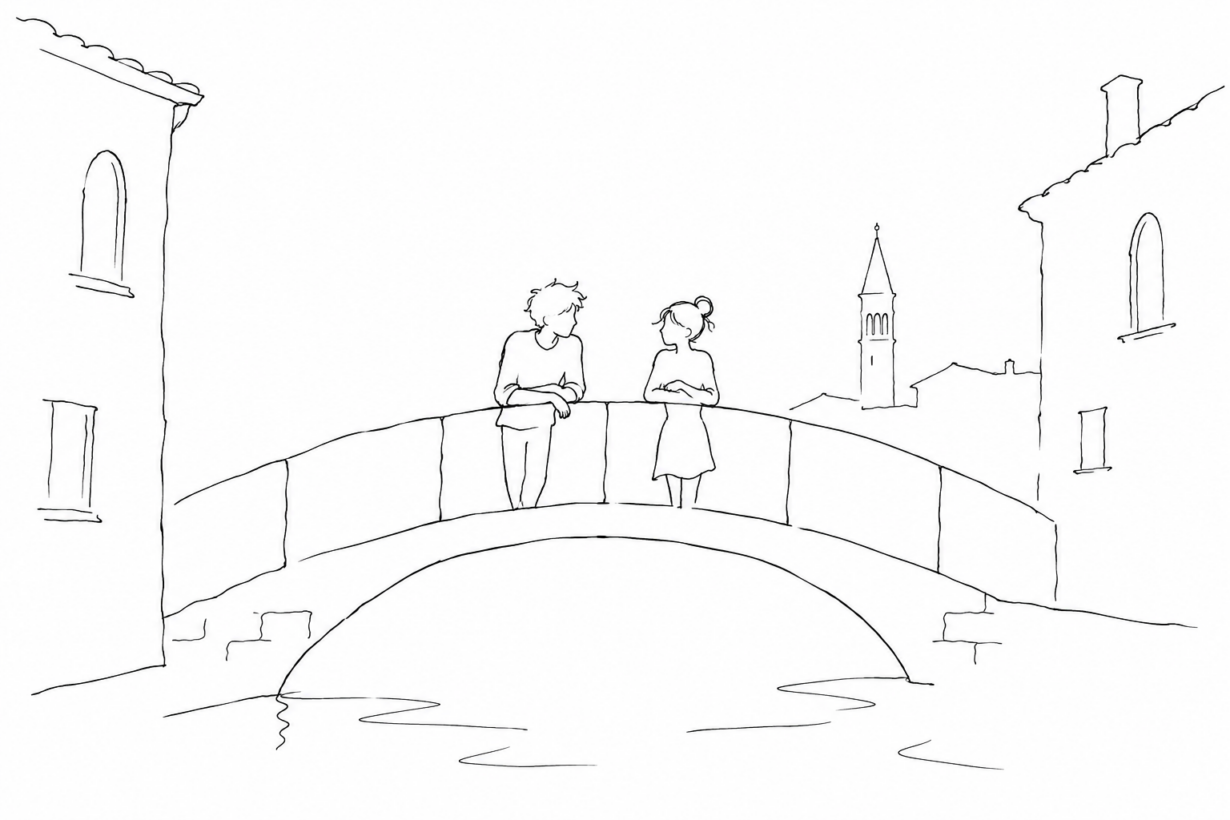

Venice with teenagers requires a different strategy from the “classic” visit: fewer unnecessary queues, fewer stops that all feel the same, more places capable of raising questions. St. Mark’s Square remains important, but it cannot carry a whole day by itself with teens who are looking for movement, images, breaks and something to talk about. The city offers much more if you cross it by areas, choosing readable routes, museums with immediate content, islands reachable without rushing and small stops that help put energy and attention back in order. The point is to build a sustainable rhythm, not to simplify Venice.
Venice with teenagers: starting with the right rhythm
With boys and girls in tow, Venice works better if you do not approach it as a list of monuments to tick off. Distances look short on the map, but between bridges, narrow calli, crowds in obligatory passages and sudden detours, even a simple route can become long. It is better to build light half-days: one area to explore, one short visit, one real break.
St. Mark’s Square should be seen, of course: the basilica, the bell tower, the Procuratie and the view toward the lagoon explain in just a few meters the political and symbolic weight of the Serenissima. But it is better to use it as a stop, not as the only center of the trip. After an hour between the square and the Molo, many teenagers already need a change of pace.
The key is to think in terms of sestieri and interests: photography, science, comics, architecture, food, boats, music, military history. Alternating walks, bridges, shady stops and visits of controlled duration helps maintain attention and mood. Venice, with teens, gives more when it leaves room for curiosity and not only for physical endurance.
Cannaregio, Dorsoduro and Castello: a more concrete Venice
To get out of the more compressed Venice without losing interest, three sestieri work very well with teenagers: Cannaregio, Dorsoduro and Castello. They are easy to read on foot, have clear strong points and allow you to alternate history, water, workshops, campi and architecture without turning the day into a marathon of churches and museums.
Cannaregio: fondamenta, Ghetto and daily life
Cannaregio is useful because it shows an inhabited Venice, not just one people pass through. The area of the fondamenta along the Rio della Misericordia and the Rio di Cannaregio is easy to understand even for those who do not know the city: water on one side, houses on the other, closely spaced bridges, service boats, bars, students, residents. It is a good neighborhood for explaining that in Venice a “street” can be a fondamenta, that is, a pedestrian bank along a canal.
The Jewish Ghetto adds a very concrete historical layer. The term “ghetto” was born right here, in the area linked to the ancient foundries; in 1516 the Republic of Venice established that Jews had to reside in this area, closed at night. For boys and girls it is a place that can be read with the eyes: relatively compact campi, buildings taller than the Venetian average because of the need for space, synagogues inserted into the upper floors of buildings that from the outside are not very conspicuous. There is no need to make the visit heavy: it is enough to stop in Campo del Ghetto Nuovo, observe the façades, talk about coexistence, control and minorities in a commercial city that for centuries attracted people from many parts of the Mediterranean.
From here you can continue toward Strada Nova or stay on the fondamenta, where the bacari and small places make another aspect of the city evident: Venice is not made only of monuments, but also of short stops, counters, deliveries by boat, daily shopping. With curious teenagers, this detail is worth as much as a long explanation.
Dorsoduro: Zattere, Squero di San Trovaso and art without rushing
Dorsoduro changes register completely. The Zattere, overlooking the Giudecca Canal, provide visual space and help with orientation: in front you can see Giudecca, behind you enter a weave of more compact calli, campi and fondamente. It is an area suited to those who need to breathe after crowded passages, but it remains fully Venetian: converted warehouses, churches, schools, universities, landing places, working boats.
An interesting stop is the Squero di San Trovaso, visible from the outside along the rio of the same name. A squero is a boatyard for gondolas and other traditional boats; the one at San Trovaso also stands out because the wooden building recalls Alpine forms, linked to the historical origin of many shipwrights. With boys and girls it works well because it translates the gondola from a tourist symbol into a technical object: asymmetry, maintenance, wood, balance, manual work.
Dorsoduro is also the sestiere where art enters the route naturally. Even without planning a long visit, passing between Campo Santa Margherita, the Zattere and the area between the Accademia and Punta della Dogana allows you to show how much Venice has been able to hold together ancient painting, religious architecture, modern collections and contemporary spaces. The important thing, with teenagers, is to choose a single focus: a façade, a bridge, a boatyard, a view over the lagoon. Too many stimuli all together become noise.
Castello: the outside of the Arsenale, small campi and less crowded rii
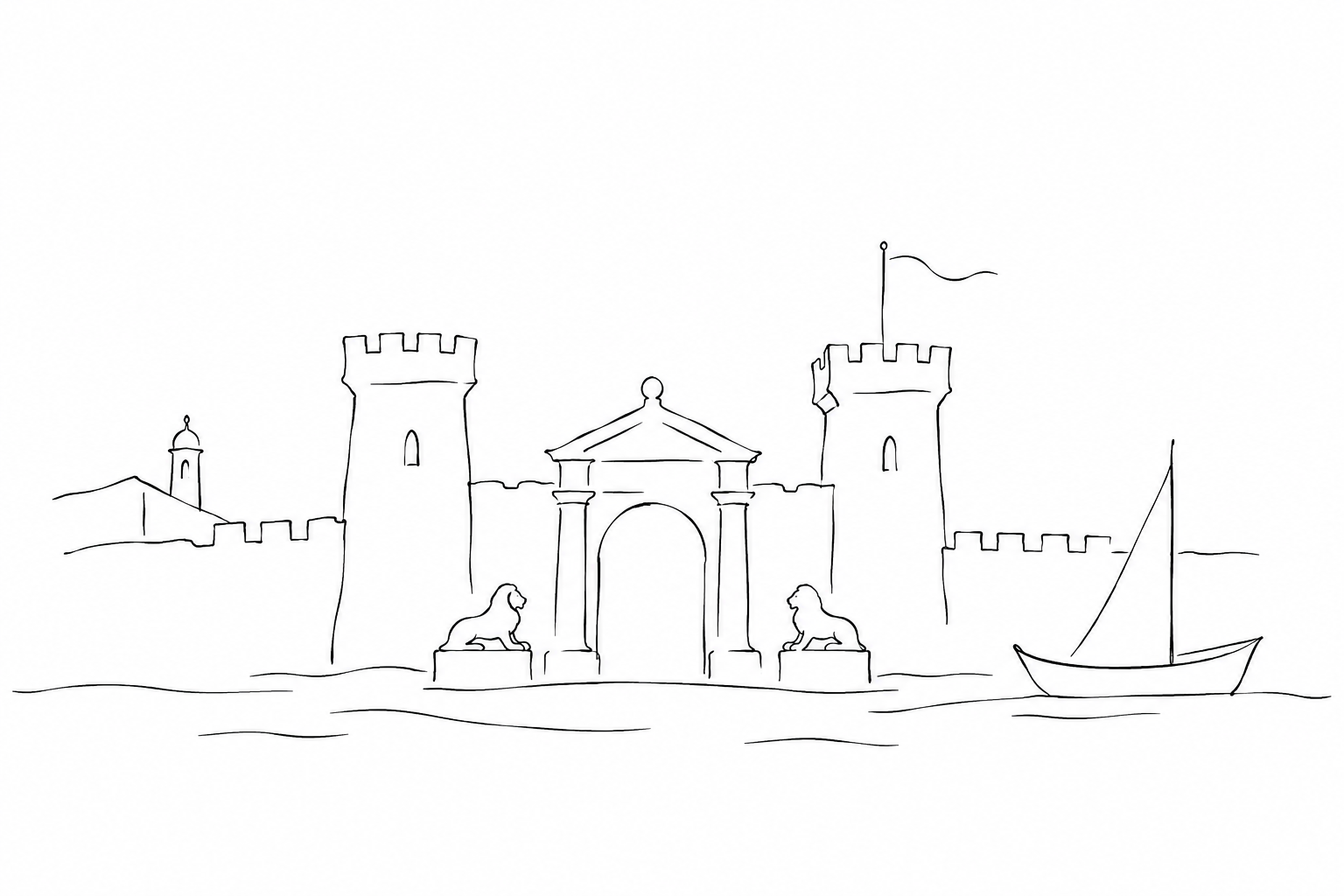
Castello is the right sestiere for talking about Venice as a naval power. The Arsenale, seen from the outside, is already enough to make the scale of the project clear: not a simple boatyard, but an enormous production complex linked to the Republic’s fleet. The Porta Magna, the monumental entrance with the lions, is one of the most effective points for introducing the theme: Venice dominated not only with palaces and diplomacy, but with ships, work organization, technologies and control of routes.
After the Arsenale, it is worth slipping toward Via Garibaldi and the nearby campi. Here Castello becomes more everyday: laundry hung out, boats moored in the rii, children in the campi, neighborhood shops, public housing built where there were once areas linked to naval and military activities. For teenagers used to cities with wide roads and car traffic, observing how a neighborhood without cars works is already an urban exercise: waste loaded onto boats, deliveries by water, bridges as obligatory passages, campi used as small squares.
The advantage of Castello is that you can walk without having to “do” something at every step. The itinerary has a clear thread: from the power of the Arsenale to residential Venice, from large portals to narrow rii. It is a part of the city that helps teens connect military history, work, architecture and contemporary life, always remaining inside Venice and far from the sole image of a monumental square.
Museums that work with teenagers
With teenagers, the right museum is not necessarily the “easy” one: it is the one that provides visual footholds, concrete questions and manageable times. In Venice and nearby there are at least two to keep on the agenda when you want to alternate the city of water with strong content, without staying only inside rooms of ancient painting.
M9 in Mestre: the twentieth century seen through images, sounds and data
M9 – Museo del ’900, at via Giovanni Pascoli 11 in Mestre, speaks a language fairly close to teenagers: screens, photographs, videos, audio, graphs, printed materials. The permanent exhibition brings together more than 6,000 photos, 820 videos, 500 printed materials, 400 audio files and 10 hours of digital footage: numbers that matter because they transform the Italian twentieth century into something to look at and compare, not only to read about on panels.
It is a sensible choice if you are interested in recent history, society, consumption, school, work, television, urban transformations. The ordinary opening hours indicated by the museum are Wednesday, Thursday and Friday 10:00-18:00; Saturday and Sunday 10:00-19:00; Monday and Tuesday closed, with the ticket office closing 30 minutes earlier. For the permanent exhibition, the full ticket is 12 euros, the reduced ticket for ages 7-18 is 8 euros, the family ticket is 20 euros.
Natural History at the Fondaco dei Turchi
For those who prefer science, animals and natural history collections, the Giancarlo Ligabue Natural History Museum of Venice is at the Fondaco dei Turchi, Santa Croce 1730. The building itself helps: an ancient fondaco overlooking the Grand Canal, therefore not a neutral box, but a Venetian place with a recognizable historical function.
Here the rhythm can be targeted: observing finds, animal forms, classifications, environments and anatomical details works well with curious teens or those passionate about biology. Opening hours vary by season: in winter 09:00-17:00, last admission 16:00; in summer 10:00-18:00, last admission 17:00; closed on Monday. Before organizing the day it is always best to check official sites, because opening hours, special openings and rates may change.
Islands, cicchetti and details to observe while walking
When attention drops, the lagoon helps. Murano or Burano work well with teenagers if they become a choice, not a race: it is better to focus on a single island and leave time for the vaporetto ride. In Murano the theme is glass, with furnaces, workshops and shop windows that allow you to talk about Venetian technique and trade without necessarily entering into a long visit. Burano, on the other hand, is useful for thinking about color, fishing, lace and island life.
For a quick break, bacari are practical: cicchetti at the counter, a tramezzino, a meatball, something to drink. The ombra, in Venetian language, is the small glass of wine: it remains for adults; for teens there are water, soft drinks and non-alcoholic alternatives. It is better to avoid peak hours, when places fill up and space is limited.
While walking, suggest a small detail hunt: the nizioleti, that is, the names of the calli painted in white on the walls; the vere da pozzo, parapets of the ancient cisterns; the altane, wooden terraces on the roofs. They are simple clues, but they make you read Venice as a city built for water, stone and everyday habits.
With teenagers, Venice rewards those who choose fewer stops and look at them better: a sestiere walked through calmly, a visit with a clear theme, a break that is not improvised, a stretch by vaporetto when a change of perspective is needed. Not everything has to be “for teens”: often the places that work are those that allow connections to be made, from maritime trade to science, from counter food to the details written on the walls. The goal is not to avoid classic Venice, but to place beside it a more concrete, readable and surprising city, where even those who start out skeptical end up finding something truly worth observing.