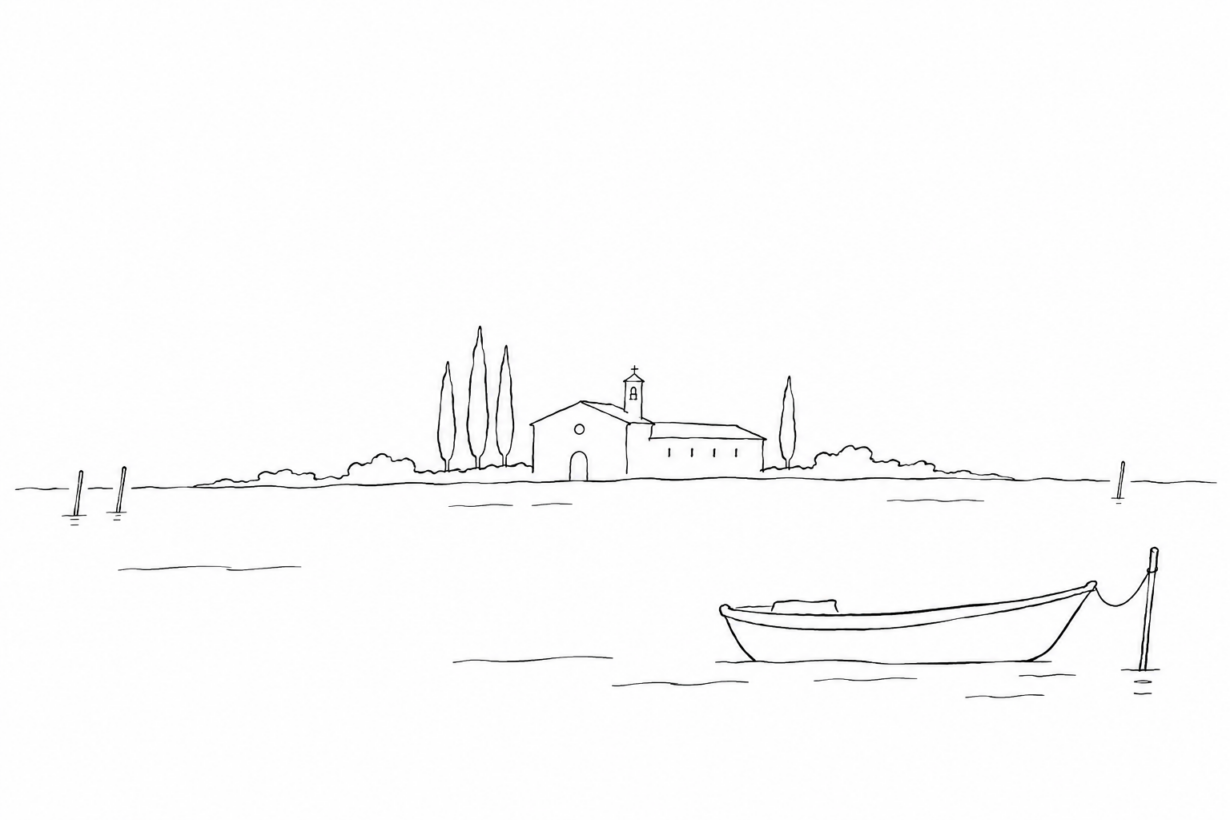

You do not end up on San Francesco del Deserto by chance. The island is very close to Burano on the map, but secluded enough to change your perspective immediately: no free stroll among alleys and workshops, but rather a regulated landing, an accompanied visit and a Franciscan convent that is still inhabited. Precisely for this reason it is worth arriving prepared. In this guide you will find how to organize the route, what to know before leaving and which elements to observe so as not to reduce the island to a simple “extra” excursion in the northern lagoon.
San Francesco del Deserto, where it is and why visit it
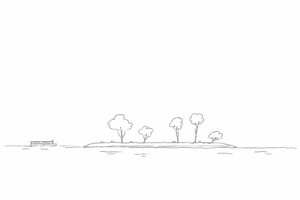
San Francesco del Deserto is a small island in the northern lagoon, in the stretch of water between Burano and Sant’Erasmo. It is not a stop to slip in distractedly between a photo of the colorful houses and the return to Venice: people come here above all for the Franciscan convent, for the silence of the island and to understand a less noisy piece of lagoon history.
The visit makes sense if you are looking for a secluded place, with slower times than the larger islands. According to the convent’s tradition, the island was donated to the Friars Minor in 1233 by Jacopo Michiel, when there was already a small church dedicated to Saint Francis. This detail helps you read the place: not a museum isolated from religious life, but a community that is still present.
One point should be clarified immediately: access is not free as it is on Burano or Torcello. San Francesco del Deserto can only be visited accompanied on the guided visit of the convent, so it is advisable to organize your arrival around that.
How to reach San Francesco del Deserto from Burano
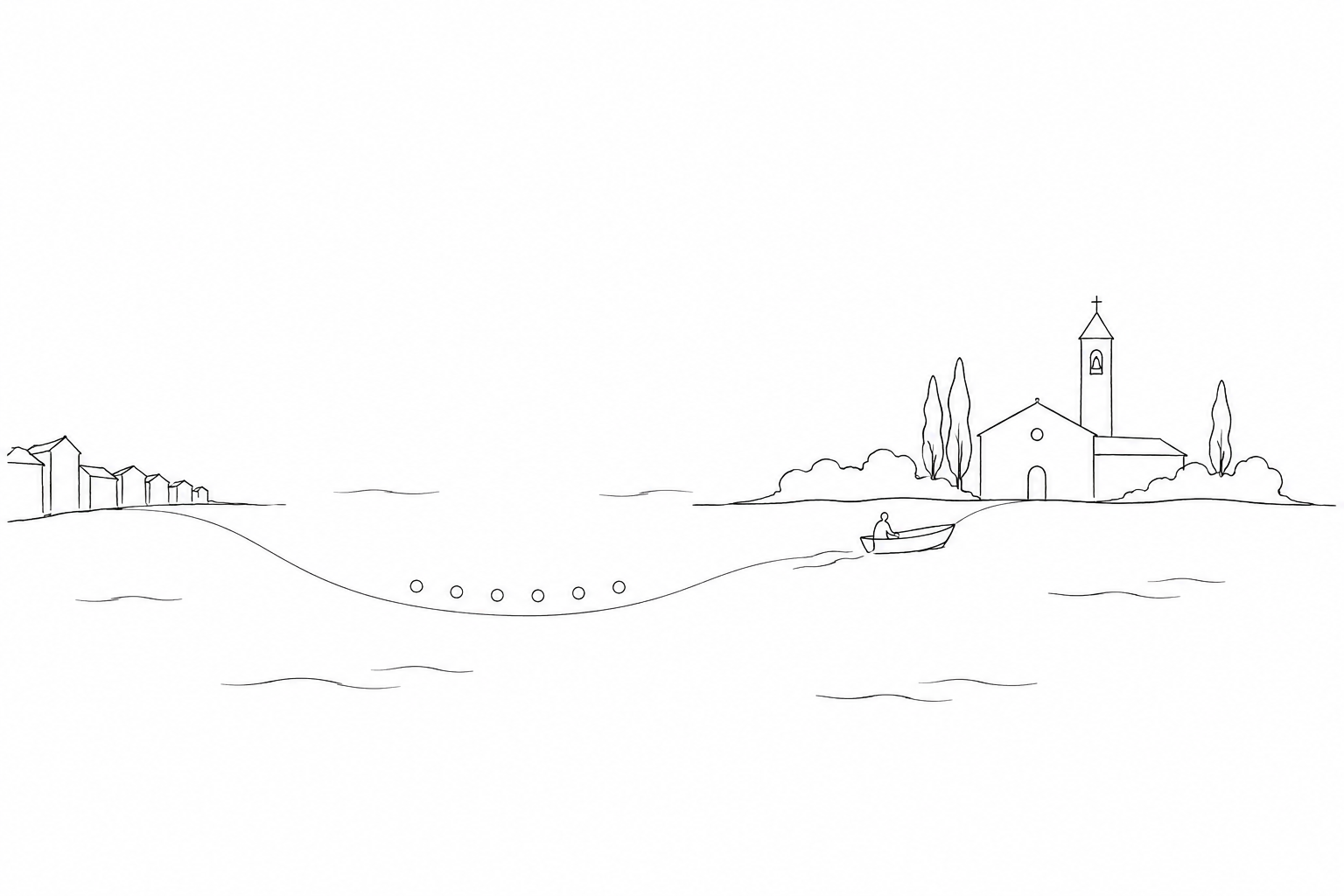
The most straightforward way to get to San Francesco del Deserto is to split the journey into two parts: first Venice-Burano by public transport, then Burano-island with a private transfer. This is an important detail, because the final stretch is not served by ACTV vaporetti.
From Venice, you normally leave from Fondamente Nove and take ACTV line 12 towards Burano. It is the northern lagoon line: it connects Venice with Murano, Mazzorbo, Burano and continues towards the Treporti area. Before you set off, it is advisable to check the updated timetables, especially in winter, on holidays or if you need to coordinate your arrival with a precise time at the convent.
Once you get off in Burano, do not look for a public stop for San Francesco del Deserto: there is none. The island can be reached by water taxi, private boat or with the private shuttle indicated by the convent, which in the official information refers to Laguna Fla Group. It is therefore prudent to organize the transfer before leaving Venice, not when you are already on the quayside in Burano with only a few minutes to spare.
How to plan the boat change
- Calculate the return together with the outward journey: the private connection must bring you back to Burano in time to take the vaporetto again.
- Do not arrive at the last minute: between disembarking from the ACTV service, the meeting point for the private boat and the crossing, you need a small margin.
- Consider lagoon weather: wind, fog and rough water can change times and the availability of transfers.
The crossing from Burano is short, but it completely changes rhythm: you leave behind alleys, shops and colorful houses, and arrive at an essential landing place, designed more for those entering a conventual place than for the normal tourist flow of the larger islands.
Guided visit to the convent: times, duration and donation
Your arrival on the island should be calculated according to the convent’s visit slots, not simply the boat timetable. The accompanied route is scheduled every day except Monday, with departures indicated at 9.00, 9.45, 10.30, 15.00, 15.45 and 16.30. These are fairly close time slots, but the final stretch from Burano still requires a margin: if you miscalculate the connection, you risk arriving when the group has already gone in.
The duration is about 40 minutes. It is the right amount of time to pass through the convent spaces without turning the stop into a race, but it remains a place inhabited by friars: the convent specifies that there may be closures decided by the fraternity. For this reason, before leaving, it is prudent to check the updated notices and coordinate the private transfer from Burano with one of the actual visit slots.
There is no fixed ticket. For daily access, a voluntary donation is requested, intended for the maintenance of the island and the complex. It is a good idea to have cash with you, because you should not take for granted that you will find the same conveniences as at a Venetian museum ticket office.
One final practical precaution: arrive a few minutes early and maintain a tone suited to the context. San Francesco del Deserto does not function like an exhibition venue; it is first and foremost a religious house, and this difference can already be felt from the landing place.
What to see in the Franciscan convent
In the convent it is worth looking less at the quantity of the spaces and more at their stratification. The date to keep in mind is 1233: according to tradition, Jacopo Michiel donated the island to the Friars Minor when there was already a small church dedicated to Saint Francis. This explains the character of the place, born as a religious presence even before it was a completed architectural complex.
The current church dates back to 1401, built thanks to the munificence of Frangola Giustinian. Do not expect a great Venetian basilica: here the interest lies in the measure of the spaces and in the continuity of use. Under the floor, remains of the thirteenth-century phase are preserved, a detail that helps you read the building as an overlapping of centuries, not as an interior isolated from its past.
The two cloisters are very important. The first, thirteenth-century, also preserves the well linked to Saint Bernardino; the second belongs to the second half of the fifteenth century and is attributed to Friar Nicolò Erizzo. They are simple spaces, but for precisely this reason they make conventual life clear: passageways, silence, light, daily rhythm.
The route also includes the oratory of San Francesco, linked to the memory of the saint’s prayer, and the chapel of the Madonna, where the statue of the Mater Purissima in traditional Burano dress is found: a small, but very lagoon-like, sign of the relationship between the convent and nearby communities.
San Francesco del Deserto works best if you consider it a chosen detour, not an improvised addition. It requires checking connections, the visit and the final transfer, but in return it gives back a different reading of the northern lagoon: less scenic, more essential, still linked to a living religious presence. If you are already planning Burano, it is worth understanding whether you have the right time to push on this far. Not to “see everything,” but to give the day a change of rhythm that is rare in Venice.