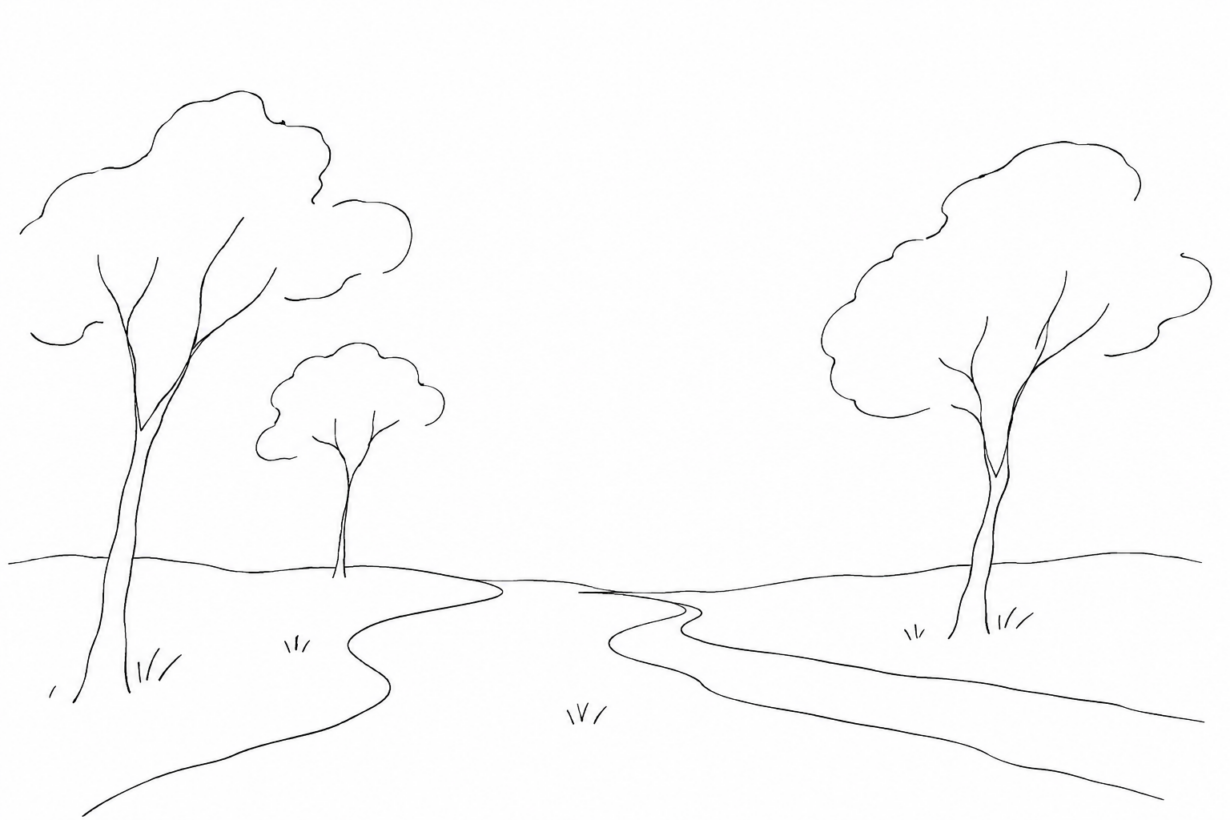

Those who associate Venice only with the lagoon often pass through Mestre without realizing that, just outside the busiest roads, there is a green network with a precise history. The Mestre Woods is not a “decorative” park, but a mosaic of natural areas and reforestations created to give space back to lowland woodland, water and biodiversity. It is worth getting to know if you are looking for a different, less obvious walk, one capable of telling the story of the Venetian mainland with its contrasts: neighborhoods, canals, wet meadows, young trees and an ancient fragment that still endures.
What the Mestre Woods is
The Mestre Woods is not a single fenced park, but a green system of the Venetian mainland: about 230 hectares distributed among different nuclei, connected by a shared idea of renaturalization. This name includes the Carpenedo Woods, the Osellino Woods, the Campalto Woods and the Querini areas, with the Ottolenghi, Franca and Zaher woods.
Its importance lies precisely in its position. We are in a part of Venice made up of neighborhoods, through roads, canals, agricultural edges and urban areas that grew quickly in the twentieth century. Here the woods serves to mend: it increases biodiversity, accompanies the recovery of waterways and brings back to the plain a landscape that was once much more extensive, that of the lowland forest, dominated by species such as pedunculate oak and European hornbeam.
The idea of a large peri-urban woods for Mestre took shape around 1984, also thanks to the environmentalist mobilizations that arose against the project for the new hospital near the small Carpenedo wood. From that period the issue became more concrete: not only preserving what remained, but planting, managing and making legible a network of green areas close to the city’s daily life.
Carpenedo Woods: the most precious relic
To truly understand the Mestre Woods, you have to start from Carpenedo, because here you are not just looking at a recent green area: you enter the oldest and most delicate fragment of the system. The Carpenedo Woods preserves the last local relic of the European hornbeam woods that once characterized the Mestre plain, environments documented in the territory at least since the fourteenth century and then almost entirely erased by land reclamation, agriculture, roads and urbanization.
Its scale is compact: about 10 hectares, alongside an area of about 3 hectares reforested between 1998 and 1999. It is precisely this closeness between historic woodland and new plantings that makes Carpenedo interesting: what remains of the original lowland oak-hornbeam woodland and the contemporary work to reconnect habitats, edges and ecological continuity can be read together.
It is not a park to cross by bicycle or to use as a shortcut. The routes are pedestrian only, with rest areas and an educational trail designed for observing without consuming the place. Protection is not just a label: the Carpenedo Woods is part of the Natura 2000 Network as an SCI/SAC area, recognized for the rarity of its environments and for its birdlife, as well as for the combined presence of historic woodland, permanent meadows, wetlands and new reforestations.
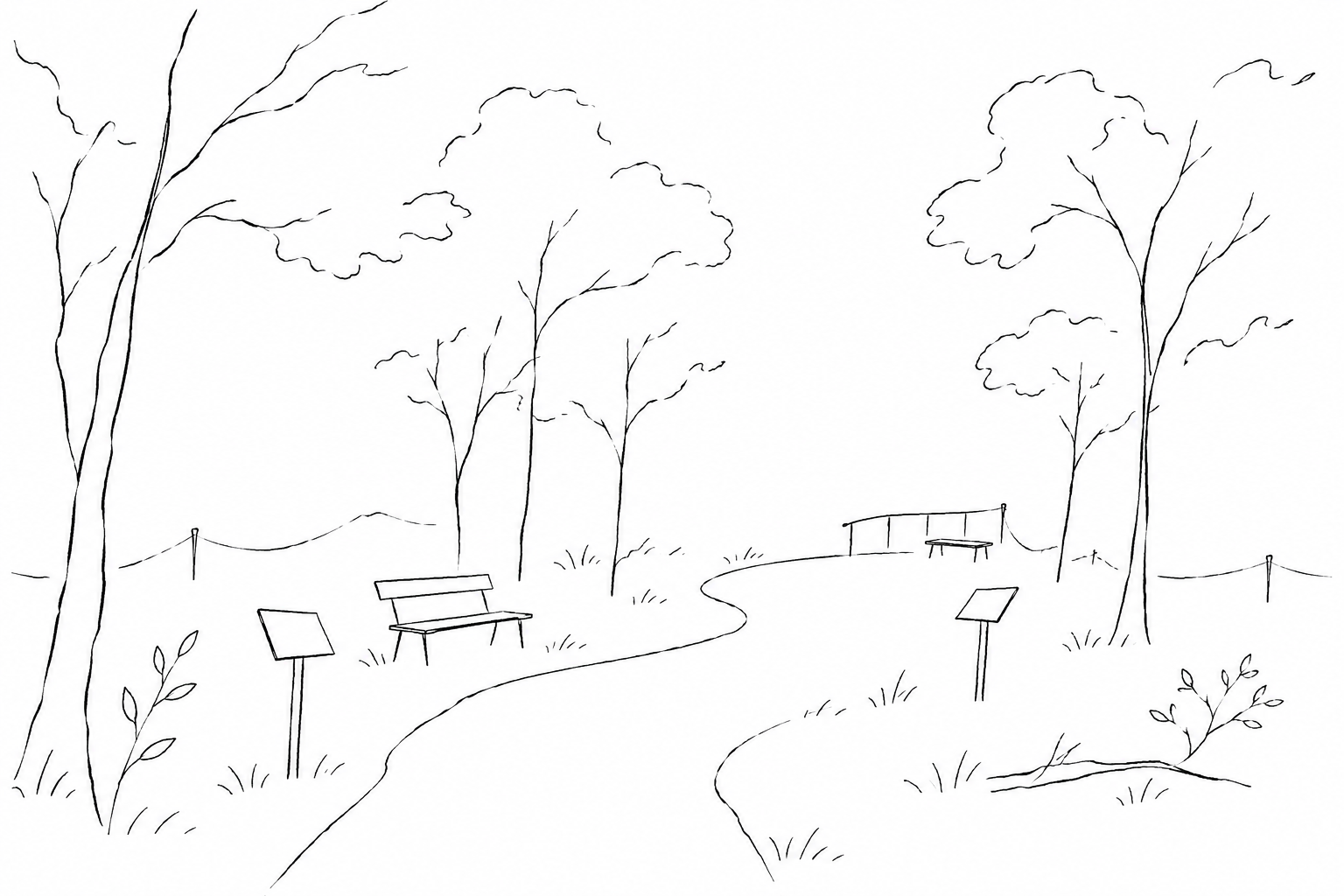
The pedestrian access is in via del Boschetto, in Carpenedo, with external parking along the same street. Before planning a visit, however, it is advisable to check the updated municipal openings: it is not a public garden that is always open, and this management with regulated entries is part of its fragility.
Osellino, Campalto and Querini areas
If Carpenedo is the historic nucleus, the Osellino helps to understand the planned part of the Mestre Woods. Created in 1994 by the Regional Forestry Agency, it is laid out as lowland oak-hornbeam woodland: not an ornamental park, therefore, but a planting designed to reconstruct the physiognomy of lowland woodland, with pedunculate oak and European hornbeam among the guiding presences.
The numbers give the measure of the intervention: 13,000 native plants belonging to 35 species. For those walking, this means an alternation of young rows, dense thickets, clearings and edges where the vegetation changes pace. It is also a useful area for reading the relationship between greenery and water on the mainland, a central theme in the municipal project for the renaturalization of waterways.
Campalto and the Querini areas complete the picture toward the east and north-east. Here the names to keep together are Campalto Woods and the Zaher, Ottolenghi and Franca woods: pieces that widen the network beyond the single green enclosure and bring it closer to neighborhoods, local roads and agricultural edges.
- For a short visit: choose just one sector, Osellino or Campalto, avoiding turning the walk into a transfer.
- To orient yourself in the network: consider the Querini areas as a green hinge, not as a single unified park with one monumental entrance.
- To understand the landscape: observe the edges, where recent woodland, meadows, water and roads best show the peri-urban nature of the project.
Reading the woods during the walk
In the Mestre Woods it is best to give up the idea of “doing everything.” A successful visit works better by choosing a single nucleus, or by combining two nearby areas, leaving time for stops. In Carpenedo, attention goes to the small transitions: the damp ground, fallen trunks left to decompose, clearings, the change of light under the canopies. At the Osellino, instead, the design of the reforestation is clearly understood: rows of trees now grown, grassy edges, canals and stretches where the greenery dialogues with the built city.
- Proceed slowly: stopping every few minutes helps you notice birds, insects, fungi, bark and differences between meadow, hedge and dense woodland.
- Look at the edges: roads, ditches and nearby fields explain the peri-urban nature of these areas better than any panel.
- Check the rules first: openings, access and limitations, especially for Carpenedo, should be checked on the website of the Municipality of Venice.
If you want to build a day without rushing, the Woods can be combined with Parco Albanese to stay in urban greenery, or with M9 and Piazza Ferretto when you want to end the walk in the center of Mestre.
The value of the Mestre Woods lies in its discretion: it does not ask for a spectacular detour, but for a more attentive look at the Venetian mainland. After seeing churches, campi and museums, walking here helps you understand another part of the city, made of edges, slow water, young trees and ancient fragments that have survived. It is a landscape to read without haste, knowing that each nucleus tells a different piece of the same story: that of a city that does not end at the edge of the lagoon, but also continues in its rediscovered woods.