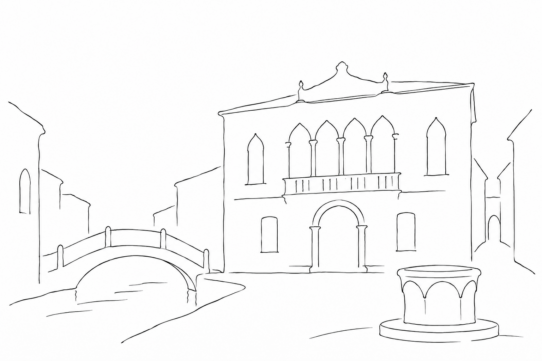
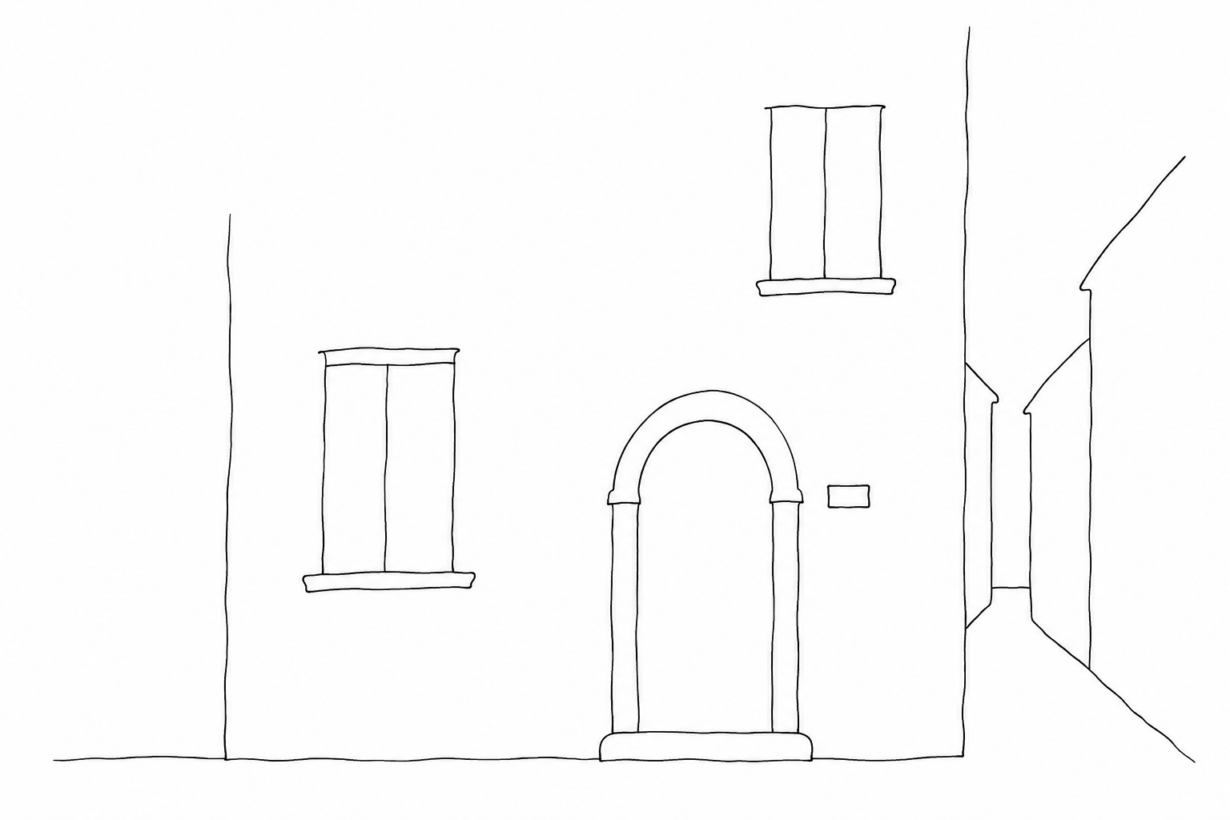

In Venice, an address can seem like a small puzzle: “San Marco 3998” does not work like “via Roma 12”. Here, often, the house number does not follow the street but the sestiere, that is, a historic portion of the city with its own numbering. It is the system called insulario, practical for those who know it and disorienting for those who arrive used to orderly streets. Understanding it changes a lot: it helps you look for accommodation, find a doorbell, read a map correctly and not confuse calle, salizada or fondamenta with the truly decisive part of the address.
The first thing to understand is that in Venice, in the historic center, the house number does not identify a house within a single calle, as happens in many Italian cities. Usually an urban address works like this: street name, number, possibly apartment or interior number. Here the main logic is different: the house number belongs to the sestiere, that is, to one of the six large historic parts of the city, and the numbering runs within that territory.
For this reason a Venetian address may begin with “San Marco”, “Cannaregio”, “Castello”, “Dorsoduro”, “San Polo” or “Santa Croce”, followed by a number that should not be read as a progression along a street. It is the system that the Municipality distinguishes from “street directory” numbering and defines, in technical documents, as “insulario” numbering: the area counts, not necessarily the individual circulation area.
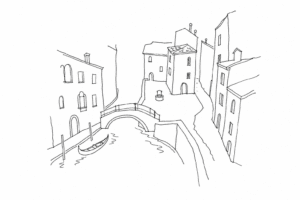
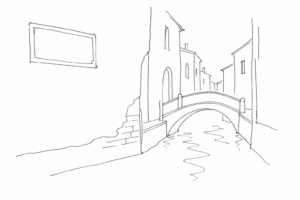
A useful example is San Marco 3998, Salizada del Teatro. The indispensable part is “San Marco 3998”: it says which sestiere to search in and which house number to identify. “Salizada del Teatro” helps narrow down the point on the map and in the actual walk, but in the traditional Venetian address it can be an addition, not the pivot of the system.
The technical word to keep in mind is insulario. In fact, in municipal documents Venice distinguishes “street directory” numbering, that is, street plus number as in most cities, from “insulario” numbering, where the sequence belongs to the sestiere or to a locality. It is not a folkloric oddity: it is a practical way of adapting the urban registry to a city made of islands, bridges and small passages.
If one tried to order everything by individual street, the mechanism would become fragile. A calle can change name after a few meters, a campo opens suddenly, a rio interrupts the route, a bridge moves access from one side of the water to the other. In Venice, continuity is not the linear continuity of the avenue, but that of the urban fabric: compact blocks, courtyards, banks, sottoporteghi, fondamente. For this reason the number works as an internal coordinate within a wider unit.
The nizioleti, the black writing on a white background painted on the walls, remain very useful: they say where you are, confirm the name of a calle or a campo, help you avoid taking the wrong sottoportego. However, they do not replace the sestiere in the traditional logic. They are orientation signage, not the primary structure of the numbering.
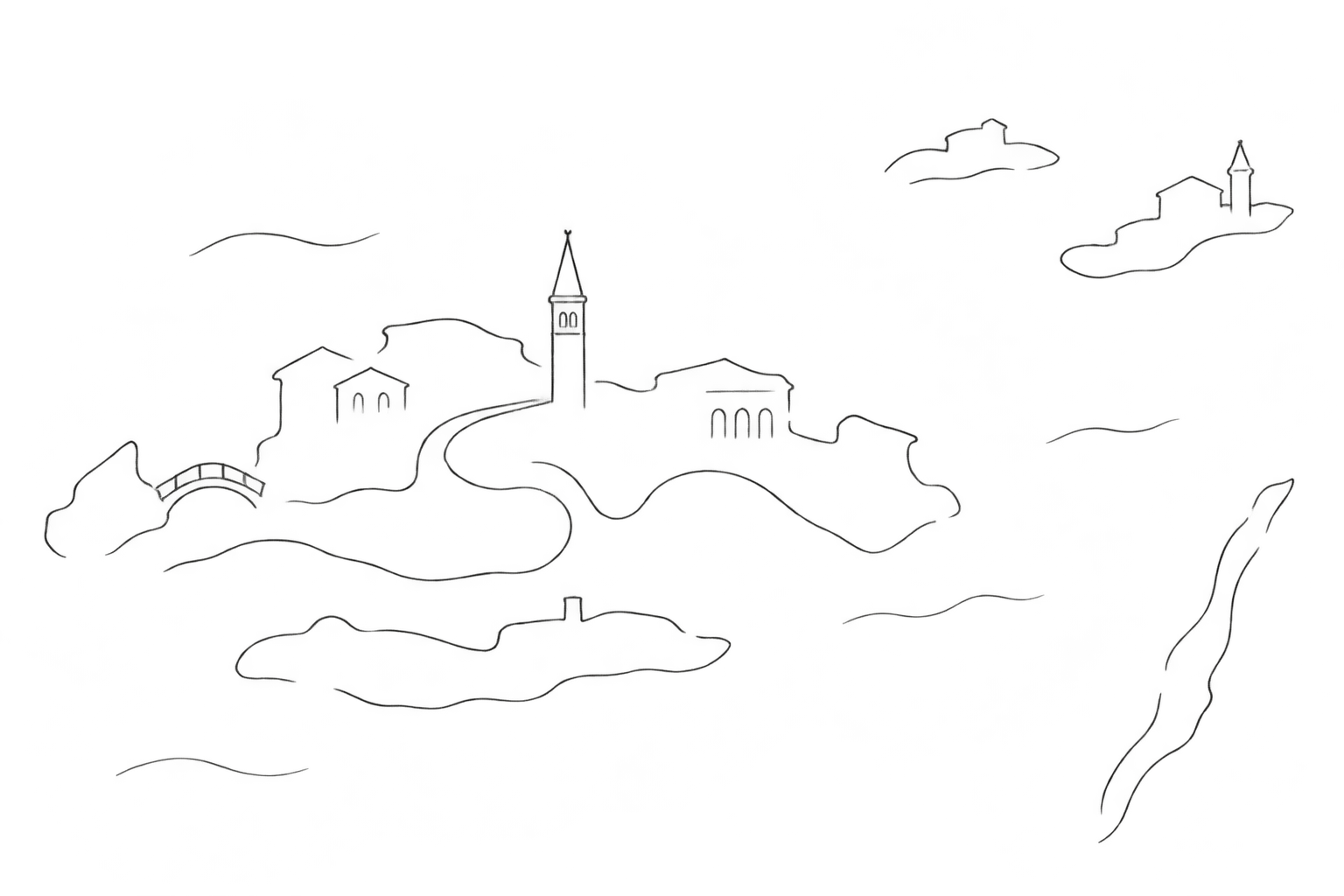
The same approach does not concern only the best-known center: the island-based system is also provided for Giudecca, Burano, Mazzorbo and some localities of Pellestrina. It is an administrative geography, but it arises from a very concrete fact: Venice is not read as a grid of streets, but as an urban archipelago.
How to actually look for a number in Venice
The trick is to reverse the habit: do not start from the calle, but from the sestiere or the locality and from the number on the door. Only afterward does it make sense to add the name of the calle, the fondamenta or the salizada. That is why a formula such as “San Marco 3998, Salizada del Teatro” is readable: the decisive part is the territorial block with the numbering, while the street helps you orient yourself in the last few meters.
- Check the sestiere first. Cannaregio, Castello, Dorsoduro, Santa Croce, San Polo and the St. Mark’s area have their own numerical series. The same applies, with similar logic, to places such as Giudecca or Burano.
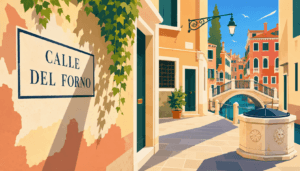
- Enter the number together with the name of the area. Writing only “Calle del Forno” or “Ramo del Teatro” can lead you astray: similar names recur often, and a map does not always understand which point you mean.
- Look for a nearby reference. Campo, bridge, rio or fondamenta are more useful than they may seem. If you know that a door is near Campo San Polo, the Ponte delle Guglie or a certain fondamenta, you can immediately narrow down the area.
- Look at the progression on the doors. When you are on site, compare the numbers painted or applied to the jambs: in Venice the sequence can turn around blocks, courtyards and narrow passages, so a few meters can make the difference.
Around Rialto and San Marco it is best to be particularly cautious: calli change name quickly, a sottoportego can move you into another micro-area and following only the street name risks unnecessarily lengthening the route. For hotels, bacari and private doorways, the best combination remains: sestiere, number, then the nearest physical reference.
The Venetian rule does not stop at the six sestieri. The Municipality calls this criterion insulario numbering: the sequence of numbers belongs to the area, not necessarily to the individual calle. In municipal documents the same criterion also appears for Giudecca, for the sestieri of Burano, for Mazzorbo and for some parts of Pellestrina. That is why, when looking for a door in the lagoon, the name of the island or area can count more than the street written on the sign.
Murano is the useful reminder: not all islands follow the same logic. In some areas, street directory numbering may apply, that is, street plus number, as in mainland cities. Before correcting an address “by instinct”, it is therefore best to check how that place is officially registered.
To assign, verify or update an official number, the municipal Ecographic and Toponymy office comes into play, handling the street directory, preliminary procedures and updates also in the ANNCSU. It receives by appointment at via Palazzo 8, in Mestre, on Monday and Thursday from 8:45 a.m. to 1:00 p.m.; the municipal page indicates a paid service and standard times of less than 30 days for communicating the fees.
Understanding Venetian house numbers is not a nicety for insiders: it is needed to arrive on time, avoid unnecessary detours and read the city better. An address like “Cannaregio 1234” tells of a logic different from that of a street numbered in sequence, and knowing that distinct systems exist, including those of islands and localities, also helps when booking, filling out a form or looking for a not very visible doorway. In Venice, often, orienting yourself well begins right here: from the sestiere, from the number and from a little extra attention.
Sources and updates
Sources consulted on 2026-11-16.