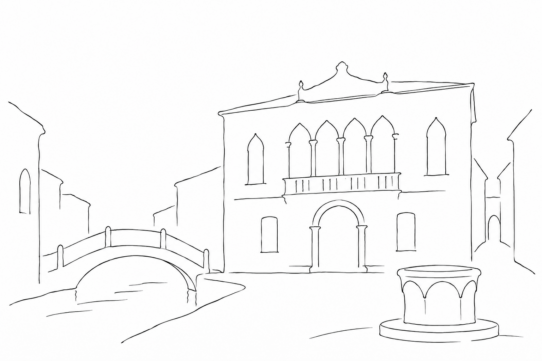
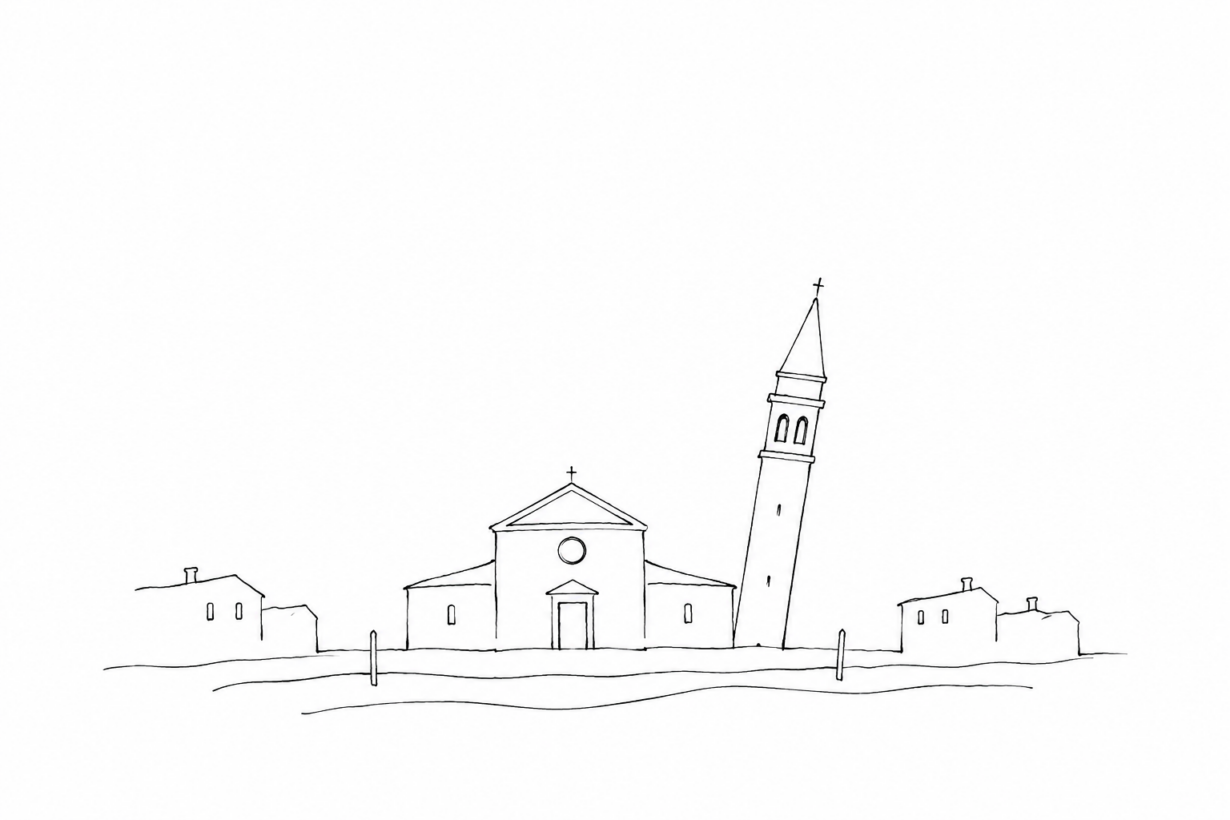

Burano is immediately recognizable by its colorful façades, but stopping only at those means missing an important part of the island. In Piazza Galuppi, the church of San Martino and its leaning bell tower tell of a more ancient Burano, made of reconstructions, popular devotion, structural interventions and details that are noticed better by slowing down. This article serves exactly this purpose: to understand what to look at beyond the first glance, why San Martino deserves a stop and where to observe the bell tower from to truly grasp its lean, without turning the visit into an art history lesson.
Burano almost always presents itself with its colors: bright façades, laundry hanging out, low reflections in the canals. It is a strong first glance, but it risks stopping the visit at the surface. To understand the island better, it is worth immediately shifting attention toward Piazza Galuppi, the most readable space for finding your bearings: from here you reach the church of San Martino, its leaning bell tower and the civic core also linked to the lace tradition.
San Martino gives depth to Burano because it tells a story longer than the painted houses. According to the parish, after the year 1000 it became the island’s parish church; the current building was rebuilt between the sixteenth and seventeenth centuries and consecrated in 1645. These are details that change the way you look at the place: no longer just a colorful backdrop, but a community with a precise religious center, reworked over the centuries.
The advice is simple: cross the calli and bridges without ignoring the context, but use Piazza Galuppi as a starting point. From there Burano stops being only scenery and begins to show its own structure.
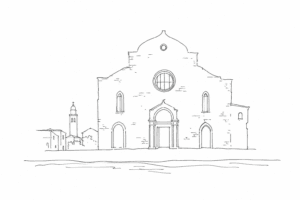
Entering Piazza Galuppi, San Martino does not impose itself with a monumental façade: the church of Burano has an almost everyday relationship with the island, made of square, bell tower and continuous passages. Precisely for this reason it is worth looking at it carefully. According to parish tradition, after the year 1000 it became the island’s parish church, when Burano already had its own stable community in the northern lagoon.
The building seen today, however, is not the medieval one. The church was rebuilt between the sixteenth and seventeenth centuries, in a phase when many lagoon religious sites were being renewed according to different tastes and liturgical needs. The consecration took place on October 29, 1645 by Marco Antonio Martinengo, bishop of Torcello: an important detail, because it recalls Burano’s historical link with the ancient Torcello diocese, even before its link with the Venice of tourist routes.
Inside, the reading becomes clear: a Latin cross plan, three naves, a Lombard-Baroque language recognizable in the solid layout and in the distribution of the spaces. The naves are separated by neoclassical pillars, a sign of later interventions and of a layered architectural history, not frozen in a single period.
It is also worth looking up to understand the building’s wounds and repairs. In the nineteenth century the church underwent significant works; in 1913 a fire destroyed the ceiling of the main nave. In the same year the current Mascioni organ from Cuvio was installed, with over 2,000 pipes: not a simple furnishing, but a presence that tells how much San Martino has remained, for Burano, a living center of religious and civic life.
Inside San Martino it is worth looking up calmly, because the interior should not be read as a museum room arranged once and for all. It is a layering: the Latin cross plan, the three naves marked by neoclassical pillars and the Lombard-Baroque taste coexist with wounds and recent interventions in the long life of the building.
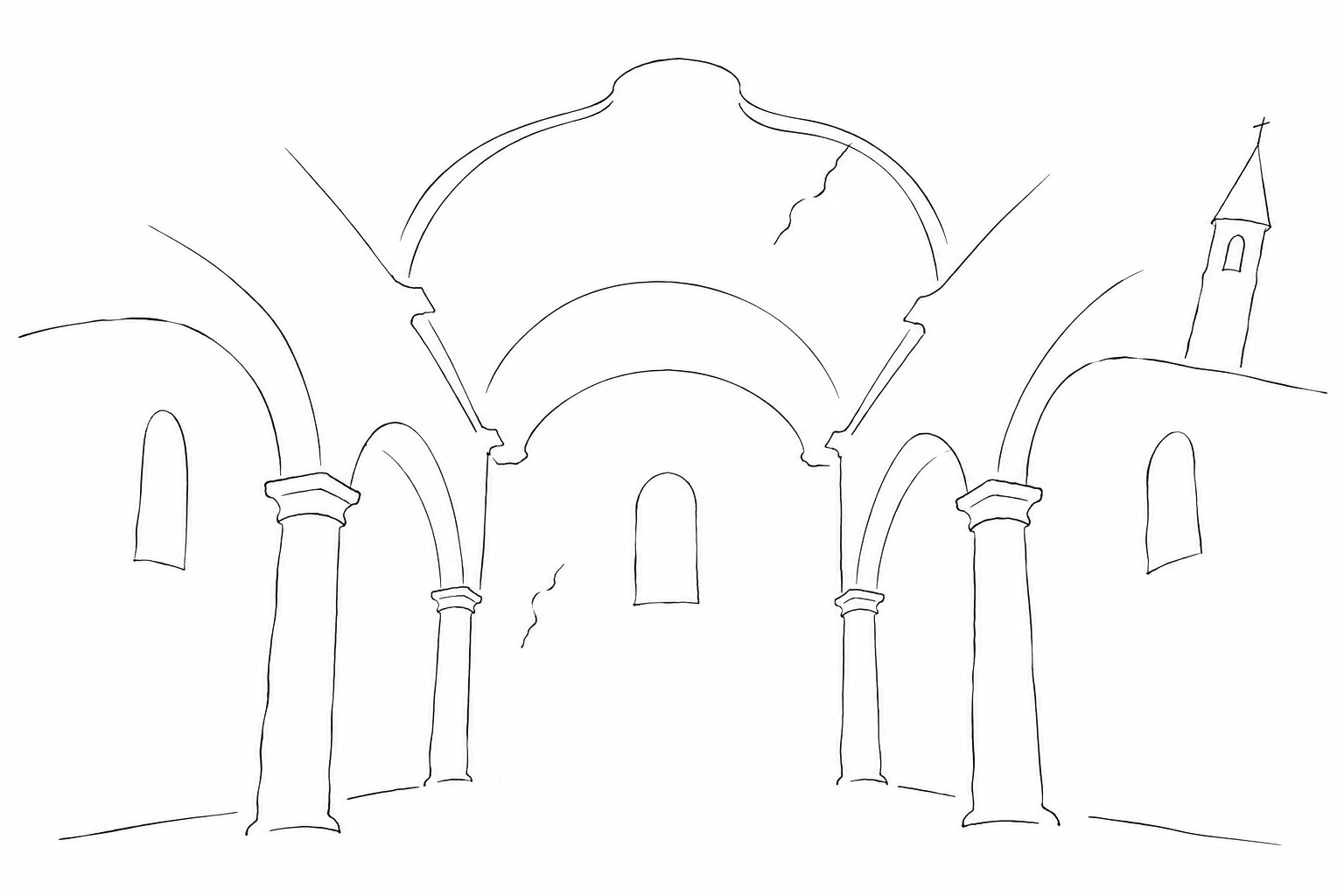
The detail that best explains this continuity is the ceiling of the main nave. In 1913 a fire destroyed it, leaving a concrete mark in the history of the church. It is not just a chronological note: it helps to understand why San Martino presents a balance made of rebuildings, adaptations and memory, without losing its role as a reference point for the island.
In the same year the Mascioni organ from Cuvio also arrived, with over 2,000 pipes. Looking at it only as liturgical furnishing would be reductive: in a parish church like this one, the organ tells of the sound dimension of celebrations, festivals and the community. Before going out toward the leaning bell tower, it is worth stopping in the central nave and putting these clues together: ancient structure, signs of the twentieth century, living use of the space.
The bell tower of San Martino is not just a curiosity to photograph at an angle: it is a 51.94-meter-high structure, with an out-of-plumb displacement measured at about 170 centimeters. The technical figure, expressed precisely in recent records on the structure, speaks of 1.699 meters of overhang on the south side at an elevation of 26.44 meters. Put simply: the tower really does lean, and quite a lot, but it should not be read with anxiety about imminent collapse.
A decisive step for its stability was the consolidation carried out between 1964 and 1966, intervening on the foundations and shaft. This is useful information also during the visit: it helps you look at the tower not only as a “crooked bell tower,” but as a lagoon building that required specialist maintenance, on ground that is difficult and mobile by nature.
To observe it well, do not stay too close to the base. From Piazza Galuppi it is best to step back and look for a vertical reference: the edge of a façade, a pole, the regular profile of a building. The lean becomes much more readable when the eye has a straight line with which to compare it. On bright days, even the shadow and the cut of the belfry help to grasp the inclination without forcing the framing.
If the Lace Museum is open, the stop pairs well: it is located at Piazza Galuppi 187, so just a few steps away. As of November 16, 2026, the indicated opening hours are 10.00–16.00, last admission 15.30, closed on Mondays; single ticket 7.00 euros full price and 3.50 euros reduced.
Looking at Burano also from San Martino changes the rhythm of the visit: Piazza Galuppi is not just a passage between lace and photographs, but the point where the island shows its more stable and, at the same time, more fragile history. The church tells of reconstructions, fires and everyday devotions; the leaning bell tower, with its well-documented out-of-plumb displacement and twentieth-century consolidations, recalls how much Venice and the lagoon are made of balance. It is enough to set aside half an hour, perhaps before or after the Lace Museum, to add depth to a stop that many dismiss too quickly.
Sources and updates
Sources consulted on 2026-11-16.