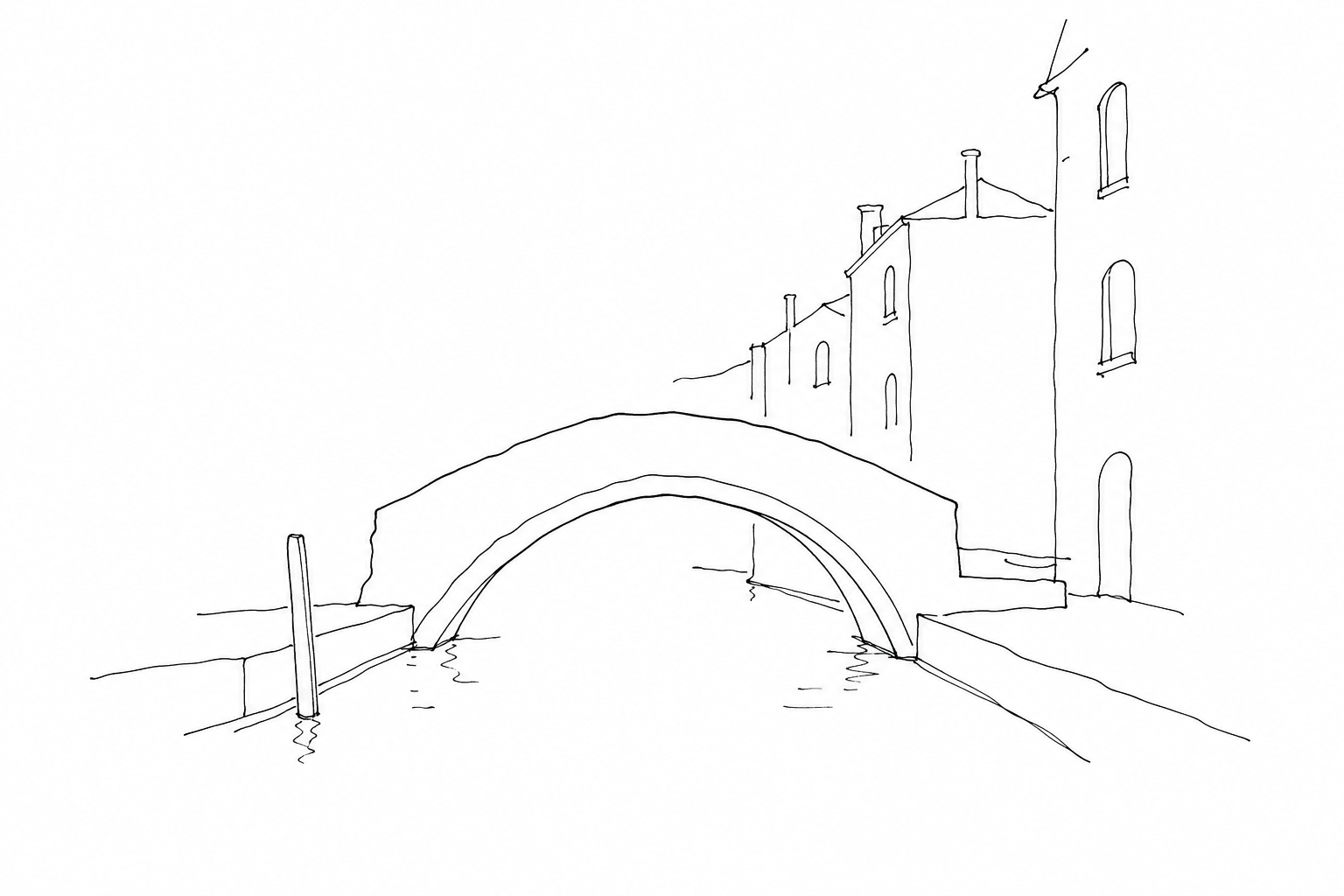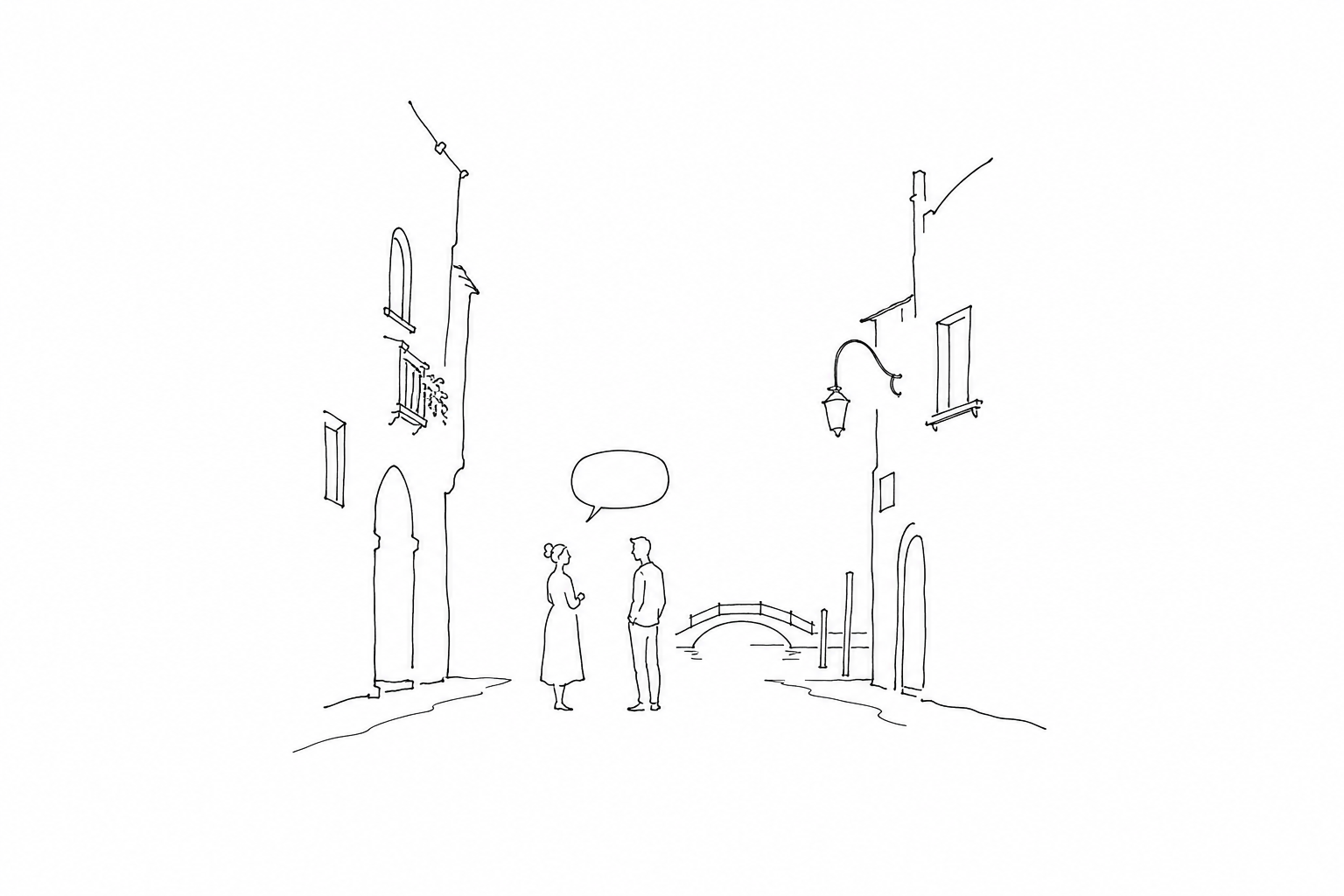

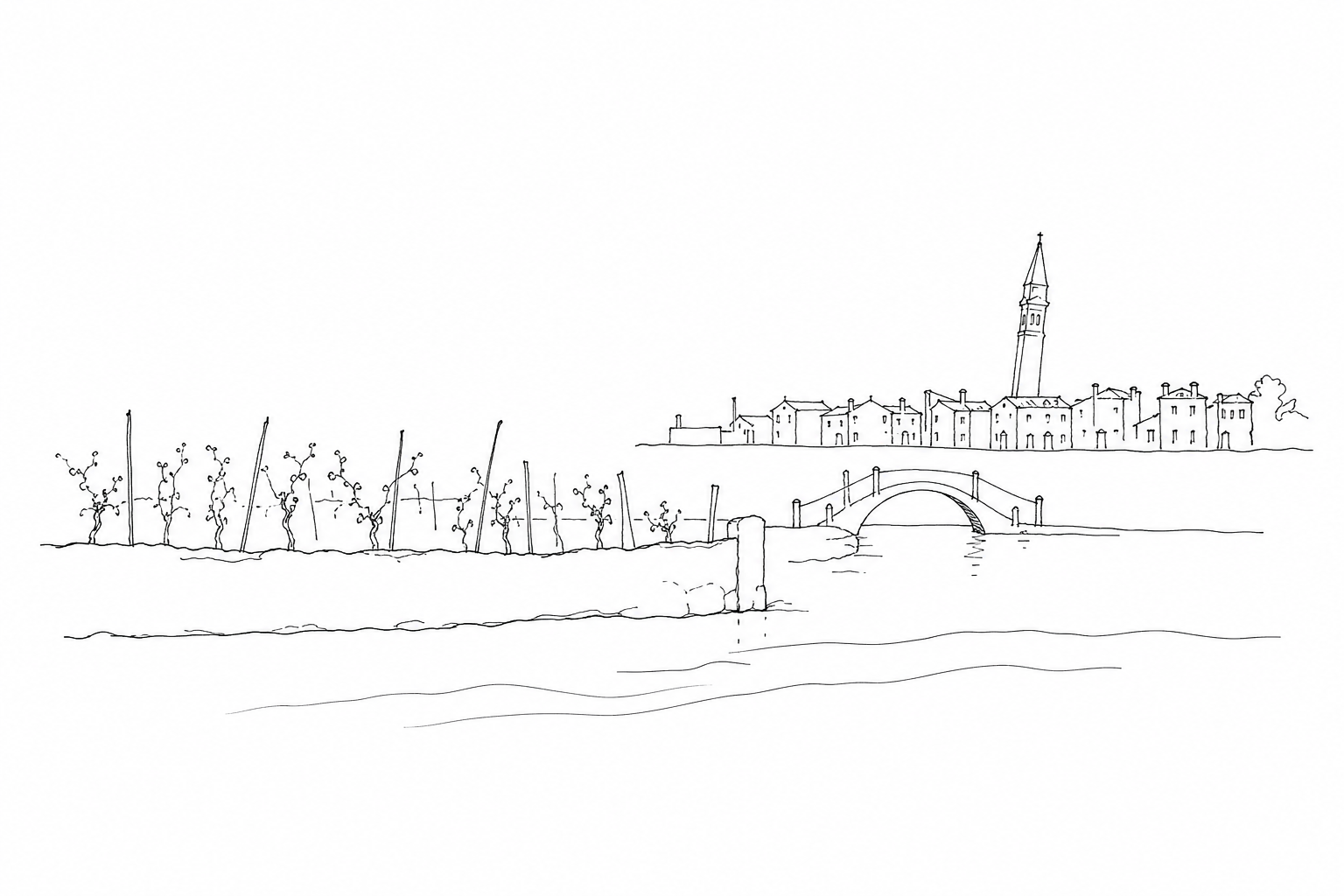
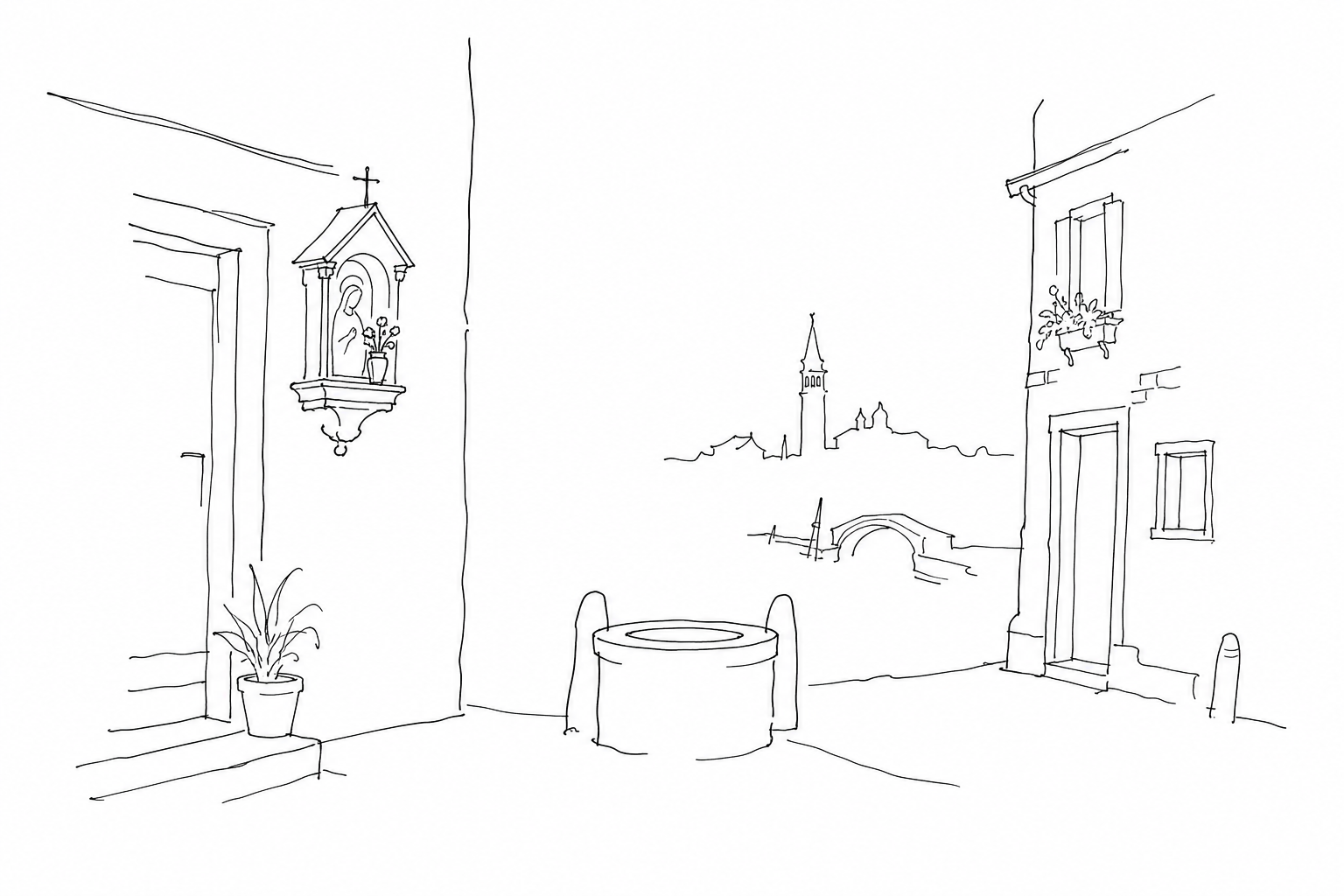

Among the calli of Venice, often at the height of a distracted gaze or just above a door, small shrines appear with Madonnas, saints, lamps, frames worn by salt. They are the votive shrines: small presences, but decisive for understanding an everyday religiosity made of protection, family memory, work and neighborhood. They belong neither only to the history of art nor only to private devotion: they stand at the exact point where the inhabited city meets the city that is crossed. Observing them means slowing down, reading the corners, recognizing traces of parishes, trades and communities that have left discreet signs in the urban fabric.
What Venetian votive shrines are
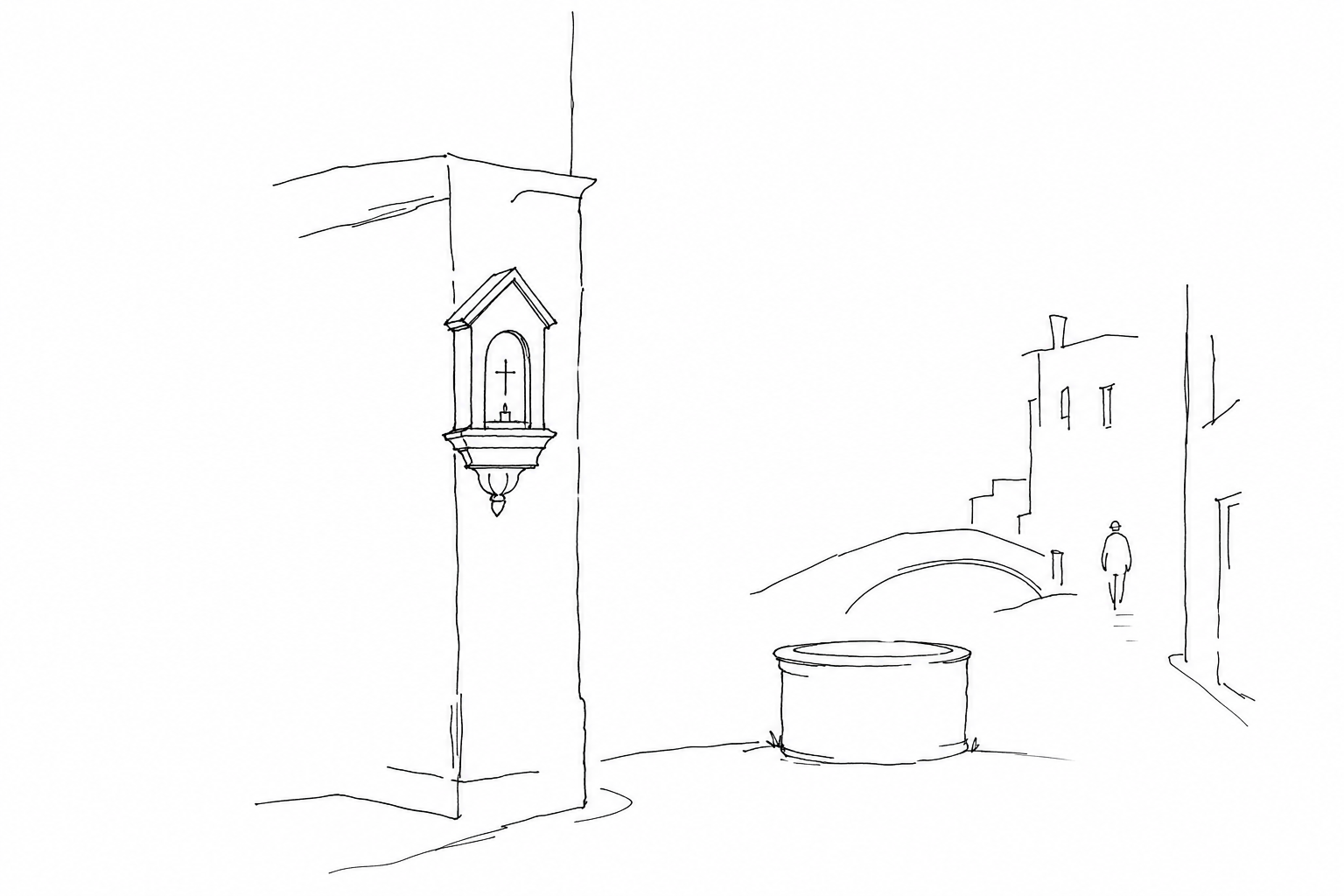
In the calli of Venice, a votive shrine is a small sacred presence placed on a wall, on a corner, above a door or beside a sottoportego. It may be a niche in Istrian stone, a brick frame, a relief, a painted image, a statuette of the Madonna, Christ or a saint, often protected by glass and accompanied by a small lamp.
The word “capitello” here does not indicate the architectural capital of a column, but an urban devotional shrine: a sign of prayer inserted into everyday life. In Venice these elements also had a practical function. Before modern public lighting, the lamps lit in front of sacred images illuminated narrow passages and dark intersections, making the night-time walk safer.
Observing them means reading a minute, non-monumental religiosity: that of residents, confraternities, trades and neighbors, who entrusted to sacred protection a bridge, a courtyard, a fondamenta or a bend in the calle.
A devotion of proximity: homes, parishes, trades
Venetian votive shrines did not belong only to the private sphere: they were shared points of reference, linked to the minute geography of the parish and the neighborhood. Before the city was regularly lit, a lamp burning in front of a Madonna or a saint could make a dark passage safer, mark an intersection, accompany workers returning along calli and fondamente.
The choice of image was not accidental. In areas inhabited by boatmen, fishermen or artisans, figures invoked for protection, health, safe travel or defense against fires could prevail. Devotion was thus intertwined with trades: a sacred niche could speak of daily work as much as a workshop plaque or a sign.
The parish mattered too. The votive shrine strengthened belonging to a small community, made up of families, internal courtyards, communal wells and routes repeated every day. It did not replace the church, but brought a fragment of church to the domestic threshold: a religiosity of proximity, entrusted to the care of residents, to the maintenance of images and to the simple gesture of stopping, greeting, lighting a lamp.
How to recognize them: forms, materials, details
Recognizing a votive shrine in a calle means training the eye on corners, bends and porticoes. It usually appears as a small walled shrine: a shallow niche, a projecting shelf, a frame in Istrian stone or plastered brick, sometimes protected by glass or by a grille. The position is not accidental: it is often found at an intersection, near a bridge, above a doorway or where the passage narrows.
The materials help date it and read its use. Istrian stone indicates a more stable and carefully made frame; painted wood or metal indicate later remakes and protections; ceramics and small devotional canvases point to more domestic interventions. Among the recurring subjects are the Madonna and Child, Christ, Saint Anthony, Saint Roch, Saint Mark or saints linked to the parish.
- Observe the light: hooks, lamp holders and traces of wax reveal evening use.
- Look at the frame: scrolls, tympanums and small arches imitate the architecture of altars in miniature.
- Note the inscriptions: initials, dates and votive formulas tell of donations, restorations or promises kept.
Where to look for them during a slow walk
To find votive shrines, there is no need for a strict itinerary: a slow walk works better, choosing a sestiere and following the smaller calli instead of the most crowded routes. In Cannaregio it is worth observing the corners between fondamente and campielli, where devotional images dialogue with doorways, wells and workshops. In Castello the gaze should be raised near the sottoportici and internal courtyards, often marked by walled shrines that protected daily passages.
In San Polo and Santa Croce, the intersections near the rii are interesting: the votive shrine may appear above a bridge, on a side facade or at the entrance to a narrow calle. In Dorsoduro, instead, look for them along residential routes, among plaster walls and exposed bricks. Even in San Marco, away from the main squares, small presences persist on the edges of buildings.
A good method is to proceed by micro-areas: campo, calle, sottoportico, bridge. Stopping at the corners makes it possible to understand why the image had to be seen, greeted and remembered right there.
Looking for votive shrines does not require a strict itinerary, but a different way of walking. It is enough to turn off a crowded fondamenta, stop in front of a sottoportego, look at the less showy facades: there Venice reveals an intimate geography, built by repeated gestures and by images placed to protect ordinary life. Some votive shrines are restored, others almost hidden, still others survive as fragments. In all of them, however, an ancient relationship between urban space and devotion remains legible. It is a less obvious Venice, but a very concrete one: made of walls, thresholds, lights, names and daily attentions.
Related Posts
Venice Beyond St Mark’s Square: 12 Details to Notice While Walking Slowly
Venice invites a different kind of exploration – one that uncovers its identity through painted street names, ancient wellheads, quiet bridges, and hidden courtyards, all…Venetian paterae: animals, symbols and Byzantine stones walled into façades
Guide to Venetian paterae: origin, forms, animals, symbols and ways to read them on façades among calli, campi and rii.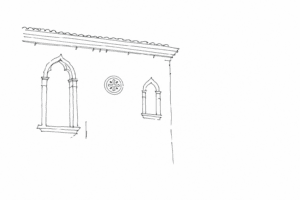
Venetian patere: small Byzantine reliefs set into facades that almost no one notices
A brief guide to Venetian patere: what they are, where they come from, what figures they show and how to recognize them on the facades…Questions Answered
What are Venetian votive shrines?
Small sacred markers placed in the calli with devotional and protective roles.How do shrines relate to community and work?
They symbolize ties to parishes, neighborhoods, and trades for protection.How can one identify a votive shrine?
Look for niches, frames, lamps, and common religious images at corners.Where in Venice are these shrines typically found?
In quiet calli, near intersections, bridges, doorways, often away from crowded routes.
Keep looking at Venice through details
Want to move from this feature to urban signs that are easy to miss on a quick visit?
 Barbacani: the wooden brackets that tell of houses wider than the calliAn urban detail of Venice: the barbacani, supports that explain space, rules and life in the calli.
 Venetian paterae: animals, symbols and Byzantine stones walled into façadesGuide to Venetian paterae: origin, forms, animals, symbols and ways to read them on façades among calli, campi and rii.
 Rio terà: why some streets in Venice were canalsWhat rio terà means, why some rii were filled in, and how to recognize them while walking among calli, campi, and sestieri.
 Venetian sottoporteghi: small urban tunnels where the city suddenly changes rhythmGuide to Venetian sottoporteghi: covered passages between calli, campi and rii, urban thresholds where light, sound and pace suddenly change.