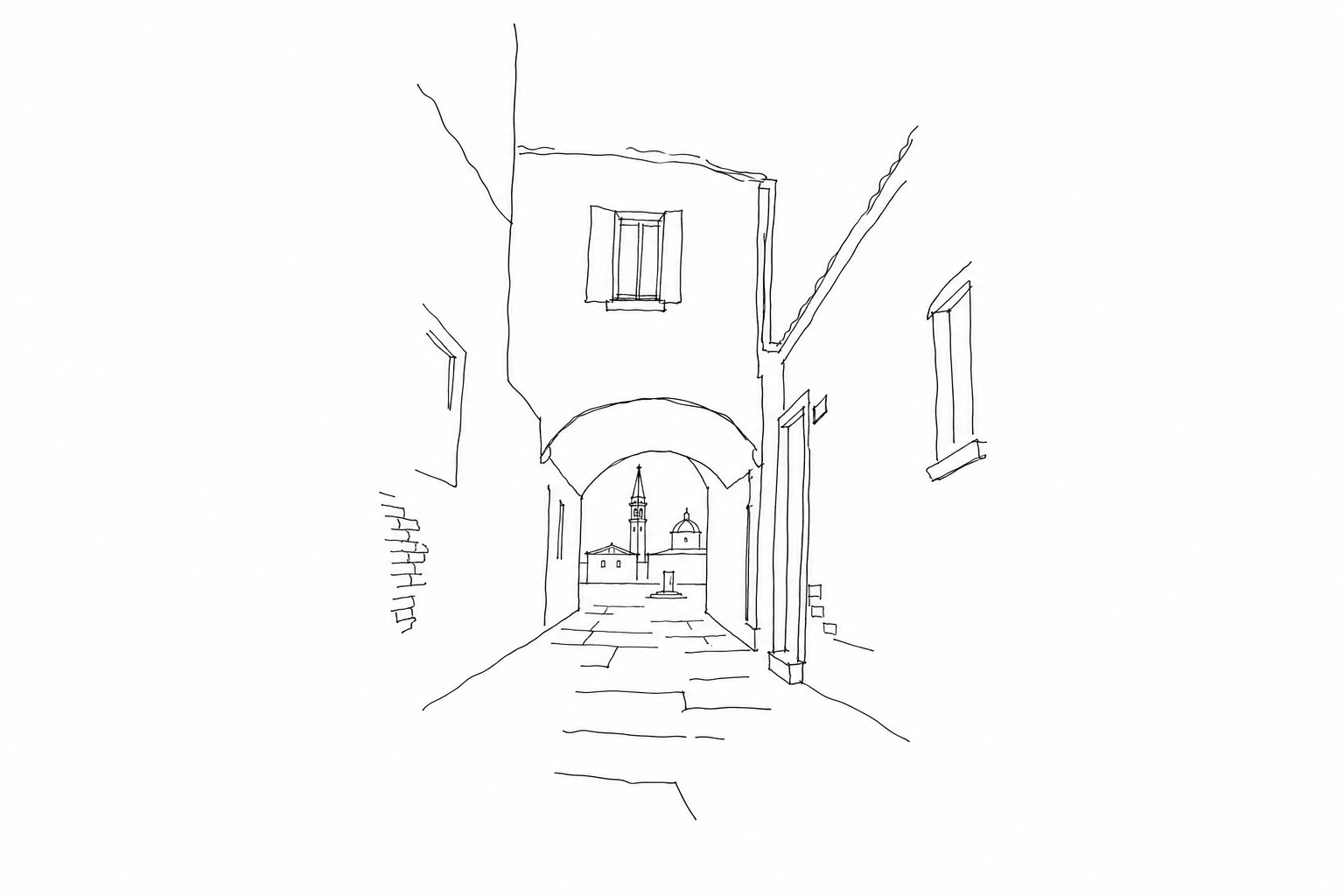

Venetian sottoporteghi are short passages, often low and shadowy, that pass through buildings and connect calli, small squares and waterfronts. They are not simply picturesque glimpses: they tell of a precise way of building the city, adapting private properties, public routes, water and inhabited space. Entering them means perceiving an immediate change in light, sound and scale: the pace slows, voices are compressed, the horizon narrows. In these small urban tunnels Venice shows one of its most subtle qualities: the ability to transform a few metres into a threshold, an interval, almost a pause in the fabric of everyday life.
What a Venetian sottoportego is
A sottoportego is a covered passage created beneath a building, open to public transit and inserted into the fine-grained fabric of Venetian calli. It is not simply a portico: in Venice it often functions as a short urban gallery, narrow and shadowy, connecting two different spaces without interrupting the continuity of the route.
Its presence arises from the very form of the city, built on densely occupied islands, where every metre had to serve multiple uses. Above there could be dwellings, warehouses or workspaces; below, instead, there remained a necessary opening to reach a courtyard, a fondamenta, a campo or a bridge.
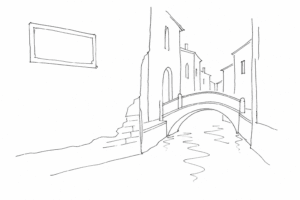
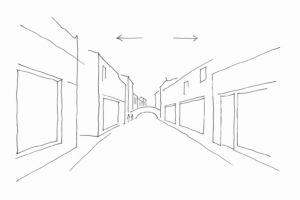
Crossing a sottoportego means perceiving a sudden change of rhythm: the light dims, the sounds of water or footsteps bounce off the walls, the perspective compresses and then opens up again. In just a few metres, Venice shifts from a place of passage to an open-air room, showing how much its architecture is made of thresholds, adaptations and shared routes.
Why the rhythm changes there
Entering a sottoportego, the body immediately senses a variation: the light dims, the field of vision narrows, the pace becomes more cautious. The nearby walls and low ceiling transform a simple passage into a threshold. Even when the stretch is short, the city seems to hold its breath before returning a campo, a fondamenta or a more open calle.
The change is also acoustic. The sound of footsteps bounces off Istrian stone, plastered bricks and damp surfaces; voices arrive more sharply, less dispersed than in open spaces. If outside the sound of water or tourist traffic mingles, beneath the vault everything becomes closer and more measurable.
These covered passages therefore function as small urban regulators. They slow, compress, orient. In Venice, where the pedestrian route is made of sudden turns and broken perspectives, a few metres of shade are enough to change perception: one does not merely cross a space, one changes rhythm within the same city.
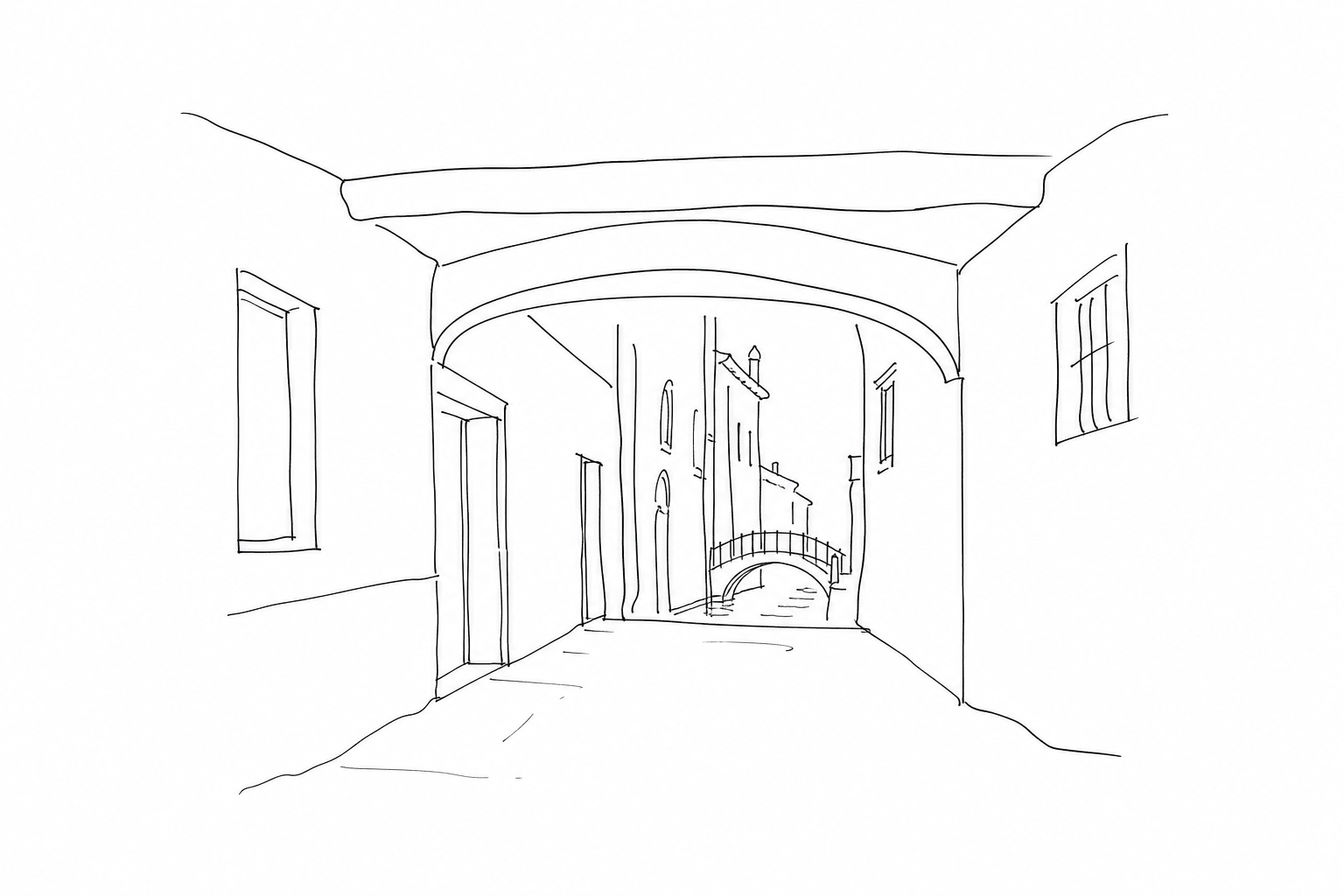
Small-scale architecture and the inhabited city
In Venetian sottoporteghi, the form does not arise as a scenic effect, but as a practical solution: allowing people to pass beneath a building, connecting calli, small squares and courtyards without interrupting the continuity of the homes above. Above the opening there may be rooms, warehouses or parts of houses; below, the route remains public or in common use, often paved with masegni and contained by load-bearing walls.
This coexistence explains many irregularities: different heights, lowered arches, wooden beams, Istrian stone lintels, rounded corners to facilitate passage. In some cases votive shrines or small sacred images appear, placed to protect daily transit; in others, the ceiling preserves signs of later adaptations.
The architectural detail therefore tells of a subtle balance: gaining buildable space in a compact fabric and, at the same time, maintaining a capillary pedestrian network. The covered passage is tiny, but it reveals a precise urban logic: inhabiting, crossing and building in the same gesture.
Where to notice them during a walk
To recognise Venetian sottoporteghi, there is no need to look for “minor monuments”: it is better to observe the points where a calle seems to come to an end and instead continues beneath a house. The most useful signal is the light: at the entrance the brightness of the campo or the fondamenta narrows, then reappears a few steps later, often with an oblique perspective onto a bridge, a courtyard or a rio.
While walking, pay attention to passages that connect spaces of different scales: from an open campo to a quiet small square, from a busy waterfront to a secondary calle, from a low portico to a small inhabited courtyard. The nizioleti at the corners, worn thresholds, wooden beams or plastered vaults help to show that this is not simply a private entrance hall, but a public stretch incorporated into the building.
Areas such as Castello, Cannaregio and San Polo offer many examples because they preserve a dense fabric, made of adjoining houses, nearby rii and pedestrian routes dictated by the water.
Observing sottoporteghi during a walk helps to read Venice beyond the sequence of monuments. They are small elements, but decisive ones: they regulate passages, protect from water and sun, preserve traces of domestic use, commerce, neighbourhood life. Some appear suddenly between two calli, others lead towards a fondamenta or a quiet small square. Stopping to look at them, without necessarily searching for the most famous one, makes it possible to grasp a city built by layering and necessity. It is in these discreet crossings that Venice changes rhythm and reveals its most concrete urban intelligence.
Related Posts
Venetian nizioleti: reading the names of the calli like a map written on the walls
Guide to Venetian nizioleti: origin, form, recurring words and practical use for finding your way among calli, campi, rii and sestieri.Le Mercerie: the commercial route between Rialto and San Marco that was not created for modern shopping
History and urban reading of the Mercerie, a dense axis of calli between Rialto and San Marco born from civic, artisan and mercantile functions.
Calle Varisco: seeking one of Venice’s narrowest calli without turning it into a trophy
A brief guide to Calle Varisco: where to look for it, why it matters and how to pass through it with restraint, without reducing it…Questions Answered
What is a Venetian sottoportego?
A covered public passage beneath buildings connecting Venetian streets and spaces.Why does the rhythm change when crossing a sottoportego?
Because of changes in light, sound, and spatial compression that affect perception.How do sottoporteghi reflect Venice's urban architecture?
They show the balance between building space and pedestrian continuity in dense areas.Where can you find sottoporteghi during a walk in Venice?
In neighborhoods like Castello and Cannaregio where streets continue under buildings.
Venice can be read through its names
Would you like to connect calli, vanished canals and place names to read the city more closely?
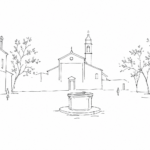 Campo San Giacomo dell’Orio in the evening: why some Venetian campi do not need monumentsAn evening reading of Campo San Giacomo dell’Orio: space, history and everyday life in the Santa Croce sestiere.
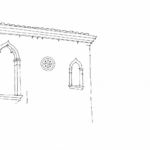 Venetian patere: small Byzantine reliefs set into facades that almost no one noticesA brief guide to Venetian patere: what they are, where they come from, what figures they show and how to recognize them...
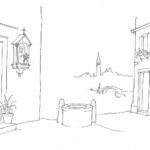 Votive shrines in the calli: everyday religiosity hidden on the corners of VeniceGuide to the votive shrines in the calli of Venice: origin, forms, places and urban reading.
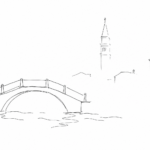 Venetian caìgo: when fog changes the way of seeing calli, canals and bell towersA practical and cultural account of Venetian caìgo, the fog that changes distances, sounds and details among calli, canals and bell towers.