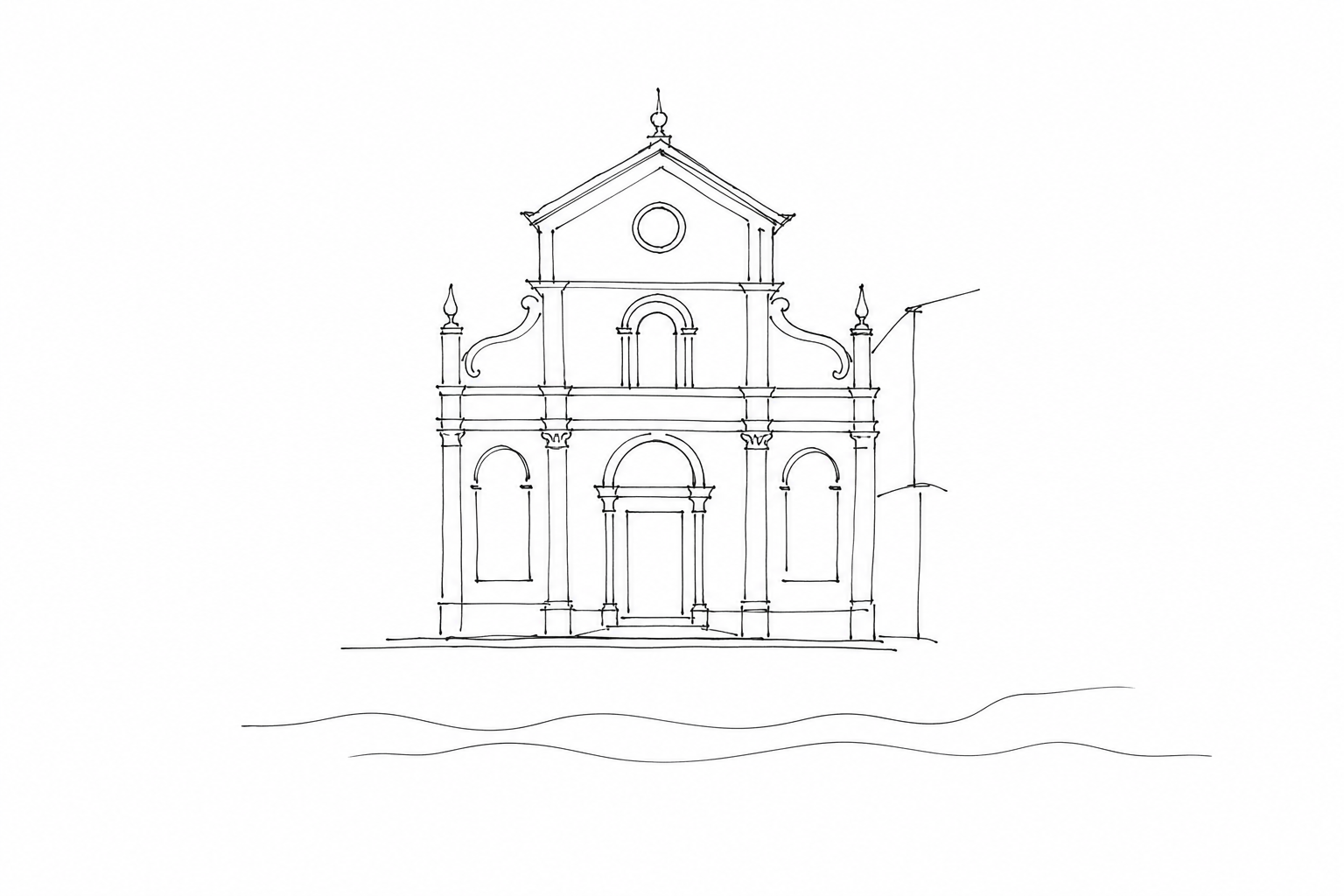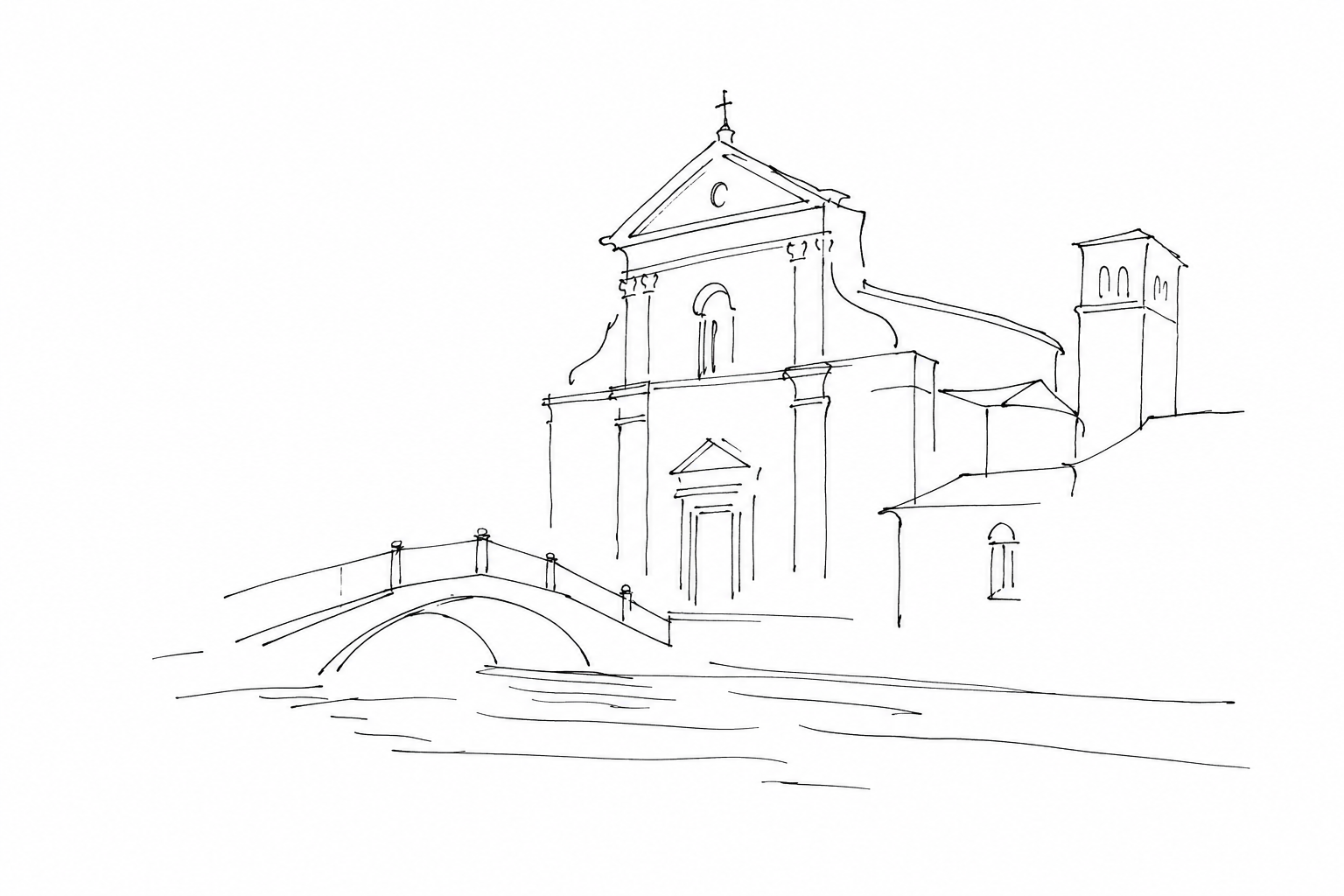

At San Sebastiano, on the quietest edge of Dorsoduro, Venice changes rhythm. The church does not impress because of its façade, but because of what happens inside: a long pictorial worksite in which Paolo Veronese transformed the nave, ceiling, presbytery and organ into a continuous scene. Entering here means reading a building as a story constructed over time, between devotion, monastic ambition and theatrical skill. It is not a stop to be consumed in a hurry: it requires a slow gaze, attention to the sequences and a certain willingness to let oneself be guided by the images.
Where San Sebastiano is located and why it matters
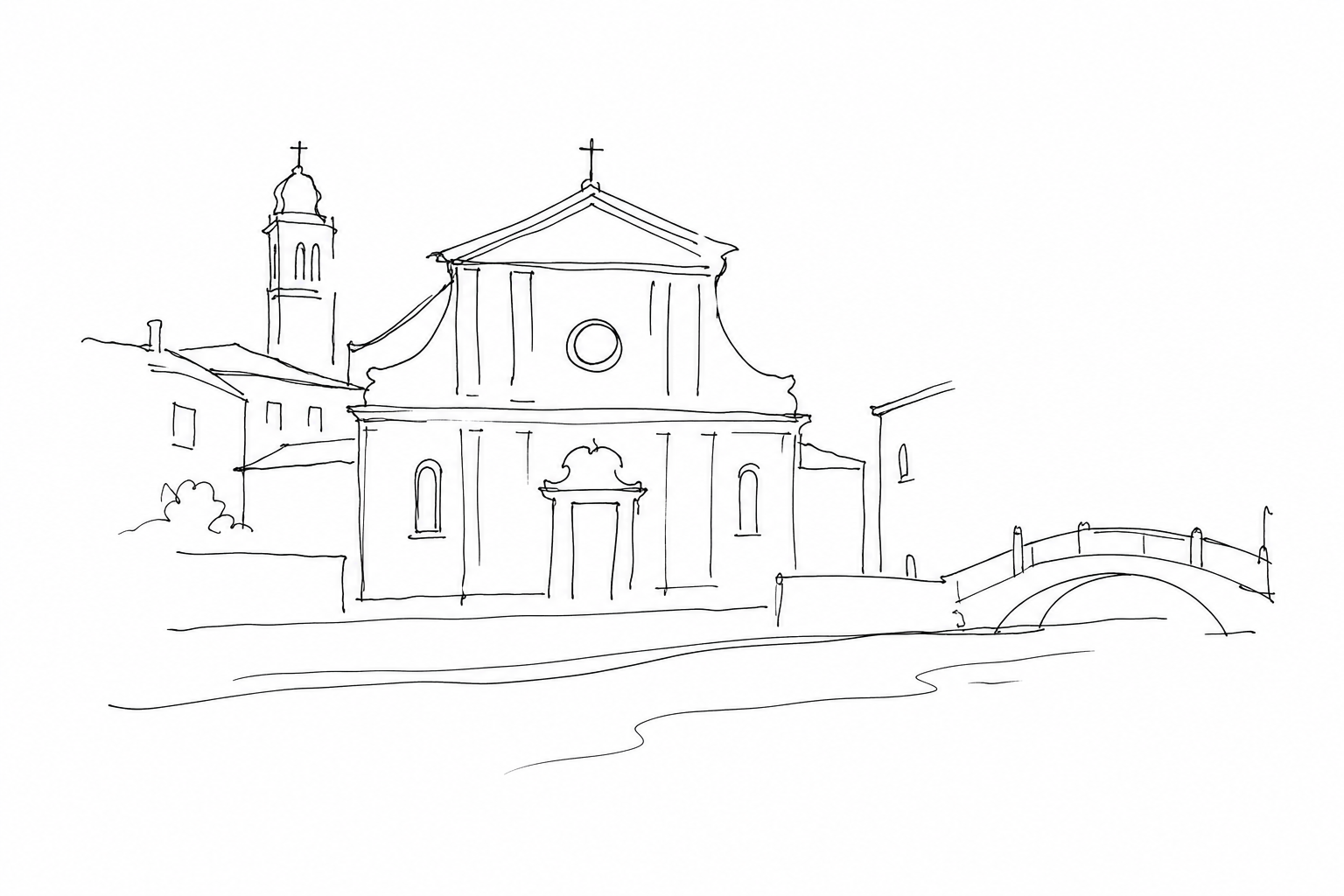
San Sebastiano is located in the sestiere of Dorsoduro, in an area set apart from Venice’s most crowded routes, between the campo of the same name and the San Basilio area, not far from the Zattere. This position is important: the church was not created as a monumental backdrop for the official city, but as a place linked to a religious community and to an urban fabric made up of fondamente, minor canals and work spaces.
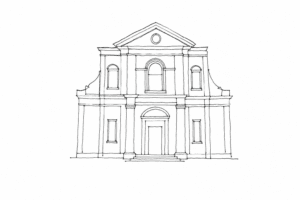
The current building took shape in the early sixteenth century, on a previous settlement of the Gerolamini, and was dedicated to Saint Sebastian, traditionally invoked against the plague. Its fame, however, is inseparable from Paolo Veronese: here the painter worked for years, transforming the ceiling, walls and organ into a continuous visual narrative. San Sebastiano matters because it preserves one of the most coherent cycles of the Venetian Renaissance, to the point of becoming almost the “church of Veronese,” who was also buried there.
Veronese: a worksite lasting a lifetime
The bond between Paolo Caliari, known as Veronese, and San Sebastiano was not an isolated episode, but a relationship that lasted decades. The painter arrived in Venice from Verona in the 1550s and found in this church of the Gerolamini monks an ideal workshop: not a single altarpiece, but an organism to be transformed room after room.
The worksite began around 1555 with the decoration of the sacristy and continued with the ceiling of the nave, where the biblical stories, in particular those of Esther, become great scenes suspended above the faithful. In the following years Veronese also worked on the walls, presbytery, choir loft and organ, constructing a unified path made of painted architectures, theatrical perspectives, monumental figures and luminous colors.
Continuity is the decisive point: here Veronese does not simply adapt paintings to an already given space, but thinks about the entire building as a stage machine. For this reason the church appears like an artistic biography in the form of a place: from his first Venetian experiments to full maturity, up to the artist’s burial inside it in 1588.
Walls, ceiling, organ: the painted scene
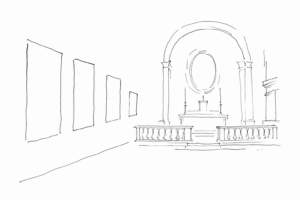
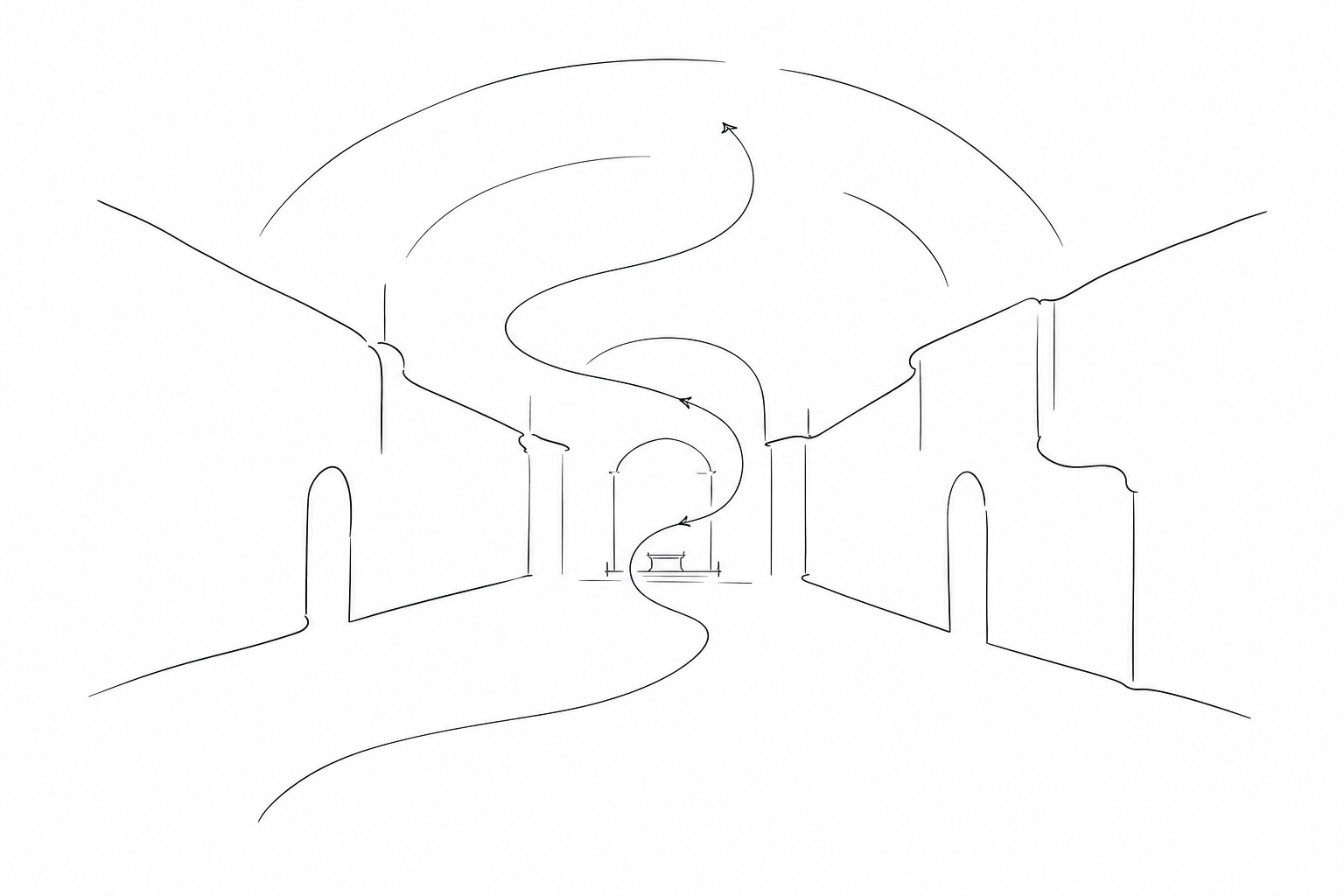
To read the interior of San Sebastiano one must proceed with the gaze in motion. The decoration is not designed for a fixed point: it accompanies those who enter, stop in the nave, raise their eyes and then return toward the presbytery. The ceiling becomes the first stage, with the stories of Esther constructed through bold perspectives, painted architectures, stairways, columns and crowds arranged in depth. It is not only a matter of narrating a biblical episode: the Persian court appears transformed into a solemn ceremony, close to the Venetian taste for processions, embassies and public apparatuses.
The walls broaden this staging. The scenes linked to the martyrdom of the titular saint do not remain isolated in individual devotional images, but dialogue with the real hall: almost theatrical life-size figures, broad gestures, armor, draperies and architectural wings make the sacred space perceived as an environment inhabited by action.
The organ also takes part in the visual device. The painted shutters and the choir loft do not function as simple musical furnishing: they introduce another level of spectacle, where painting, liturgy and sound meet. The result is a continuous perceptual machine: ceiling, side walls and the organ area guide the eye in sequence, transforming the interior into an enveloping narrative, closer to a total scene than to a gallery of paintings.
How to read it during a slow visit
An attentive visit works best in brief stages. Before looking for the single masterpiece, it is worth recognizing the logic of the cycle: the painter uses architectural frames, false balconies, views from below and figures seen at an angle to make real space and painted space coincide.
Then stop in the nave and read the scenes of Esther not only as biblical episodes, but as examples of court, power, loyalty and salvation: themes suited to a monastic community and also understandable to the Venetian public of the sixteenth century. Moving a few steps, proportions and vanishing points change; it is part of the theatrical effect, not a flaw.
Finally, observe the material details: still-bright colors, gestures, fabrics, armor, painted architectures. For up-to-date practical information on access and opening hours, it is always better to check with official sources before visiting.
Visiting San Sebastiano means understanding how Venice knows how to hide masterpieces far from the most crowded routes. In this church Veronese does not leave a single memorable painting, but a complete visual system, designed to envelop those who enter and orient their gaze. Lingering on the walls, the ceiling, the organ and the architectural details makes it possible to grasp the meaning of a work born day after day, almost like a personal workshop. It is a precious stop for those seeking a more attentive Venice, where art is not decoration, but lived space.
Related Posts
The Church of San Sebastiano: Veronese’s pictorial refuge hidden in Dorsoduro
Guide to the church of San Sebastiano in Dorsoduro, where Veronese worked for years and was buried.The Scuola Grande di San Rocco: Tintoretto and the pictorial cycle that transforms a confraternity into sacred theater
History, rooms and reading of Tintoretto’s cycle at the Scuola Grande di San Rocco, between confraternity, architecture and sacred theater.
San Salvador: Titian, Bellini and a central church that many pass by without seeing
A short guide to San Salvador, between Rialto and St. Mark’s: history, architecture and works by Titian and Bellini.Questions Answered
Where is San Sebastiano located and why is it important?
It’s in Dorsoduro, linked to religious community and away from main city spectacle.What was unique about Veronese's work at San Sebastiano?
He transformed the entire church interior into a continuous pictorial narrative.How does the church’s decoration affect a visitor's perception?
It forms a theatrical, enveloping narrative guiding the viewer’s gaze.What are key aspects to observe during a visit?
Notable are architectural frames, biblical scenes, and painted details.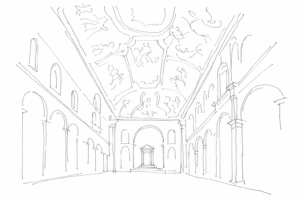
Stay a little longer in Dorsoduro
Would you like to move from this place to nearby stories among churches, palaces and fondamenta?
 Angelo Raffaele: Tobias, the dog and a Dorsoduro church with an almost narrative toneA reading of the church of Angelo Raffaele in Dorsoduro, between Tobias, the dog, Guardi and the sacred story in Venetian space.
 San Pantalon and the Painted Ceiling That Pretends to Be a FrescoAt San Pantalon, in the Dorsoduro sestiere, an enormous painting on canvas creates the illusion of a fresco: history, technique and details...
 San Nicolò dei Mendicoli: one of the oldest churches where Venice still seems like an outskirtsHistory, urban space and details of San Nicolò dei Mendicoli, an ancient church on the inhabited edge of Dorsoduro.
 The Gesuati at the Zattere: Tiepolo, light and white façades in front of the Giudecca CanalA brief guide to the Gesuati at the Zattere: history, façade, light of the Giudecca Canal and Tiepolo’s ceilings.