
Santa Maria dei Miracoli is a church that seems to escape the usual scale of Venice: it does not dominate a campo, it does not seek a monumental effect, but presents itself as a compact and precious object, set among houses, bridges and canals. Its charm arises precisely from this intimate measure, from its skin of polychrome marbles and from an architectural balance that transforms a votive building into an urban casket. Looking at it carefully means reading together devotion, Renaissance art and everyday Venetian life.
The first glance in front of Santa Maria dei Miracoli already explains the nickname “marble casket”. The church does not dominate the space with monumental dimensions: it conquers it through concentration, like a precious object placed among the houses, canals and fondamente of the Cannaregio sestiere.
Built at the end of the fifteenth century by the Lombardo workshop, it was conceived to house an image of the Virgin considered miraculous. This votive origin helps to read the architecture: not a great processional basilica, but a refined, almost intimate container, in which every surface seems to participate in the veneration of the icon.
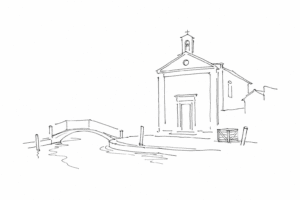
The effect arises above all from the polychrome marble cladding. Light slabs, pinkish veins, roundels, panels and geometric motifs compose the façade and interior like a work of inlay. The compact form, the curved pediment and the barrel-vaulted roof amplify the idea of a closed and luminous case: small in size, sumptuous in material.
Votive origin and the Lombardo project
The preciousness of Santa Maria dei Miracoli arises from a very concrete story: devotion to an image of the Virgin considered miraculous. The icon, painted on an external wall of a Venetian house, attracted offerings and pilgrims; from that popular cult matured the idea of building a church capable of housing it worthily.
The project was entrusted to Pietro Lombardo, with the contribution of his workshop and his sons, including Tullio and Antonio. The choice is decisive for understanding why the building looks like a casket: the Lombardos did not conceive the church as a large container, but as a marble frame built around the sacred image. Architecture, sculpture and decoration proceed together, without clear separations.
Built at the end of the fifteenth century, the church reflects the Venetian Renaissance taste for order, measure and rare materials. The façade and interior thus become a visible response to the votive function: to protect a venerated image by transforming it into the heart of a compact, luminous and extremely carefully crafted work.
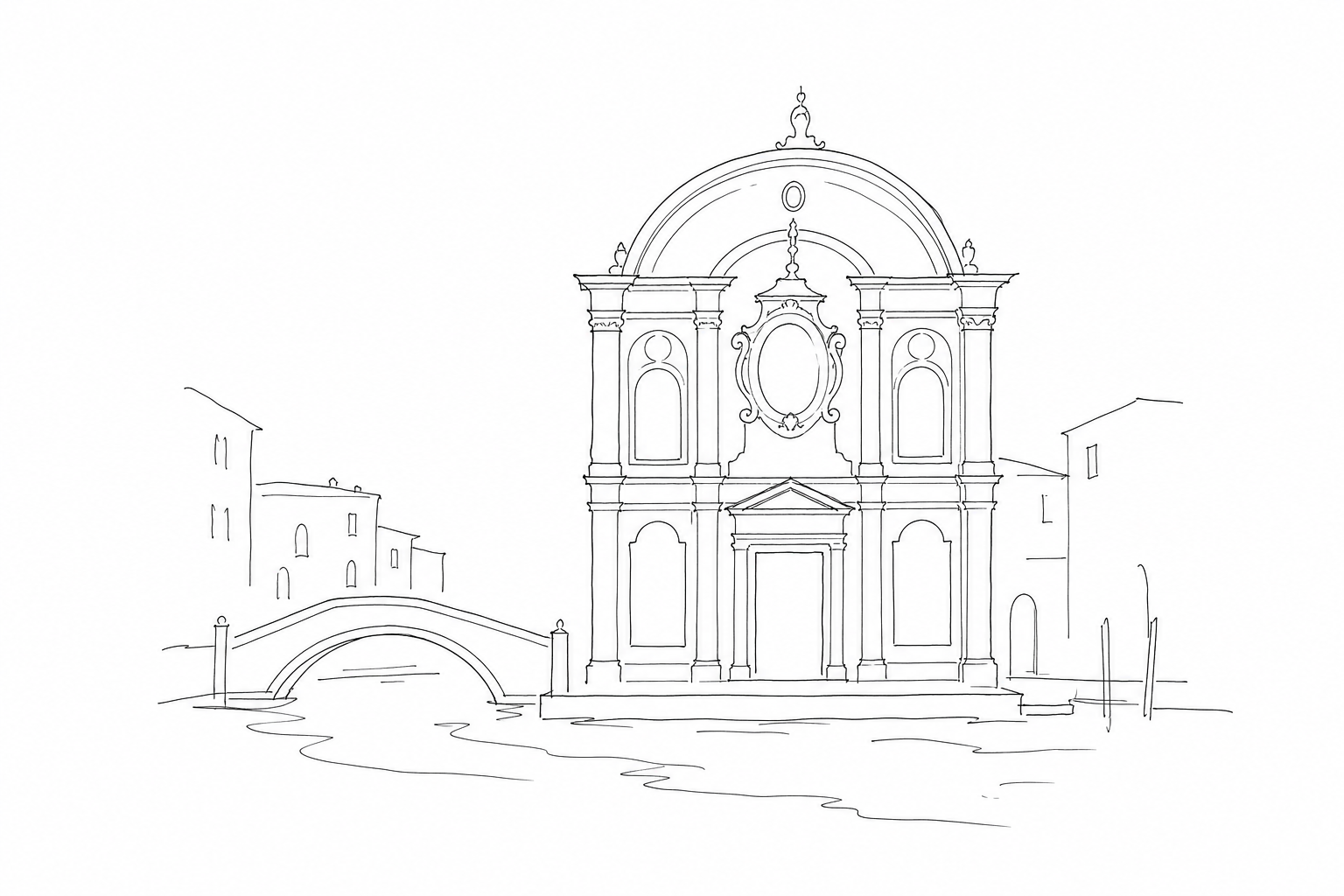
The façade: marbles, proportions and light on the canals
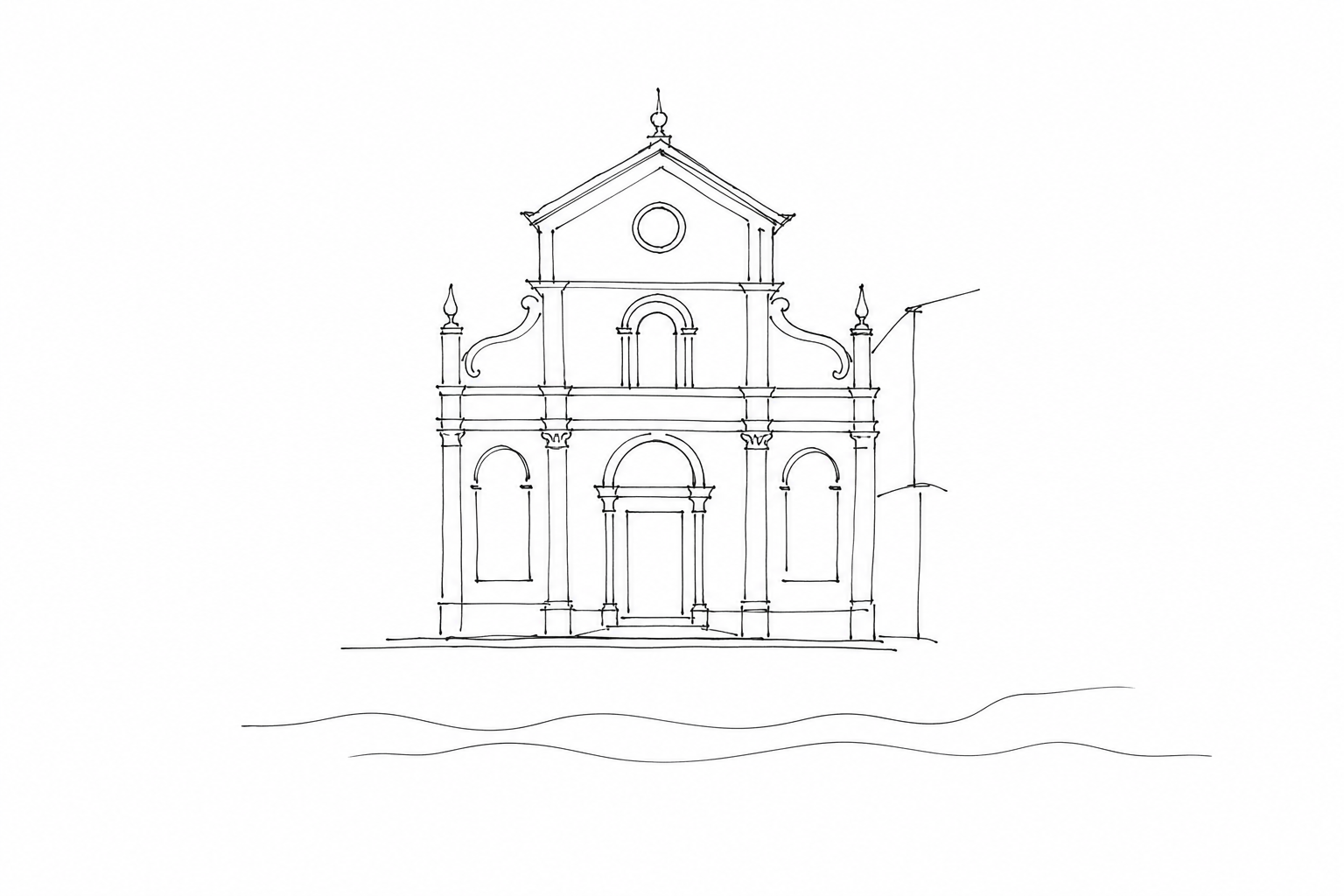
On the outside, Santa Maria dei Miracoli gives the impression of a casket because it does not aim for grandeur, but for concentration. The façade is an ordered surface, almost a precious panel, in which the polychrome marbles draw geometric fields, frames and circular bands with inlay-like precision. Istrian white converses with pink, grey and green veining: different materials that, under the Venetian light, change tone during the day.
The front is built on clear proportions. Two superimposed orders, light pilasters, arches and a curved tympanum guide the gaze upward without weighing down the volume. The decoration does not cover the structure: it makes it legible, transforming every marble band into a visual measure. For this reason the building appears worked rather than simply clad.
The context also matters. Overlooking a small space and the nearby rii, the façade does not present itself from afar, but through close approaches and oblique views. The water reflects shifting gleams on the stones, accentuating the effect of a precious case: not a monument dispersed in the urban scene, but a luminous object set into the fabric of Cannaregio.
On entering, the precious effect does not diminish: it changes scale. The nave is single, short and intimate, and the walls clad in polychrome marbles make the space read more like a chiselled work than a simple liturgical setting. The light, veined and coloured slabs are not a neutral backdrop: they draw panels, pilasters, frames and continuous surfaces, creating a compact architectural skin.
The gaze is guided toward the raised presbytery, reached by a scenographic central staircase. This height difference is decisive: the altar does not appear only at the end of the hall, but elevated, almost guarded. Here the connection is concentrated with the Marian image considered miraculous, the origin of the devotion that made such a carefully crafted building necessary.
Also observe the roof: the barrel vault, with painted decorations and gilding, completes the sensation of a closed and luminous case. In such a compact interior every detail carries weight: balustrades, capitals, inlays, marble profiles. The richness does not derive from an abundance of space, but from the precision with which stone, light and proportions transform a small hall into a Renaissance casket.
Visiting Santa Maria dei Miracoli requires a slow gaze: the façade changes with the light, the marbles reveal different veins and colours, the interior concentrates in a few metres a surprising richness of proportions and details. It is a small church, but not a lesser one: it tells of the Venetian ability to transform a limited space into a complete work, where architecture, faith and material converse with great precision. For this reason it remains one of the city’s most intense and least predictable stops.
Related Posts
Santa Maria dei Miracoli: the marble church that looks like a reliquary in the heart of Cannaregio
History, marbles and details of Santa Maria dei Miracoli, a small Renaissance masterpiece among the canals and calli of Cannaregio.Santa Maria Mater Domini: a small church for understanding the mercantile Venice of Santa Croce
A slow reading of Santa Maria Mater Domini, among campo, mercantile history, art and the urban fabric of Santa Croce.
Santa Maria Formosa: one campo, two façades, and a Venice that changes sides with every step
A narrative guide to Santa Maria Formosa: the campo, the two façades, the bell tower, and the details that change the way you look.Questions Answered
Why is Santa Maria dei Miracoli referred to as a marble casket?
Its compact size and polychrome marble cladding make it resemble a precious closed case.Who designed Santa Maria dei Miracoli and what was the concept?
Pietro Lombardo and his workshop designed it as an intimate frame for the miraculous Virgin image.How does the church’s façade interact with its Venetian context?
The façade uses light and materials to blend into the urban fabric and reflect canal waters.What makes the interior of Santa Maria dei Miracoli unique in Renaissance architecture?
Its detailed marble inlays and elevated presbytery focus enhance intimacy and spiritual devotion.
Keep exploring Cannaregio
Want to stay among secluded churches, unusual bridges and everyday stories of the district?
 San Giobbe in Cannaregio: the hidden Venetian Renaissance near the stationGuide to San Giobbe, a Renaissance church in Cannaregio just a short walk from Santa Lucia.
 Sant’Alvise in Cannaregio: the secluded church with Tiepolo and an almost domestic VeniceA brief guide to Sant’Alvise, between the northern edge of Cannaregio, Tiepolo’s canvases and daily rhythm.
 The Ghetto Novo: why the houses are so tall and what they tell us about Venetian Jewish historyIn Cannaregio’s Ghetto Novo, the height of the houses tells of imposed space, housing density and Jewish life in Venice.
 Unfinished San Marcuola: the missing façade that teaches you to look at Venice without pretenseSan Marcuola, on the Grand Canal, shows Venice without coverings: an unfinished, concrete church to be read in its voids.