

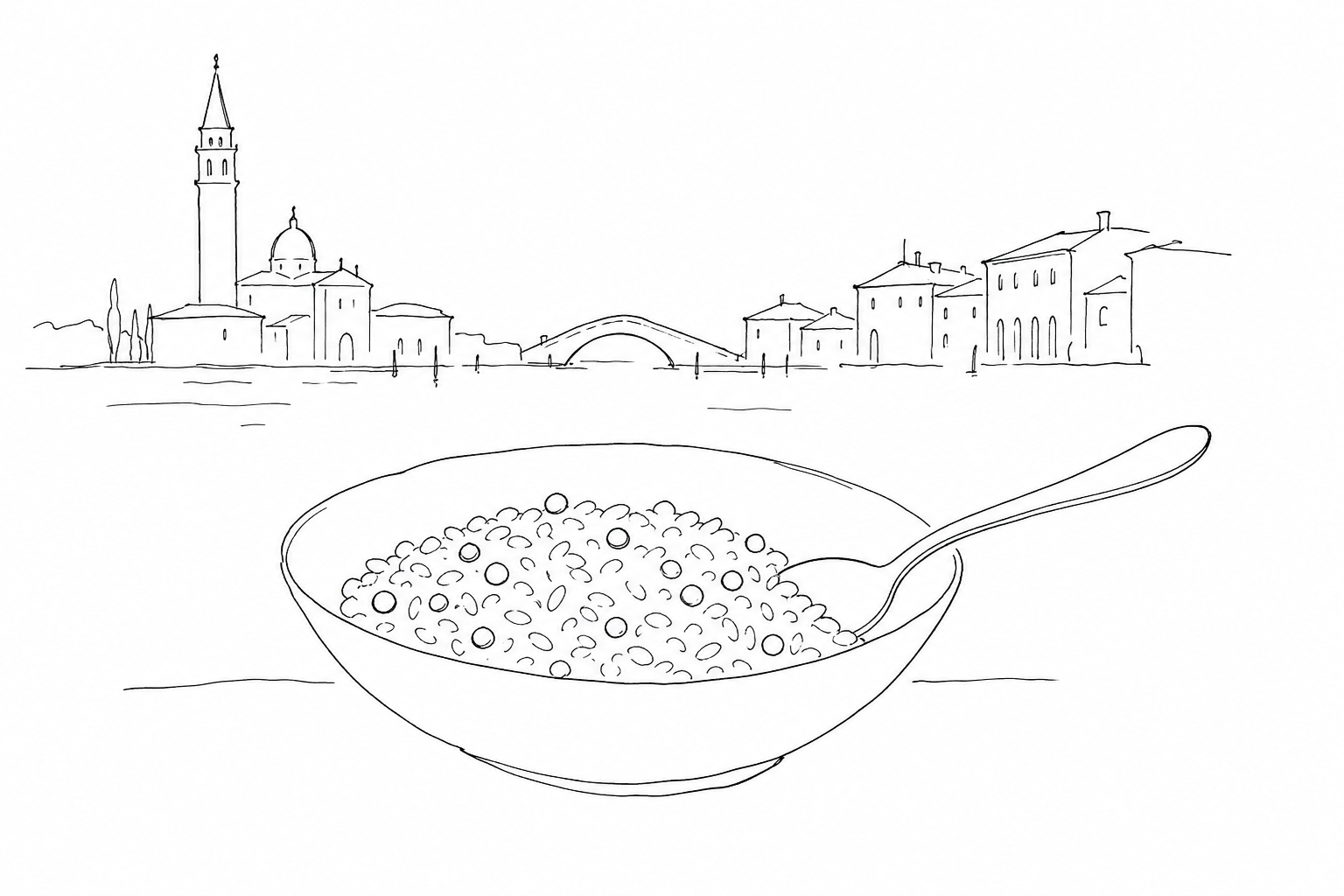

Risi e bisi seems like a domestic, almost modest dish: rice, fresh peas, broth, a consistency halfway between soup and risotto. And yet, in the Venice of the Serenissima, this simplicity had a precise time and a public value. April brought the first bisi from the lagoon hinterland and the nearby countryside, and the table became a way to read the season, trade, hierarchies and civic celebrations. Telling the story of risi e bisi therefore means entering a concrete Venice: not only that of palaces and views, but that of markets, kitchens, agricultural rhythms and habits still recognizable in spring menus.
An April dish, not just a recipe
Risi e bisi seems to arise from a domestic gesture: rice, fresh peas, a light broth, the consistency halfway between soup and risotto. Yet it is precisely this simplicity that tells the story of spring in the Serenissima better than many solemn dishes. Its natural moment is April, when tender pods arrived from the vegetable gardens of the lagoon and the Venetian mainland, and the green of the peas marked the return of the mild season.
In Venice the dish is also linked to the feast of San Marco, on April 25, when according to tradition it was served to the doge as a symbolic dish: not ostentatious luxury, but controlled abundance, balance, freshness. The rice evoked the trade and countryside of the Venetian dominion; the bisi, that is peas in Venetian, brought to the plate the voice of the island vegetable gardens, such as Sant’Erasmo and the Vignole. For this reason risi e bisi is not only a regional recipe: it is a small edible map of Venice, suspended between water, market, calendar and civic power.
San Marco, the doge and the table of the Serenissima
In the Venetian calendar, April 25 was not just any date: it was the feast of San Marco, patron saint and political symbol of Venice. On that day the doge took part in the ceremonies of San Marco and the official lunch took on a public, almost ritual value. Risi e bisi, according to a very deeply rooted tradition, appeared at the ducal table precisely to greet spring with a new, tender food, arrived from the lagoon vegetable gardens.
The historical meaning lies here: not ostentatious wealth, but a seasonal luxury. Rice, a prized crop in the Venetian mainland domains, met the fresh peas produced on the islands and in the nearby countryside; cooking thus translated the commercial and agricultural extent of the Venetian State into a bowl.
Alongside the winged lion, the processions in Piazza San Marco and the rite of the bocolo, risi e bisi told of a power capable of representing itself also through food: sober, orderly, linked to the natural cycle and to the city of water.
Why it tells the story of Venetian spring
The strength of risi e bisi lies in the exact moment when it arrives in the kitchen: when the peas are tender, sweet, still full of vegetable water. It is neither a dry risotto nor a liquid soup, but a soft middle ground, “all’onda,” which conveys the lagoon humidity and the delicacy of the first harvests.
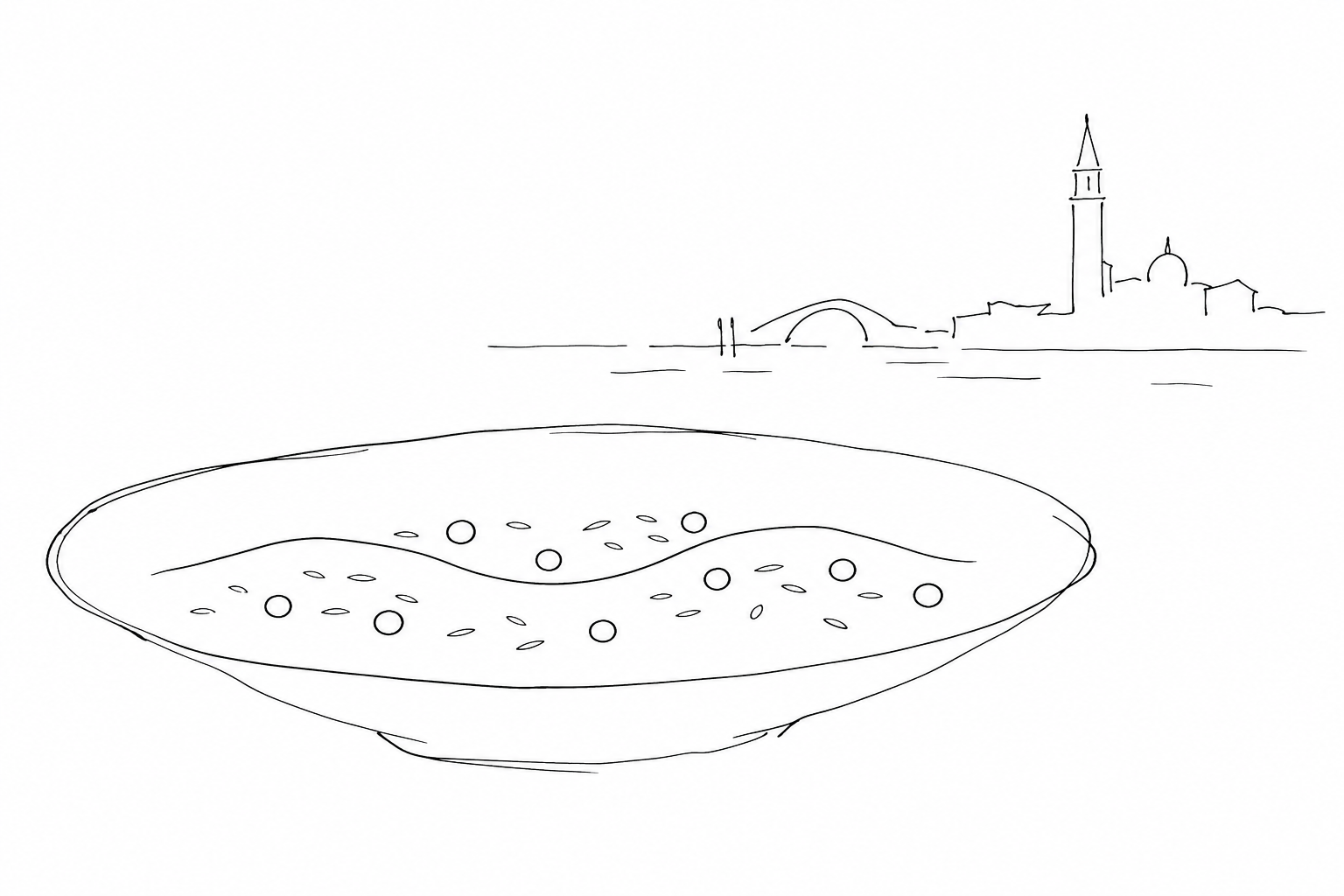
The seasonal character comes from precise gestures. The fresh legumes are shelled by hand; the pods are often used to prepare a green and fragrant broth, so that nothing from the harvest is wasted. The light sauté with onion, butter or oil, parsley and sometimes pancetta accompanies without covering. The rice, added little by little, absorbs flavor but remains distinct, with recognizable grains.
In this measure lies Venetian spring: controlled abundance, light colors, scents of the vegetable garden and a consistency that does not weigh heavily. The recipe speaks of lagoon vegetable gardens, city markets and a cuisine capable of transforming humble ingredients into a public, festive sign deeply linked to the natural calendar.
Where to understand it today: bacari, homes and seasonal menus
To read it in the present, it is best to look for it where cooking truly changes with the vegetable garden: in homes, in some neighborhood osterias and in the bacari that, when fresh peas appear, include risi e bisi among the dishes of the day. There is no need to chase a “definitive” address: its nature is seasonal, so menus, availability and recipes should always be checked at the moment.
A good clue is the consistency: it must not be dry like a risotto nor liquid like a soup. The grain remains soft, bound by a broth often prepared also with the pods, which gives back vegetal sweetness and a delicate color. In families, onion, parsley, butter, cheese and sometimes a savory base may be added, but the center remains the balance between cereal and young legume.
Asking for it “when it is in season” helps to understand its meaning: it is not postcard nostalgia, but a domestic and city practice that still measures the calendar by the market.
Understanding risi e bisi means observing Venice from a less obvious angle: the one in which institutional history meets everyday cooking. The dish preserves the memory of the feast of San Marco and the doge’s table, but it remains alive above all when peas are in season, in attentive bacari, in homes and in restaurants that respect the calendar more than folklore. There is no need to look for it as a curiosity to tick off: it is better to taste it at the right moment, letting its measure tell of a Venetian spring made of vegetable gardens, lagoon, memory and simple gestures.
Related Posts
Polenta and schie: small shrimp, lagoon cuisine and the memory of an everyday food
Origin, taste and meaning of polenta and schie, a small dish from the Venetian lagoon.Bigoli in salsa: the poor pasta that tells of anchovies, onions and days of abstinence
An outline on bigoli in salsa: poor Venetian pasta, slow-cooked onions, salted anchovies and the memory of days of abstinence.
Baccalà mantecato: why a fish from the North became one of the most Venetian flavors
History, technique and places of baccalà mantecato, from Nordic cod to Venetian tables.Questions Answered
What is risi e bisi and when is it traditionally eaten?
A dish of rice and fresh peas traditionally eaten in April.How is risi e bisi connected to the feast of San Marco?
It was served to the doge as a symbolic spring dish on April 25.What does risi e bisi represent in Venetian culture?
It embodies Venice’s agricultural heritage, trade, and civic pride.Where can risi e bisi best be enjoyed today?
In homes and bacari during pea season for authentic experience.
Keep tasting your way through Venice
Want to see how dishes, cicchetti and counter habits tell the city better than a simple menu?
 Why in Venice They Say “ombra”: history and legend of the most Venetian glass of wineOrigin, legend and everyday use of the ombra, the glass of wine linked to Venetian bacari.
 Moeche: what the lagoon’s soft-shell crabs are and why they are so sought afterWhat moeche are, when they are found, how they originate in the lagoon and why in Venice they are considered a rare...
 Baccalà mantecato: why a fish from the North became one of the most Venetian flavorsHistory, technique and places of baccalà mantecato, from Nordic cod to Venetian tables.
 Sarde in saor: the sweet-and-sour dish that tells of sailors, preservation and the lagoonHistory, taste and everyday use of sarde in saor, a Venetian dish born among fishing, onions, vinegar and long preservation.