
Calle Varisco attracts attention because it promises an extreme measurement: one of the narrowest calli in Venice, almost an urban slit hidden between Cannaregio and the Miracoli area. But seeking it only to photograph a record means missing the point. Its narrowness tells, better than many famous views, how the city adapted to space, water, properties and everyday passageways. Approaching Calle Varisco therefore requires a different gaze: not the hunt for a curious place, but attention to a minute Venice, made of close walls, sudden turns and traces of ordinary life.
What Calle Varisco is and why it arouses curiosity
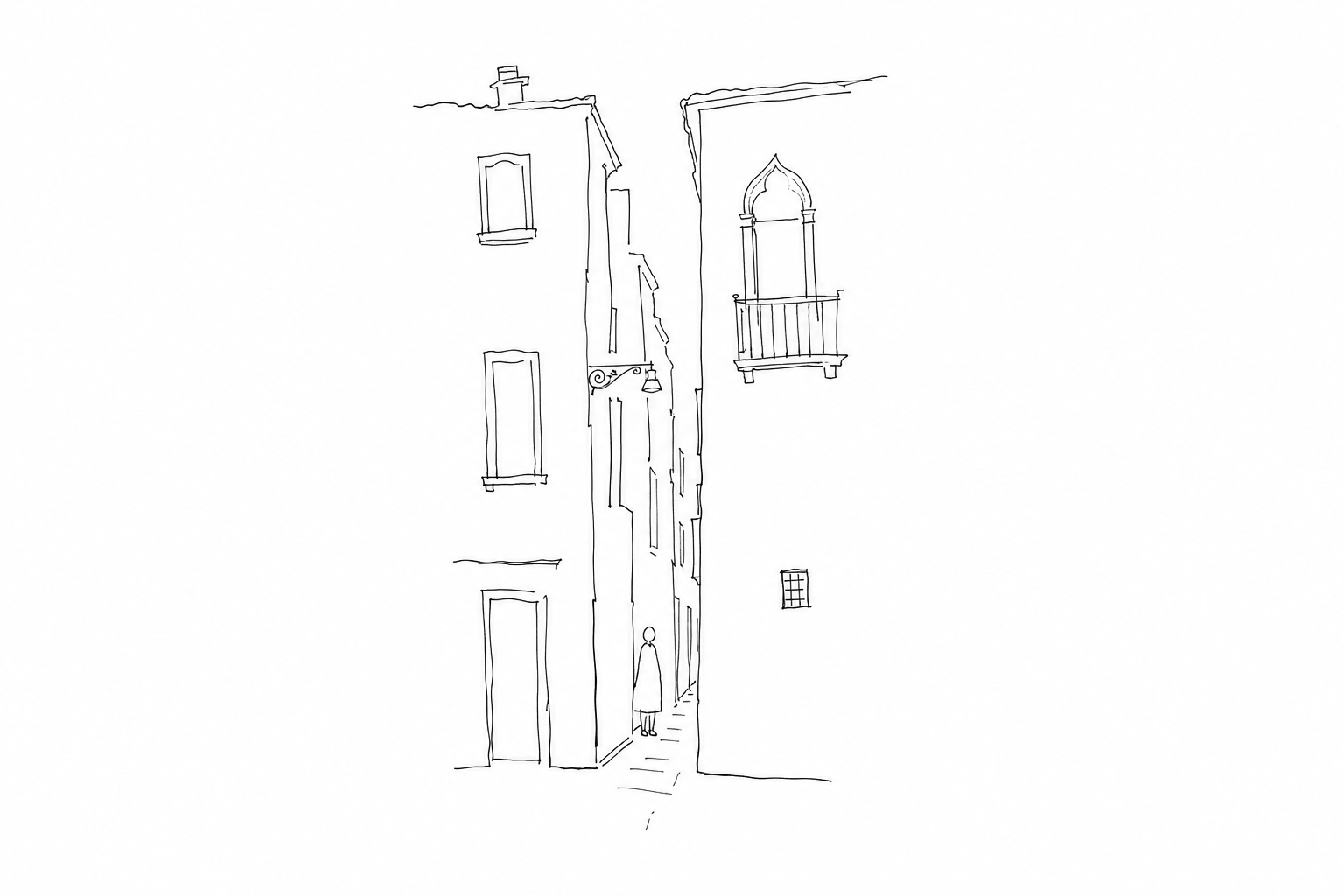
Calle Varisco is a small calle in the Cannaregio sestiere, often cited among the narrowest passageways in Venice: at its tightest point it is indicated at around 53 centimetres. People usually look for it because of this extreme measurement, but reducing it to a test to be overcome or a photo to collect means losing the sense of the place.
It is a secondary calle, not a monument designed to amaze. Like many Venetian streets, it was born within an urban fabric made of closely set walls, private entrances, canals, sudden turns and spaces carved with precision into the built environment. The name itself, most likely linked to a family or a property, belongs more to everyday toponymy than to the rhetoric of attraction.
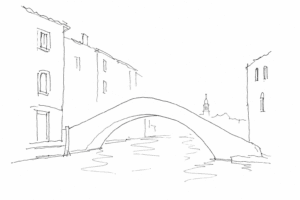
Seeking it can be interesting if it becomes an exercise in attention: observing the proportions, understanding how much the historic city is also made of minimal passageways, and remembering that these spaces remain part of a lived-in neighbourhood.
Where to look for it: finding your way between Cannaregio and Miracoli
To find Calle Varisco, it is best to think in terms of urban reference points, not as a hunt for the exact spot. We are in the Cannaregio sestiere, in an area set back from the main flows: the useful reference is the church of Santa Maria dei Miracoli, with its recognizable marble façade and the small campo that introduces it.
Arriving from Rialto or from Strada Nova, the best orientation is to head toward the area of Santa Maria Nova and the Miracoli, then slow down. Here Venice changes scale: the campi narrow, the bridges become short neighbourhood passages, the turns are not always readable from a distance. The little street you are looking for is nearby, inserted in a dense residential fabric, not on a monumental route.
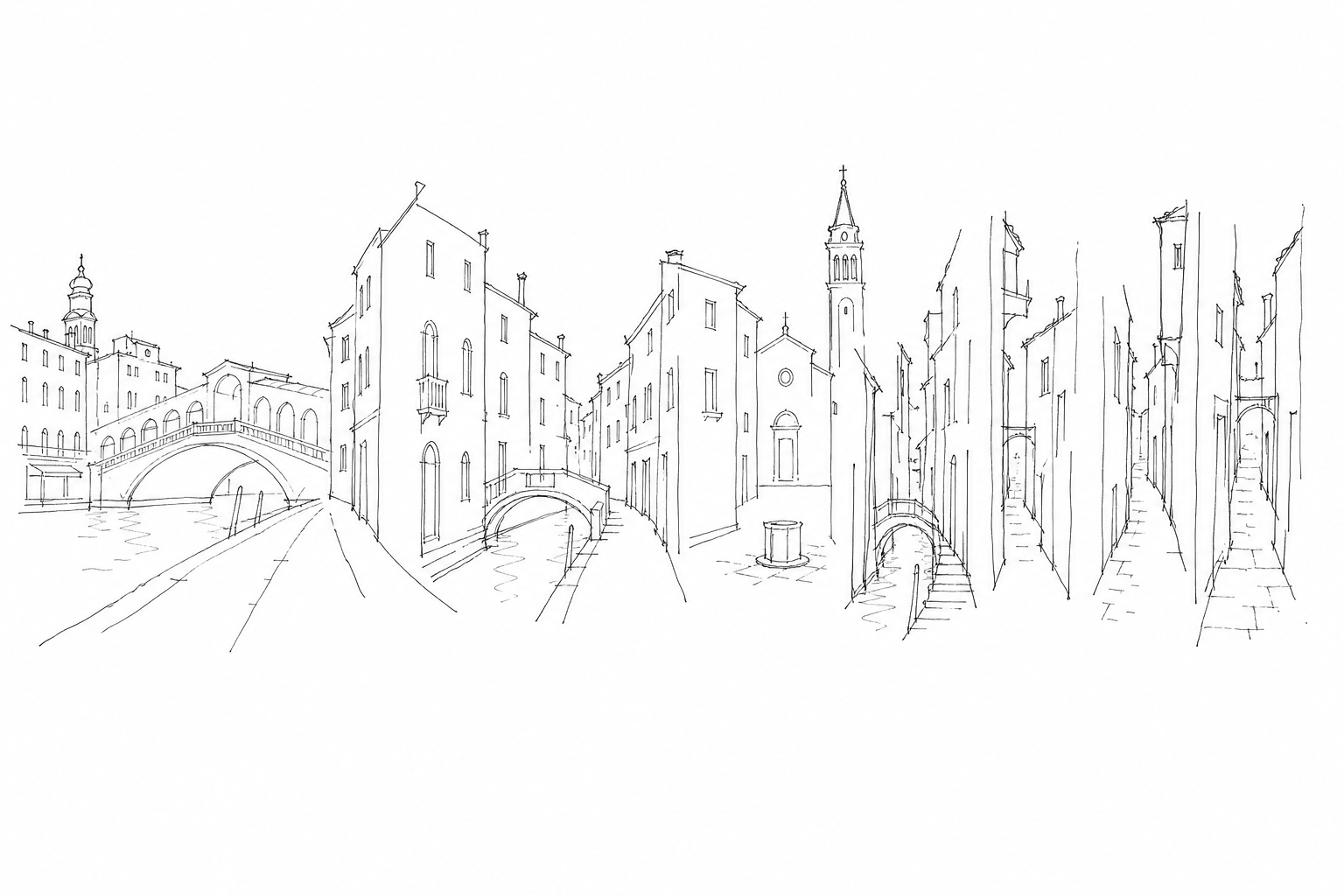
- Use Miracoli as the main reference point, not as a simple photographic backdrop.
- Avoid shouted directions or groups stopping for a long time: the space is tiny.
- Check an updated map only for the final stretch, because Venetian toponymy can be confusing.
A narrow passage tells the story of Venice’s growth
The fame of Calle Varisco comes from its extreme measurement, often indicated at around 53 centimetres at its narrowest point. Its interest, however, is not the challenge of the tape measure: it is the way an urban fragment makes visible the minute logic of the lagoon city. In Venice many routes were not laid out on a regular grid; they formed among plots, courtyards, inner banks and properties pressed together over time. When buildable land was precious, the void left for transit could shrink to a functional slit.
When observing this passage, it is worth reading the walls before the photograph: close façades, absence of perspective, a slowed pace, the physical perception of density. It is not an isolated anomaly, but a small proof of balance between living, passing and building in a city made of islands, canals covered over or crossed, private boundaries and daily necessities. The architectural detail explains why here the wonder lies in the compression of space, not in the record to collect.
Visiting it without making it a trophy
Calle Varisco lies within an inhabited fabric, not in a space designed for tests of skill. The best way to look for it is to consider it an urban clue: a minute passage that shows limits, adaptations and forced proximity between houses. Arriving with this idea also changes behaviour on site.
- Stop briefly: observe the narrow point, perhaps take a single picture and leave the passage free.
- Do not stage challenges: forcing yourself through, measuring your body or blocking friends at the narrowest point turns the place into a gag and increases wear on the passage.
- Respect doors and windows: avoid loud voices, leaning on walls, dragging backpacks and taking photographs directed toward private interiors.
- Give way to those who live or work there: if someone arrives, step back toward a wider space instead of asking the other person to wait.
In this way the visit remains consistent with the meaning of the place: not the conquest of a record, but the encounter with an extreme form of the built city.
Seeking Calle Varisco can become a small exercise in measure: walking slowly, finding your way without forcing the neighbourhood, observing what is around it even before the narrow passage. In a city often reduced to a list of attractions, such a minute calle invites a change of scale and behaviour. There is no need to turn it into a trophy or a photographic challenge; it is enough to recognize it for what it is, a fragile and significant urban detail. Visited with discretion, it gives back a less spectacular but more precise Venice, where even a few steps between two walls can tell centuries of adaptations, boundaries and everyday habits.
Related Posts
Via Garibaldi: Venice’s only “via” and the district that breathes like a village
History, urban form and daily life of Via Garibaldi, a wide and popular axis in the Castello sestiere.Ponte Chiodo in Cannaregio: the bridge without a parapet that Venice has almost forgotten
History, form and context of Ponte Chiodo, a rare Venetian bridge without a parapet in Cannaregio.
Le Mercerie: the commercial route between Rialto and San Marco that was not created for modern shopping
History and urban reading of the Mercerie, a dense axis of calli between Rialto and San Marco born from civic, artisan and mercantile functions.Questions Answered
What is Calle Varisco and why is it notable?
It is one of Venice's narrowest streets, reflecting urban adaptation.Where exactly is Calle Varisco located?
Near Santa Maria dei Miracoli in the Cannaregio district.What does the narrowness of Calle Varisco represent?
It illustrates Venice's historic urban growth and spatial constraints.How should visitors behave when visiting Calle Varisco?
Brief stops, respect for residents, and no disruptive behaviors.
Another stretch of Cannaregio
Want to continue through campi, façades and small places best discovered without rushing?
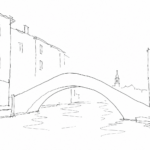 Ponte Chiodo in Cannaregio: the bridge without a parapet that Venice has almost forgottenHistory, form and context of Ponte Chiodo, a rare Venetian bridge without a parapet in Cannaregio.
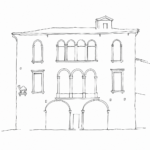 Palazzo Mastelli and the Camel: an Eastern Detail in the Heart of CannaregioHistory, interpretation and context of the camel carved on Palazzo Mastelli, among Eastern trade and the calli of Cannaregio.
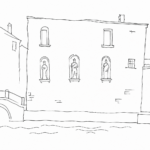 Campo dei Mori: statues, merchants and legends carved on the walls of CannaregioA brief guide to Campo dei Mori, among walled-in statues, eastern merchants and legends of Cannaregio.
 Corte del Milion: Marco Polo, toponyms and hidden memory behind RialtoA reading of the Corte del Milion among the Polo houses, nizioleti and urban traces behind Rialto.