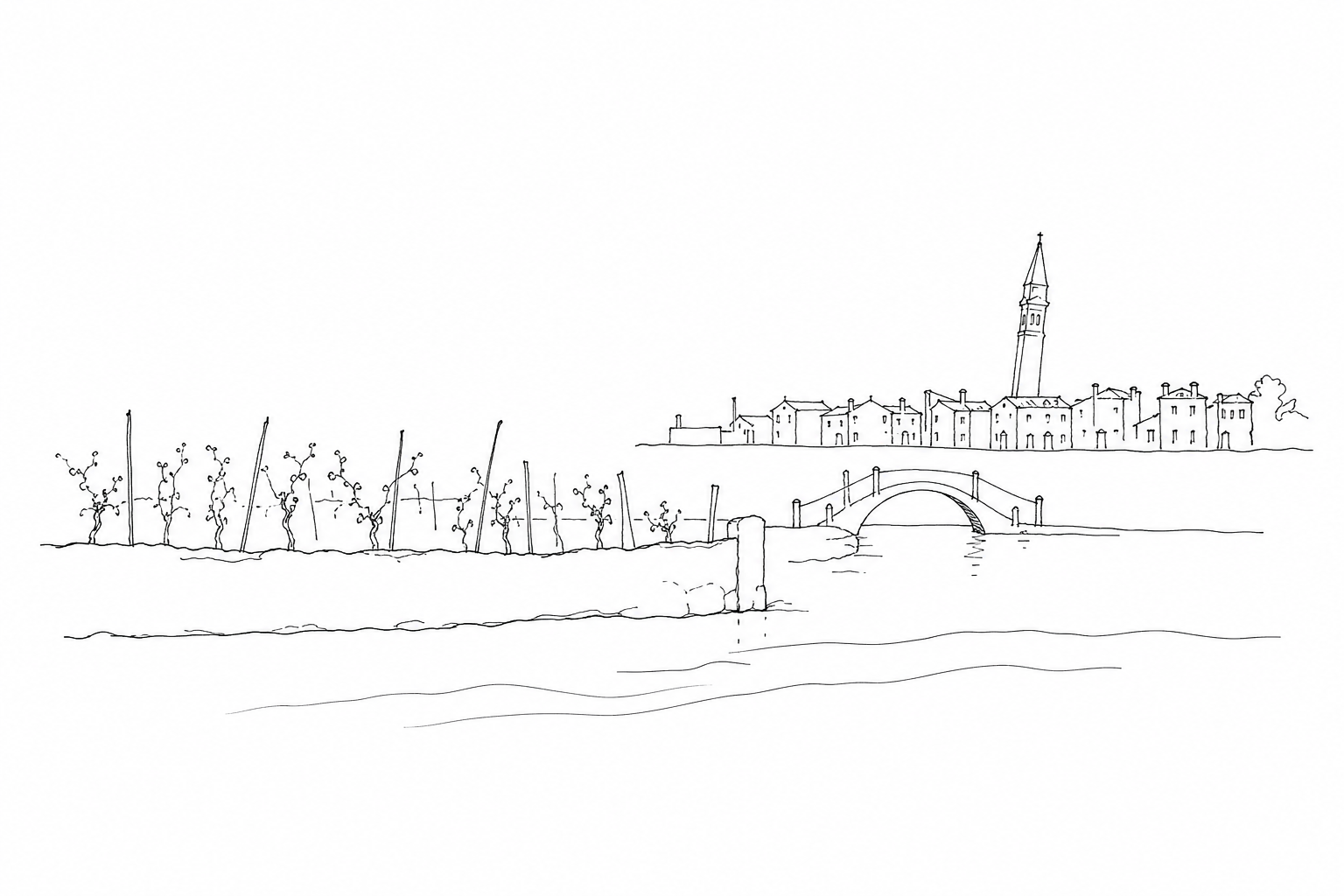


The Scuola Grande di San Rocco is not only one of the most astonishing interiors in Venice: it is the place where a lay confraternity, born around devotion to a protector saint, becomes a visual machine of extraordinary power. Amid rooms, wooden ceilings, canvases and half-light, Tintoretto constructs a pictorial cycle that is not observed as an ordered sequence, but as a total environment. Entering it means understanding how art, in sixteenth-century Venice, could speak at once of faith, prestige, assistance, urban competition and daily life.
A Venetian confraternity that became a place of images
The Scuola Grande di San Rocco was founded in Venice in 1478 as a lay confraternity dedicated to Saint Roch, invoked against the plague. In a city exposed to contagion and founded on networks of civic solidarity, its task was not only devotional: it organized assistance for its confratelli, charitable practices, public ceremonies and forms of social representation.
Its prestige grew rapidly. In 1489 the confraternity obtained the rank of Scuola Grande, entering the restricted group of the most influential lay institutions of the Republic. The headquarters, built next to the church of San Rocco and not far from the Frari, thus became a space where religion, civic identity and institutional ambition met.
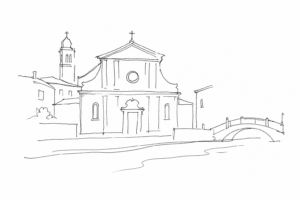
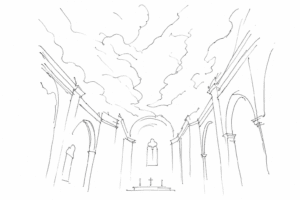
Even before Tintoretto’s arrival, the building was designed to impress: superimposed rooms, a ceremonial staircase, spaces intended for meetings and rites. The later pictorial cycle did not simply decorate these rooms: it transformed the confraternal function into a visual path, almost a sacred theater of mercy and redemption.
Tintoretto and the conquest of the walls
The decisive passage came in 1564, when Jacopo Tintoretto entered the competition for the decoration of the Sala dell’Albergo. According to tradition, instead of limiting himself to presenting a preparatory drawing, he placed a finished canvas, Saint Roch in Glory, directly in the center of the ceiling, offering it as a gift. It was a bold move: it transformed the competition into a fait accompli and imposed his presence in the space.
From that moment the painter built an almost exclusive relationship with the Scuola, working for more than twenty years between the Sala dell’Albergo, the Sala Superiore and the Sala Terrena. His “conquest” was not only quantitative, though it included dozens of canvases: it was a direction of the experience. The foreshortened figures, violent diagonals, sudden flashes and deep shadows force the viewer to move their gaze from the ceiling to the walls.
Tintoretto did not fill empty surfaces: he organized an immersive narrative of the Passion, the Old Testament and salvation, turning the building into a continuous narrative environment.
The pictorial cycle as sacred theater
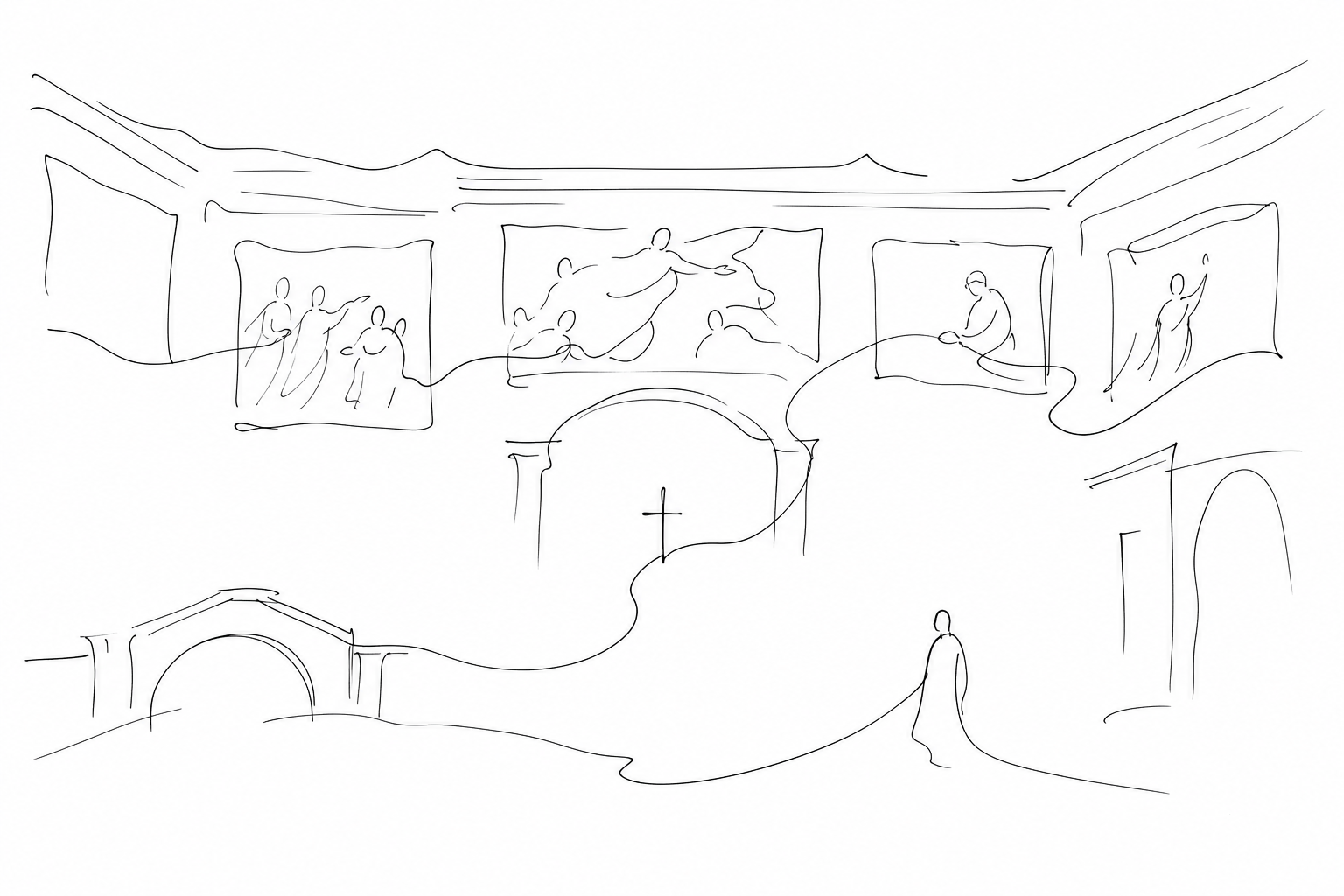
To understand the whole, it is not enough to observe the individual canvases: the building must be read as a scenic device. The rooms do not simply display biblical episodes, but guide the gaze in a progression, from the narrative of the Incarnation and the life of Christ to the dramatic culmination of the Passion. The visitor is placed inside the narrative, as if passing through a sacred theater built with light, diagonals and sudden perspective cuts.
In the Sala Terrena, scenes closer to the human dimension prevail: the childhood of Jesus, the presence of Mary, the theme of divine protection. Going up to the Sala Capitolare, the language becomes broader and more solemn: episodes from the Old Testament appear on the ceiling, read as anticipations of salvation, while Gospel moments unfold along the walls. Finally, the Sala dell’Albergo concentrates the tension on the Passion, with the great Crucifixion as its visual and spiritual fulcrum.
Jacopo Tintoretto exploits the architecture instead of submitting to it. The wooden frames, openings, the position of the doors and the height of the ceilings become part of the staging. The figures seem to burst into the real space: some plunge from above, others emerge from the shadow, still others are arranged like actors on a stage. The pictorial cycle thus transforms the headquarters of the association into a unified path, where painting, devotion and the movement of the body coincide.
How to look at it today, without reducing it to a quick stop
The visit requires a slow pace: it is not advisable to look immediately for the “masterpiece,” but to understand where the light comes from, at what distance the figures can be read and how the ceiling forces a change in posture. The canvases are designed for high walls, oblique views and environments crowded with meaning, not for the frontal gaze of a modern museum.
A useful criterion is to follow three levels: first the architecture, with stairs, portals and visual axes; then the scenes, distinguishing the Old and New Testaments, episodes of the Passion and images linked to charity; finally the material, that is, rapid brushstrokes, deep browns, flashes of white and bodies emerging from the darkness.
In the Sala dell’Albergo, in front of the Crucifixion, it is worth stopping longer: the work is not exhausted at the center, but opens at the margins, where secondary gestures build the sacred drama.
Looking at the Scuola Grande di San Rocco requires time, more than a simple passage between one monument and another. It is best to stop, raise your gaze, return to the details, accept that the light changes the perception of the scenes and that Tintoretto’s cycle reveals itself through accumulation. In this space Venice does not appear as a picturesque backdrop, but as a city of institutions, confraternities, artistic ambitions and concrete devotions. It is a visit that works best when you slow down: only in this way does the sacred theater painted on the walls cease to be decoration and become narrative.
Related Posts
San Sebastiano in Dorsoduro: the church where Veronese transformed the walls into theater
A slow guide to San Sebastiano, the church in Dorsoduro marked by Paolo Veronese’s long work.San Pantalon: the ceiling that pretends to break through the church without using frescoes
The ceiling of San Pantalon in Venice explained through canvas, illusion, Fumiani and the view from below.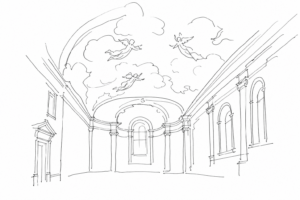
The Scuola Grande dei Carmini: clouds, angels and Venetian painting above a hidden hall
A brief guide to the upper hall of the Carmini, among Tiepolo, Carmelite devotion and Dorsoduro.Questions Answered
What was the original purpose of the Scuola Grande di San Rocco?
A lay confraternity devoted to Saint Roch, combining devotion, assistance, and civic representation.How did Tintoretto secure the commission for the pictorial cycle?
By presenting a finished canvas as a gift, forcing his presence in the space.In what way does the pictorial cycle transform the building?
It becomes a sacred theater staging biblical narratives through immersive art and architecture.How should visitors approach viewing Tintoretto’s works today?
By slowing down to observe light, perspective shifts, and layered details in context.
Follow Tintoretto beyond San Rocco
Want to connect this vast pictorial cycle with other places where Tintoretto left a different mark on Venice?
 The Church of the Madonna dell’Orto: why Tintoretto is buried in one of the quietest areas of CannaregioWhy Tintoretto rests at the Madonna dell’Orto: home, parish, works and urban silence in northern Cannaregio.
 San Cassiano: Tintoretto, market and silence a few minutes from the chaos of RialtoA short route between Rialto and San Cassiano: market, quiet calli, church and canvases by Tintoretto.
 Unfinished San Marcuola: the missing façade that teaches you to look at Venice without pretenseSan Marcuola, on the Grand Canal, shows Venice without coverings: an unfinished, concrete church to be read in its voids.
 The Hall of the Great Council: when Venice painted itself as an immense republicHistory, political function and images of the Hall of the Great Council in the Doge’s Palace.