

A few steps from the compact flow of Rialto, the Corte del Milion preserves a subtler memory: that of the Polo family, of the names that remain on the walls and of a piece of the city that is read better by slowing down. It is not a monumental place in the immediate sense, but a point where toponymy, mercantile history and Venetian daily life overlap. Understanding where it is, why it is called this and how to observe it allows you to look at Venice with greater precision, beyond the surface of the obligatory routes.
Where the Corte del Milion is and why it matters
The Corte del Milion is located in the dense network of calli behind Rialto, in the area of San Giovanni Crisostomo, a few steps from the bridge but already outside its most crowded scene. It is one of those Venetian places where memory does not appear as an isolated monument: instead, it remains entrusted to a name engraved in the topography, to a sottoportego, to a secluded courtyard, to walls that have changed function over the centuries.
The reference is to the Polo family and to the nickname linked to Marco Polo’s book, Il Milione. Tradition places the Polo houses here, in an urban sector close to the commercial and financial routes of Rialto, the mercantile heart of medieval Venice. The area was later transformed: the theater now known as the Malibran occupies a zone connected to the memory of the ancient family properties.
To understand the Corte del Milion, it must therefore be read as a historical toponym: it does not only celebrate a traveler, but preserves in the urban fabric the relationship between commerce, narrative and Venetian identity.
The link between this corner behind Rialto and Marco Polo should be read with caution: no visitable house of the traveler remains, but rather a layering of names, memories and urban transformations. Tradition places the family’s properties here, in the parish of San Giovanni Crisostomo, an area suited to merchants involved in the Mediterranean and Eastern routes of thirteenth-century Venice.
Niccolò and Matteo Polo, Marco’s father and uncle, were businessmen even before they were protagonists of an adventure story. The journey to the Mongol court and the long stay in Asia entered European memory through the book dictated by Marco to Rustichello da Pisa, later known as Il Milione. The title should not be explained only by fabulous riches: scholars also connect it to the family nickname “Emilione,” attested in Venetian tradition.
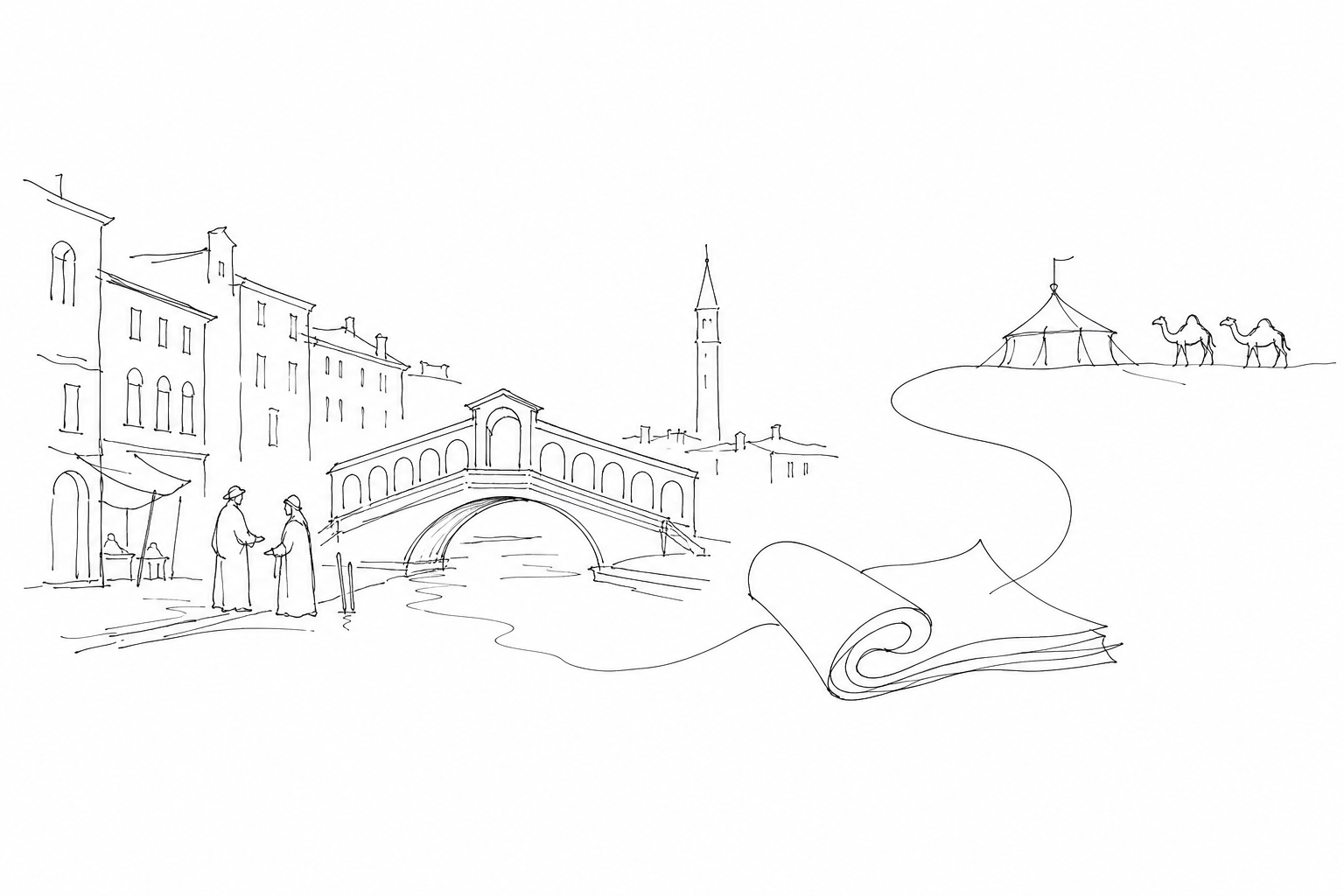
This detail makes the toponym less legendary and more concrete. The name “Milion” does not indicate a commemorative monument created after the fact, but a domestic and mercantile memory left imprinted in the city’s vocabulary. The nearby Teatro Malibran as well, built in the area traditionally associated with the Polo houses, recalls how much this history has been continuously rewritten in urban space.
Toponyms: nizioleti, courtyards and neighborhood memory
In this area behind Rialto, the names painted on the walls function almost like an archive. The nizioleti, the characteristic white rectangles with black letters, do not indicate only an address: they fix in the urban fabric trades, families, vanished buildings and local uses. For this reason the Corte del Milion should be read together with the nearby passages, the small calli and the sottoporticoes: the toponym does not by itself prove the material presence of Marco Polo’s house, but preserves the trace of a tradition rooted in the neighborhood.
- Corte indicates an internal space, more enclosed than the calle, often linked to a group of dwellings.
- Sotoportego indicates a covered passage, typical of the denser Venetian circulation network.
- Nizioleto turns the wall into a public document, readable by those who cross the city.
The value of the place lies precisely in this overlap: not an isolated monument, but a network of urban words that holds together orientation, family narrative and Venetian continuity.
Arriving from Rialto, it is worth slowing down even before looking for a “monument.” The Corte del Milion is better understood by observing passages, thresholds and proportions: it is a place of everyday transit, not an isolated scene.
- Read the access: the sotoporteghi and narrow calli convey the density of the old commercial block, close to but separate from the main flow of the market.
- Compare the names: the nizioleto does not only indicate where you are; it links the spot to the tradition of the Polo house and to the nickname associated with the account of the travels.
- Observe the building scale: small façades, irregular windows and heavily reworked walls suggest a history made up of replacements, fires, reuse and changed ownership.
- Look for the urban void: the open space functions as a small pause between compressed routes, useful for imagining a family complex more extensive than its current appearance.
The key is not to ask the place for a single proof about Marco Polo, but to read coherent clues: toponym, building fabric and position behind Rialto reinforce one another.
The Corte del Milion teaches that in Venice even a tiny space can open many directions: Marco Polo and his account, the family houses and courtyards, the nizioleti as an urban archive, the continuous relationship between memory and everyday use. Stopping here during a walk does not mean looking for a spectacular scene, but recognizing a detail that holds together travel, commerce, language and neighborhood. It is precisely in these discreet places that the city becomes less predictable and more readable.
Related Posts
Calle del Paradiso: a gentle name for looking at Venetian toponymy more carefully
A small Venetian name becomes a guide for reading nizioleti, calli and urban memory with greater precision.Le Mercerie: the commercial route between Rialto and San Marco that was not created for modern shopping
History and urban reading of the Mercerie, a dense axis of calli between Rialto and San Marco born from civic, artisan and mercantile functions.
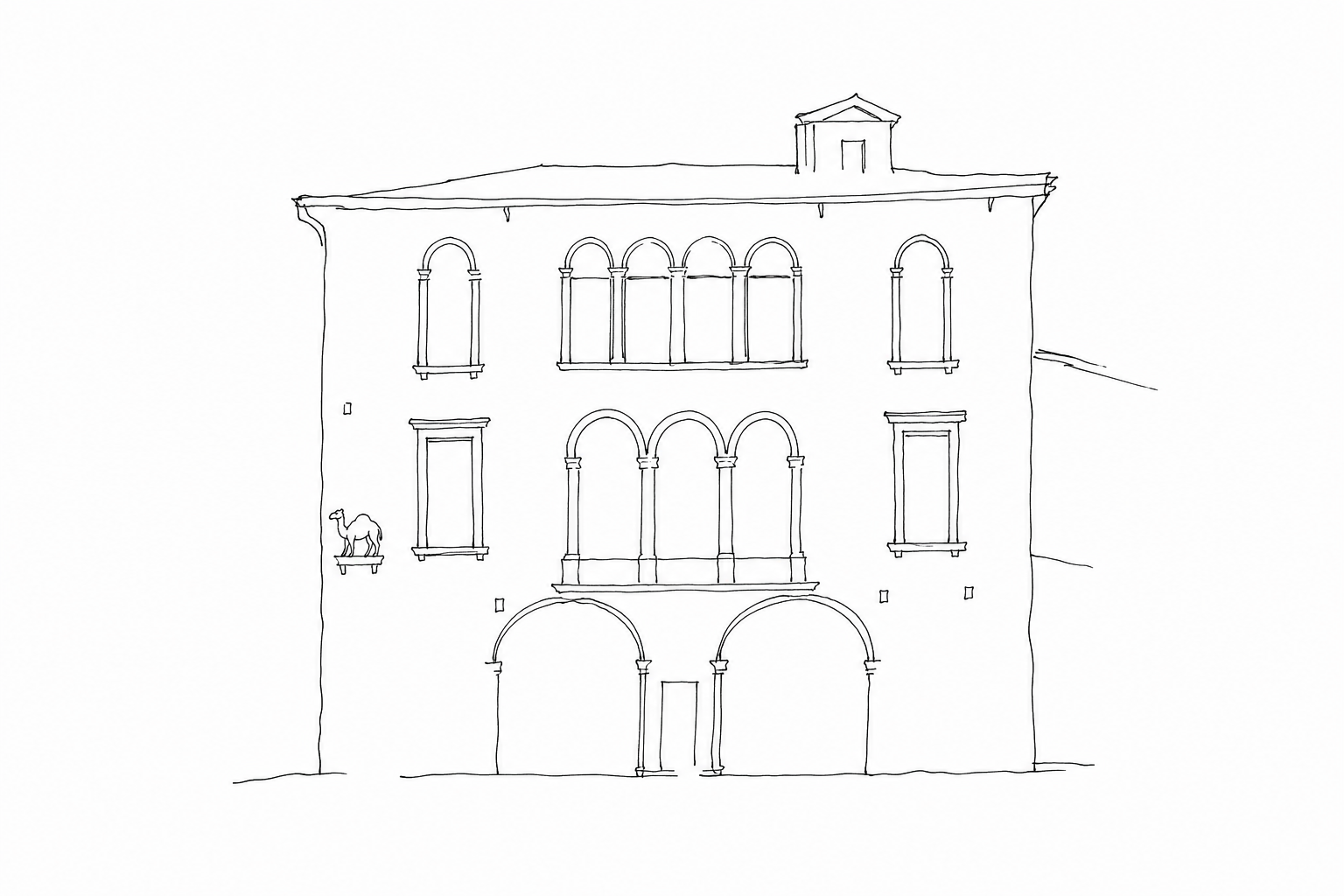
Palazzo Mastelli and the Camel: an Eastern Detail in the Heart of Cannaregio
History, interpretation and context of the camel carved on Palazzo Mastelli, among Eastern trade and the calli of Cannaregio.Questions Answered
What is the Corte del Milion and where is it located?
It is a small area behind Rialto linked to the Polo family memory.Why is the name 'Milion' significant?
It reflects the Polo family’s mercantile heritage and nickname, not just legend.How do toponyms like nizioleti function in Venice?
They serve as urban archives recording trades, families, and historical memory.How should visitors approach understanding Corte del Milion?
By observing urban details like passages, names, and building fabric together.
Keep reading Rialto
Want to see how the market, churches, shops and palaces tell the story of the same commercial heart?
 Rialto at dawn: the fish market before the photographs arriveRialto at dawn told through work: stalls, crates, voices, lagoon and respect before the tourist gaze.
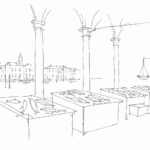 The Rialto Fish Market: how to read stalls, columns and details of a market still aliveA short guide to observing the Rialto Fish Market: stalls, architecture, marine signs and the daily rhythm of the market.
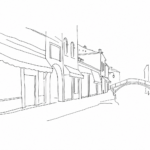 Ruga Rialto: a street of shops for understanding Venetian commerce before global storefrontsA reading of Ruga Rialto as a living trace of Venetian commerce: shops, place names, markets and urban rhythm before global chains.
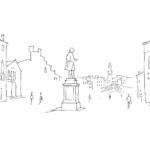 Campo San Bartolomeo: Goldoni, Rialto and the city’s most restless meeting pointCampo San Bartolomeo read as an urban node: Goldoni, Rialto, flows, pauses and details to observe.